- Company Articles
- Products and Technology
- Installation And Maintenance
- Common Mistakes to Avoid When Using External Straight Aluminum Joints

Common Mistakes to Avoid When Using External Straight Aluminum Joints
Related Product
External Straight Aluminum Joint
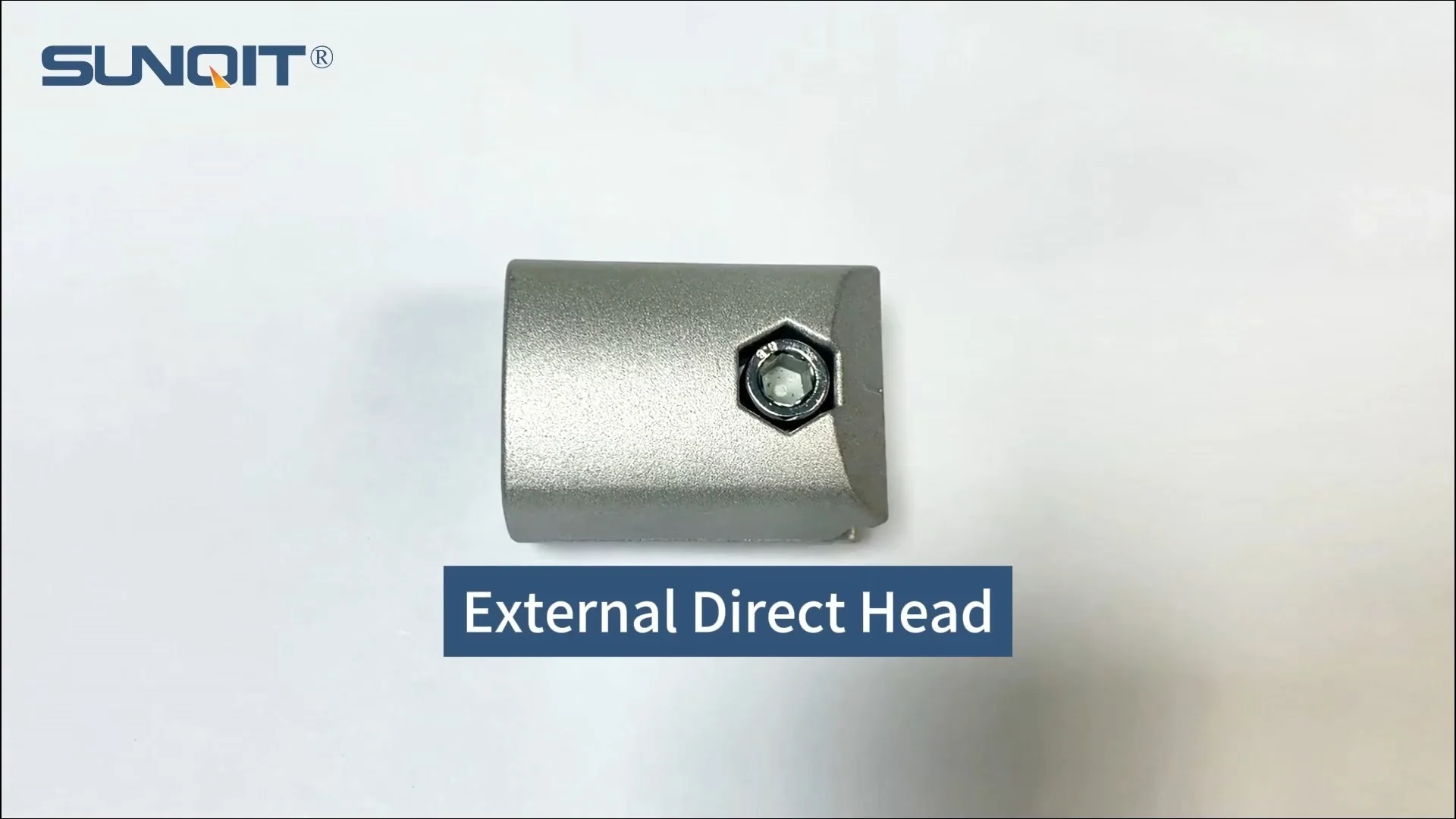
Aluminum pipe joint outside connection used for two pcs 28pcs aluminum pipe connection in straight angle,it connects two pcs pipe from outside.
In the world of manufacturing and production, where efficiency and precision are the backbone of success, every component plays a silent yet critical role. Among these, external straight aluminum joints might seem like small, unassuming parts—but their impact on the stability, safety, and functionality of lean systems, workbenches, and material handling setups is undeniable. These joints are the unsung heroes that hold together aluminum profiles, connect roller tracks, and ensure that everything from assembly lines to storage racks operates smoothly. Yet, despite their importance, it's how often simple mistakes with these joints lead to costly downtime, wobbly workbenches, or even safety hazards.
Whether you're setting up a new lean system, upgrading an existing workbench, or maintaining a production line, overlooking the details of external straight aluminum joints can derail your operations faster than you might think. From choosing the wrong material to cutting corners during installation, these errors can turn a well-designed setup into a source of frustration. In this article, we'll walk through the most common mistakes people make when using external straight aluminum joints, why they matter, and how to steer clear of them. By the end, you'll have the insights to ensure your joints work as hard as your team does—keeping your processes lean, your workspace safe, and your productivity on track.
Mistake 1: Choosing the Wrong Material for the Job
One of the first—and most costly—mistakes starts long before installation: selecting the wrong type of external straight aluminum joint for your specific application. Aluminum joints come in a range of grades, designs, and strengths, each tailored to different loads, environments, and usage patterns. Yet, it's common to see teams grab the nearest joint on the shelf without considering whether it's built to handle the demands of their setup.
Take, for example, a heavy-duty assembly workbench used for assembling large machinery. If this workbench relies on basic external straight joints meant for light shelving, it's only a matter of time before the joints bend or fail under the weight. On the flip side, using an overengineered, reinforced joint for a simple storage rack not only adds unnecessary cost but also makes the setup bulkier and harder to adjust—undermining the flexibility that makes aluminum profiles so valuable in lean systems.
A key factor here is understanding the load requirements of your project. External straight aluminum joints are rated for specific weight capacities, and exceeding these limits is a recipe for disaster. For instance, aluminum profile systems designed for high-capacity workbenches often require joints with thicker walls or reinforced threading, while lighter applications like temporary material racks can use standard-duty joints. Similarly, if your setup involves moving parts—like connecting roller tracks to a conveyor—you'll need joints that can withstand vibration without loosening over time.
Another material consideration is compatibility with aluminum pipe accessories . Some joints are designed for use with specific pipe diameters or profile types (e.g., T-slot vs. round). Using a joint that's too loose or too tight for your pipes can lead to misalignment, increased wear, and even system failure. For example, a joint meant for 20mm aluminum pipes won't secure a 25mm pipe properly, creating gaps that compromise stability.
Real-World Scenario:
A small electronics manufacturer recently expanded its production line by adding a new workbench for testing circuit boards. To save costs, they reused external straight joints from an old, lightweight storage rack. Within a month, workers reported that the workbench top was tilting slightly, causing tools and components to slide off. An inspection revealed the joints had begun to bend under the weight of the testing equipment (around 80kg), which far exceeded their 50kg load rating. The fix? Upgrading to heavy-duty reinforced joints designed for workbench use—costing time and money that could have been avoided with proper material selection.
Mistake 2: Poor Installation Technique—Overtightening or Undertightening
Even if you've chosen the perfect external straight aluminum joint for your project, improper installation can render it useless. The most common culprit here is either overtightening or undertightening the joint during setup. It's a deceptively simple mistake, but its consequences ripple through the entire system.
Overtightening is often the result of a "more is better" mindset. Many assume that cranking down on the joint as hard as possible will make it more secure, but aluminum is a relatively soft metal compared to steel. Excessive force can strip the threads inside the joint, warp the aluminum profile, or even crack the joint itself. Once the threads are damaged, the joint loses its ability to hold tension, leading to wobbling or complete failure. In worst cases, overtightening can also distort the shape of the aluminum pipe, making it impossible to reuse the components if you need to reconfigure the setup later.
Undertightening, on the other hand, is equally problematic. A joint that's not tightened enough will never fully secure the pipes or profiles, creating a loose connection that vibrates with use. Over time, this vibration causes the joint to loosen further, leading to instability in workbenches, misaligned roller tracks, or even safety hazards (e.g., a rack collapsing under its load). In lean systems, where precision is key, a loose joint can throw off the entire workflow—imagine a conveyor belt that jams because the roller track, held by undertightened joints, has shifted out of alignment.
So, how tight is "just right"? The answer lies in following the manufacturer's torque specifications. Most reputable suppliers provide guidelines for how much force to apply when tightening their joints (typically measured in Newton-meters or inch-pounds). Using a torque wrench ensures you hit that sweet spot—enough tension to secure the joint without damaging the material. For example, a standard external straight joint for 30mm aluminum profiles might require a torque of 4-5 Nm. Going beyond that risks stripping; stopping short leaves it loose.
Another installation pitfall is using the wrong tools. Using a Phillips-head screwdriver on a hex bolt, or pliers instead of a wrench, can round off the fastener heads, making it impossible to adjust or remove the joint later. Invest in basic tools like hex keys, torque wrenches, and socket sets designed for aluminum hardware—they're a small investment that prevents big headaches.

Mistake 3: Ignoring Compatibility with Roller Tracks and Other Components
External straight aluminum joints rarely work in isolation. They're part of a larger ecosystem that includes aluminum profiles, roller tracks, conveyors, and other material handling components. A critical mistake many make is treating the joint as a standalone part, ignoring how it interacts with the other pieces in the system. This lack of foresight often leads to compatibility issues that disrupt workflow and reduce efficiency.
Consider the example of integrating a joint with roller tracks . Roller tracks rely on precise alignment to ensure materials glide smoothly—even a tiny misalignment can cause jams, slow down production, or damage delicate items. External straight joints are often used to mount roller tracks to frames or connect track segments. If the joint isn't designed to interface with your specific roller track model, you might end up with gaps between track sections, uneven heights, or tracks that slope incorrectly.
For instance, some roller tracks have built-in mounting holes spaced at 50mm intervals, while others use a T-slot system for adjustable positioning. An external straight joint with fixed mounting points won't align with a T-slot roller track, forcing you to drill custom holes or use shims—both of which weaken the structure and introduce instability. Similarly, if the joint's height doesn't match the roller track's load-bearing requirements, the track might sag under weight, causing items to get stuck.
Compatibility issues also arise when mixing components from different manufacturers. While many aluminum profile systems claim to be "universal," subtle differences in tolerances, thread sizes, or profile dimensions can make joints from Brand A incompatible with pipes or tracks from Brand B. For example, a joint designed for a 40x40mm T-slot profile from one supplier might fit loosely on a 40x40mm profile from another, due to slight variations in wall thickness.
To avoid this, always check the manufacturer's specifications for both the joint and the components it will connect. Look for compatibility charts or ask suppliers directly if the joint works with your roller track model, aluminum profile type, or conveyor system. When in doubt, order sample components to test the fit before committing to a full setup—it's a small step that saves time, money, and frustration down the line.

Mistake 4: Neglecting Environmental Factors
Aluminum is prized for its lightweight and corrosion-resistant properties, but it's not invincible. A common oversight when using external straight aluminum joints is failing to account for the environment in which they'll operate. Humidity, temperature fluctuations, exposure to chemicals, and even salt air (in coastal facilities) can all take a toll on aluminum joints over time—leading to rust, degradation, and premature failure.
In humid or high-moisture environments (e.g., food processing plants, car washes, or outdoor storage areas), standard aluminum joints are prone to oxidation. While aluminum forms a protective oxide layer naturally, constant moisture can break this layer down, leading to pitting or white rust. This not only weakens the joint but also creates a rough surface that can snag on materials or harbor bacteria—critical concerns in industries like food or pharmaceuticals.
For these environments, consider upgrading to joints made from stainless steel pipe series or aluminum with a specialized coating (e.g., anodized or powder-coated). Stainless steel offers superior corrosion resistance, while coatings add an extra barrier against moisture and chemicals. Similarly, in facilities with exposure to oils, solvents, or acids (like manufacturing plants or auto repair shops), standard aluminum joints may degrade over time. Look for joints with chemical-resistant finishes or opt for plastic-coated aluminum to protect against harsh substances.
Temperature is another environmental factor. Aluminum expands and contracts with temperature changes, which can loosen joints in systems exposed to extreme heat or cold. For example, a lean system in a warehouse that experiences summer temperatures of 40°C (104°F) and winter lows of -5°C (23°F) will see significant thermal movement. If joints are installed without accounting for this, they may become loose in cold weather or warp in heat, compromising stability.
The solution? Choose joints designed for your climate. In extreme temperatures, look for joints with thermal-resistant materials or adjustable components that can compensate for expansion. In corrosive environments, prioritize stainless steel or coated aluminum. And always clean joints regularly—wiping away moisture, dust, or chemicals prevents buildup that accelerates wear.

Mistake 5: Skipping Regular Maintenance and Inspections
Even the best-designed external straight aluminum joints won't last forever without a little care. A final, often overlooked mistake is neglecting regular maintenance and inspections. In the rush to meet production deadlines, it's easy to assume that once a joint is installed, it will stay secure indefinitely. But the reality is that vibrations from machinery, repeated loading and unloading, and normal wear and tear all take a toll—slowly loosening joints, weakening connections, and reducing performance.
Consider a busy assembly line where workbenches are used 8 hours a day, 5 days a week. The constant movement of workers, tools, and components creates vibrations that gradually loosen the joints holding the workbench together. Over time, a slightly loose joint becomes a wobbly one, which then puts extra stress on adjacent joints, creating a domino effect. Before long, the entire workbench is unstable, tools fall off, and workers waste time readjusting materials instead of focusing on production.
In lean systems, where every second counts, this kind of downtime is costly. A single loose joint in a roller track can slow down material flow by 20% or more as workers stop to fix jams. Worse, if a joint fails completely, it can lead to equipment damage or injuries—costing far more than the time it would have taken to inspect and tighten it.
So, what does proper maintenance look like? It starts with a simple inspection schedule. For high-traffic areas (like assembly lines or loading docks), inspect joints weekly—check for looseness, signs of wear (e.g., cracked plastic components, stripped threads), or corrosion. For less frequently used setups (e.g., storage racks), monthly inspections should suffice. During inspections, tighten any loose joints to the recommended torque, replace worn parts immediately, and clean joints to remove debris that could cause binding.
It's also important to train your team to spot issues. Workers who use the equipment daily are often the first to notice something's off—a wobbly shelf, a noisy roller track, or a workbench that feels "unsteady." Encourage them to report these observations, and make it easy for them to flag concerns (e.g., a dedicated maintenance log or quick reporting app). By turning your team into maintenance partners, you'll catch problems early, before they escalate into major issues.
Common Mistakes at a Glance: A Quick Reference Table
| Mistake | Impact | How to Avoid |
|---|---|---|
| Choosing the wrong material | Bent joints, system failure, safety risks | Match joint load rating to application; check compatibility with aluminum profiles and accessories |
| Overtightening/undertightening | Stripped threads, warped profiles, loose connections | Use torque wrenches; follow manufacturer torque specs |
| Ignoring component compatibility | Misaligned roller tracks, jams, reduced efficiency | Check specs for joints, roller tracks, and profiles; test components before full setup |
| Neglecting environmental factors | Corrosion, degradation, thermal warping | Use stainless steel or coated joints in harsh environments; account for temperature changes |
| Skipping maintenance | Loose joints, downtime, equipment damage | Schedule regular inspections; train teams to report issues |
Conclusion: Small Joints, Big Impact
External straight aluminum joints may be small, but their role in building reliable, efficient lean systems and workbenches is enormous. From choosing the right material to nailing the installation and keeping up with maintenance, avoiding these common mistakes isn't just about "getting it right"—it's about protecting your productivity, your team's safety, and your bottom line.
Think of it this way: a lean system is only as strong as its weakest link. If that link is a poorly chosen or installed joint, the entire system suffers—slowing production, increasing waste, and creating unnecessary stress. By taking the time to select compatible, high-quality joints, install them with care, and maintain them regularly, you're not just fixing parts—you're investing in the foundation of your operation.
So, the next time you reach for an external straight aluminum joint, remember: it's more than just a piece of hardware. It's a critical component that connects your goals to your results. Treat it with the attention it deserves, and it will repay you with smoother workflows, fewer headaches, and a lean system that truly works for you.