- Company Articles
- Products and Technology
- Installation And Maintenance
- Common Mistakes to Avoid When Using One Way Rotatory Straight Lean Pipe Joints

Common Mistakes to Avoid When Using One Way Rotatory Straight Lean Pipe Joints
Related Product
One Way Rotatory Straight Lean Pipe Joint
Two way lean pipe joint for 2 pcs 28MM lean pipe connection in straight angle with rotatory fucntion, which used widely in workbench, flow rack, hand trolley frame connection.
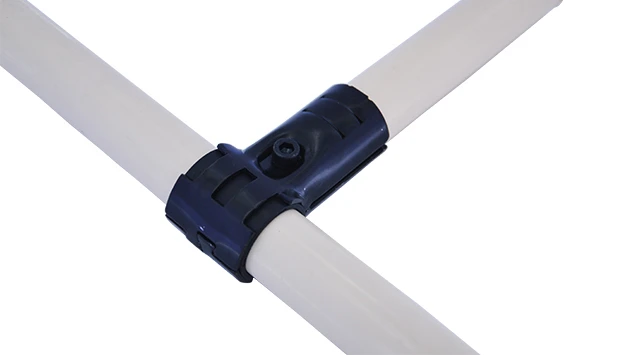
In the world of lean manufacturing, where efficiency and adaptability are king, the smallest components often play the biggest roles. Take the one way rotatory straight lean pipe joint, for example. This unassuming piece of hardware is the backbone of countless lean systems—holding together lean pipe workbenches, flow racks, conveyor systems, and turnover trolleys. Yet, despite its importance, I've seen too many teams stumble with it, leading to wobbly workstations, production delays, and even safety hazards. Today, let's pull back the curtain on the most common mistakes people make when using these joints, and more importantly, how to steer clear of them. Whether you're setting up a new production line or maintaining an existing one, these insights could save you time, money, and a lot of frustration.
Understanding One Way Rotatory Straight Lean Pipe Joints
Before we dive into the mistakes, let's make sure we're all on the same page about what a one way rotatory straight lean pipe joint actually is. At its core, this joint is designed to connect lean pipes (or lean tubes) in a straight line while allowing controlled rotation in one direction. Think of it as the hinge that lets a flow rack's roller track tilt for easy material sliding, or the connector that lets a workbench's accessory arm swing into place without locking up. It's a workhorse in environments where flexibility matters—like assembly lines, warehouses, and labs using ESD workstations to protect sensitive electronics.
These joints come in various materials, from budget-friendly PE coated steel to durable aluminum and corrosion-resistant stainless steel. They're compatible with different lean pipe sizes, too, often pairing with 28mm or 30mm tubes, though you'll also find options for aluminum profile systems. And while they might look simple, their design is (precise)—engineered to balance strength, rotation smoothness, and ease of installation. That's why getting their use right is so critical: a misused joint can turn a well-designed lean system into a liability.
Common Mistake #1 – Choosing the Wrong Material for the Environment
One of the first decisions you'll make when selecting a one way rotatory straight lean pipe joint is the material. It sounds basic, but I've walked into factories where joints are rusting after just a few months, or cracking under light loads, all because someone picked the cheapest option without thinking about the environment. Let's break down the three most common materials and where they work (and where they don't).
| Material Type | Best For | Pros | Cons |
|---|---|---|---|
| PE Coated Lean Pipe Joint | Dry, low-humidity environments (e.g., assembly lines without moisture exposure) | Affordable, lightweight, resistant to minor scratches | Prone to corrosion in damp areas; not ideal for heavy loads over 50kg |
| Aluminum Lean Pipe Joint | Moderate humidity, clean rooms, or where weight matters (e.g., mobile turnover trolleys) | Lightweight, rust-resistant, compatible with aluminum profile systems | Softer than steel; can bend under extreme loads (over 150kg) |
| Stainless Steel Pipe Series Joint | Wet environments (e.g., food processing, labs with frequent cleaning), heavy loads | Corrosion-resistant, high strength (supports up to 200kg+), durable | Heavier, more expensive, may require specialized tools for installation |
Here's a real-world example: A beverage bottling plant once installed PE coated joints near a washing station. Within six weeks, the coating started peeling, and the underlying steel began to rust. The joints seized up, making it impossible to adjust the flow rack's angle, and production had to stop for replacements. The fix? Switching to stainless steel swivel roller balls and joints, which held up even with daily water splashes.
Pro Tip: When in doubt, ask: "Will this joint get wet? Will it support more than 100kg regularly? Is the area chemically treated (e.g., with cleaning agents)?" If the answer to any of these is "yes," skip PE coated and go for aluminum or stainless steel. Your future self (and maintenance team) will thank you.

Common Mistake #2 – Over-Tightening (or Under-Tightening) During Installation
Let's talk about installation torque—the amount of force you apply when tightening the joint onto the lean pipe. It's a step that's often rushed, with someone grabbing a wrench and cranking until it "feels tight." But here's the problem: one way rotatory straight lean pipe joints aren't meant to be clamped like a vice. Over-tighten, and you'll warp the joint's internal components, restricting rotation or even cracking the housing. Under-tighten, and the joint will loosen over time, leading to wobbling workbenches or roller tracks that shift mid-operation.
I recently worked with a team that built a material rack B (3 row and 3 floor) using aluminum lean pipe joints. They were proud of their handiwork—until the top shelf started sagging after a week. When we checked the joints, half of them were loose; the installer had been afraid of "breaking something" and hadn't tightened them enough. The fix was simple: using a torque wrench set to the manufacturer's recommended 15 Nm, and retightening each joint. Six months later, that rack is still solid.
The Right Way to Tighten a Joint
1. Check the specs: Most lean pipe suppliers (including reputable ones like those specializing in lean system wholesale) will print the recommended torque on the joint's packaging or in the product manual. It's usually between 12-20 Nm for aluminum joints and 18-25 Nm for stainless steel.
2. Use a torque wrench: Skip the adjustable wrench or pliers. A basic torque wrench costs $50-$100 and ensures you hit the exact number. For mobile setups like turnover trolleys with caster wheels, this is non-negotiable—loose joints here can make the trolley tip over.
3. Test rotation after tightening: After securing the joint, give it a gentle spin. It should move smoothly in one direction without sticking or wobbling. If it's stiff, you've overtightened; back off by 1-2 Nm and test again.

Common Mistake #3 – Ignoring Load Capacity Limits
Every one way rotatory straight lean pipe joint has a maximum load capacity—the amount of weight it can safely support while still rotating smoothly. This isn't a suggestion; it's an engineering limit. Yet I've seen teams stack heavy components on a workbench E (single deck-without caster) supported by joints rated for 80kg, only to wonder why the bench collapsed when loaded with 120kg of parts. The result? Damaged materials, downtime, and in one case, a minor injury when a toolbox fell.
Load capacity isn't just about the joint itself, either. It's a system issue. For example, if you're using a joint to connect a roller track to an aluminum guide rail, you need to account for both the weight of the materials sliding on the track and the downward force from the rail. A joint rated for 100kg might only handle 70kg in this setup because the rail amplifies stress on the connection point.
Key Calculation: Total Load = Weight of Materials + Weight of Attached Components (e.g., roller track, caster accessories) + Dynamic Load (if moving, like a trolley in motion). Always aim for your total load to be 70-80% of the joint's rated capacity to leave a safety buffer.
If you're unsure about capacity, talk to your lean pipe supplier. Reputable suppliers (those who offer lean pipe workbench wholesale or custom solutions) can help you calculate load limits based on your specific setup. And when in doubt, add supports: a simple aluminum profile bracket or a center support bracket for roller track can reduce stress on joints by up to 40%.
Common Mistake #4 – Mixing Incompatible Components
Lean pipe systems are modular by design, which is part of their appeal. You can mix and match tubes, joints, and accessories to build almost anything—from ESD workstations to turnover trolleys. But that flexibility can backfire when you mix components from different brands or sizes. A one way rotatory straight lean pipe joint designed for a 28mm aluminum pipe won't play nice with a 30mm stainless steel pipe, even if they "sort of" fit together.
I visited a electronics plant last year that had bought lean pipe and accessories from three different suppliers to save money. Their ESD workstation used a mix of aluminum profile a, plastic roller track guide rail yellow, and stainless steel swivel roller balls 1 inch. The problem? The joints connecting the roller track to the aluminum profile were too loose—the profile's slot size didn't match the joint's clamp design. The result was parts getting stuck on the track, slowing down production by 20%.
The solution here is simple: stick to a single supplier or verify compatibility before mixing. Most major suppliers (like those offering aluminum pipe accessories or lean tube wholesale) provide compatibility charts on their websites. For example, if you're using 4040 aluminum profile, check that the joint's clamp is designed for 40mm profiles. It's a small step that saves huge headaches later.
Common Mistake #5 – Skipping Regular Maintenance
Even the best one way rotatory straight lean pipe joints need a little TLC. Dust, debris, and daily wear can take a toll: the rotation mechanism might get gritty, the clamp might loosen, or the coating might chip. Yet many teams install their lean systems and forget about them until something breaks. That's a mistake. A 5-minute monthly check can extend a joint's lifespan by years.
Quick Maintenance Checklist
• Clean the rotation point: Use a dry cloth to wipe away dust from the joint's moving parts. For aluminum joints, a quick spray of silicone lubricant (avoid oil-based lubes—they attract dirt) keeps rotation smooth.
• Check tightness: Give each joint a gentle tug. If it moves, retighten with a torque wrench to the recommended setting.
• Inspect for damage: Look for cracks in the housing, rust on metal parts, or worn caster accessories if the joint is on a mobile trolley. replace any damaged parts immediately—don't wait for them to fail.
A food packaging company I advised started doing this monthly check, and they reduced joint replacements by 60% in a year. One technician even caught a cracked stainless steel joint before it failed, preventing a 2-hour production halt.
Wrapping Up: Small Changes, Big Results
Using one way rotatory straight lean pipe joints might seem straightforward, but as we've covered, the smallest missteps can lead to big problems. From choosing the wrong material to skipping maintenance, these mistakes are common—but they're also avoidable. By taking the time to select the right joint, install it properly, respect load limits, use compatible components, and maintain it regularly, you'll keep your lean system running smoothly, safely, and efficiently for years to come.
Remember, a lean system is only as strong as its weakest link. And more often than not, that link isn't the fancy aluminum profile or the high-tech ESD workstation—it's the humble joint holding it all together. Treat it with care, and it will treat you to better productivity, fewer headaches, and a workspace that truly lives up to the "lean" name.