- Company Articles
- Products and Technology
- Installation And Maintenance
- Common Mistakes When Installing Gusset Alp 3030 & How to Avoid Them

Common Mistakes When Installing Gusset Alp 3030 & How to Avoid Them
Related Product
Gusset ALP 3030
The 3030 bracket/Gusset is an external fastening method that creates a 90 degree connection. 3030 means this size is used for 30 series aluminum profile with a quick connection by bolt and nut.
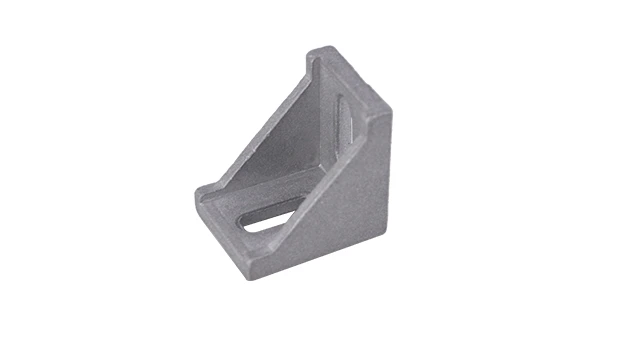
Walk into any modern workshop, factory, or even a DIY garage, and you'll likely spot aluminum profiles hard at work. These sleek, versatile structures form the backbone of everything from workbenches and material racks to assembly lines and storage systems. And if you're deep into lean system setups—where efficiency, flexibility, and durability are non-negotiable—you've probably encountered the 3030 aluminum profile. Compact yet sturdy, it's a favorite for projects that need a balance of strength and adaptability. But here's the thing: even the best materials fall flat if the little details go wrong. Enter the Gusset Alp 3030—a small but critical aluminum profile accessory that holds those 3030 profiles together, ensuring your structures don't just look good, but stand up to the daily grind of production, assembly, or storage.
Over the years, I've helped dozens of teams set up lean workspaces, and time and again, the same issues pop up when installing gussets like the Alp 3030. It's easy to dismiss these small metal brackets as "just another part," but skimping on their installation can turn a rock-solid workbench into a wobbly hazard or a material rack that sags under the weight of your tools. In this guide, we'll break down the most common mistakes people make when installing Gusset Alp 3030, why they happen, and—most importantly—how to avoid them. Whether you're a seasoned facility manager or a weekend DIYer, these tips will save you time, frustration, and maybe even a few replacement parts.
Mistake #1: Using the Wrong Fasteners—Because "Good Enough" Bolts Rarely Are
Let's start with the basics: fasteners. You'd think picking a bolt or screw to attach a gusset would be straightforward, but I've seen teams use everything from random hardware store screws to rusted old bolts they found in a toolbox. Spoiler: that's a recipe for disaster. Aluminum profiles, including the 3030 series, have specific thread sizes and T-slot designs that demand equally specific fasteners. The Gusset Alp 3030, with its pre-drilled holes and slim profile, is no exception.
Take, for example, a small electronics manufacturer I worked with last year. They were building a custom workbench using 3030 aluminum profiles and Gusset Alp 3030s to support the shelves. To save time, they grabbed a box of M6 steel bolts from their stockroom—"They're strong, right?"—and started tightening. By the end of the day, half the bolts had stripped the threads inside the profile's T-slots, and the shelves wobbled so badly they couldn't place circuit boards on them without everything sliding off. When I asked why they chose M6, the lead technician shrugged: "We didn't check the profile specs. We just grabbed what was handy."
Here's the problem: 3030 aluminum profiles typically use M5 or M6 threads, but the key is matching the fastener to the profile's T-slot width and the gusset's hole size. The Gusset Alp 3030, for instance, often has 5mm diameter holes, which pair best with M5 bolts. Using an M6 bolt (which is 6mm in diameter) forces the threads to expand, stripping the aluminum—softer than steel—like a knife through butter. Even if you "get lucky" and the bolt fits, the threads will weaken over time, leading to loose joints that compromise the entire structure.
How to Fix It: Choose Fasteners Designed for Aluminum Profiles
First, check the specs. Most 3030 aluminum profile suppliers (and yes, even the Gusset Alp 3030 packaging) will list the recommended fastener size—usually M5 for standard 3030 profiles. Look for T-slot bolts or socket head cap screws specifically designed for aluminum extrusion profiles. These fasteners have smooth shanks that slide easily into the T-slot and threads that grip without damaging the aluminum.
Pro tip: Avoid cheap steel bolts if you can. Opt for stainless steel or aluminum fasteners to prevent corrosion, especially if your workspace is humid or exposed to moisture. And always, always test the fit before fully tightening. Slide the fastener through the gusset's hole and into the profile's T-slot—if it feels tight going in, it's too big. If it wobbles, it's too small. You want a snug fit where the fastener turns smoothly without resistance until it hits the gusset.
Mistake #2: Ignoring Alignment—When "Close Enough" Creates a Wobbly Mess
Imagine this: You've got your 3030 aluminum profile laid out, the Gusset Alp 3030 in hand, and you're ready to bolt it all together. You line up the gusset with the profile, drill a quick pilot hole, and tighten the fastener. Looks straight, right? But when you stand back, the whole structure leans to one side, or the shelf you're attaching sits at a slight angle. Sound familiar? That's the result of poor alignment—and it's more common than you think.
Alignment issues happen when the Gusset Alp 3030 isn't perfectly flush with the profile's edges or when the holes in the gusset don't line up with the T-slots in the profile. Maybe you eyeballed it instead of using a square, or the profile itself is slightly bent (we'll get to that later). Either way, even a 1-2mm misalignment can throw off the entire structure's balance. The gusset's job is to distribute weight evenly across the profile; if it's twisted or offset, the loads on one side, leading to sagging, warping, or even collapse over time.
A furniture manufacturer I consulted with had this exact problem. They were building a series of material racks (think: 3 rows, 3 floors) using 3030 profiles and Gusset Alp 3030s to connect the vertical and horizontal beams. The first rack went up fine, but by the third, the team was rushing, and they stopped using their square tool to check angles. A month later, the top shelf of that third rack started to bow, and a few boxes of parts crashed to the floor. When we took it apart, we saw the gussets on one side were rotated 5 degrees off-center—hardly noticeable to the eye, but enough to weaken the entire structure.
How to Fix It: Slow Down and Use the Right Tools
Alignment isn't about perfection—it's about precision. Here's how to get it right:
- Use a square tool: A simple carpenter's square or a 90-degree angle ruler is your best friend. Place it against the profile and the gusset to ensure they form a perfect right angle. If the gusset is meant to connect two profiles at 45 degrees, use a protractor or angle finder.
- Mark your holes first: Before drilling or inserting fasteners, use a pencil to mark where the gusset's holes line up with the profile's T-slots. This gives you a visual guide to check alignment before you commit.
- Check for flatness: Lay the profile and gusset on a flat surface (like a workbench) while attaching them. This prevents warping from uneven ground throwing off your alignment.
- Loosen and readjust: If something feels off after tightening, don't panic. Loosen the fasteners slightly, realign the gusset with your square, and retighten. It's better to spend an extra 5 minutes adjusting than to rebuild the entire structure later.

Mistake #3: Over-Tightening Fasteners—When "Tighter" Actually Breaks Things
We've all been there: You're tightening a bolt, and you think, "If a little tight is good, a lot tighter must be better!" So you crank down on the wrench, grunting a little, until the bolt won't turn anymore. Mission accomplished, right? Wrong. Over-tightening is one of the most destructive mistakes you can make when installing Gusset Alp 3030—and aluminum profiles in general.
Aluminum is a soft metal compared to steel, and its threads are easily damaged. When you over-tighten a fastener, you're not just securing the gusset—you're stretching the bolt, warping the profile's T-slot, or even cracking the gusset itself. I once saw a team snap a Gusset Alp 3030 clean in half because they used a impact driver to "make sure it was tight." The bracket split along the bolt hole, and the whole assembly came crashing down. Ouch.
Under-tightening is just as bad, of course. A loose fastener means the gusset shifts, leading to that wobbly feeling we talked about earlier. But most people err on the side of over-tightening, assuming that "snug" isn't enough. The truth is, aluminum profiles and gussets don't need brute force—they need controlled, consistent pressure.
How to Fix It: Use a Torque Wrench (or "The Finger Test")
If you're serious about proper installation, invest in a torque wrench. Most aluminum profile manufacturers recommend a specific torque range for fasteners—for M5 bolts on 3030 profiles, that's usually 8-10 Newton-meters (Nm). A torque wrench lets you set that exact value, so you'll know when to stop tightening. No more guessing, no more snapped bolts.
Don't have a torque wrench? Try the "finger test." Tighten the fastener with your fingers until it's snug against the gusset, then use a wrench to give it a quarter-turn more. That's usually enough to secure it without overdoing it. You'll feel resistance, but the fastener shouldn't bend or the profile shouldn't flex. If you hear a "creaking" sound from the aluminum, stop immediately—that's the metal straining.
Pro tip: For critical joints (like those holding up a heavy workbench), check the fasteners after a week of use. Aluminum can "relax" slightly, so you might need a tiny tweak to keep everything tight. Just don't go overboard—remember, snug is the goal.

Mistake #4: Skipping Pre-Installation Checks—The "Oops, This Profile Is Bent" Moment
You've got your Gusset Alp 3030, your fasteners, and your tools laid out. You're ready to build—so you grab the first 3030 aluminum profile you see and start drilling. But halfway through, you notice the profile curves slightly to the left. Or maybe the gusset has a tiny burr on the edge that's scratching the profile. These might seem like minor issues, but they're actually red flags you should address before you start installing.
Pre-installation checks are the most overlooked step in the process, and they're also the easiest to fix. Bent profiles, for example, are surprisingly common—they can get warped during shipping, storage, or even from being leaned on in the workshop. A bent profile might look straight at first glance, but when you attach a gusset, the curve forces the bracket out of alignment, leading to all the issues we've already discussed: wobbling, uneven weight distribution, and weak joints.
Burrs are another culprit. When aluminum profiles are cut to length, they often have sharp, rough edges (burrs) along the T-slots or cut ends. If you attach a gusset over a burr, the bracket won't sit flat against the profile, creating gaps that let moisture in (hello, corrosion!) or prevent the fastener from gripping properly. I once helped a team that spent hours trying to tighten a gusset, only to realize a burr was keeping it from sitting flush. A 30-second file job fixed the problem instantly.
How to Fix It: Take 5 Minutes to Inspect Before You Build
Pre-installation checks don't have to be complicated. Here's a quick checklist to run through before you start:
- Check for straightness: Roll the aluminum profile on a flat surface (like a workbench or the floor). If it wobbles or rocks, it's bent. You can try to straighten minor bends with a rubber mallet (gently!) or replace the profile if it's badly warped.
- Deburr edges: Run your finger along the profile's cut ends and T-slots. If you feel a rough spot, grab a metal file or sandpaper and smooth it out. This ensures the gusset sits flat and prevents scratches on your hands (safety first!).
- Clean the T-slots: Dust, dirt, or metal shavings in the T-slots can block fasteners or prevent them from sliding into place. Use a small brush or compressed air to blow out debris before installing.
- Inspect the gusset: Check the Gusset Alp 3030 for cracks, bent edges, or misdrilled holes. A damaged gusset won't support weight properly, so replace it if you spot any issues.
These checks take 5 minutes at most, but they'll save you hours of frustration later. Think of it like prepping a canvas before painting—you wouldn't start with a dirty, wrinkled canvas, right? Your aluminum profile and gusset deserve the same care.
Mistake #5: Forgetting Material Compatibility—When Metal Meets Metal (and Rusts)
Let's talk about corrosion. It's not the sexiest topic, but it's a silent killer of aluminum structures. Here's a scenario: You install a Gusset Alp 3030 (which is aluminum) onto a 3030 aluminum profile using steel bolts. A few months later, you notice white, powdery spots on the profile around the bolts, or the gusset starts to pit. That's galvanic corrosion, and it happens when two different metals touch in the presence of moisture.
Aluminum and steel are like oil and water—they don't play well together. When they're in contact, especially in humid or damp environments (like a workshop near the coast or one that uses water-based coolants), they create a tiny battery. The aluminum acts as the "anode" and starts to corrode, sacrificing itself to protect the steel. Over time, this weakens the profile, the gusset, and the fasteners, turning a solid structure into a rusty, crumbling mess.
I saw this firsthand at a food processing plant that used steel fasteners with their aluminum profiles. The facility was kept cool and humid to preserve ingredients, and within six months, the profiles near the floor were covered in corrosion. The Gusset Alp 3030s were still intact, but the profiles they were attached to had thinned so much that the joints started to loosen. It cost them thousands to replace the damaged sections—all because they didn't consider material compatibility.
How to Fix It: Stick to Aluminum (or Use a Barrier)
The easiest solution? Use aluminum fasteners with your aluminum profiles and Gusset Alp 3030. Aluminum-on-aluminum contact won't cause galvanic corrosion, so you can skip the rust worries. Most hardware suppliers sell aluminum T-slot bolts and screws specifically for this purpose—they're slightly more expensive than steel, but they'll save you from costly replacements down the line.
Can't find aluminum fasteners? Use stainless steel. It's less reactive than regular steel and works well with aluminum in dry environments. For extra protection, apply a thin layer of anti-corrosion tape (like Teflon tape) between the fastener and the gusset, or use a dielectric grease to create a barrier between the metals. This stops moisture from getting in and kickstarting that "battery effect."
Pro tip: If you're installing in a super humid area (think: a greenhouse or a workshop with frequent power washing), consider anodized aluminum profiles. The anodized coating adds a protective layer that resists corrosion even better than bare aluminum. Pair that with anodized Gusset Alp 3030s, and you'll have a setup that lasts for years.
Fastener Guide for Gusset Alp 3030 Installation
| Fastener Type | Profile Thread Size | Gusset Hole Diameter | Torque Recommendation (Nm) | Common Mistake | Quick Fix |
|---|---|---|---|---|---|
| M5 T-slot Bolt | M5 | 5mm | 8-10 | Using M6 bolts (too large) | Swap for M5 bolts; check hole fit before tightening |
| M5 Socket Head Cap Screw | M5 | 5mm | 8-10 | Over-tightening (snapped bolt) | Use torque wrench; stop at 10 Nm |
| Stainless Steel Button Head Screw | M5 | 5mm | 8-10 | Steel-on-aluminum contact (corrosion) | Add anti-corrosion tape between screw and gusset |
| Aluminum Thumb Screw | M5 | 5.5mm | Hand-tight + 1/4 turn | Under-tightening (loose joint) | Tighten until snug; no need for tools |
Wrapping Up: Small Details, Big Results
Installing Gusset Alp 3030 might seem like a simple task, but as we've seen, the smallest mistakes can lead to big problems. From using the wrong fasteners to skipping pre-installation checks, these errors are easy to make—but they're even easier to avoid. The key is to slow down, pay attention to the details, and treat your aluminum profiles and accessories with the care they deserve.
Remember: A lean system is only as strong as its weakest link. Whether you're building a workbench, a material rack, or an entire assembly line, the Gusset Alp 3030 is that link. Take the time to choose the right fasteners, align everything properly, tighten with care, check for defects, and ensure material compatibility. Your future self (and your wobbly workbench) will thank you.
So the next time you pick up a Gusset Alp 3030, ask yourself: "Am I doing this right?" With the tips in this guide, the answer will be a resounding "Yes." Now go build something sturdy.