- Company Articles
- Products and Technology
- Product knowledge
- Common Myths About Flat Rigid Castor Wheels in Industrial Material Handling

Common Myths About Flat Rigid Castor Wheels in Industrial Material Handling
Related Product
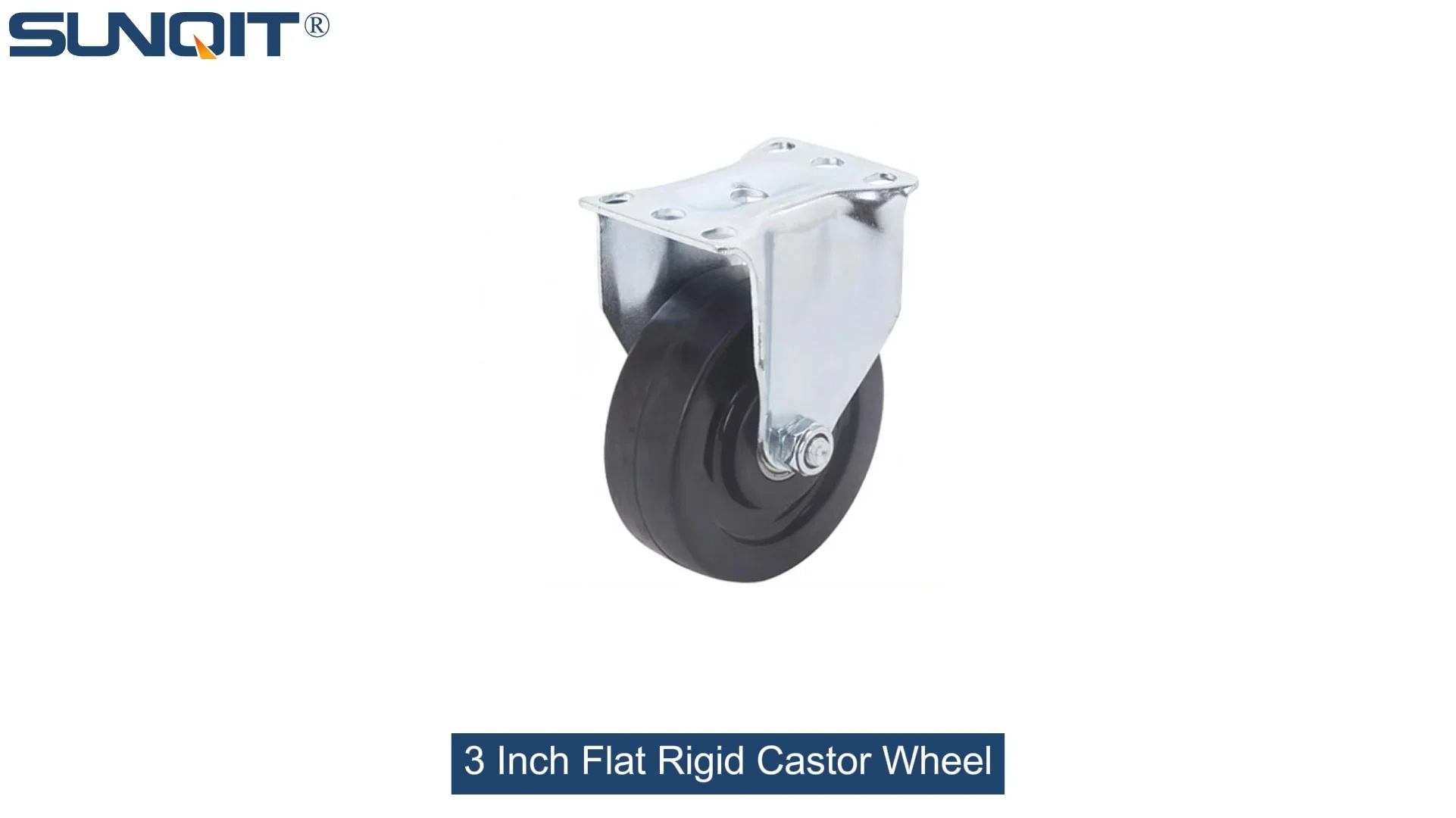
Flat Rigid Castor Wheel
Chair Casters Ball Bearing Wheels Rubber Base. Resistant to abrasion, impact and corrosion. Heavy payload can hold 70Kgs per pcs,which can make it works at a stable and smooth status.
In the bustling world of industrial material handling, every component plays a quiet but critical role in keeping operations running smoothly. Among these unsung heroes are castor wheels—small in size but mighty in impact. While swivel castors often steal the spotlight for their maneuverability, flat rigid castor wheels are the workhorses that anchor stability and precision in countless workflows. Yet, despite their ubiquity, misconceptions about these essential tools persist, leading to poor purchasing decisions, inefficiencies, and even safety risks. Today, we're diving deep into the most common myths surrounding flat rigid castor wheels, separating fact from fiction to help you make smarter choices for your facility.
Myth 1: "Flat Rigid Castors Are Only for Light-Duty Use"
Walk into any hardware store or browse industrial supply websites, and you might come across descriptions that pigeonhole flat rigid castors as "light-duty" options. This myth has persisted because many associate rigidity with limited strength—after all, if a castor can't swivel, surely it can't handle heavy loads, right? Nothing could be further from the truth.
Flat rigid castor wheels are engineered with load capacity as a core priority. Unlike some swivel models, which distribute weight through a swivel joint (adding potential weak points), rigid castors transfer weight directly from the mounting plate to the wheel axle, creating a more robust load-bearing structure. Modern designs use high-grade materials like forged steel for axles, reinforced nylon or polyurethane for wheels, and heavy-duty aluminum or steel for mounting brackets—materials that rival or exceed the strength of many swivel castor components.
Consider the manufacturing floor of an automotive plant, where rigid castors are often used on assembly line workbenches. These workbenches frequently hold hundreds of pounds of tools, parts, and equipment. A standard 4-inch flat rigid castor with a steel wheel and reinforced bracket can easily support 1,000–2,000 pounds per wheel, and specialized heavy-duty models push that number to 5,000 pounds or more. In warehouses, rigid castors are the go-to for pallet jacks and fixed-position material racks, where stability during loading and unloading is non-negotiable.
The confusion often arises from mixing up "rigid" with "small." Many light-duty applications do use small rigid castors (like those on office chairs), but that's a choice based on size, not capability. When paired with the right materials and design, flat rigid castors are more than capable of heavy-duty tasks—think loading docks, construction sites, and manufacturing lines where "light-duty" simply isn't an option.
Myth 2: "All Flat Rigid Castors Perform the Same on Different Floors"
Another common assumption is that floor type doesn't matter with flat rigid castors—after all, they roll in a straight line, so how different can they be? This couldn't be more misleading. The performance of a flat rigid castor is deeply influenced by the interaction between its wheel material, tread design, and the floor surface it's used on. Choosing the wrong combination can lead to everything from excessive noise and vibration to premature wear, or even damage to the floor itself.
Let's break down how floor type impacts castor performance. On smooth concrete floors (common in warehouses), a hard wheel material like cast iron or steel might seem ideal for durability—but without proper tread, these wheels can produce loud, jarring noise and scratch the floor if debris gets caught between the wheel and surface. In contrast, a polyurethane wheel with a smooth tread absorbs vibration, reduces noise, and grips the floor to prevent slipping, making it a better choice for both worker comfort and floor protection.
On uneven surfaces, like factory floors with cracks or warehouse floors with transition strips between concrete and asphalt, the wheel's shock absorption becomes critical. Rigid castors with solid rubber wheels, for example, can bounce or skid over bumps, risking damage to both the castor and the load. A wheel with a foam-filled polyurethane core, however, offers flexibility to absorb impacts while maintaining rigidity in direction—perfect for navigating minor irregularities without sacrificing control.
To illustrate this, let's compare four common wheel materials across different floor types:
| Wheel Material | Best Floor Types | Load Capacity (Per Wheel) | Pros | Cons |
|---|---|---|---|---|
| Rubber | Smooth concrete, tile, hardwood | 500–1,500 lbs | Quiet, shock-absorbent, non-marking | Prone to wear on rough surfaces |
| Polyurethane | Uneven concrete, asphalt, warehouse floors | 1,000–3,000 lbs | Durable, grips well, resists chemicals | Heavier than rubber; may leave marks if low-quality |
| Nylon | Smooth concrete, metal floors | 1,500–4,000 lbs | High load capacity, low rolling resistance | Hard; noisy on rough surfaces; can scratch floors |
| Steel | Gravel, rough concrete, outdoor use | 3,000–8,000 lbs | Extremely durable, ideal for heavy loads | Loud, heavy, can damage soft floors |
The takeaway? Flat rigid castors are not one-size-fits-all when it comes to floors. Matching the wheel material to your facility's surface is key to maximizing performance and longevity.

Myth 2: "Rigid Castors Don't Need Regular Maintenance Compared to Swivel Ones"
It's easy to assume that because flat rigid castors lack the swivel joint (a common maintenance pain point in swivel models), they're "set it and forget it" components. Why bother with upkeep if there's no joint to lubricate or swivel plate to clean? This myth can cost facilities dearly in downtime and replacement costs.
Rigid castors do require maintenance—just different kinds than swivel castors. The absence of a swivel joint means other components take on more stress. For example, the wheel bearings (often ball or roller bearings) in rigid castors are under constant load, as there's no swivel action to relieve pressure during turns. Without proper lubrication, these bearings can seize, causing the wheel to drag or lock up entirely. Similarly, the axle nut or bolt that secures the wheel to the bracket can loosen over time, especially in high-vibration environments like manufacturing plants, leading to wobbling or even wheel detachment.
Caster accessories play a crucial role here. Many rigid castor models come with grease fittings for bearings, dust caps to prevent debris buildup, and lock washers to keep axle nuts tight. Neglecting these accessories is a common mistake. A dust cap that's cracked or missing allows dirt and metal shavings to enter the bearing, accelerating wear. A loose lock washer can lead to axle nuts backing off, turning a minor adjustment into a major repair.
So, what does a basic maintenance routine for flat rigid castors look like? It's simpler than you might think:
- Weekly inspections: Check for loose axle nuts, cracked wheels, or debris stuck in the wheel tread. Remove any rocks, metal shavings, or other debris that could scratch floors or damage bearings.
- Monthly lubrication: Apply bearing grease through the grease fitting (if equipped) to reduce friction. Use a lithium-based grease for most indoor applications; for outdoor or wet environments, opt for a water-resistant formula.
- Quarterly deep clean: Remove the wheel from the bracket, clean the axle and bearing housing with a degreaser, and inspect for signs of rust or pitting. replace worn bearings or wheels promptly—waiting until they fail can lead to damage to the mounting plate or the equipment the castor is attached to.
By investing 10–15 minutes per month per castor, you can extend their lifespan by 2–3 times, avoiding costly replacements and unexpected downtime.

Myth 3: "Flat Rigid Castors Can't Be Integrated into Lean Systems Effectively"
Lean system principles—focused on minimizing waste, improving flow, and maximizing efficiency—are the backbone of modern industrial operations. When facility managers think about lean systems, they often picture agile, flexible equipment: workbenches on swivel castors that can be repositioned in seconds, or conveyors that adapt to changing production needs. Rigid castors, with their fixed direction, are sometimes dismissed as "too inflexible" for lean environments. But this couldn't be further from the truth—rigid castors are often the unsung heroes of lean material handling.
Lean systems thrive on predictability and consistency, and flat rigid castors deliver both. In assembly lines, for example, workbenches or material carts on rigid castors can be guided along fixed paths (like floor tracks or painted lines), ensuring that tools and parts arrive at the exact same position every time. This eliminates the variability that comes with swivel castors, where a slight bump can send a cart veering off course, wasting time and creating bottlenecks.
Consider a typical automotive assembly line. The chassis of a car moves along a conveyor, and workers at each station need their tools and parts to be positioned within arm's reach. A material cart on flat rigid castors, locked into a track parallel to the conveyor, ensures that each bin of screws, bolts, or panels is exactly where it needs to be—no more, no less. This precision reduces motion waste (a key lean principle) by eliminating the need for workers to search for or adjust materials.
Rigid castors also shine in "flow rack" systems, a staple of lean warehousing. Flow racks use gravity to move products from the loading end to the picking end, but they rely on stable, fixed-direction movement. By mounting flow rack shelves on flat rigid castors, facilities can easily reposition entire rack units along warehouse aisles without disrupting the gravity flow mechanism. The rigid castors ensure the rack stays straight and level, maintaining the integrity of the flow system.
Even in dynamic lean environments where equipment needs to be reconfigured, rigid castors have a role. Many modern lean system suppliers offer modular workbenches and trolleys with quick-release mounting plates, allowing rigid castors to be swapped out for swivel castors when flexibility is needed, and vice versa. This hybrid approach combines the best of both worlds: rigidity for daily, predictable tasks, and swivel mobility for occasional reconfigurations.
At the end of the day, lean systems are about using the right tool for the job. When predictability, load capacity, and straight-line efficiency matter most, flat rigid castors aren't just compatible with lean principles—they're essential to them.

Myth 4: "Choosing the Cheapest Flat Rigid Castor Saves Money in the Long Run"
In tight budget cycles, it's tempting to opt for the lowest-priced flat rigid castor option. After all, a castor is just a wheel and a bracket, right? Why pay extra for a "premium" model when a budget-friendly one looks similar? This mindset ignores the concept of "total cost of ownership"—the hidden expenses that come with cheap castors, from frequent replacements to downtime and safety risks.
Cheap flat rigid castors often cut corners in critical areas: thin-gauge steel for mounting plates that bend under load, low-quality plastic wheels that crack in cold or hot environments, and undersized axles that snap under stress. A $20 castor might seem like a steal, but if it fails after 6 months of use, requiring a replacement (and downtime while the equipment is out of service), the true cost balloons. Compare that to a $50 castor built with reinforced steel, heat-treated axles, and industrial-grade polyurethane wheels that lasts 3–5 years with minimal maintenance—the "expensive" option quickly becomes the cheaper one.
Safety is another hidden cost. A failed castor can cause equipment to tip, spilling materials or injuring workers. OSHA reports that over 20% of workplace injuries involve material handling equipment, and many of these incidents trace back to faulty components like castors. The cost of a workers' compensation claim, equipment damage, or regulatory fines far exceeds the savings from buying cheap castors.
Reputable lean system suppliers understand this, which is why they often partner with castor manufacturers that prioritize quality over cost. These suppliers offer castors with warranties (some up to 5 years), material certifications (like RoHS compliance for electronics manufacturing), and performance guarantees (e.g., "will not crack at temperatures from -40°F to 180°F"). While the upfront price is higher, the peace of mind and long-term savings are invaluable.
So, how do you spot a quality flat rigid castor? Look for these signs:
- Load capacity ratings: A quality castor will clearly state its load capacity (e.g., "1,500 lbs per wheel") and include a safety factor (typically 1.5x the rated capacity).
- Material specifications: Avoid vague terms like "heavy-duty plastic"—look for specifics, such as "65 Shore A polyurethane wheel with steel core" or "forged steel axle."
- Testing data: Reputable manufacturers provide test results, like "30,000 cycles of 1,000 lbs load without failure" or "water and chemical resistance tested to ASTM standards."
In short, when it comes to flat rigid castors, you get what you pay for. Investing in quality isn't a luxury—it's a smart business decision.
Conclusion: Beyond the Myths—The Power of Informed Choices
Flat rigid castor wheels are far more than simple, "light-duty" components—they're versatile, strong, and essential tools in industrial material handling. By debunking these common myths, we've seen that they excel in heavy-duty applications, adapt to diverse floor types with the right wheel material, integrate seamlessly into lean systems, and offer long-term value when chosen for quality.
The next time you're shopping for castors, remember: rigidity doesn't mean weakness, maintenance isn't optional, and price alone isn't a measure of value. Whether you're outfitting a workbench in a small workshop or a fleet of material carts in a large factory, taking the time to understand your needs (load capacity, floor type, environment) and choosing a reputable supplier will ensure your flat rigid castors work as hard as your team does.
After all, in the world of industrial material handling, the smallest components often make the biggest difference.