- Company Articles
- Products and Technology
- Product knowledge
- Common Myths About Four Way Straight Lean Pipe Joint Chrome Debunked

Common Myths About Four Way Straight Lean Pipe Joint Chrome Debunked
Related Product
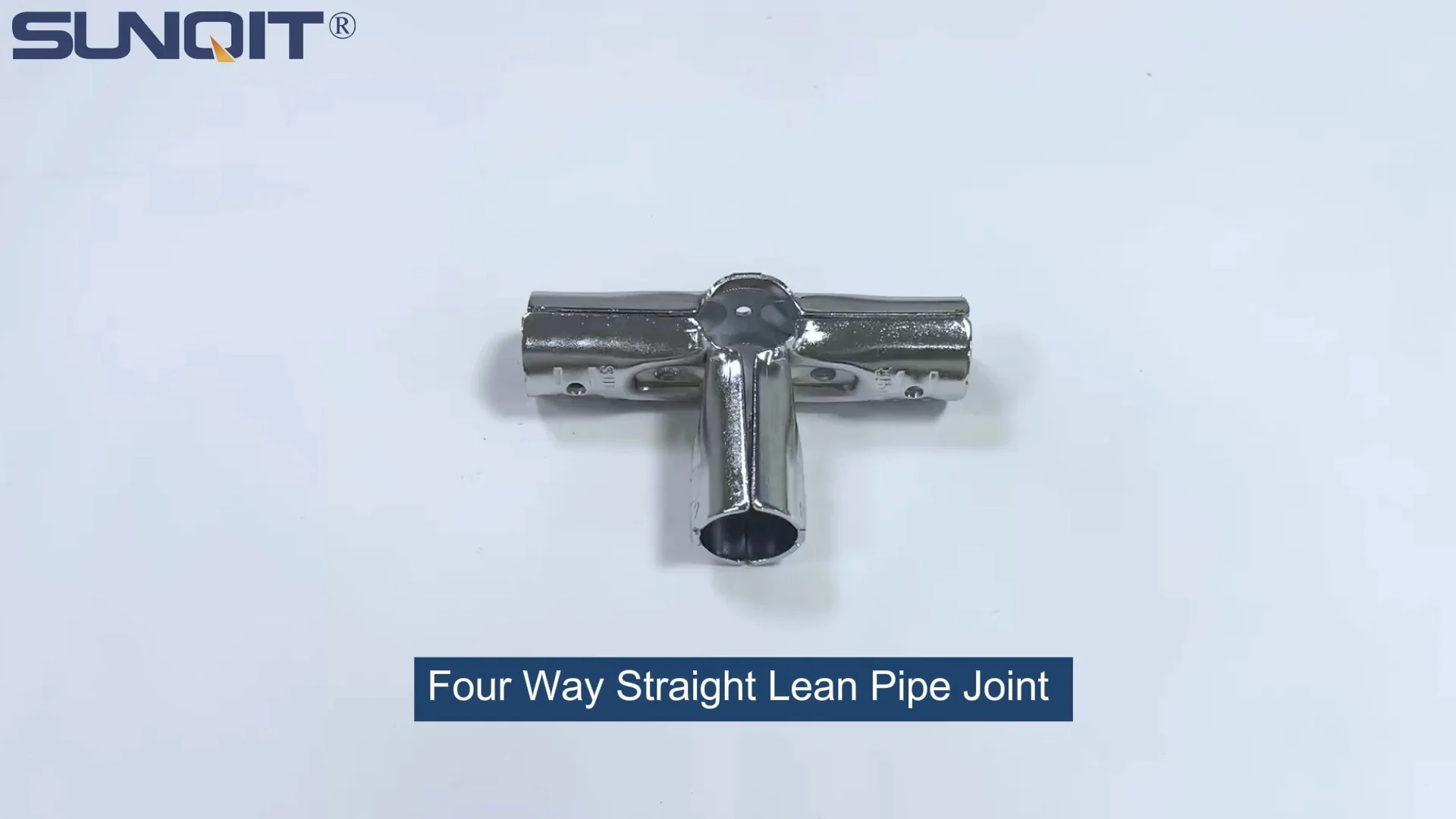
Four Way Straight Lean Pipe Joint Chrome
Four way lean pipe joint for 4 pcs 28MM lean pipe connection in straight angle, which used widely in workbench, flow rack, hand trolley frame connection.
If you've ever stood in the middle of a workshop, staring at a pile of lean pipe components and wondering how they all fit together, you're not alone. Lean systems—those modular, flexible setups that power assembly lines, warehouses, and workbenches—rely heavily on small but critical parts, and few are as misunderstood as the four way straight lean pipe joint chrome . Ask a new operations manager, a small business owner setting up their first production area, or even a seasoned technician, and you'll hear a mix of assumptions: "It's just for heavy stuff," "Chrome is just for show," "You need a pro to install it." But what if those assumptions are holding back your workflow? Let's dive into the most common myths surrounding this unassuming yet powerful component, and uncover how it might be the missing piece in your lean pipe system.
Myth #1: Four Way Straight Lean Pipe Joint Chrome Is Only for Heavy-Duty Manufacturing Floors
Walk into a busy auto parts plant, and you'll likely see rows of sturdy workbenches and material racks held together by shiny chrome joints. It's no wonder many people assume the four way straight lean pipe joint chrome is reserved for environments where steel pipes are loaded with heavy machinery parts or bulk materials. But here's the truth: this joint is a chameleon, equally at home in light-duty settings as it is on the factory floor.
Let's break down the specs. A standard 1.5mm wall thickness lean pipe paired with a four way chrome joint can comfortably support 150–200kg of evenly distributed weight. That's enough for car parts, sure, but it's also more than enough for lighter applications. Think about a small electronics workshop assembling circuit boards: the joint can secure a shelf for tools, a side rail for component bins, and a overhead holder for cables—all without breaking a sweat. Or consider a retail stockroom: use it to build a mobile cart for moving apparel boxes, where the chrome finish resists scuffs from daily use. Even labs and medical facilities benefit, as the joint's smooth, non-porous chrome surface is easy to sanitize, making it ideal for holding sample trays or equipment stands.
Why does this myth persist? Blame Hollywood. Manufacturing scenes in movies and TV often focus on heavy industry, so we mentally link chrome joints to clanging machinery. But in reality, lean systems thrive on adaptability—and the four way chrome joint is a poster child for that. It's not about the weight; it's about the flexibility to build exactly what you need, whether that's a heavy-duty material rack or a lightweight workbench for a startup's garage workshop.
Myth #2: All Lean Pipe Joints Are Interchangeable—Chrome or Not
A common rookie mistake in lean system setup is assuming that any lean pipe joint will work with any pipe. After all, they look similar: metal, cylindrical, with holes for screws. But swap a four way straight chrome joint with a three way aluminum joint, and you might end up with a wobbly structure that collapses under even minimal weight. The four way straight lean pipe joint chrome has unique design features that set it apart—and ignoring them can derail your entire setup.
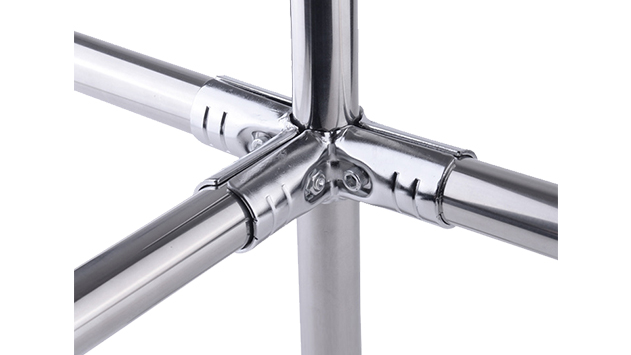
Let's start with material compatibility. Chrome-plated joints are typically made from carbon steel, which pairs best with steel or stainless steel lean pipes. Aluminum joints, on the other hand, are designed for aluminum profiles—their threads and clamping mechanisms are sized to grip aluminum's lighter, softer material without damaging it. Mixing steel joints with aluminum pipes? The steel's harder threads can strip the aluminum, leading to loose connections. Similarly, a four way chrome joint's four ports (one on each axis) mean it's engineered to distribute weight across four directions, whereas a two way joint only handles two. Use a two way where a four way is needed, and you'll overload the joint, causing it to bend or snap.
Another key difference is the clamping mechanism. Chrome steel joints often use set screws with pointed tips that dig into the pipe's surface, creating a tight friction fit. Aluminum joints, by contrast, may use smooth screws or plastic inserts to avoid marring the aluminum. If you use a chrome joint's pointed screw on an aluminum pipe, you'll leave permanent indentations that weaken the pipe over time. It's like using a Phillips head screwdriver on a flathead screw—technically possible, but a bad idea.
| Joint Type | Material | Best For | Clamping Mechanism |
|---|---|---|---|
| Four Way Straight Chrome | Carbon steel (chrome-plated) | Steel/stainless steel pipes, multi-directional setups | Pointed set screws (friction fit) |
| Three Way Aluminum | Aluminum alloy | Aluminum profiles, T-junctions | Smooth screws/plastic inserts |
| Two Way Plastic | Nylon/ABS plastic | Lightweight PE-coated pipes, temporary structures | Snap-fit or wing nuts |
The takeaway? Always check the joint's material, port count, and clamping design before mixing and matching. The four way straight lean pipe joint chrome is a specialist, not a generalist—and that's a good thing. Its specificity is what makes it reliable in the right setup.
Myth #3: Chrome Plating Is Just for Looks—It Adds No Functional Value
Walk into a hardware store, and you'll see chrome-plated tools and fixtures marketed as "stylish" or "premium." It's easy to assume the same logic applies to the four way straight lean pipe joint chrome : that the shiny finish is just a cosmetic upgrade to make industrial equipment look nicer. But chrome plating on lean pipe joints is a workhorse feature, not a vanity add-on. In fact, it's one of the most critical aspects of the joint's performance.
First, chrome plating is a barrier against corrosion. Steel joints without plating are prone to rust when exposed to moisture, oil, or chemicals—common in manufacturing, food processing, or even humid warehouse environments. A thin layer of chrome (typically 5–10 microns thick) acts as a shield, preventing water and oxygen from reaching the steel underneath. This isn't just about longevity; rust can weaken the joint's structural integrity, leading to cracks or failure. In a food packaging plant, for example, where floors are regularly hosed down, a rusted joint could contaminate products or collapse under a load of packaging materials. Chrome-plated joints? They'll stay rust-free for years, even in damp conditions.
Second, chrome is incredibly durable. Unlike paint or powder coating, which can chip or scratch, chrome forms a hard, wear-resistant surface that stands up to daily abuse. Think about a busy assembly line where workers are constantly adjusting the position of a material rack—bumping into the joint, dragging tools across it, or tightening/loosening screws. A chrome finish won't scratch or dull easily, maintaining its grip and appearance over time. Compare that to a painted joint: after a few months of use, the paint would chip, exposing the steel to rust and creating rough edges that could catch on gloves or clothing.
Lastly, chrome is low-maintenance. A quick wipe with a damp cloth is all it takes to remove oil, grease, or dust. In contrast, unplated steel joints require regular cleaning and oiling to prevent rust, adding time and labor costs to your maintenance routine. For small businesses or facilities with limited staff, this simplicity is a game-changer. You won't need to assign a team member to polish joints every week—they'll stay clean and functional with minimal effort.
So, is chrome plating "just for looks"? Hardly. It's a functional, cost-saving feature that extends the joint's life, improves safety, and reduces maintenance. The shine is just a bonus.

Myth #4: Installing a Four Way Straight Lean Pipe Joint Chrome Requires a Professional
DIY culture has taken over everything from home repairs to startup workshops, but when it comes to industrial components like the four way straight lean pipe joint chrome , many people still hesitate. "It looks complicated," they think. "I'll probably mess it up and have to call a pro." But the reality is that installing this joint is surprisingly straightforward—even if you've never touched a lean system before. With a few basic tools and a little patience, you can have a sturdy, professional-grade setup in under an hour.
Let's walk through the process. First, gather your tools: an Allen wrench (usually 5mm or 6mm, depending on the joint), a rubber mallet, and a level. That's it—no power tools, no welding, no specialized equipment. Start by sliding the joint onto the end of a lean pipe. If it's tight, tap it gently with the rubber mallet to seat it properly. Then, position the second pipe into one of the joint's other ports—say, the horizontal port for a shelf. Once the pipes are aligned (use the level to check for straightness), tighten the set screws with the Allen wrench. You'll feel resistance when the screw bites into the pipe—stop when it's snug, but don't over-tighten (you could strip the threads). Repeat for the remaining ports, and you're done. That's it! No prior experience needed, no expensive training courses.
Why do people think it's hard? Maybe because industrial equipment is often associated with complexity, but lean systems are intentionally designed for simplicity. Manufacturers of lean pipe joint components know that users range from factory engineers to small business owners, so they prioritize user-friendly designs. The four way chrome joint, for example, has clearly labeled ports and standard-sized screws, so you won't need to guess which tool to use. Plus, most suppliers include step-by-step guides or video tutorials—resources that walk you through the process visually.
Don't just take my word for it. Ask any small manufacturer who's built their own workbenches or material racks. Chances are, they'll tell you that installing lean pipe joints was one of the easiest parts of the project. "I'm not handy at all," says Maria, who runs a custom jewelry workshop. "But I built a lean workbench with four way chrome joints last year, and it took me maybe 45 minutes. The instructions were clear, and the Allen wrench fit perfectly. Now I adjust it all the time when I need to add more shelves—no pro required."
The only time you might need professional help is if you're building an extremely large or complex system (like a 20-foot-tall material rack) that requires structural engineering. For 99% of setups—workbenches, mobile carts, small assembly lines—DIY installation is more than feasible. Save the professional fees for other projects; this joint is designed for you to handle on your own.
Myth #5: Aluminum Profiles Have Made Four Way Straight Lean Pipe Joint Chrome Obsolete
In recent years, aluminum profiles have surged in popularity for lean systems. Sleek, lightweight, and modular, they're often marketed as "the future of lean manufacturing." This has led many to write off steel components like the four way straight lean pipe joint chrome as outdated—relics of a bygone era. But the truth is, chrome steel joints and aluminum profiles each have their strengths, and in many cases, the chrome joint is still the better choice.
Let's start with cost. Aluminum profiles are expensive—often 2–3 times the price of steel lean pipes and chrome joints. For small businesses or startups with tight budgets, this can be a dealbreaker. A basic workbench built with steel pipes and four way chrome joints might cost $200, while the same setup with aluminum profiles could run $500 or more. That extra money could go toward tools, materials, or hiring staff. Even larger companies often stick with steel for non-critical setups, reserving aluminum for high-visibility areas or specialized applications.
Durability is another factor. While aluminum is lightweight, it's also softer than steel. In high-impact environments—like a warehouse where forklifts occasionally bump into racks or a manufacturing floor with heavy machinery—aluminum profiles can bend or dent. Steel pipes and chrome joints? They're tough as nails. A forklift tap that would crumple an aluminum rack might not even scratch a steel setup. For long-term reliability in rough conditions, steel is still king.
Then there's repairability. If an aluminum profile gets damaged, you often need to replace the entire section—since cutting or welding aluminum requires specialized tools. With steel pipes and chrome joints? Just loosen the set screws, swap out the damaged pipe, and retighten. No special skills, no expensive equipment. In a busy production environment, where downtime costs money, this quick fix can save hours of lost productivity.
That's not to say aluminum profiles don't have their place. They're great for applications where weight is critical (like mobile carts that need to be moved frequently) or where aesthetics matter (like customer-facing displays). But to claim they've made chrome steel joints obsolete is like saying electric cars have made pickup trucks obsolete—both have their uses, and neither is going away anytime soon.
The four way straight lean pipe joint chrome is here to stay, and for good reason: it's affordable, durable, easy to install, and versatile. It might not be as flashy as aluminum, but in the world of lean manufacturing, substance always beats style.
The Bottom Line: Don't Sleep on the Four Way Straight Lean Pipe Joint Chrome
From heavy-duty manufacturing floors to small workshop workbenches, the four way straight lean pipe joint chrome is a versatile, reliable component that deserves more credit than it gets. It's not just for heavy loads, it's not interchangeable with other joints, its chrome plating is functional (not just pretty), it's easy to install yourself, and it's far from obsolete. So the next time you're designing a lean system, don't overlook this unsung hero. It might just be the key to building a setup that's sturdy, affordable, and built to last.
And if you're still unsure where to start? Reach out to a reputable lean pipe supplier —they can help you choose the right joints, pipes, and accessories for your specific needs. After all, a lean system is only as strong as its components, and the four way straight chrome joint is one component you won't regret investing in.