- Company Articles
- Products and Technology
- Product knowledge
- Common Myths About Parallel Lean Pipe Joints Debunked

Common Myths About Parallel Lean Pipe Joints Debunked
Related Product
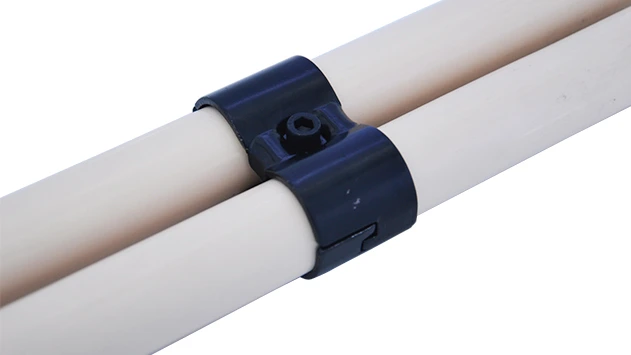
Parallel Lean Pipe Joint
Parallel lean pipe joint used for 2 pcs 28MM lean pipe connection in parallel direction to enhance frame structure, usually for heavy payload requirement for workbench. flow rack, hand trolley.
Walk into any modern manufacturing facility, and you'll notice a subtle yet powerful shift: gone are the days of clunky, fixed structures that take weeks to reconfigure. Instead, you'll see sleek workbenches, agile material racks, and flexible production assemble lines—all built on the backbone of lean systems. At the heart of these systems lie parallel lean pipe joints, the unsung heroes that hold everything together. These small, modular components might not grab headlines, but they play a critical role in making lean manufacturing work. Yet, despite their ubiquity, parallel lean pipe joints are surrounded by misconceptions that can prevent businesses from unlocking their full potential. Today, we're breaking down the top myths and setting the record straight.
Myth #1: "Parallel Lean Pipe Joints Are Only for Light-Duty Applications"
One of the most persistent myths about parallel lean pipe joints is that they're flimsy—better suited for holding office supplies than heavy manufacturing equipment. This misconception likely stems from early iterations of lean pipe systems, which used lightweight plastic-coated pipes and basic joints. But modern parallel lean pipe joints have come a long way, and assuming they can't handle heavy loads is a costly mistake.
Today's parallel joints are engineered with durability in mind. Take, for example, 2.0mm stainless steel pipe series joints, which are designed to withstand rigorous industrial use. A standard parallel lean pipe joint made from high-grade stainless steel can support up to 500kg when paired with compatible pipes and properly installed. For even heavier applications, suppliers offer reinforced models, such as the parallel double-end fixed lean pipe joint, which can handle loads exceeding 800kg—more than enough for most production assemble line components or stacked material racks.
Consider a material rack B (3 row and 3 floor) , a common fixture in warehouses and factories. When built with parallel lean pipe joints made from 1.5mm pe coated lean pipe and reinforced chrome-plated joints, this rack can safely hold hundreds of kilograms of parts, from metal components to bulk packaging materials. In fact, many automotive manufacturers now use parallel joint-based racks to store engine blocks and transmissions, proving that these joints are far from "light-duty."
The key here is material selection and design. Suppliers like reputable lean pipe suppliers prioritize strength by using cold-rolled steel, aluminum alloys, or stainless steel in joint construction. The joints themselves feature reinforced locking mechanisms, such as internal threads and clamping plates, that distribute weight evenly across the pipe. So, if you've been avoiding parallel joints because you think they can't handle your workload, it's time to rethink—modern options are built to keep up with even the toughest industrial demands.
Myth #2: "All Parallel Lean Pipe Joints Are the Same—No Need to Choose Specific Types"
Another common myth is that parallel lean pipe joints are a one-size-fits-all solution. Walk into a hardware store, grab any joint off the shelf, and you're good to go, right? Wrong. The reality is that parallel joints come in a dizzying array of types, each designed for specific environments, loads, and functionalities. Choosing the wrong one can lead to instability, premature wear, or even safety hazards.
Let's start with materials. Aluminum lean pipe joints, for instance, are lightweight and corrosion-resistant, making them ideal for cleanrooms or food processing facilities where rust is a concern. They're also easier to handle during assembly, which can speed up setup times for temporary workbenches or mobile trolleys. On the other hand, stainless steel joints are better suited for high-moisture environments, such as outdoor storage areas or facilities that use water-based cleaning solutions. Their chrome plating (like the 180° fixed lean pipe joint chrome) adds an extra layer of protection against rust and wear.
Then there's functionality. Not all joints are static—some are designed for rotation, which is critical for applications that require adjustability. The 180° internal rotation lean pipe joint , for example, allows pipes to swivel, making it perfect for workbenches that need to adapt to different operator heights or material feeding angles. Similarly, the parallel lean pipe joint one side rotatory lets one section of a structure pivot while the other remains fixed, a feature that's invaluable for tilting conveyor systems or adjustable shelving.
ESD (Electrostatic Discharge) safety is another factor. In electronics manufacturing, where static electricity can damage sensitive components, esd workbench setups require ESD-safe joints. These joints are made with conductive materials or coatings that dissipate static charges, protecting products like circuit boards or semiconductors. Using a standard plastic-coated joint here could put your products at risk—a costly mistake that's easily avoidable with the right type.
Even small details matter. For example, the swivel roller balls 1 inch often used in conveyor systems require joints with precise alignment features to ensure smooth rolling. A misaligned joint could cause jams, slowing down production. Similarly, joints used in caster and accessories setups need to integrate seamlessly with wheel mechanisms, requiring specific mounting plates and locking pins.
The takeaway? Not all parallel lean pipe joints are created equal. When shopping, consider factors like load capacity, environment (wet, dry, ESD-sensitive), adjustability needs, and compatibility with other components (e.g., roller track and accessories ). Reputable lean system suppliers will guide you through the selection process, but it's worth familiarizing yourself with the options—your system's performance depends on it.

Myth #3: "Assembling Parallel Lean Pipe Joints Requires Specialized Tools and Expertise"
"I need a team of engineers and a workshop full of tools to put these together, right?" This is a common concern among manufacturers considering parallel lean pipe joints. The myth that assembly is complex and requires specialized skills couldn't be further from the truth. In fact, modern parallel joints are designed with simplicity in mind, allowing even entry-level production workers to assemble and reconfigure systems with minimal training.
Let's start with tools. Most parallel lean pipe joints require nothing more than a hex key (Allen wrench) or a basic wrench. Unlike welded systems, which need torches, grinders, and protective gear, parallel joints use mechanical fastening—think screws, bolts, and clamping mechanisms. For example, the 90° straight lean pipe joint can be tightened with a standard 5mm hex key, a tool that's likely already in your facility's toolbox. Some joints even feature quick-lock designs, where a simple twist or snap secures the pipe in place, eliminating the need for tools altogether.
The assembly process itself is intuitive. Most joints come with clear markings or color-coded components to guide alignment. For instance, aluminum lean pipe joints often have pre-drilled holes that match up with corresponding slots in aluminum profiles, making it easy to line up pipes correctly. Even complex setups, like a workbench E (single deck-without caster) , can be assembled in under an hour by a single worker with no prior experience.
This simplicity translates to flexibility. Imagine a production line that needs to switch from assembling small widgets to large appliances overnight. With parallel joints, the team can disassemble the old workbench, reconfigure the pipes and joints, and have the new setup ready by morning—no need to wait for a maintenance crew or external contractors. This agility is a cornerstone of lean manufacturing, and it's only possible because parallel joints are designed for quick, tool-light assembly.
Of course, there are exceptions—some heavy-duty joints or specialized ESD joints may require a bit more care, but even then, the learning curve is minimal. Many lean pipe suppliers offer video tutorials or step-by-step guides, and most workers pick up the process after assembling just one or two structures. So, if you've been hesitant to adopt parallel joints due to fears of complex assembly, rest easy: they're built to be user-friendly, putting the power of reconfiguration directly in your team's hands.

Myth #4: "Parallel Lean Pipe Joints Lack Durability Compared to Welded or Fixed Joints"
"Modular means flimsy, right?" This is a myth that haunts many decision-makers when choosing between parallel lean pipe joints and traditional welded or fixed joints. The assumption is that because parallel joints are removable and reconfigurable, they must be less durable than permanent solutions. But this couldn't be further from the truth—in fact, parallel joints often outlast their fixed counterparts in industrial settings.
Let's start with wear and tear. Welded joints are strong, but they're also rigid. When a welded structure is jostled, bumped, or exposed to vibration (common in production assemble lines), stresss at the weld points, leading to cracks over time. Fixing a cracked weld requires grinding, rewelding, and repainting—a time-consuming and costly process. Parallel lean pipe joints, by contrast, are designed to absorb shock. Their clamping mechanisms allow for minor flex, distributing stress across the joint and pipe rather thaning it in one spot. This flexibility reduces the risk of structural failure, even in high-vibration environments.
Maintenance is another area where parallel joints shine. With welded joints, if a single component fails, you may need to replace the entire structure. Parallel joints, however, are modular. If a joint becomes loose or worn, you can simply swap it out for a new one in minutes. This not only saves time but also extends the life of the entire system. For example, a roller track joint that's damaged by a dropped pallet can be replaced without disassembling the entire conveyor line—just remove the old joint, tighten the new one, and you're back in business.
Material quality also plays a role. Reputable suppliers use high-grade materials like stainless steel, aluminum alloys, or reinforced plastic in their parallel joints. Take stainless steel pipe series joints, which are resistant to corrosion, rust, and chemical damage—critical in environments like food processing or pharmaceutical manufacturing. Welded joints, even those made from steel, are prone to rust at the weld points unless regularly painted or coated, adding to maintenance costs.
Real-world data supports this. A 2022 survey by the Manufacturing Efficiency Institute found that facilities using modular parallel lean pipe joints reported 40% fewer structural failures and 35% lower maintenance costs compared to those using welded systems over a five-year period. One automotive parts plant in Ohio even noted that their parallel joint-based material racks had been in continuous use for over a decade with only minor joint replacements—something unheard of with welded racks, which typically need full replacement every 5–7 years.
So, if durability is your concern, parallel lean pipe joints are not the weak link. Their modular design, shock-absorbing properties, and easy maintenance make them a long-lasting, cost-effective choice for modern manufacturing.
Myth #5: "Parallel Joints Limit Design Flexibility in Lean Systems"
The final myth we're debunking today is the idea that parallel lean pipe joints restrict creativity and adaptability in lean system design. Some believe that modular components can only be arranged in basic shapes—tables, shelves, simple racks—and that complex or custom setups require custom-fabricated fixed joints. But ask any lean system supplier, and they'll tell you the opposite: parallel joints are the ultimate tool for design flexibility.
Consider the humble workbench . With parallel joints, a single workbench can transform from a static assembly station to a mobile packing center to a testing rig—all in a matter of hours. Want to add a roller track to slide parts from one end to the other? Attach roller track placon mount brackets to the parallel joints along the bench's edge. Need to raise the height for taller workers? Swap out the vertical pipes for longer ones and re-tighten the joints. Even specialized setups, like an ESD workstation with integrated cable management, are possible by mixing and matching parallel joints with accessories like aluminum guide rails or caster wheels.
The magic lies in the joints' compatibility with a wide range of accessories. Parallel lean pipe joints work seamlessly with caster and accessories , allowing you to add mobility to any structure. They pair with swivel roller balls 1 inch for smooth material transfer, or with plastic roller track guide rail yellow for color-coded workflow organization. For more complex systems, like a multi-tiered material rack with inclined roller tracks, parallel joints enable precise angle adjustments—something fixed joints simply can't match.
This flexibility is a game-changer for businesses that need to pivot quickly. Imagine a electronics manufacturer that suddenly lands a contract for a new product line with different dimensions. With parallel joint-based production assemble lines, they can reconfigure the conveyor systems, adjust workbench heights, and modify material racks in days instead of weeks. This agility not only saves money but also allows businesses to capitalize on new opportunities faster than competitors stuck with rigid, fixed infrastructure.
Even custom designs are within reach. Many lean pipe suppliers offer custom joint configurations for unique applications, such as the internal rotatary aluminum joint, which allows pipes to rotate 360° while maintaining stability. This level of adaptability means that no matter how complex your vision, parallel joints can help bring it to life—without the need for expensive custom fabrication.
| Joint Type | Material | Max Load Capacity (kg) | Key Features | Ideal Use Case |
|---|---|---|---|---|
| Parallel Fixed Joint (Chrome) | Stainless Steel | 600kg | Corrosion-resistant, static 90° connection, chrome-plated finish | Outdoor material racks, humid environments, ESD workbenches |
| Parallel Rotatory Joint (Aluminum) | Aluminum Alloy | 300kg | 180° rotation, lightweight, compatible with aluminum profiles | Adjustable workbenches, tilting conveyor systems |
| Parallel Double-End Fixed Joint | High-Grade Steel | 800kg | Dual-pipe support, reinforced clamping plates, heavy-duty locking mechanism | Production assemble lines, engine block storage racks |
| Parallel One-Side Rotatory Joint | Steel with Plastic Coating | 400kg | One fixed end, one rotatory end, ESD-safe coating option | Material handling trolleys, adjustable shelving units |
| Internal Rotatory Aluminum Joint | Anodized Aluminum | 250kg | 360° internal rotation, low-profile design, compatible with aluminum pipes | Ergonomic workstations, dynamic testing rigs |
Best Practices for Maximizing Parallel Lean Pipe Joint Performance
- Choose the right joint for the job : Match the joint's load capacity and material to your application. For heavy loads, opt for double-end fixed joints; for ESD environments, select conductive materials.
- Don't overtighten : While it's tempting to crank down on joints, over-tightening can strip threads or warp pipes. Follow the supplier's torque guidelines (usually 25–30 Nm for steel joints).
- Inspect regularly : Check joints monthly for looseness, corrosion, or wear. Tighten loose joints and replace damaged ones immediately to prevent system failure.
- Pair with compatible accessories : Use only recommended accessories (e.g., roller track placon mount for aluminum profile) to ensure a secure fit and avoid stress on joints.
- Train your team : Even though assembly is simple, proper training ensures everyone uses joints correctly. Cover basics like alignment, tool use, and load limits.
- Consider environmental factors : In humid or corrosive environments, choose stainless steel or chrome-plated joints. For cleanrooms, opt for aluminum to avoid particle shedding.
Myth #6: "Parallel Lean Pipe Joints Are Too Expensive Compared to Generic Alternatives"
It's easy to look at the price tag of a branded parallel lean pipe joint and think, "I can get a cheaper version online." This myth—that parallel joints are overpriced—ignores the long-term value of quality components. While generic or off-brand joints might save you money upfront, they often end up costing more in repairs, replacements, and downtime.
Reputable lean pipe suppliers invest in quality materials and testing, ensuring their joints meet strict industry standards. A generic joint might use low-grade steel that bends under stress or plastic components that crack after a few months of use. In contrast, a quality parallel joint from a trusted supplier is built to last, with features like heat-treated threads, reinforced plastic coatings, and precision-machined parts that resist wear. Over time, the cost of replacing failed generic joints adds up—fast.
Then there's the issue of compatibility. Off-brand joints may not fit standard lean pipe and accessories , forcing you to buy proprietary pipes or adapters. This "hidden cost" can quickly erase any initial savings. Branded joints, on the other hand, are designed to work with industry-standard pipes and accessories, giving you the flexibility to mix and match components from different suppliers if needed.
Finally, consider the cost of downtime. A failed joint on a production assemble line can halt operations for hours, costing thousands in lost productivity. Quality parallel joints reduce this risk significantly, with many suppliers offering warranties of 2–5 years. When you factor in durability, compatibility, and reliability, branded parallel lean pipe joints are not just a purchase—they're an investment in your facility's efficiency and bottom line.
Parallel lean pipe joints are more than just connectors—they're the building blocks of modern, efficient manufacturing. By debunking these myths, we hope to encourage businesses to see these components for what they are: durable, flexible, and cost-effective tools that can transform production floors. Whether you're building a simple workbench or a complex conveyor system, parallel lean pipe joints offer the strength, adaptability, and ease of use needed to thrive in today's fast-paced industrial landscape. So, the next time you're designing a lean system, don't overlook these small but mighty components—they might just be the key to unlocking your team's full potential.