- Company Articles
- Products and Technology
- Product knowledge
- Common Sizes of Single Side Aluminum Pipe for Flexible Production Equipment

Common Sizes of Single Side Aluminum Pipe for Flexible Production Equipment
Related Product
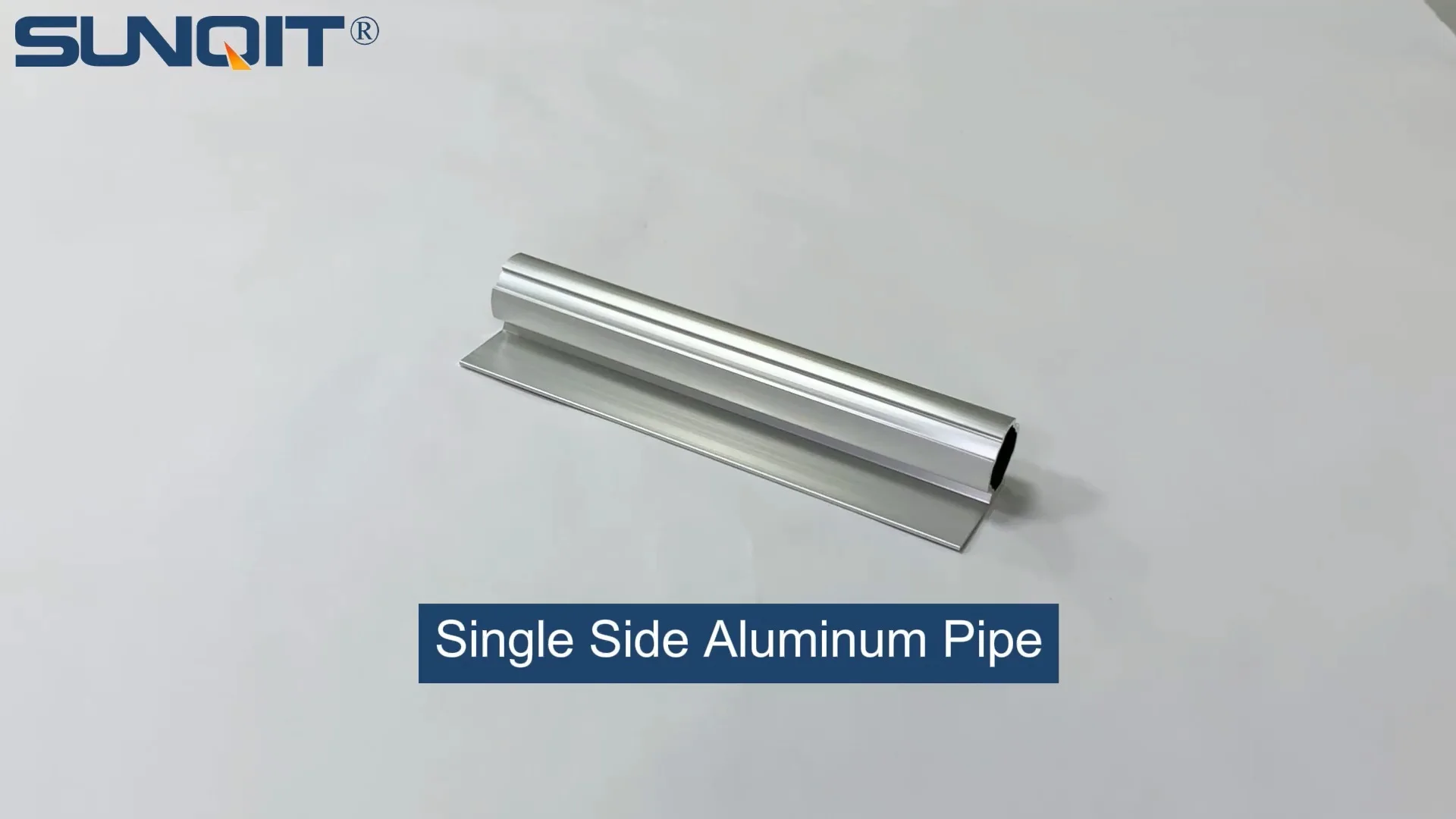
Single Side Aluminum Pipe
The single-sided plane can be installed with a back-mounted material box, and can also be used as a sidewall or partition.
In the fast-paced world of manufacturing, flexibility isn't just a buzzword—it's the backbone of staying competitive. Flexible production equipment, with its ability to adapt to changing workflows, product designs, and production demands, has become a cornerstone for modern factories, warehouses, and assembly lines. At the heart of this adaptability lies a humble yet crucial component: the single side aluminum pipe. These unassuming tubes are the building blocks of modular systems, from workbenches and material racks to conveyor tracks and turnover trolleys. But not all aluminum pipes are created equal, and understanding their sizes is key to unlocking their full potential in your production setup.
If you've ever walked through a well-organized factory floor, you've likely seen these pipes in action—lightweight yet sturdy, interconnected by sleek joints, and configured into structures that seem to evolve with the tasks at hand. What makes single side aluminum pipes so indispensable? Their modularity. Unlike rigid steel or fixed plastic, these pipes can be cut, connected, and reconfigured in endless ways, making them ideal for lean manufacturing systems where efficiency and adaptability are paramount. But to build effectively, you need to speak the language of sizes: diameters, wall thicknesses, lengths, and how each dimension impacts strength, load capacity, and compatibility with accessories.
In this article, we'll dive deep into the common sizes of single side aluminum pipes, exploring why each measurement matters, how they're used in real-world applications, and which factors to consider when choosing the right size for your project. Whether you're setting up a new assembly line, upgrading a workstation, or designing a custom material handling system, this guide will help you navigate the world of aluminum pipe sizes with confidence.
What Are Single Side Aluminum Pipes, Anyway?
Before we jump into sizes, let's clarify what "single side aluminum pipe" means. Unlike traditional round pipes that are uniform around their circumference, single side aluminum pipes (sometimes called "single-slot aluminum pipes" or "t-slot aluminum pipes") feature a longitudinal slot along one side. This slot is the secret to their modularity—it allows for easy attachment of accessories like brackets, connectors, shelves, and panels without drilling or welding. The slot acts as a built-in channel for bolts, nuts, and specialized fasteners, making assembly and reconfiguration a breeze.
These pipes are typically made from aluminum alloys, most commonly 6061 or 6063, known for their excellent balance of strength, corrosion resistance, and machinability. Aluminum's lightweight nature makes single side pipes easy to handle during installation, while their inherent strength ensures they can support the demands of industrial environments. From small workbenches in electronics manufacturing to heavy-duty material racks in automotive plants, single side aluminum pipes are designed to be both versatile and reliable.
Why Size Matters: The Basics of Pipe Dimensions
When it comes to single side aluminum pipes, three key dimensions dictate their performance: outer diameter , wall thickness , and length . Each plays a unique role in determining how the pipe will function in your system. Let's break them down:
Outer Diameter: The "Size" You See
The outer diameter (OD) is the most visible dimension, measured from one outer edge of the pipe to the opposite side. It determines the pipe's overall footprint and how it connects to other components. Common diameters range from 20mm to 50mm, though smaller and larger sizes exist for specialized applications. A larger diameter generally means a stiffer pipe with higher load-bearing capacity, but it also adds weight and takes up more space.
Wall Thickness: The Hidden Strength
Wall thickness refers to the distance between the outer and inner diameter of the pipe. It's a critical factor in determining the pipe's strength and rigidity. Thicker walls (e.g., 2.0mm) can support heavier loads and resist bending, while thinner walls (e.g., 1.0mm) are lighter and more flexible, ideal for applications where weight is a priority. Wall thickness is often measured in millimeters (mm) and is sometimes specified alongside the outer diameter (e.g., "25mm x 1.5mm" indicates a pipe with 25mm OD and 1.5mm wall thickness).
Length: From Standard to Custom
Single side aluminum pipes are available in standard lengths, typically 1 meter (m), 2m, 3m, or 6m. These lengths are convenient for most modular systems, as they can be easily cut to size using a hacksaw or pipe cutter. For larger projects or unique configurations, suppliers often offer custom cutting services, allowing you to get pipes in exact lengths to minimize waste and streamline assembly.

Common Sizes of Single Side Aluminum Pipes: A Detailed Breakdown
Now that we understand the basics, let's explore the most common sizes of single side aluminum pipes used in flexible production equipment. These sizes are industry standards, chosen for their balance of versatility, availability, and performance. We'll organize them by outer diameter, as this is the most intuitive starting point for selection.
1. 20mm Single Side Aluminum Pipes
The 20mm diameter is the smallest common size, often used for lightweight, precision applications. With a compact footprint, these pipes are ideal for systems where space is limited or where a delicate balance of strength and weight is needed. Let's look at typical specifications:
- Wall Thickness Options: 1.0mm, 1.2mm
- Standard Lengths: 1m, 2m, 3m
- Material Grade: 6063 (medium strength, excellent corrosion resistance)
Typical Applications: Small workbenches (like the "workbench e (single deck-without caster)" in many lean systems), electronic component racks, lightweight turnover trolleys, and prototype assemblies. They're also popular in the electronics and pharmaceutical industries, where cleanroom compatibility and non-magnetic properties (a benefit of aluminum) are important.
Why Choose 20mm? If you're building a system that needs to be moved frequently or requires intricate, small-scale components, 20mm pipes are a great fit. Their small size also makes them easy to transport and store, reducing logistics costs for large projects.
2. 25mm Single Side Aluminum Pipes
Moving up, 25mm pipes strike a balance between the compact 20mm and larger diameters. They're the workhorses of many lean manufacturing systems, offering increased strength without a significant jump in size or weight. Common specs include:
- Wall Thickness Options: 1.2mm, 1.5mm
- Standard Lengths: 2m, 3m, 6m
- Material Grade: 6063 or 6061 (6061 for higher strength)
Typical Applications: General-purpose workbenches, small to medium material racks (such as "material rack b (3 row and 3 floor)" in some setups), assembly line workstations, and light-duty conveyor systems. They're also widely used in automotive sub-assembly lines, where they support tools, parts bins, and small components.
Why Choose 25mm? Versatility is the name of the game here. 25mm pipes are compatible with a wide range of aluminum pipe accessories, from basic joints to specialized brackets, making them easy to integrate into existing systems. They're also cost-effective, as they offer more strength than 20mm pipes without the premium price tag of larger diameters.
3. 30mm Single Side Aluminum Pipes
The 30mm size is a step up in both diameter and load capacity, designed for medium-duty applications. These pipes are stiffer than 25mm options, making them suitable for systems that need to support heavier tools or materials. Key specs:
- Wall Thickness Options: 1.5mm, 2.0mm
- Standard Lengths: 3m, 6m
- Material Grade: 6061 (high strength, good machinability)
Typical Applications: Heavy-duty workbenches, multi-tier material racks (like "material rack b (3 row and 3 floor)" with added weight capacity), roller track systems (paired with components like "roller track placon mount for aluminum profile flat"), and automated guided vehicle (AGV) guide rails. They're also used in aerospace manufacturing, where precision and durability are critical.
Why Choose 30mm? If your system needs to support loads up to 50kg per linear meter (depending on wall thickness), 30mm pipes are a solid choice. The 2.0mm wall thickness option, in particular, offers excellent rigidity, reducing vibration in high-precision assembly applications.
4. 40mm Single Side Aluminum Pipes
At 40mm, we enter the realm of heavy-duty single side aluminum pipes. These are designed for robust systems that require maximum strength and stability, often in industrial settings with continuous use. Specifications include:
- Wall Thickness Options: 1.5mm, 2.0mm, 2.5mm
- Standard Lengths: 3m, 6m, custom lengths up to 12m
- Material Grade: 6061-T6 (heat-treated for maximum strength)
Typical Applications: Large workstations for heavy machinery, industrial shelving, conveyor supports (compatible with "roller track placon mount high" accessories), and load-bearing frames for automated production lines. They're also used in the construction of "turnover trolley and rack" systems for transporting heavy parts in automotive and machinery manufacturing.
Why Choose 40mm? When load capacity is non-negotiable—think 100kg+ per linear meter—40mm pipes deliver. The thicker wall options (2.0mm and 2.5mm) provide exceptional rigidity, making them suitable for static systems that need to withstand constant use without deformation. They're also compatible with heavy-duty accessories like "caster wheel" assemblies for mobile systems that need to move large loads.
5. Larger Sizes: 50mm and Beyond
While less common, single side aluminum pipes with diameters of 50mm or more are available for specialized applications. These are typically custom-ordered and used in extreme-load scenarios, such as large-scale material handling systems, industrial mezzanines, or structural supports for automated equipment. Specifications vary widely, but wall thicknesses often start at 2.0mm and go up to 3.0mm or more, with material grades like 6082 (high strength, excellent weldability) for maximum performance.
Typical Applications: Heavy-duty storage racks, assembly line gantries, and custom machine frames. Due to their size and weight, these pipes are usually integrated into fixed systems rather than mobile ones.

Wall Thickness: How It Affects Performance
We've touched on wall thickness briefly, but it's worth diving deeper—this dimension has a profound impact on a pipe's strength, weight, and cost. Let's take a closer look at how wall thickness varies across common sizes and what it means for your application.
1.0mm Wall Thickness
Found primarily in 20mm pipes, 1.0mm walls are the thinnest common option. They offer the lightest weight but the lowest load capacity. These pipes are best for non-load-bearing applications or systems where weight is the top priority, such as temporary displays or lightweight test fixtures.
1.2mm Wall Thickness
A step up from 1.0mm, 1.2mm walls are common in 20mm and 25mm pipes. They balance weight and strength, suitable for light to medium loads. For example, a 25mm x 1.2mm pipe can support around 20-30kg per linear meter, making it ideal for small workbenches or tool holders.
1.5mm Wall Thickness
The most versatile wall thickness, 1.5mm is used in 25mm, 30mm, and 40mm pipes. It offers a significant strength boost over 1.2mm without a drastic increase in weight. A 30mm x 1.5mm pipe, for instance, can handle 40-50kg per linear meter, making it suitable for most medium-duty applications.
2.0mm Wall Thickness
Reserved for heavy-duty use, 2.0mm walls are found in 30mm and 40mm pipes. These pipes are stiff and strong, capable of supporting 60-80kg per linear meter (or more, depending on diameter). They're ideal for load-bearing structures like material racks and conveyor supports, where durability under constant stress is key.
2.5mm+ Wall Thickness
Thicker than 2.0mm, these walls are rare outside of custom 40mm+ pipes. They're designed for extreme loads, such as industrial machinery frames or heavy storage systems. While strong, they add significant weight and cost, so they're only used when absolutely necessary.

Standard Lengths and Custom Cutting: Minimizing Waste, Maximizing Efficiency
Single side aluminum pipes come in standard lengths to suit most projects, but understanding these options can help you reduce waste and save money. Let's explore the most common lengths and when to opt for custom cutting.
1m and 2m Lengths
Short lengths like 1m and 2m are ideal for small projects or for components that need to be maneuvered in tight spaces. They're easy to transport and store, making them popular for workshops or facilities with limited storage capacity. For example, a 1m pipe might be used to build a small parts bin divider, while a 2m pipe could form the side rail of a lightweight trolley.
3m Lengths
The 3m length is a sweet spot for many medium-sized projects. It's long enough to span workbench widths or material rack heights without requiring multiple joints, yet short enough to handle with standard equipment. Many suppliers stock 3m pipes as their primary offering, as they balance versatility and usability.
6m Lengths
The longest standard length, 6m pipes are cost-effective for large projects. By purchasing longer pipes, you can cut them into multiple shorter lengths, reducing the number of joints needed and minimizing waste. For example, a 6m pipe can be cut into three 2m sections or six 1m sections, saving on material costs compared to buying pre-cut shorter lengths.
Custom Cutting
For projects with unique dimensions, custom cutting is a game-changer. Most aluminum pipe suppliers offer cutting services, allowing you to specify exact lengths (e.g., 1.23m, 4.5m). This is especially useful for large-scale installations where precision is critical, such as aligning roller tracks or building uniform workstations. Custom cutting eliminates the need to trim pipes on-site, saving time and reducing the risk of errors.
Compatible Accessories: Making the Most of Your Pipes
Single side aluminum pipes are only as versatile as the accessories they pair with. From joints to brackets, these components turn pipes into functional systems. Let's explore common accessories and how they align with different pipe sizes.
Joints and Connectors
Joints are the backbone of modular systems, allowing pipes to be connected at various angles. Common types include:
- 90° Aluminum Pipe Joints: For right-angle connections, essential for workbench frames or square racks.
- 45° Aluminum Pipe Joints: For diagonal supports or sloped surfaces, like inclined roller tracks.
- Internal Rotary Aluminum Joints: Allow for rotation between connected pipes, useful for adjustable workstations.
Joints are sized to match pipe diameters—e.g., a 25mm joint fits a 25mm pipe. Always ensure compatibility to avoid loose connections or structural weakness.
Workbench Components
For workbench builds, accessories like "workbench e (single deck-without caster)" tops, shelf brackets, and tool hooks are essential. These often attach via the pipe's slot using t-slot nuts and bolts, making installation quick and tool-free.
Roller Tracks and Guides
Roller tracks (used in flow racks or conveyors) rely on aluminum guide rails and roller assemblies. Components like "plastic roller track guide rail yellow" or "aluminum guide rail a" are designed to mount directly to single side pipes, creating smooth pathways for materials to slide or roll. The pipe size determines the track's load capacity—larger pipes can support heavier roller tracks with more rollers.
Casters and Mobility Accessories
For mobile systems like turnover trolleys, casters are a must. "Caster wheel" assemblies with mounting plates attach to pipe frames via bolts through the slot. Heavier-duty casters (e.g., those with larger wheels or brake mechanisms) pair best with 30mm or 40mm pipes, as the thicker walls provide a secure mounting point.
End Caps and Protectors
Small but important, end caps (like "plastic pipe end cap") cover the open ends of pipes, preventing dust accumulation and reducing the risk of injury from sharp edges. They're available in sizes matching all common pipe diameters and are often color-coded for easy identification.
Choosing the Right Size: Key Factors to Consider
With so many sizes and options, selecting the right single side aluminum pipe can feel overwhelming. To simplify the process, consider these key factors:
1. Load Capacity
Start by calculating the maximum load your system will need to support. This includes the weight of materials, tools, and any dynamic forces (e.g., items sliding on roller tracks). As a general rule, larger diameters and thicker walls equal higher load capacity. For example, a 40mm x 2.0mm pipe can support more than a 25mm x 1.2mm pipe.
2. Space Constraints
Measure the available space for your system. If you're working in a tight corner or narrow aisle, a 20mm or 25mm pipe may be necessary to keep the footprint small. Larger pipes require more clearance, so ensure there's enough room for assembly and operation.
3. Modularity and Future Expansion
Think about whether you'll need to expand or reconfigure your system later. If flexibility is key, choose a common size (like 25mm or 30mm) with wide accessory availability. This ensures you can easily source additional pipes and components down the line.
4. Budget
Larger diameters and thicker walls cost more. Balance performance needs with budget constraints—don't oversize pipes if a smaller option will suffice. For example, a lightweight parts bin doesn't need a 40mm pipe; a 20mm or 25mm pipe will work just fine and save money.
5. Environmental Factors
Consider the environment where the pipes will be used. In corrosive settings (e.g., chemical plants), opt for higher-grade aluminum (like 6061-T6) or coated pipes. In cleanrooms, ensure accessories are compatible with hygiene standards (e.g., smooth surfaces, no crevices for dust). For ESD-sensitive environments (like electronics manufacturing), look for ESD-rated accessories, though the pipes themselves are inherently non-conductive.
Comparison Table: Common Sizes at a Glance
| Outer Diameter (mm) | Wall Thickness (mm) | Standard Lengths (m) | Material Grade | Typical Load Capacity (kg/m) | Common Applications | Key Accessories |
|---|---|---|---|---|---|---|
| 20mm | 1.0, 1.2 | 1, 2, 3 | 6063 | 10-20 | Small workbenches, electronics racks, lightweight trolleys | Plastic end caps, mini brackets, small casters |
| 25mm | 1.2, 1.5 | 2, 3, 6 | 6063, 6061 | 20-40 | General workbenches, medium material racks, assembly stations | 90° joints, shelf brackets, roller track guides |
| 30mm | 1.5, 2.0 | 3, 6 | 6061 | 40-70 | Heavy workbenches, multi-tier racks, roller tracks | Internal rotary joints, heavy-duty brackets, aluminum guide rails |
| 40mm | 1.5, 2.0, 2.5 | 3, 6, custom | 6061-T6 | 70-100+ | Industrial shelving, conveyor supports, AGV rails | Large casters, structural brackets, high-load roller tracks |
Conclusion: Sizing Up for Success
Choosing the right size of single side aluminum pipe is a critical step in building effective, flexible production equipment. From the compact 20mm pipes for lightweight tasks to the heavy-duty 40mm pipes for industrial loads, each size has its niche. By considering factors like load capacity, space, budget, and accessories, you can select pipes that not only meet your current needs but also adapt to future changes.
Remember, the modular nature of these pipes means your system isn't set in stone. With the right accessories and a bit of creativity, you can reconfigure, expand, or repurpose your pipes as your production needs evolve. Whether you're a small workshop or a large manufacturing plant, single side aluminum pipes offer a cost-effective, versatile solution to streamline your operations.
As you embark on your next project, keep this guide handy, and don't hesitate to consult with your aluminum pipe supplier for personalized recommendations. With the right sizes and a clear vision, you'll be well on your way to building a production system that's efficient, durable, and ready to grow with your business.