- Company Articles
- Products and Technology
- Product knowledge
- Common Uses of 3030b EU Standard Aluminum Profile in Material Handling Racks

Common Uses of 3030b EU Standard Aluminum Profile in Material Handling Racks
Related Product
3030B EU Standard Aluminum Profile
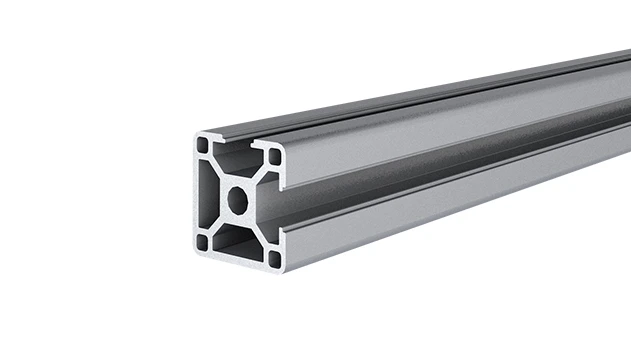
3030 is a 3.00 x 3.00CM fractional 30 series square extrusion T-slot profile with two side open T-slots, each side with 3.00cm face, 2 side with open slot, 2 side with closed face. The profile has align-a-grooves to assist in aligning connecting profiles.
In the bustling world of manufacturing, warehousing, and logistics, efficiency isn't just a buzzword—it's the backbone of daily operations. Every minute wasted searching for tools, every awkwardly placed shelf that slows down inventory checks, every flimsy structure that can't handle the weight of daily use adds up to lost productivity, frustrated teams, and missed deadlines. That's where the right material handling equipment comes in. Among the unsung heroes of this space is the 3030b EU Standard Aluminum Profile—a versatile, durable, and surprisingly adaptable building block that's transforming how businesses design and use material handling racks. Let's dive into what makes this profile so special and explore its most common applications in creating efficient, reliable storage and transport solutions.
What Is the 3030b EU Standard Aluminum Profile?
Before we jump into its uses, let's get to know the 3030b EU Standard Aluminum Profile up close. At first glance, it might look like just another metal bar, but its design is a masterclass in functional engineering. The "3030b" refers to its dimensions: 30mm in width and 30mm in height, with a specific cross-sectional design that adheres to EU manufacturing standards. Made from high-grade aluminum alloy, it's lightweight yet remarkably strong—think of it as the Goldilocks of profiles: not too flimsy for heavy loads, not too bulky to be unwieldy.
What really sets it apart, though, is its T-slot design. Running along its length are precision-machined grooves (or "slots") that allow for easy attachment of accessories—brackets, shelves, guides, and more—without the need for welding, drilling, or complex tools. This simple feature turns the 3030b from a static piece of metal into a dynamic, customizable component that can be reconfigured on the fly. Whether you're building a small parts rack in a workshop or a large-scale storage system in a warehouse, this profile adapts to your needs, not the other way around.
Key Features That Make 3030b Ideal for Material Handling
Why choose the 3030b over other materials like steel or wood? Let's break down its standout features:
- Lightweight Strength: Aluminum's natural strength-to-weight ratio means the 3030b can support heavy loads (often up to 150kg per linear meter, depending on the setup) without adding unnecessary bulk. This makes racks easier to assemble, reposition, and even transport if needed—no need for heavy machinery just to move a shelf.
- Corrosion Resistance: Unlike steel, aluminum doesn't rust. This is a game-changer for environments with moisture, humidity, or exposure to chemicals (think food processing facilities, automotive plants, or outdoor storage areas). It holds up over time, reducing the need for frequent replacements.
- T-Slot Versatility: The T-slots along the profile's length are compatible with a wide range of aluminum profile accessories—from brackets and clamps to guide rails and roller tracks. This means you can add shelves, dividers, or even conveyor components without modifying the profile itself. It's like building with Lego blocks for adults, but for industrial use.
- Precision Engineering: EU standards ensure consistent dimensions and quality across every piece. That means when you order a 3030b profile, you know it will fit perfectly with other EU-standard accessories and profiles, eliminating the guesswork and frustration of mismatched parts.
- Sustainability: Aluminum is 100% recyclable, making the 3030b a eco-friendly choice for businesses aiming to reduce their carbon footprint. Even at the end of its life, the profile can be melted down and repurposed, minimizing waste.

Common Uses in Material Handling Racks
Now that we understand what makes the 3030b tick, let's explore how it's actually used in material handling racks. From adjustable shelving to flow racks and beyond, its flexibility shines in these real-world applications.
1. Adjustable Shelving Racks: Adapting to Changing Needs
One of the biggest challenges in warehousing is dealing with products of varying sizes. A rack that works for small electronic components might be useless for bulky machinery parts, and vice versa. This is where adjustable shelving racks built with 3030b profiles excel. Using aluminum guide rail A—an accessory designed to slide into the T-slots—you can easily adjust shelf heights in minutes. No more disassembling the entire rack or drilling new holes; just loosen the bolts, slide the rails to the desired height, and tighten them back up. It's a level of flexibility that wooden or fixed steel racks can't match.
A perfect example is the Material Rack B (3 row and 3 floor), a popular configuration among lean system suppliers. Built with 3030b frames and adjustable shelves, it's designed to hold everything from small parts bins to larger boxes, with each shelf supporting up to 80kg. Whether you're storing inventory in a warehouse or organizing tools in a workshop, this rack grows and changes with your needs, ensuring you never waste vertical space.
2. Flow Racks: Streamlining Just-In-Time Inventory
In fast-paced environments like assembly lines or distribution centers, "first in, first out" (FIFO) inventory management is critical. Flow racks—tilted racks with roller tracks that let products slide forward as items are removed—are the go-to solution for this. And the 3030b profile is the ideal frame for building these systems.
To create a flow rack, the 3030b profile forms the side frames, while roller tracks are attached using roller track placon mount for aluminum profile flat—small brackets that secure the track to the profile's T-slots. The result? A smooth, gravity-fed system where products glide to the picking end, reducing the need for manual lifting and speeding up order fulfillment. For example, in a automotive parts warehouse, a 3030b-based flow rack might hold brake pads or filters, ensuring that the oldest stock is used first, minimizing waste and keeping production lines running without delays.
3. Workbench Integration: Merging Storage and Productivity
Material handling isn't just about storage—it's also about creating efficient workspaces where employees can access tools and materials quickly. Workbenches built with 3030b profiles bridge the gap between storage and productivity. The profile forms the bench's frame, with shelves, tool holders, and even small flow racks attached directly to the sides or back using aluminum profile accessories.
Imagine a workbench in an electronics manufacturing plant: the 3030b frame supports a sturdy tabletop, while T-slots along the back hold tool hooks and small parts bins. Below the table, adjustable shelves (again, using aluminum guide rail A) store larger components, and a mini flow rack on the side keeps PCBs sliding forward as they're needed. It's a one-stop station that reduces the time workers spend walking to and from storage areas, letting them focus on assembling products instead of searching for supplies.
4. Turnover Trolley Frames: Mobile Storage That Keeps Up
Not all material handling stays in one place. Turnover trolleys—mobile carts used to transport materials between departments—are essential for keeping workflows moving. The 3030b profile is a favorite for building these trolleys because it's lightweight enough to push manually but strong enough to carry heavy loads.
Trolley frames made with 3030b can be customized with shelves, dividers, or even fold-down sides, all attached via T-slots and aluminum profile accessories. Add casters (another accessory that fits seamlessly into the profile's slots), and you've got a mobile storage unit that can navigate tight aisles or move materials from the warehouse to the assembly line with ease. For instance, in a furniture factory, a 3030b trolley might carry wood panels from the cutting area to the painting station, with dividers preventing scratches and adjustable shelves keeping tools organized.
5. Custom Racks for Specialized Needs
Every business has unique challenges, and off-the-shelf racks don't always cut it. This is where the 3030b profile truly shines: its modular design allows lean system suppliers to create fully custom racks tailored to specific products, spaces, or workflows.
Take a pharmaceutical warehouse, for example, where temperature control and easy access to sensitive products are priorities. A lean system supplier might design a 3030b-based rack with enclosed shelves (using aluminum panels attached to the profile) and integrated lighting (wires hidden in the T-slots) to illuminate products. Or consider a bakery that needs racks for cooling trays—3030b frames with adjustable, slotted shelves can be spaced to allow air circulation, preventing condensation and keeping baked goods fresh. The possibilities are nearly endless, limited only by the imagination (and the laws of physics, of course).
How 3030b Compares to Other Profiles: A Quick Reference
| Profile Type | Dimensions (W x H) | Max Load Capacity (kg/m) | Ideal Applications | Key Accessories |
|---|---|---|---|---|
| 3030b EU Standard | 30mm x 30mm | 120-150 | Adjustable shelving, flow racks, workbenches, trolleys | Aluminum guide rail A, roller track placon mount, end caps |
| 2020 EU Standard | 20mm x 20mm | 60-80 | Small parts storage, lightweight tool racks | Mini brackets, plastic end caps |
| 4040 EU Standard | 40mm x 40mm | 200-250 | Heavy-duty storage, industrial machinery frames | Reinforced brackets, steel roller tracks |
As the table shows, the 3030b strikes a balance between strength and versatility, making it the most popular choice for general material handling needs. It's not the lightest (that's the 2020) or the strongest (that's the 4040), but it's the one that adapts to the widest range of tasks—hence its popularity among lean system suppliers and businesses alike.
Real-World Impact: A Case Study
Let's put this all into perspective with a real example. Meet Precision Parts Co., a mid-sized manufacturer of aerospace components. A few years ago, their warehouse was a maze of fixed steel racks and wooden shelves. When they introduced a new line of larger components, they realized their existing storage couldn't keep up—shelves were either too short, too weak, or impossible to adjust without hiring a welder. Inventory checks took hours, and misplaced parts often delayed production.
They turned to a lean system supplier specializing in aluminum profiles, who recommended a complete overhaul using 3030b EU Standard Aluminum Profiles. The result? A set of adjustable shelving racks (including several Material Rack B configurations), flow racks for FIFO inventory, and mobile trolleys for transporting parts to the assembly line. Using aluminum guide rail A, they adjusted shelf heights in minutes as new components arrived, and roller track placon mount for aluminum profile flat made the flow racks a breeze to assemble.
Within six months, Precision Parts Co. reported a 30% reduction in time spent on inventory management, a 25% drop in product damage (thanks to the racks' smooth, corrosion-resistant surfaces), and happier employees who no longer had to strain to reach or move heavy items. "It's like night and day," said their warehouse manager. "We used to dread reorganizing the racks; now we do it in an afternoon whenever we need to. The 3030b profiles made it possible."
Why Invest in 3030b-Based Material Handling Racks?
At this point, you might be wondering: Is the 3030b EU Standard Aluminum Profile worth the investment? For most businesses, the answer is a resounding yes. Here's why:
- Long-Term Cost Savings: While aluminum profiles have a higher upfront cost than wood or basic steel, their durability and reusability mean they pay for themselves over time. You won't need to replace warped wooden shelves or rusted steel racks every few years—3030b profiles last decades with minimal maintenance.
- Scalability: As your business grows, so can your racks. Add new sections, adjust existing ones, or repurpose old racks for new tasks—no need to start from scratch.
- Employee Productivity: Time is money, and anything that reduces the time spent on manual tasks (like searching for parts or adjusting shelves) directly boosts your bottom line. Happier, more efficient employees are also more likely to stay, reducing turnover costs.
- Safety: The 3030b's smooth edges and stable design reduce the risk of cuts, trips, and falls—critical in environments where workplace safety is a top priority.
Conclusion: The 3030b Profile—A Foundation for Efficiency
In the world of material handling, the right tools don't just make work easier—they transform how businesses operate. The 3030b EU Standard Aluminum Profile is more than just a building material; it's a foundation for efficiency, adaptability, and growth. Whether you're building adjustable shelving, flow racks, workbenches, or custom solutions, its lightweight strength, T-slot versatility, and compatibility with aluminum profile accessories make it the go-to choice for lean system suppliers and forward-thinking businesses.
So, the next time you walk through your warehouse or workshop, take a look at your racks. Are they holding you back, or helping you thrive? If it's the former, maybe it's time to consider the 3030b difference. After all, in a world where every second counts, why settle for anything less than a material handling solution that works as hard as you do?