- Company Articles
- Products and Technology
- Product knowledge
- Communication Equipment Assembly: Five Way Straight Lean Pipe Joint Benefits

Communication Equipment Assembly: Five Way Straight Lean Pipe Joint Benefits
Related Product
Five Way Straight Lean Pipe Joint
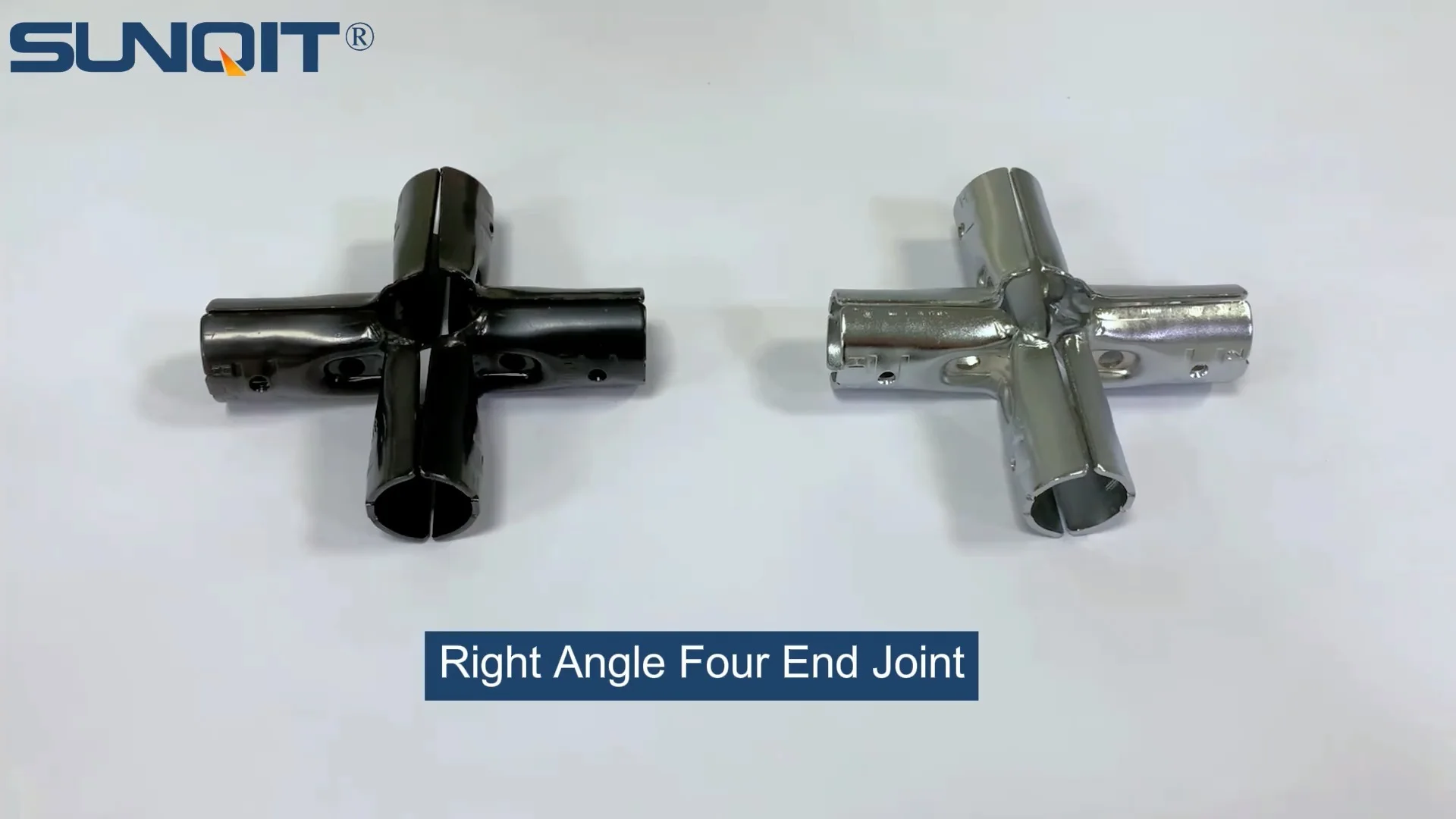
Five way straight lean pipe joint, for 5 pcs 28mm lean pipe connect in straight angle,which used widely in workbench, flow rack, hand trolley frame connection.
Introduction: The Demands of Modern Communication Equipment Assembly
In the fast-paced world of communication technology, where routers, switches, fiber optic transceivers, and 5G base stations evolve at breakneck speed, the assembly process is the unsung hero that bridges innovation and real-world application. Every component—from tiny circuit boards to bulky chassis—must come together with precision, consistency, and efficiency. But here's the challenge: as new technologies emerge, assembly lines can't stay static. A production floor that assembles a 4G router today might need to retool for a smaller, more complex 5G device next month. This constant need for adaptability, paired with the pressure to reduce waste and cut costs, has made lean manufacturing principles not just a buzzword, but a lifeline for communication equipment manufacturers.
At the heart of lean manufacturing lies the idea of creating value while minimizing waste—whether that's wasted time, materials, or space. And when it comes to building flexible, efficient assembly systems, few tools are as critical as lean pipes and their connectors. Among these connectors, the five way straight lean pipe joint stands out as a quiet workhorse, enabling manufacturers to build, reconfigure, and scale assembly setups with ease. In this article, we'll explore how this unassuming component plays a pivotal role in communication equipment assembly, driving efficiency, flexibility, and productivity in ways that traditional fixed structures simply can't match.
The Role of Lean Systems in Communication Assembly
Before diving into the specifics of the five way straight lean pipe joint, let's take a step back to understand the broader context: lean systems. A lean system isn't just about cutting costs—it's about designing workflows that adapt to change, reduce unnecessary movement, and keep workers focused on value-adding tasks. In communication equipment assembly, where product lifecycles are short and customization is often required, a rigid, one-size-fits-all production line is a recipe for inefficiency.
Enter lean pipe solutions: modular systems built from lightweight, durable pipes (often steel, aluminum, or stainless steel) and connectors that allow for quick assembly and reconfiguration. These systems form the backbone of everything from workbenches to material racks, flow racks, and even conveyor lines. Unlike traditional welded metal structures, lean pipe setups can be disassembled, modified, and reassembled in hours, not days—making them ideal for keeping up with the communication industry's rapid pace.
Key components of a lean system in this context include lean pipe workbenches (where assembly happens), flow racks (for organizing and transporting components), and various connectors that hold the system together. And among these connectors, the five way straight lean pipe joint is a game-changer. It's not just a piece that joins pipes—it's a component that unlocks new levels of flexibility in how these systems are designed and used.

Understanding the Five Way Straight Lean Pipe Joint
At first glance, the five way straight lean pipe joint might seem like a simple piece of hardware. But its design is deceptively clever. As the name suggests, this joint features five connection points: four in a straight line (two on each end) and one perpendicular to the center, allowing it to link multiple pipes in different directions. Think of it as a "hub" that can anchor horizontal, vertical, and diagonal pipes, creating sturdy, multi-dimensional structures.
Most five way joints are made from high-strength materials like die-cast aluminum or chrome-plated steel, ensuring they can handle the weight of components like circuit boards, wiring harnesses, and even small subassemblies. They're typically designed to work with standard lean pipe diameters (often 28mm or 30mm) and require minimal tools to install—usually just a hex key or wrench to tighten set screws, which grip the pipes securely without damaging them.
What makes this joint unique is its versatility. Unlike a three-way or four-way joint, which limits connections to a few directions, the five way joint opens up possibilities for more complex, space-efficient structures. For example, on a lean pipe workbench, a five way joint might anchor the main frame while also supporting a side shelf for tools, a vertical post for hanging cables, and a horizontal bar for a light fixture—all in one compact connection point.

Key Benefits of the Five Way Straight Lean Pipe Joint in Communication Equipment Assembly
Now, let's get to the heart of the matter: why does this joint matter for communication equipment assembly? Let's break down its benefits, from flexibility to safety, and how each contributes to a more efficient production floor.
1. Unmatched Flexibility for Custom Configurations
Communication equipment comes in all shapes and sizes. A small Wi-Fi router has very different assembly needs than a large fiber optic distribution panel. With a five way straight lean pipe joint, manufacturers can tailor their workspaces to each product without investing in new infrastructure. For example:
- Modular Workbenches: A lean pipe workbench using five way joints can easily be extended with side wings for additional workspace when assembling larger devices, or shortened when switching to smaller products. The perpendicular connection point is perfect for adding tool holders, component bins, or even ESD (electrostatic discharge) mats to protect sensitive electronics.
- Adaptable Material Racks: Flow racks, which use gravity to feed components to assembly stations, often need to be adjusted for different box sizes or component weights. Five way joints allow for quick repositioning of shelf heights or the addition of dividers, ensuring parts like connectors, PCBs, and antennas are always within arm's reach.
- Mobile Setups: When paired with casters, lean pipe structures become mobile workstations. Five way joints ensure these mobile units remain stable even when loaded with tools and components, making it easy to move assembly lines closer to material storage or reconfigure the production floor layout for a new project.
In short, the five way joint turns "one-time use" structures into "endless reuse" assets—critical for an industry where change is constant.
2. Enhanced Structural Stability for Heavy or Delicate Components
Communication equipment assembly involves a mix of heavy chassis and delicate, sensitive parts (like microchips or fiber optic cables). A wobbly workbench or unstable material rack isn't just inefficient—it's a safety risk and a quality risk. The five way straight lean pipe joint addresses this by distributing weight evenly across multiple connection points.
Traditional three-way joints, for example, create a "T" shape that can wobble under uneven weight. The five way joint, with its central perpendicular connection, acts as a stabilizer, reducing flex and vibration. This is especially important when working with precision tools or when moving partially assembled products along a flow rack. A stable base means fewer errors, less product damage, and a more reliable workflow.
For instance, a material rack B (3 row and 3 floor) loaded with heavy metal chassis can benefit from five way joints at key intersections, ensuring the structure doesn't sag over time. Similarly, a lean pipe workbench with a five way joint-supported shelf can safely hold a soldering station, a microscope, and a bin of components without shaking during use.
3. Streamlined Workflow Integration
In lean manufacturing, "flow" is everything. Components should move smoothly from storage to assembly to testing with minimal manual handling. The five way straight lean pipe joint excels at connecting different parts of the workflow into a cohesive system. Here's how:
- Bridging Workstations and Flow Racks: A five way joint can connect a lean pipe workbench to an adjacent flow rack, creating a continuous "pick-and-assemble" line. This eliminates the need for workers to walk to a separate rack for parts, cutting down on wasted time.
- Integrating Conveyors: Roller tracks, which move products between stations, often need to be mounted to workbenches or racks. Five way joints provide a secure mounting point for roller track connectors, ensuring the conveyor aligns perfectly with the assembly surface and doesn't shift during operation.
- Organizing Tools and Cables: Communication assembly involves a lot of cables—power cords, data lines, soldering irons. Five way joints can support overhead tool hangers or cable management hooks, keeping the workspace clutter-free and reducing the risk of tripping or tangling.
By integrating these elements into a single, stable system, the five way joint reduces "motion waste"—one of the biggest efficiency killers in manufacturing.
4. Cost-Effective Scalability for Growing Operations
Communication equipment manufacturers often face boom-and-bust cycles—spikes in demand for new 5G hardware, for example, followed by lulls as the market stabilizes. Investing in permanent, fixed infrastructure during a boom can lead to wasted space and money during a lull. Lean systems with five way joints solve this by allowing for scalable growth.
Instead of buying a new workbench for every 10 employees, manufacturers can add sections to existing lean pipe setups using five way joints. When demand drops, those sections can be disassembled and stored, freeing up floor space. This "pay-as-you-grow" model keeps capital expenses in check and ensures resources are only used when needed.
Additionally, the durability of five way joints (many are rated for 10,000+ assembly/disassembly cycles) means they rarely need replacement, further reducing long-term costs. Compared to welded steel structures, which often end up in scrap yards when reconfiguration is needed, lean pipe systems with five way joints retain their value for years.
5. Improved Safety and Ergonomics for Workers
At the end of the day, a production line is only as good as the workers operating it. Repetitive strain injuries, fatigue, and accidents can slow down assembly and hurt morale. The five way straight lean pipe joint contributes to a safer, more ergonomic workspace in several ways:
- Adjustable Heights: Five way joints make it easy to raise or lower workbenches, shelves, and flow racks to match the height of individual workers, reducing bending, reaching, and stooping.
- Stable Platforms: Wobbly structures force workers to compensate by tensing muscles or over-gripping tools, leading to fatigue. The stability of five way joint-connected systems lets workers focus on precision, not balance.
- Clutter Reduction: By providing multiple connection points for organizing tools and materials, five way joints help keep workspaces clean—reducing trip hazards and making it easier to spot potential safety issues (like loose wires or spilled lubricants).
In an industry where precision is critical, a comfortable, safe worker is a more productive, accurate worker. The five way joint might seem like a small detail, but it adds up to big improvements in workplace satisfaction and retention.

How Does It Compare? Traditional Joints vs. Five Way Straight Lean Pipe Joints
To put the benefits of the five way joint into perspective, let's compare it to two common alternatives: three-way fixed joints and four-way cross joints. The table below highlights key differences in flexibility, stability, and workflow integration—critical factors for communication equipment assembly.
| Feature | Three-Way Fixed Joint | Four-Way Cross Joint | Five Way Straight Lean Pipe Joint |
|---|---|---|---|
| Connection Points | 3 (T-shape) | 4 (cross shape) | 5 (4 straight + 1 perpendicular) |
| Flexibility | Low—limited to T-shape configurations | Moderate—good for 2D grids, but limited vertical/horizontal mixing | High—supports 3D structures with multiple directions |
| Stability Under Weight | Moderate—prone to wobble in T-shape | Good—cross shape distributes weight, but limited vertical support | Excellent—five points anchor structure in multiple directions |
| Workflow Integration | Basic—only connects two pipes at a right angle | Better—can connect pipes in four directions, but no central hub | Superior—central hub connects workbench, racks, tools, and conveyors |
| Ideal Use Case | Simple, fixed shelves or single-direction racks | Basic grids for lightweight component storage | Complex assembly workbenches, mobile stations, heavy-duty flow racks |
As the table shows, while three-way and four-way joints have their place, the five way straight lean pipe joint offers the best balance of flexibility, stability, and integration—making it the go-to choice for communication equipment assembly, where no two days (or products) are the same.
Real-World Applications: A Case Study
Case Study: Telecom Equipment Manufacturer Reduces Setup Time by 65% with Five Way Joints
To illustrate the impact of the five way straight lean pipe joint, let's look at a real example: a mid-sized telecom equipment manufacturer specializing in 5G small cells and indoor routers. Prior to adopting lean systems, the company relied on fixed steel workbenches and welded material racks. When a new router model with a smaller footprint was introduced, the production team spent three days reconfiguring the line—dismantling old racks, welding new ones, and adjusting workbench heights.
Seeking a better solution, the manufacturer invested in a lean system built around lean pipe workbenches, flow racks, and five way straight lean pipe joints. The results were striking:
- Setup Time: Reconfiguring the line for the new router model dropped from 3 days to just 4 hours. Workers used five way joints to shorten workbenches, adjust flow rack shelf heights, and add side wings for tool storage—all without welding or special tools.
- Space Savings: By using vertical space (via the five way joint's perpendicular connection point), the manufacturer reduced floor space usage by 30%, freeing up room for a new testing station.
- Worker Satisfaction: Ergonomic adjustments (like raising workbench heights) reduced reported back pain by 40%, and the ability to customize workspaces led to a 15% increase in productivity, as workers spent less time searching for tools and more time assembling.
The manufacturer now uses five way joints across all its assembly lines, and reports that the initial investment in lean pipe systems paid for itself within 6 months through reduced setup time and improved efficiency.
Conclusion: Small Component, Big Impact
In the world of communication equipment assembly, where precision, speed, and adaptability are everything, it's often the smallest components that make the biggest difference. The five way straight lean pipe joint is a perfect example. It's not flashy or high-tech, but it enables the flexible, efficient lean systems that keep production lines moving, workers safe, and manufacturers competitive in a fast-changing industry.
Whether it's creating a custom lean pipe workbench for a new router model, building a stable flow rack for delicate fiber optic components, or scaling up production to meet 5G demand, the five way joint delivers unmatched flexibility, stability, and cost-effectiveness. It's a reminder that in manufacturing, innovation isn't just about the products we build—it's about the systems we build them with.
For communication equipment manufacturers looking to stay ahead, the message is clear: invest in lean systems, and don't overlook the power of a well-designed connector. The five way straight lean pipe joint might just be the key to unlocking your production floor's full potential.