- Company Articles
- Products and Technology
- Application Cases
- Communication Equipment Assembly: Lean Pipe Clamp B Chrome Application Examples

Communication Equipment Assembly: Lean Pipe Clamp B Chrome Application Examples
Related Product
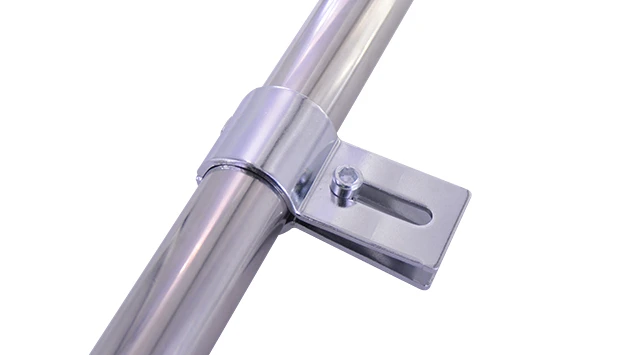
Lean Pipe Clamp B Chrome
Lean pipe clamp is used for turnover trolley, workbench, flowrack adjust the frame or fix some accessory.
The Heartbeat of Modern Communication: Why Assembly Matters
In a world where 5G networks hum in the background and smart devices connect every corner of our lives, the unsung heroes of connectivity are the communication equipment assembly lines. From routers that beam Wi-Fi through our homes to fiber-optic switches that power data centers, these devices demand precision—each component, from microchips to circuit boards, must align perfectly to ensure seamless performance. But here's the catch: the assembly process itself is often a maze of challenges. Small parts get misplaced, workstations feel rigid when production needs shift, and static electricity (a silent killer of sensitive electronics) lurks around every corner. For manufacturers, the goal isn't just to build devices—it's to build them efficiently, adaptably, and without costly errors.
This is where lean manufacturing steps in. Rooted in the idea of eliminating waste and prioritizing value, lean principles have transformed assembly lines across industries. And at the heart of many lean setups? Lean pipe systems. These modular, customizable structures—made from coated steel, aluminum, or stainless steel pipes and a variety of joints and clamps—offer a flexibility that traditional welded steel or wooden workbenches simply can't match. Today, we're zeroing in on a component that might seem small but plays a huge role: the Lean Pipe Clamp B Chrome. This unassuming clamp is a workhorse in communication equipment assembly, quietly enhancing everything from workbench stability to ESD (Electrostatic Discharge) protection. Let's dive into how it works, why it matters, and real-world examples of it in action.
Lean Pipe Systems: More Than Just Pipes and Joints
Before we zoom in on the Lean Pipe Clamp B Chrome, let's take a step back to understand lean pipe systems. Imagine a toolkit where you can build, break down, and rebuild workspaces in hours instead of days. That's the promise of lean pipes. Unlike fixed structures, these systems use lightweight pipes (often 28mm in diameter) and a range of connectors, clamps, and accessories to create everything from workbenches and flow racks to material trolleys and ESD workstations. What makes them "lean"? They're designed to reduce waste—waste of time (no waiting for custom fabrication), waste of space (modular setups fit tight areas), and waste of resources (components are reusable when lines reconfigure).
For communication equipment assembly, this flexibility is game-changing. Consider a manufacturer that produces both home routers and industrial modems. One week, the line might need deep workbenches to hold large circuit boards; the next, shallow shelves for small antenna components. With lean pipes, workers can adjust shelf heights, add tool hooks, or reposition bins in minutes. But none of this works without reliable components—and that's where clamps like the Lean Pipe Clamp B Chrome come into play. These clamps are the glue (literally) that holds the system together, ensuring stability even as setups change.
Lean Pipe Clamp B Chrome: Small Component, Big Impact
At first glance, the Lean Pipe Clamp B Chrome might look like just another metal bracket. But take a closer look, and you'll see why it's a favorite among assembly line managers. Let's break down its design: the clamp features a two-piece chromed steel body with a rubberized inner lining. The rubber isn't just for grip—it also acts as a buffer, preventing scratches on the lean pipe and ensuring a snug fit that won't loosen over time, even with daily adjustments. The chrome plating is more than aesthetic; it adds corrosion resistance, a must in environments where humidity or cleaning agents might otherwise degrade metal parts. For communication equipment assembly lines, where spills of cleaning solvents or occasional moisture (from air conditioning) are common, this durability is non-negotiable.
But what really sets the Lean Pipe Clamp B Chrome apart is its versatility. Unlike fixed joints that lock pipes at a single angle, this clamp allows for 360-degree rotation before tightening. Need to angle a shelf at 45 degrees to make component access easier? Loosen the clamp, rotate, retighten. Want to add a crossbar for hanging cable organizers? The clamp's open design lets you slide it along the pipe to the perfect position. This adjustability means technicians aren't stuck working around the workstation—instead, the workstation adapts to them.
Let's talk about strength, too. A typical Lean Pipe Clamp B Chrome can support up to 50kg of weight when paired with a standard 28mm lean pipe. That's enough to hold bins of heavy circuit boards or even small power tools. And because the clamp distributes weight evenly around the pipe, there's less risk of bending or warping, even with long-term use. For manufacturers, this translates to fewer replacements and less downtime—both critical for meeting tight production deadlines.
Application 1: Lean Pipe Workbench for Circuit Board Assembly
Circuit boards are the brains of communication devices, and assembling them requires a workspace that balances precision and accessibility. Enter the lean pipe workbench—often the first setup manufacturers build with Lean Pipe Clamp B Chrome. Let's walk through a real-world example: a mid-sized manufacturer in Texas that builds IoT gateways. Their old workbenches were wooden, with fixed shelves that left little room for customization. Technicians had to reach across cluttered surfaces to grab tools, and static buildup from the wood occasionally damaged sensitive chips. The solution? A lean pipe workbench using Lean Pipe Clamp B Chrome.
Here's how they built it: they started with a frame of 28mm PE-coated lean pipes (ESD-safe, of course) and connected them using 90-degree joints. Then, they used Lean Pipe Clamp B Chrome to attach aluminum shelves at three heights: the top shelf for bins of resistors and capacitors (easy to grab), the middle for the circuit board itself (at elbow height to reduce strain), and the bottom for tool drawers. The clamps made it easy to adjust the middle shelf—some technicians preferred it 5cm higher for better visibility, others lower to rest their forearms. They even added a LED light bar above the work area, clamped to the frame with the same Lean Pipe Clamp B Chrome. No drilling, no welding—just hand-tightened clamps.
The results? Static-related defects dropped by 35% (thanks to the ESD pipe and grounded clamps), and technicians reported a 20% faster component retrieval time. "Before, I'd spend 10 minutes a day just moving things around to reach my soldering iron," said Maria, a lead technician. "Now, I can slide the tool holder closer with one hand. It sounds small, but over a shift, that adds up."
Application 2: Flow Racks for Just-In-Time Component Delivery
In lean manufacturing, "just-in-time" (JIT) delivery means components arrive exactly when they're needed—not before, not after. For communication equipment assembly, this often involves flow racks: sloped shelves where bins of parts slide forward as the front bin is emptied. But traditional flow racks are rigid; if a component's bin size changes, the whole rack might need replacing. With lean pipe flow racks and Lean Pipe Clamp B Chrome, that's no longer a problem.
Take a manufacturer of satellite receivers. Their flow rack needed to hold everything from small screws (in tiny bins) to coaxial cables (in long, narrow boxes). Using Lean Pipe Clamp B Chrome, they built a rack with adjustable dividers. The clamps attached to vertical lean pipes, and horizontal aluminum rails (slotted for easy positioning) slid into the clamps. By moving the clamps up or down the vertical pipes, they could adjust shelf height; sliding the rails along the clamps changed the width between dividers. When a new cable bin (10cm wider than the old one) arrived, the team simply loosened the clamps, shifted the rails, and retightened—done in 5 minutes.
The cherry on top? They added roller tracks (another lean pipe accessory) to the shelves, using the clamps to secure the tracks in place. Now, bins glide forward smoothly, reducing the force needed to pull them out. "I used to strain my wrist pulling heavy bins," said Raj, a material handler. "Now, they practically roll into my hand. The clamps keep the tracks from sliding, so everything stays aligned."
Application 3: ESD Workstations for Sensitive Microchip Handling
Microchips—the "brains" of communication devices—are incredibly sensitive to static electricity. A single static discharge (as small as 3000 volts, which a human might not even feel) can fry a chip, rendering it useless. That's why ESD workstations are mandatory in these assembly lines. But traditional ESD workstations are often bulky and expensive, with fixed grounding points that make reconfiguration a headache. Enter lean pipe ESD workstations, powered by Lean Pipe Clamp B Chrome.
A case in point: a manufacturer of 5G base station components needed ESD workstations that could accommodate both manual assembly (where technicians handle chips by hand) and automated pick-and-place machines (which require clear space around the workstation). Using Lean Pipe Clamp B Chrome, they built a hybrid setup: the main frame was ESD-safe lean pipe, with a conductive tabletop clamped to the frame using the Clamp B Chrome. The clamps, being metal, were grounded via a wire connected to the building's ESD system, ensuring any static buildup was safely dissipated.
But the real innovation was the adjustable grounding arm. Attached to the frame with—you guessed it—Lean Pipe Clamp B Chrome, the arm could swing over the workstation, holding an ESD wrist strap connector. Technicians could position it on the left or right side, depending on their dominant hand. When the automated machine arrived, they simply unclamped the arm, moved it to the back of the workstation, and reconnected the ground wire. No drilling new holes, no calling an electrician. "We used to have to shut down the line for 2 hours to reposition grounding points," said the plant manager. "Now, it's a 10-minute job. The Clamp B Chrome made all the difference."
Traditional vs. Lean Pipe Clamp B Chrome Setups: A Comparison
| Aspect | Traditional Welded Steel Workstations | Lean Pipe Workstations with Lean Pipe Clamp B Chrome |
|---|---|---|
| Setup Time | 4–6 hours (requires welding/ drilling) | 30–60 minutes (hand-tightened clamps) |
| Reconfiguration Flexibility | Low (requires cutting/ rewelding) | High (adjust clamps in minutes) |
| ESD Protection | Limited (requires additional grounding kits) | Built-in (compatible with ESD pipes and grounded clamps) |
| Durability | High (but permanent; damage is hard to repair) | High (chrome clamps resist corrosion; parts replaceable) |
| Cost Over Time | High (custom fabrication for each change) | Low (reusable components; no fabrication fees) |
Beyond the Basics: Pairing Clamp B Chrome with Other Lean Components
The Lean Pipe Clamp B Chrome rarely works alone. To maximize its potential, manufacturers often pair it with other lean accessories, creating setups that feel almost tailor-made for communication equipment assembly. Let's explore a few key pairings:
Aluminum Profiles: For heavier loads, like server chassis or large antenna arrays, lean pipes can be reinforced with aluminum profiles. The Clamp B Chrome's open design lets it grip both the pipe and the profile's T-slot, creating a hybrid structure that's lightweight but strong. A manufacturer in California used this combo to build a workbench that holds 100kg server components—no sagging, even after months of use.
Casters: Mobile workstations are a lean staple, and the Clamp B Chrome makes attaching casters a breeze. By clamping a caster mount to the bottom of the lean pipe frame, technicians can roll the workstation to different parts of the line as needed. One 5G router manufacturer uses these mobile setups to move partially assembled devices from soldering stations to testing areas, cutting down on walking time by 40%.
Roller Tracks: As we saw with flow racks, roller tracks turn static shelves into dynamic material delivery systems. The Clamp B Chrome secures the tracks to the lean pipe frame, ensuring they stay aligned even as bins slide over them. A telecom supplier in Florida reported a 25% faster material flow after adding roller tracks clamped with Clamp B Chrome to their assembly line.
The Bottom Line: Why Lean Pipe Clamp B Chrome Matters for Your Assembly Line
At the end of the day, communication equipment assembly is about more than building devices—it's about building trust. Every router that fails due to a misaligned component, every delay caused by a rigid workstation, erodes that trust. Lean Pipe Clamp B Chrome might seem like a small part of the solution, but small parts add up. By enabling faster reconfigurations, reducing static damage, and lowering long-term costs, this clamp helps manufacturers deliver devices that work, on time, every time.
For technicians on the line, the impact is personal. It's the difference between struggling with a workstation that fights them and one that adapts to their needs. It's the satisfaction of knowing their tools are always within reach, their workspace is safe, and their time is spent building, not adjusting. And for manufacturers, it's the difference between keeping up with the pace of innovation and falling behind.
So the next time you connect to Wi-Fi or make a video call, take a moment to appreciate the assembly lines that made it possible. Chances are, somewhere in that line, a Lean Pipe Clamp B Chrome is hard at work—quietly, reliably, and flexibly—keeping the world connected.