- Company Articles
- Products and Technology
- Product knowledge
- Communication Equipment Assembly: Lean Pipe Clamp Chrome Usage Scenarios

Communication Equipment Assembly: Lean Pipe Clamp Chrome Usage Scenarios
Related Product
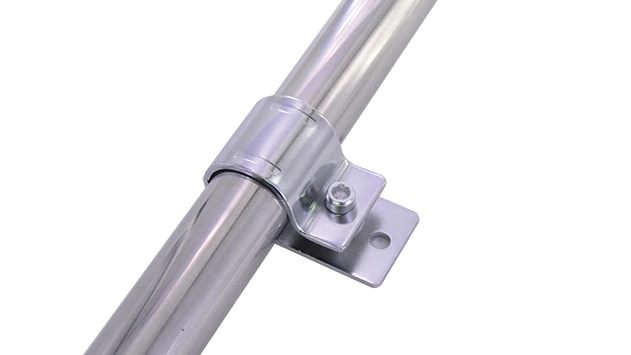
Lean Pipe Clamp Chrome
Lean pipe clamp is used for rack system hang monitor or other panel for workbenck, flowrack in production daily use.
The Rhythm of Precision: Inside Communication Equipment Assembly
Walk into any communication equipment assembly facility, and you'll feel it immediately—the quiet hum of purpose. Technicians hunched over workbenches, carefully placing microchips onto circuit boards; conveyor belts gliding with rhythmic precision, carrying half-assembled routers and modems; shelves stocked with tiny, critical components, each labeled and ready for its moment in the spotlight. In this world, where a single misplaced wire can disrupt global connectivity, every tool, every workspace, and every process matters. The difference between a smooth, efficient line and one plagued by delays often comes down to the flexibility of the equipment that supports it. That's where lean pipe systems step in—and at the heart of those systems, quietly holding everything together, lies a small but mighty component: the lean pipe clamp chrome.
Lean Systems: The Backbone of Modern Assembly
Before diving into the specifics of lean pipe clamp chrome, let's take a step back to understand the "why" behind lean systems. In an industry where product cycles are shorter than ever—new routers, switches, and fiber-optic gear hitting the market every few months—manufacturers can't afford rigid, one-size-fits-all workspaces. Lean systems, built around the principles of reducing waste, optimizing flow, and adapting quickly, are the answer. They're the chameleons of the assembly floor: modular, adjustable, and designed to evolve with changing needs.
At the core of these systems are lean pipes—lightweight yet sturdy tubes—and the connectors that bring them to life. And if lean pipes are the bones of the system, then clamps are the joints that let those bones move, flex, and support weight without breaking. Among the various types of clamps available, lean pipe clamp chrome stands out for a reason: it's built to keep up with the demands of communication equipment assembly, where precision and durability can't be compromised.

What Makes Lean Pipe Clamp Chrome a Game-Changer?
Not all clamps are created equal. In communication equipment assembly, where workbenches might need to hold delicate circuit boards one day and heavier testing gear the next, the clamp you choose has to check multiple boxes. Lean pipe clamp chrome does just that, thanks to a few key features:
- Chrome-Plated Durability: The chrome finish isn't just for looks. It adds a layer of protection against rust and corrosion, critical in factory environments where humidity or occasional spills might otherwise take a toll. For technicians who rely on their tools day in and day out, knowing a clamp won't seize up or degrade over time is priceless.
- Versatility in Design: Unlike fixed brackets or welds, lean pipe clamp chrome is designed for adjustment. It slides onto lean pipes easily, tightens with a simple turn of a hex key, and can be repositioned in minutes. This flexibility is a lifesaver when a new product line requires a taller workbench or a wider flow rack.
- Seamless Compatibility: Pair it with lean pipe joints, and you've got a match made in assembly heaven. Whether you're building a straight line, a 90-degree corner, or a complex multi-level structure, these clamps lock into joints securely, ensuring stability even when supporting heavy loads—like stacks of aluminum profile accessories or fully loaded material bins.
Usage Scenarios: Where Lean Pipe Clamp Chrome Shines in Communication Assembly
Enough about the "what"—let's talk about the "how." How does lean pipe clamp chrome actually make a difference on the assembly floor? Let's walk through four key scenarios where this unassuming component becomes indispensable.
1. Custom Workbench Construction: Tailoring Spaces to Tasks
No two assembly tasks are identical. A technician assembling a small Wi-Fi router needs a different workspace than someone testing a large fiber-optic transceiver. That's why custom workbenches are the norm—and lean pipe clamp chrome is the secret to building them quickly and effectively.
Consider a scenario where a team is tasked with assembling 5G base station components. These units are larger than standard consumer routers, with bulkier circuit boards and more intricate wiring. The workbench needs to be taller to reduce technician (bending), wider to spread out tools, and sturdy enough to hold a soldering station, magnifying lamp, and anti-static mat. Using lean pipes, lean pipe joints, and lean pipe clamp chrome, the team can build this bench in hours, not days. The clamps secure horizontal and vertical pipes together, allowing for adjustments: if a technician prefers the shelf for tools to be 2 inches higher, a quick loosen and retighten of the clamp makes it happen. Even better, when the project shifts to a smaller component next month, the same pipes and clamps can be disassembled and reconfigured into a new bench—no waste, no waiting for custom furniture.
In one facility I visited, technicians had even added small shelves and tool hooks using the same clamp system, turning their workbench into a personalized command center. "Before, we'd have to ask maintenance to drill holes or weld on brackets if we needed something changed," one technician noted. "Now, I can adjust my bench during my lunch break. It sounds small, but it keeps me in the zone—no more stopping work to wait for help."
2. Flow Rack Optimization: Keeping Components at Your Fingertips
In communication equipment assembly, time spent searching for components is time wasted. Flow racks—those inclined shelves where bins glide forward as the front one is emptied—are designed to put parts exactly where technicians need them, reducing reach and retrieval time. But a flow rack is only as good as its structure, and that's where lean pipe clamp chrome comes in.
Flow racks rely on roller tracks to let bins slide smoothly. These tracks need to be secured at a precise angle—too steep, and bins might slide too fast; too shallow, and they might get stuck. Lean pipe clamp chrome ensures the roller tracks stay firmly attached to the rack's frame. Unlike plastic clamps, which can warp under the weight of full bins, chrome-plated steel clamps hold tight, even when loaded with heavy components like power supplies or metal shielding cases. And when the facility switches to smaller bins for a new product, the clamps make it easy to reposition the tracks, adjusting the angle or height without replacing the entire rack.
A supervisor at a mid-sized assembly plant shared a story about their experience with flow racks before switching to lean pipe clamp chrome: "We used plastic clamps initially to save costs, but they'd loosen over time. Bins would start tilting, components would fall out, and we'd spend hours realigning tracks. Since switching to chrome clamps, we've had zero issues. The racks stay stable, the bins glide smoothly, and our techs can focus on building, not fixing shelves."
3. Conveyor System Adaptations: Flexibility in Motion
Conveyors are the arteries of the assembly line, moving products from station to station. But in a dynamic environment, conveyor paths can't be set in stone. Maybe a new testing station is added, requiring a 90-degree turn in the line. Or perhaps a surge in orders means doubling the length of a conveyor to keep up with demand. Traditional conveyors, bolted to the floor, make these changes costly and time-consuming. Modular conveyors, built with lean pipes and lean pipe clamp chrome, make them effortless.
Imagine a conveyor that carries half-assembled modems from the soldering station to the quality control (QC) check. The QC team recently moved their station 10 feet to the left to make room for a new inspection machine. With a modular system, the team can disassemble the conveyor, reconfigure the pipes into the new path, and use lean pipe clamp chrome to secure the sections together. The clamps ensure the conveyor stays level and stable, even when moving products over longer distances. No need for heavy machinery or contractors—just a few technicians and a hex key.
What's more, these conveyors can be customized with side rails (secured with, you guessed it, clamps) to prevent small parts from sliding off, or adjusted in height to align with different workbench levels. In one facility, they even added a small "branch" conveyor using the same components, letting some products divert to a rework station without disrupting the main line. "It's like building with Legos," one engineer laughed. "The clamps are the studs that hold everything together, but you can take them apart and rebuild whenever you need to."
4. Ergonomic Trolley Builds: Moving Heavy Loads Safely
Not everything moves on conveyors. Sometimes, delicate or oversized components—like large antenna arrays or heavy power modules—need to be transported manually. Ergonomic trolleys, designed to reduce strain on technicians, are essential here. Again, lean pipe clamp chrome plays a starring role in building these trolleys to fit specific needs.
A trolley carrying sensitive circuit boards, for example, needs to be stable (to prevent jostling), lightweight (to make pushing easy), and customizable (to hold different board sizes). Using lean pipes, casters, and lean pipe clamp chrome, the trolley's frame can be built with adjustable shelves—secured by clamps—that can be moved up or down based on the load. The chrome clamps ensure the shelves don't shift during transport, even over uneven factory floors. And when the need arises to carry larger items, the shelves can be removed entirely, turning the trolley into a flatbed—all without a single tool beyond the hex key used to adjust the clamps.
One safety manager I spoke with emphasized how this flexibility reduces workplace injuries: "Before, we had a handful of fixed trolleys. If a technician needed to move something slightly larger than the trolley's shelf, they'd try to balance it, risking strains or drops. Now, they adjust the trolley on the spot. The clamps make it so simple, they actually use the trolleys correctly instead of taking shortcuts. That's a win for everyone."
Lean Pipe Clamp Chrome vs. the Rest: A Quick Comparison
Still wondering why lean pipe clamp chrome is the go-to choice? Let's break it down with a quick comparison to other common clamp types used in assembly:
| Feature | Lean Pipe Clamp Chrome | Standard Steel Clamp | Plastic Clamp |
|---|---|---|---|
| Material | Chrome-plated steel | Uncoated steel | Polypropylene/plastic |
| Corrosion Resistance | High (chrome layer prevents rust) | Low (prone to rust in humid environments) | High (but prone to UV damage over time) |
| Load Capacity | High (up to 50kg per clamp, depending on size) | High (similar to chrome, but surface rust weakens over time) | Low (bends under heavy loads) |
| Ease of Adjustment | High (smooth chrome surface allows easy sliding/reattaching) | Medium (uncoated steel can stick; rust increases friction) | Medium (plastic can warp, making repositioning tricky) |
| Best For | Heavy loads, frequent adjustments, humid/demanding environments | Low-moisture areas with infrequent adjustments | Light loads, temporary setups, dry environments |
The Ripple Effect: How Small Components Drive Big Results
It's easy to overlook components like lean pipe clamp chrome—they're small, they don't have flashy features, and they rarely get mentioned in product launch press releases. But in the day-to-day grind of communication equipment assembly, their impact is undeniable. When workbenches are adjustable, flow racks are stable, conveyors are adaptable, and trolleys are ergonomic, something bigger happens: technicians work faster, with less frustration, and with more focus on the precision that communication equipment demands.
Consider the numbers: A facility that switches to lean pipe systems with chrome clamps might see a 15% reduction in setup time for new product lines, a 20% decrease in component retrieval errors (thanks to better flow rack organization), and a 10% drop in workplace injuries (due to ergonomic workbenches and trolleys). Multiply those improvements across a large facility, and the results add up to faster time-to-market, lower operational costs, and a more engaged workforce.
Tips for Getting the Most Out of Lean Pipe Clamp Chrome
To maximize the benefits of lean pipe clamp chrome, keep these best practices in mind:
- Don't Over-Tighten: Chrome clamps grip firmly, but over-tightening can strip the threads or damage the lean pipe's surface. Tighten until secure, then stop—you can always adjust later.
- Regular Inspections: Check clamps monthly for signs of wear, especially in high-load areas. Look for loose bolts, dents in the chrome, or rust (though rare, it can happen if the chrome is scratched). replace any damaged clamps promptly.
- Pair With Quality Lean Pipe Joints: Clamps work best when paired with compatible lean pipe joints. Mismatched components can lead to instability, so stick to a single supplier for pipes, joints, and clamps when possible.
- Train the Team: Ensure technicians know how to properly adjust and secure clamps. A 10-minute training session on using the hex key and checking for tightness can prevent a lot of headaches later.
Conclusion: The Quiet Hero of the Assembly Floor
In the fast-paced world of communication equipment assembly, where innovation is constant and efficiency is king, the tools that support the process are just as critical as the technicians themselves. Lean pipe clamp chrome may not grab headlines, but it's a workhorse that makes flexibility, durability, and adaptability possible. From custom workbenches to optimized flow racks, from modular conveyors to ergonomic trolleys, this small component plays a big role in keeping the assembly line moving—and in ensuring the communication equipment we rely on every day is built with the precision it demands.
So the next time you pick up your router or connect to Wi-Fi, take a moment to appreciate the unseen systems that brought it to life. Behind every seamless connection is a team of technicians, and behind those technicians? A set of lean pipes, joints, and clamps—quietly holding it all together.