- Company Articles
- Products and Technology
- Product knowledge
- Communication Equipment Production: Precision with Lean Pipe Clamp B

Communication Equipment Production: Precision with Lean Pipe Clamp B
Related Product
Lean Pipe Clamp
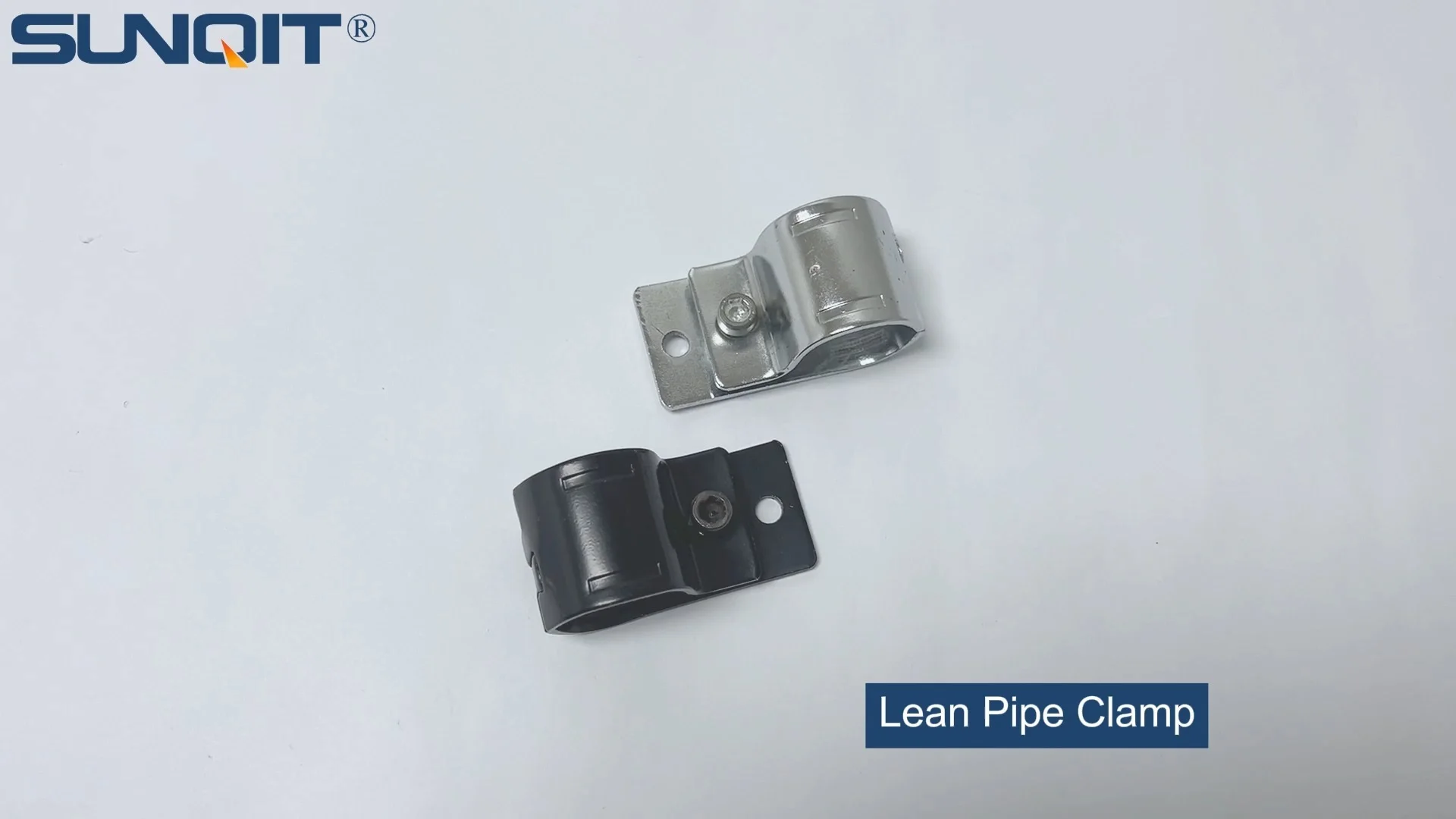
Lean pipe clamp is used for rack system hang monitor or other panel for workbenck, flowrack in production daily use.
In the quiet hum of a communication equipment factory, where routers, fiber optic transceivers, and 5G base stations take shape, there's an unsung hero working behind the scenes. It's not the high-tech machinery or the specialized software—though those play their part. It's something smaller, simpler, yet infinitely crucial: the humble lean pipe clamp B . This unassuming component, often overlooked in the grand scheme of production, is the glue that holds together the lean systems powering modern manufacturing. Today, we're diving into how this tiny clamp, paired with lean pipe , aluminum profile , and smart workbench design, is redefining precision in communication equipment production.
Why Precision Matters in Communication Equipment
Communication equipment isn't just about connecting people—it's about reliability. A single misaligned component in a fiber optic router can disrupt internet service for thousands. A loose connection in a 5G base station might drop calls or slow down data speeds. In an industry where tolerances are measured in millimeters and downtime costs millions, precision isn't a luxury; it's a necessity.
But here's the challenge: communication technology evolves at lightning speed. Factories that once produced 4G modems now need to shift to 6G prototypes. Production lines designed for bulky routers must adapt to sleek, compact IoT devices. Traditional manufacturing setups—with fixed steel frames, welded structures, and inflexible workstations—simply can't keep up. They're slow to reconfigure, expensive to modify, and often lead to wasted space, time, and resources.
Consider this: A major telecom manufacturer recently reported that retooling a traditional production line for a new router model took 12 weeks and cost over $200,000. By contrast, a competitor using lean systems with lean pipe clamp B completed the same transition in 3 weeks, at a fraction of the cost. The difference? Flexibility.
The Lean Solution: Beyond Buzzwords
Lean manufacturing isn't new, but its application in communication equipment production has taken on a new urgency. At its core, lean is about eliminating waste—whether that's wasted time, space, or materials—while maximizing value. And in a industry where product lifecycles are shorter than ever, lean systems offer the adaptability factories need.
At the heart of these systems are modular components: lean pipe (often coated in durable plastic or made from aluminum), aluminum profile (lightweight, strong, and easy to cut), and connectors like lean pipe clamp B. These components snap together like building blocks, allowing teams to design, build, and reconfigure production lines on the fly. No welding, no heavy machinery, no waiting for custom parts.
But why lean pipe clamp B, specifically? Let's break it down.

Lean Pipe Clamp B: The Unsung Hero of Modular Production
What Is Lean Pipe Clamp B?
Lean pipe clamp B is a small, C-shaped connector designed to join lean pipes and aluminum profiles securely. Made from high-grade steel or aluminum, it features a bolt-and-nut mechanism that tightens around pipes, creating a rock-solid connection without damaging the material. Unlike traditional clamps, which might require specialized tools or permanent fixes, clamp B is adjustable. Need to reposition a pipe? Loosen the bolt, move it, retighten. Done.
Its design is deceptively simple, but that simplicity is its strength. The clamp's curved edges cradle the pipe, distributing pressure evenly to prevent slippage—critical when assembling workbenches that hold delicate circuit boards or flow racks that transport sensitive components. And because it's compatible with both standard lean pipes (typically 28mm in diameter) and aluminum profiles (like 4040 or 3030 series), it's a versatile workhorse in any lean setup.
Why It's a Game-Changer for Precision
In communication equipment production, where even a slight wobble in a workstation can throw off assembly, stability is key. Lean pipe clamp B delivers that stability in spades. Let's say a factory is building a workbench for soldering fiber optic connectors. The workbench needs to stay level, with no vibration, to ensure precise solder joints. By using clamp B to secure aluminum profiles and lean pipes, the bench becomes rigid yet lightweight—easy to move if needed, but steady as a rock during operation.
Another advantage? Consistency. Traditional welded frames can vary slightly from one workstation to the next, leading to uneven assembly lines. With clamp B, every connection is uniform. Whether you're building the first workbench or the hundredth, the clamp ensures pipes align at the exact same angle, distances stay consistent, and tolerances are met every time. This consistency reduces errors during assembly, cutting down on defective products and rework.

Building Blocks: Lean Pipe, Aluminum Profile, and the Role of Clamp B
Lean pipe clamp B doesn't work alone. It's part of a ecosystem that includes lean pipe, aluminum profile, and other accessories. Let's break down how these components work together to create efficient, precise production lines.
Lean Pipe: The Backbone of Flexibility
Lean pipe (also called "lean tube") is typically made of steel with a plastic coating, or aluminum for lighter applications. It's strong enough to support heavy equipment but lightweight enough to be maneuvered by a single worker. In communication factories, lean pipes form the frames of workbenches, material racks, and even mobile carts. When paired with clamp B, they become infinitely reconfigurable. Need to add a shelf to a workbench? Just cut a length of lean pipe, attach it with clamp B, and you're done. No drilling, no welding, no mess.
Aluminum Profile: Strength Meets Precision
For areas where extra rigidity is needed—like workbenches for assembling circuit boards or testing stations—aluminum profile takes center stage. These extruded profiles, with their T-slot design, allow for easy attachment of accessories like shelves, tool holders, and cable management clips. And when you need to connect aluminum profiles to lean pipes (or to other profiles), lean pipe clamp B is the bridge. Its adjustable design fits both round lean pipes and square/rectangular aluminum profiles, making it easy to mix and match materials based on the task at hand.
For example, a factory might use aluminum profiles for the main frame of a testing workbench (for added stability) and lean pipes for the material flow rack attached to it (for flexibility). Clamp B seamlessly joins the two, creating a unified system that's both strong and adaptable.
Workbenches: Where Precision Assembly Happens
The workbench is the heart of any production line, and in communication equipment manufacturing, it's where the magic happens. Whether workers are soldering, assembling, or testing components, the workbench must be tailored to the task. With lean pipe clamp B, building a custom workbench is surprisingly straightforward.
Let's walk through the process. First, choose the base: aluminum profiles for stability, or lean pipes for mobility. Then, use clamp B to connect vertical supports to horizontal beams, creating the frame. Add a worktop—often a non-conductive material like phenolic resin to protect sensitive electronics—and secure it with more clamps. Attach accessories: a tool rail with holders for screwdrivers and pliers, a LED light bar for better visibility, and a cable tray to keep wires organized. If the workbench needs to be mobile, add casters (secured, of course, with clamp B). The result? A workstation designed exactly for the task, with no wasted space and every tool within arm's reach.
And when the product line changes? Disassemble the workbench, reuse the pipes, profiles, and clamps, and build a new one. It's that simple. This reusability not only saves money but also reduces waste—a win for both the factory and the environment.

Flow Racks: Keeping Materials Moving (Precisely)
In communication equipment production, materials—from circuit boards to connectors to tiny screws—need to flow smoothly from storage to assembly. That's where flow racks come in. These gravity-fed racks use rollers to move materials down to workers, reducing the need for manual lifting and ensuring a steady supply of parts. And once again, lean pipe clamp B plays a starring role in their construction.
A typical flow rack might have multiple levels, each with roller tracks. To build it, you'd start with a frame of lean pipes or aluminum profiles, connected by clamp B. Then, attach roller tracks to the frame, using specialized brackets (also secured with clamp B). The key is ensuring the tracks are angled correctly—just enough to let materials glide down, but not so steep that they slide too quickly. With clamp B, adjusting the angle is easy: loosen the bolts, tilt the track, retighten. This precision ensures materials arrive at the assembly line at the right speed, preventing jams and keeping workers focused on building, not fetching parts.
Fun fact: A telecom factory in Singapore recently replaced its traditional static shelves with flow racks built using lean pipe clamp B. The result? Material retrieval time dropped by 40%, and workers reported less fatigue from bending and reaching. Plus, the racks were so easy to reconfigure that when the factory introduced a new, larger circuit board, they adjusted the roller tracks in under an hour—no contractors needed.
Traditional vs. Lean: A Comparison Table
| Aspect | Traditional Manufacturing Setup | Lean Setup with Lean Pipe Clamp B |
|---|---|---|
| Reconfiguration Time | Weeks to months (requires welding, custom parts) | Days to weeks (modular components, no special tools) |
| Cost to Modify | High ($100,000+ for major changes) | Low (reuses existing components, minimal new parts) |
| Precision & Consistency | Variable (welded frames may have slight differences) | Highly consistent (uniform clamp connections ensure alignment) |
| Worker Ergonomics | Poor (fixed heights, hard to adjust for different workers) | Excellent (easily adjustable workbenches and racks) |
| Waste Reduction | High (scrap from welded frames, unused space) | Low (reusable components, space-efficient design) |
Beyond the Clamp: A Holistic Lean Ecosystem
While lean pipe clamp B is a critical component, it's part of a larger lean ecosystem that includes everything from casters for mobile workstations to ESD (electrostatic discharge) accessories for protecting sensitive electronics. For example, ESD workbenches—essential for assembling circuit boards that can be damaged by static electricity—often use lean pipe frames with ESD-safe tops. Clamp B ensures the frame is grounded, preventing static buildup and protecting components.
There's also the role of suppliers. Choosing a reliable lean pipe supplier that offers high-quality clamp B, lean pipe, and aluminum profile is key. A good supplier doesn't just sell parts; they provide expertise, helping factories design custom setups that meet their unique needs. Whether it's a small workshop producing IoT sensors or a large plant manufacturing 5G base stations, the right supplier can turn a generic lean system into a precision tool tailored for communication equipment.
The Future of Communication Manufacturing: Leaner, Smarter, More Precise
As communication technology continues to advance—think 6G, satellite internet, and AI-powered network management—factories will need to become even more agile. Fixed setups will become obsolete, replaced by modular, adaptable systems built on the foundation of lean pipe, aluminum profile, and yes, lean pipe clamp B.
Imagine a factory where production lines reconfigure themselves overnight, where workbenches adjust to the height of each worker automatically, and where material flow is optimized in real time. It's not science fiction—it's the future of manufacturing, and it starts with small, smart components like the lean pipe clamp B.
In the end, communication equipment is about connection. And in the factories that build it, the most important connection might just be the one made by a tiny clamp, holding together the systems that keep the world connected.