- Company Articles
- Products and Technology
- Product knowledge
- Comparing 1-Piece vs. Modular 38 Aluminum Roller Track Yellow Designs

Comparing 1-Piece vs. Modular 38 Aluminum Roller Track Yellow Designs
Related Product
38 Aluminum Roller Track Yellow
Durable and smooth-running modular roller rails. The system is fully assembled. The roller rail profile contains plastic rollers mounted on steel axles. Aluminum frame with plastic wheel make it anti corrosion,and material convey more smooth.
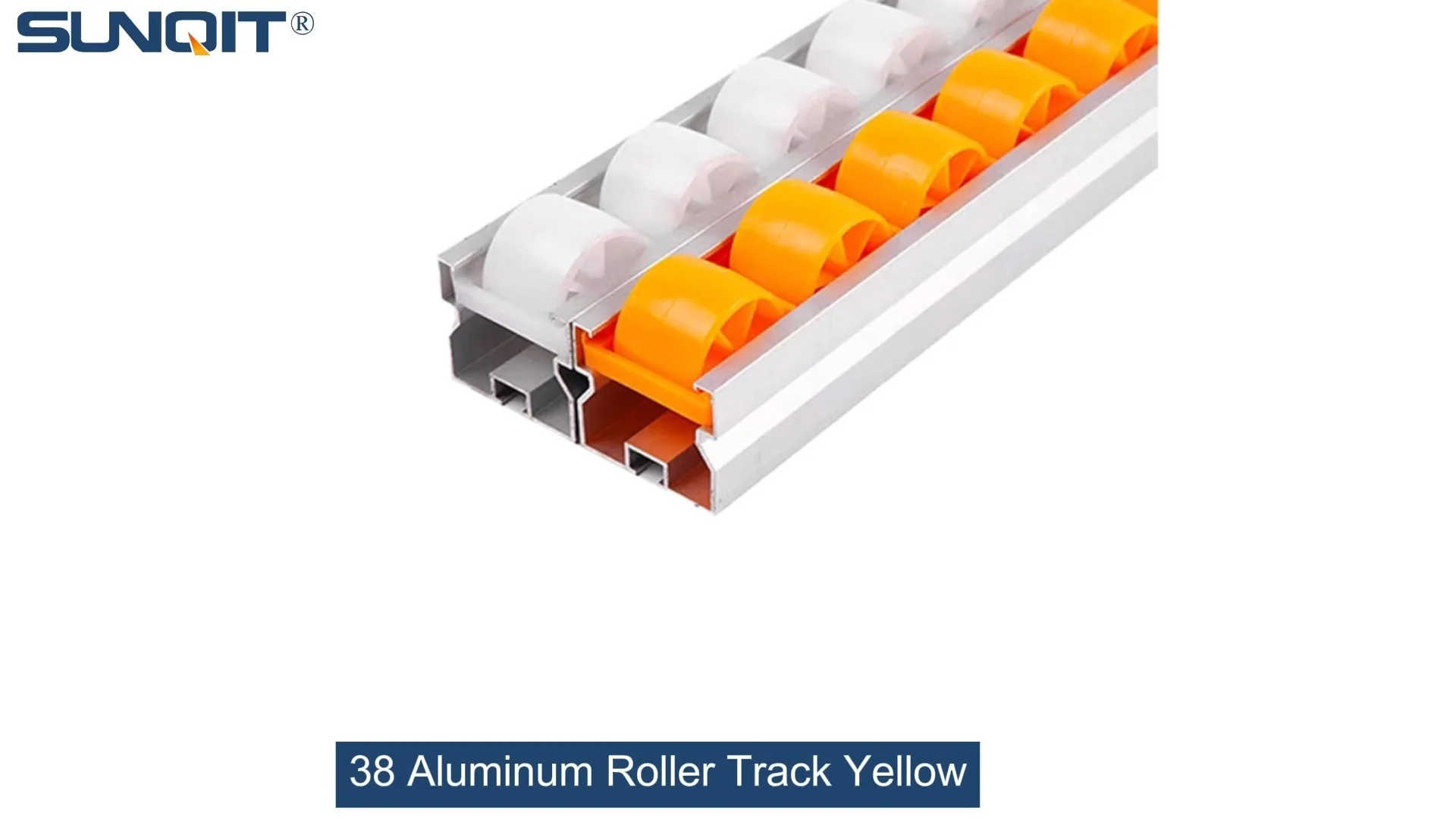
When it comes to efficient material handling in manufacturing and logistics, every component counts. Roller tracks are the unsung heroes of many production lines—they keep parts moving smoothly, reduce manual labor, and cut down on waste. Among the many types available, the 38 aluminum roller track yellow stands out for its unique blend of durability, lightweight design, and high visibility. Whether you're setting up a flow rack in a warehouse or a conveyor line in a 3C assembly plant, choosing the right track design can make a huge difference in your operations. But with two main options—1-piece and modular—how do you know which one fits your needs? This article will break down both designs, compare their strengths and weaknesses, and help you make an informed decision that aligns with your lean system goals.
What Exactly Is 38 Aluminum Roller Track Yellow?
Before diving into the comparison, let's clarify what we're talking about. The "38" in the name typically refers to the width of the track (around 38 millimeters), making it suitable for medium to large-sized parts. The material is aluminum—chosen for its strength-to-weight ratio; it's light enough to handle easily but strong enough to support heavy loads. The yellow color isn't just for aesthetics: it enhances visibility in busy workplaces, reducing the risk of accidents and making it easier to spot misaligned parts.
This track is a staple in industries like 3C assembly, medical equipment manufacturing, and warehouse logistics. It's used in flow racks to slide boxes, conveyors to move products along lines, and workstations to streamline assembly processes. For businesses following a lean solution approach, this track is a key component—helping to eliminate waste in material handling and improve overall efficiency.
The 1-Piece 38 Aluminum Roller Track Yellow: A Static Solution for Consistent Performance
Design & Construction
As the name suggests, the 1-piece track is a single, continuous unit. It's made from extruded aluminum, which gives it a uniform, sturdy structure. The rollers are permanently attached to the track—they're sealed to prevent dust and debris from getting inside, ensuring smooth operation over time. The length is fixed (common sizes are 1 meter, 2 meters, or 3 meters), so you don't have to worry about cutting or adjusting it to fit your space. This design means there are no gaps between sections, which is a big plus for consistent material flow.
Key Advantages of 1-Piece Tracks
1. Quick Setup: Unbox the track, mount it to your flow rack or conveyor frame, and you're ready to go. There's no need to assemble sections or use roller track connectors—this saves valuable time, especially in high-volume production lines where downtime is costly.
2. Consistent Performance: Since there are no connection points, items glide smoothly across the entire length of the track. This is critical for 3C assembly lines, where even a small gap can cause a smartphone part to get stuck, slowing down the entire line.
3. Low Maintenance: With fewer moving parts, there's less to go wrong. The sealed rollers require minimal cleaning, and since the track is one piece, you don't have to worry about loose connectors or wobbly sections.
4. Heavy-Duty Capacity: The 1-piece design can handle heavier loads than many modular options. For example, a 2-meter 1-piece track can support up to 60 kg of weight—perfect for moving heavy medical equipment parts or automotive components.
Limitations to Consider
1. Inflexibility: If your layout changes, you can't adjust the length of the track. You'll have to replace the entire unit, which is wasteful and goes against lean system principles of reusability.
2. Storage Challenges: Long, bulky tracks take up a lot of space. If you have a small warehouse or need to store extra tracks, this can be a problem.
3. Repair Issues: If one roller breaks or a section of the track gets damaged, you have to replace the entire track. This is expensive and time-consuming—especially if the track is part of a critical production line.
4. No Customization: You can't create curved or angled paths with 1-piece tracks. This limits their use in custom workstations or flow racks that require non-linear layouts.
Best Use Cases for 1-Piece Tracks
1. Static Production Lines: If your layout hasn't changed in years (like a long-term 3C assembly line for smartphones), 1-piece tracks are ideal. They provide consistent performance and require minimal maintenance.
2. Heavy Load Applications: For moving items over 50 kg (like engine parts or large medical devices), 1-piece tracks are more suitable.
3. High-Volume Operations: In factories where parts move quickly and continuously, 1-piece tracks ensure no delays due to stuck items—keeping production rates high.
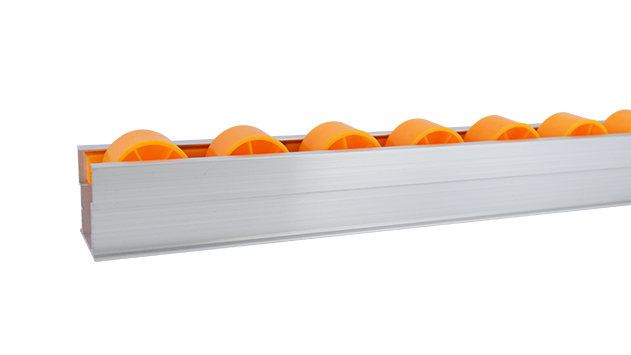
The Modular 38 Aluminum Roller Track Yellow: A Dynamic Choice for Changing Needs
Design & Construction
Modular tracks are built from interlocking sections. Each section is usually 50 cm or 1 meter long, and they connect using roller track connectors. The rollers are either pre-installed or can be added/removed as needed. The aluminum profile is lightweight, so you can easily carry and assemble sections without heavy tools. This design is all about flexibility—you can cut sections to fit your space, add extensions, or create curved paths by using angled connectors.
Key Advantages of Modular Tracks
1. Unmatched Flexibility: This is the biggest selling point of modular tracks. If you need to extend your conveyor line or adjust your flow rack layout, you just add more sections. For businesses following a lean solution approach, this flexibility is a game-changer—it allows you to adapt quickly to new products or process improvements.
2. Easy Repairs: If one roller breaks or a section gets damaged, you don't have to replace the entire track. Just swap out the broken part, and you're back up and running. This saves money and reduces downtime—critical for lean system operations.
3. Space-Efficient Storage: When not in use, you can disassemble modular tracks into small sections. This is perfect for small warehouses or businesses that need to store extra tracks without taking up too much space.
4. Customization: Modular tracks let you create custom layouts—curved paths, angled sections, or even multi-level flow racks. This is ideal for 3C assembly lines that make different products (like smartphones vs. smartwatches) or medical equipment suppliers that handle a variety of parts.
5. Scalability: As your business grows, you can easily expand your track system. You don't have to buy a whole new setup—just add more sections and connectors. This makes modular tracks a cost-effective choice for startups and growing businesses.
Limitations to Keep in Mind
1. Setup Time: Assembling modular tracks takes longer than 1-piece tracks. You have to connect sections using roller track connectors, adjust the alignment, and make sure everything is tight. However, this extra time pays off in the long run with flexibility.
2. Connection Points: If connectors aren't tightened properly, sections may shift or wobble. This can cause items to get stuck or fall off the track. To avoid this, make sure to follow the assembly instructions carefully.
3. Load Capacity: While modular tracks are strong (up to 50 kg per meter), they can't handle as much weight as 1-piece tracks. If you need to move ultra-heavy items, 1-piece is a better choice.
4. Upfront Cost: Modular tracks are slightly more expensive upfront than 1-piece tracks. This is because you have to buy connectors and extra sections. But over time, the cost savings from repairs and reusability make up for this.
Best Use Cases for Modular Tracks
1. Dynamic Warehouses: If your layout changes often (like seasonal product shifts), modular tracks are perfect. You can reconfigure your flow racks in a few hours without downtime.
2. Small-Batch Production: For businesses making custom products (like 3C accessories or medical devices), modular tracks let you adjust your workstations quickly for each new product.
3. Lean Manufacturing Lines: Modular tracks align perfectly with lean system principles. They allow you to continuously improve your layout, reduce waste, and adapt to changing customer needs.
4. Startups: Growing businesses can use modular tracks to scale their operations without breaking the bank. As you add new products or expand your team, you can easily modify your track system.

Head-to-Head: 1-Piece vs. Modular 38 Aluminum Roller Track Yellow
| Feature | 1-Piece Track | Modular Track |
|---|---|---|
| Design Flexibility | Very Low (Fixed length, no adjustments) | Very High (Adjustable sections, curved paths) |
| Setup Time | 5-10 minutes per unit (unbox & install) | 15-30 minutes per unit (assemble sections) |
| Maintenance Cost | High (replace entire track if damaged) | Low (replace only broken parts) |
| Max Load Capacity | Up to 60 kg/m (varies by model) | Up to 50 kg/m (varies by model) |
| Storage Efficiency | Poor (bulky, hard to stack) | Excellent (disassemble into small sections) |
| Long-Term Cost | Higher (frequent replacements for layout changes) | Lower (reusable sections, minimal repairs) |
| Customization Options | None (fixed straight length) | Full (curved, angled, multi-level) |
| Lean System Alignment | Low (limited reusability) | High (supports continuous improvement) |
| Ideal Scenarios | Static lines, heavy loads, high-volume 3C assembly | Dynamic layouts, lean solution, custom workstations |

How to Pick the Right Track for Your Needs?
Choosing between 1-piece and modular tracks requires a clear understanding of your operational needs. Here's a step-by-step guide to help you decide:
1. Analyze Layout Stability: Ask—will your material handling path change in the next 6 to 12 months? If your layout is static (like a long-term 3C assembly line), 1-piece tracks are a solid choice. If you expect frequent changes (like new product lines), modular tracks are better.
2. Evaluate Load Requirements: Check the average weight of items you move. For loads over 50 kg/m, 1-piece tracks are more reliable. For lighter to medium loads (under 50 kg/m), modular tracks work perfectly.
3. Consider Storage Space: Do you have room to store long, bulky tracks? If your warehouse is small, modular tracks are the way to go—they can be disassembled and stored in a compact space.
4. Align with Lean Principles: If you follow a lean system or are looking for a lean solution, modular tracks are the clear winner. They allow you to reuse parts, reduce waste, and adapt quickly to process improvements.
5. Budget for Long-Term Value: While 1-piece tracks are cheaper upfront, modular tracks save money over time. If you plan to grow or adjust your operations, modular tracks are a more cost-effective investment.
6. Check Customization Needs: If you need curved or angled paths (for custom flow racks or workstations), modular tracks are the only option. 1-piece tracks are limited to straight lines.
Real-World Examples: How Businesses Use Both Tracks
Example 1: 3C Assembly Line (1-Piece)
A large smartphone manufacturer uses 1-piece 38 aluminum roller track yellow in their final assembly line. The line layout hasn't changed in two years, and they handle heavy battery packs (55 kg/m). The quick setup of 1-piece tracks means they can replace old tracks in minutes, reducing downtime. The consistent performance ensures that battery packs move smoothly from one station to the next, keeping production rates high.
Example 2: Medical Device Warehouse (Modular)
A medical equipment supplier uses modular tracks in their flow racks. They need to adjust layouts often for new products—like surgical tools vs. diagnostic devices. The modular design allows them to reconfigure racks in a few hours, without buying new tracks. They use roller track connectors to join sections, and the flexibility helps them keep up with changing customer demands. This aligns with their lean solution goals of reducing waste and improving efficiency.
Example3: Lean Startup (Modular)
A small startup making custom 3C accessories uses modular tracks in their workstations. As they add new products (like phone cases vs. tablet stands), they can easily extend or modify their conveyor lines. The modular tracks let them reuse parts, saving money and reducing waste. This is a perfect example of how modular tracks support lean system principles for growing businesses.
Final Thoughts: Which Track Is Right for You?
Both 1-piece and modular 38 aluminum roller track yellow are excellent choices for material handling. The decision boils down to your specific operational needs.
If you have a static layout, handle heavy loads, or need quick setup, 1-piece tracks are the way to go. They're reliable, low-maintenance, and perfect for high-volume production lines like 3C assembly.
If you need flexibility, space-efficient storage, or want to align with lean system principles, modular tracks are the better choice. They allow you to adapt quickly to changing layouts, repair parts easily, and reuse sections—making them a cost-effective lean solution for growing businesses.
Whichever you choose, both tracks are durable, safe, and essential for efficient operations in industries like 3C assembly, medical equipment manufacturing, and warehouse logistics. By understanding the strengths and weaknesses of each design, you can make an informed decision that will improve your material handling processes and help your business grow.