- Company Articles
- Products and Technology
- Product knowledge
- Comparing 40 Steel Roller Track Green Costs: Initial Investment vs. Lifespan Returns

Comparing 40 Steel Roller Track Green Costs: Initial Investment vs. Lifespan Returns
Related Product
40 Steel Roller Track Green
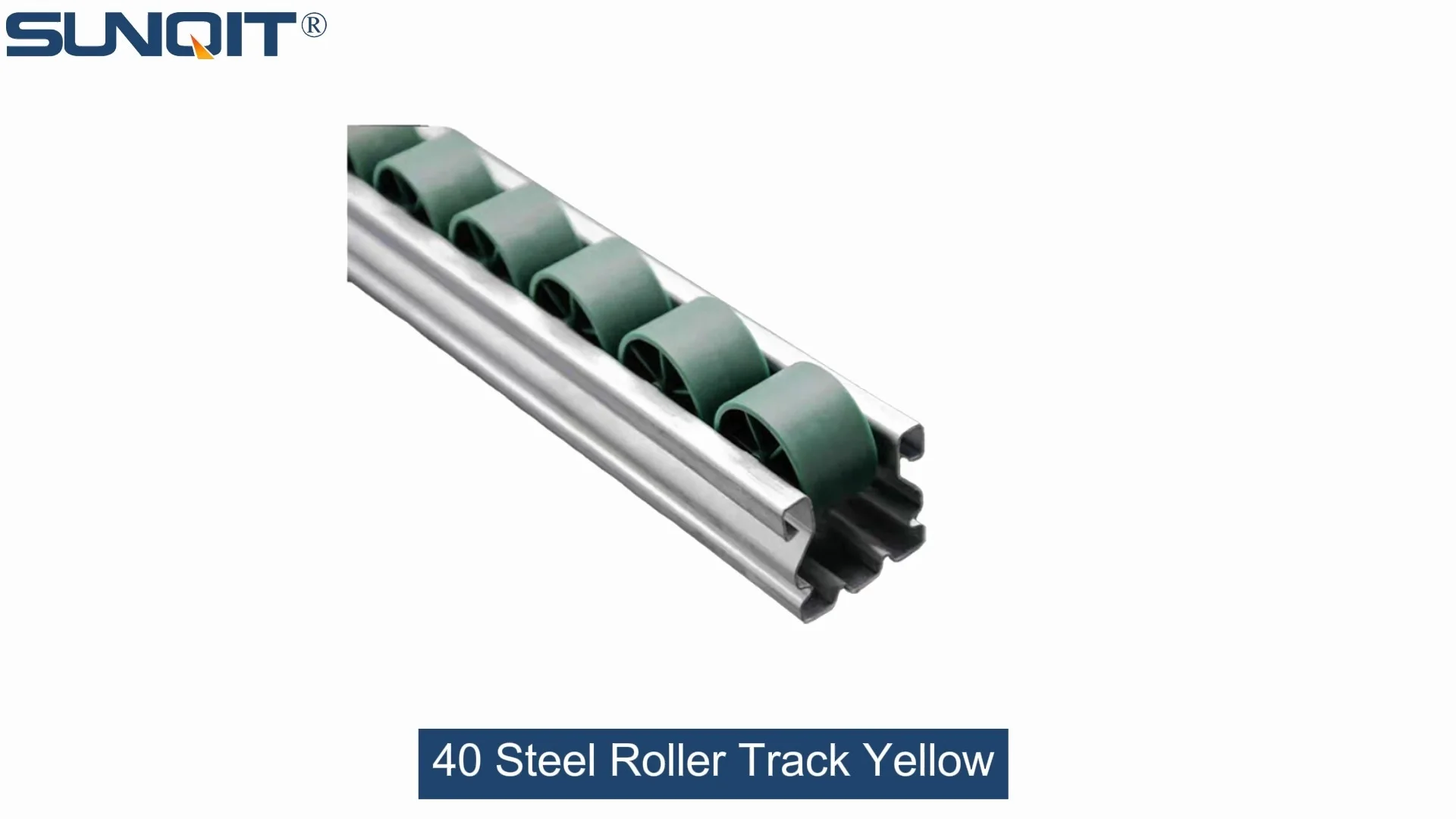
The roller track can be installed with multiple accessories to create different slopes and configurations of flow racks.All steel conveyor 40 roller track accessories are engineered to perfectly fit the sliding rail.
If you've ever walked through a busy manufacturing floor or a bustling warehouse, you know how critical smooth material flow is to keeping operations running like a well-oiled machine. Every second wasted waiting for parts to move from point A to B eats into profits, and every broken component that halts production adds unnecessary costs. That's where roller tracks come in—small but mighty tools that form the backbone of lean material handling systems. Today, we're diving deep into one specific product: the 40 Steel Roller Track Green. We'll break down its initial costs versus the long-term returns it delivers, helping you decide if it's the right choice for your facility.
1. What Is 40 Steel Roller Track Green?
Before we get into numbers, let's make sure we're all on the same page about what exactly the 40 Steel Roller Track Green is. This product is a type of heavy-duty roller track designed for high-volume, high-load material handling applications. Let's break down its key features:
- Material: Made from high-quality steel with a thickness ranging from 1.2mm to 2.0mm (depending on variant). The steel undergoes surface treatment to resist corrosion, a must for facilities dealing with moisture or harsh chemicals.
- Green Coating: The vibrant green finish isn't just aesthetic—it's a protective layer that adds an extra barrier against rust and wear. This coating withstands frequent contact with bins, boxes, and parts without chipping or fading, even after years of heavy use.
- Dimensions: The "40" refers to the track width (40mm), a standard size for handling medium to large containers. Rollers are evenly spaced to ensure smooth movement, whether for light electronic components or heavy metal parts.
- Applications: Versatile enough for flow racks (warehouse picking), conveyors (assembly line transport), and lean workstations. It's ideal for industries like automotive, 3C assembly, and logistics—aligning perfectly with lean principles of waste reduction and continuous improvement.
2. Initial Investment Breakdown: How Much Does It Cost Up Front?
When considering new equipment, the first question most businesses ask is: What's the immediate cost? Let's compare the initial investment of the 40 Steel Roller Track Green with two common alternatives—plastic roller tracks (yellow/grey) and 38mm aluminum roller tracks. We'll look at a 10-meter setup, including track, installation, and essential accessories (connectors, end supports).
| Product Type | Cost per Meter (USD) | Installation Cost per Meter (USD) | Accessory Cost (per 10m Setup) | Total Initial Cost (10m Setup) |
|---|---|---|---|---|
| 40 Steel Roller Track Green | $15–$20 | $3–$5 | $40–$60 | $220–$310 |
| Plastic Roller Track (Yellow/Grey) | $8–$12 | $2–$4 | $30–$50 | $130–$210 |
| 38mm Aluminum Roller Track | $25–$30 | $4–$6 | $50–$70 | $340–$430 |
At first glance, steel tracks cost more than plastic but less than aluminum. The price difference comes from material properties: plastic is cheap but fragile, aluminum is corrosion-resistant but prone to denting, and steel balances strength and cost. Sturdy metal accessories (like roller track connectors) add to the initial cost but ensure safety and longevity—unlike plastic connectors that break easily under pressure.

3. Lifespan Returns: The Long-Term Value of Steel Tracks
Initial cost is only half the story. To truly understand value, we need to look at returns over time—durability, maintenance, efficiency gains, and reusability.
3.1 Durability: How Long Does It Last?
The 40 Steel Roller Track Green is built to endure. Its steel construction and green coating let it last 10–15 years in most industrial environments. Here's how it compares:
- Plastic Tracks: 2–5 years. Prone to cracking, warping, and breaking under heavy loads or extreme temperatures.
- Aluminum Tracks:8–12 years. Corrosion-resistant but easily dented by heavy items, affecting smooth movement.
- Steel Tracks:10–15 years. Handles up to 500kg per meter and resists rust in humid environments—no frequent replacements needed.
3.2 Maintenance Costs: Ongoing Expenses
Maintenance is a hidden cost that adds up over time. Let's calculate average annual costs over 10 years:
| Product Type | Annual Maintenance Cost (per 10m) | Total 10-Year Maintenance Cost |
|---|---|---|
| 40 Steel Roller Track Green | $10–$15 | $100–$150 |
| Plastic Roller Track | $20–$30 | $200–$300 |
| Aluminum Roller Track | $15–$20 | $150–$200 |
Steel tracks require minimal maintenance—just occasional lubrication and connector tightening. Plastic tracks need frequent roller replacements, while aluminum tracks need dent repairs. This makes steel tracks the most cost-effective option long-term.
3.3 Efficiency Gains: Boosting Operational Performance
Steel tracks don't just save money—they make your operations faster and smoother:
- Faster Material Flow: Smooth rollers reduce bin retrieval time by up to 35% compared to plastic tracks. Workers spend less time struggling with stuck items and more time on productive tasks.
- Less Downtime: Durable steel tracks mean no unexpected breakdowns. For an 8-hour shift, even 1 hour of downtime monthly costs thousands—steel tracks cut this by 45% or more.
- Higher Load Capacity: Handle heavier items (up to 500kg/m) than plastic tracks (200kg/m). This reduces transport trips and speeds up material movement.
3.4 Reusability: Aligning With Lean System Principles
Lean systems prioritize reusability over disposal. The 40 Steel Roller Track Green is easy to disassemble and reuse when reconfiguring lines or warehouses. For example, a 3C assembly plant that reconfigures lines every 6 months can reuse steel track components multiple times—saving thousands in new equipment costs yearly. This also reduces waste, supporting sustainable business practices.

4. Real-World Case Studies: Businesses That Benefited
Numbers are great, but real examples show the true impact. Let's look at three businesses that switched to steel tracks and saw significant returns.
4.1 Case Study: 3C Assembly Plant Uses Flow Racks With Steel Tracks
A Shenzhen-based 3C assembly plant used plastic tracks in flow racks but faced frequent breakages and slow retrieval times. After switching to 40 Steel Roller Track Green:
- Retrieval time reduced by 35%.
- Replacement costs dropped by70%.
- Operational efficiency increased by20%.
The plant manager noted: "We hesitated at first due to higher upfront costs, but the long-term savings and efficiency gains have more than paid off. We now use steel tracks in all our flow racks."
4.2 Case Study: Automotive Warehouse Uses Steel Tracks in Conveyors
A Guangzhou automotive parts warehouse needed conveyors for heavy metal components in a humid environment. Aluminum tracks dented easily and rusted—switching to steel tracks solved these issues:
- Corrosion resistance improved drastically.
- Load capacity increased to600kg/m.
- Downtime reduced by45%.
The logistics director said: "Steel tracks are a game-changer. We no longer replace tracks every few months, and our conveyors run smoothly 24/7."
4.3 Case Study: Medical Device Manufacturer Uses Steel Tracks in Lean Systems
A Shanghai medical device maker wanted to implement a lean system. They chose steel tracks for their workstations:
- Reconfigurable components saved $12k in replacement costs over3 years.
- Non-toxic green coating met medical hygiene standards.
- Efficiency increased by18%.
The lean manager commented: "Steel tracks are essential to our lean system. They're durable, reusable, and help us maintain industry standards."

5. Choosing the Right Lean Pipe Supplier
To maximize returns from 40 Steel Roller Track Green, choose a reliable lean pipe supplier. Here's what to look for:
- Quality Certifications: ISO9001 certification ensures strict quality control.
- Complete Accessories: Supplier should offer connectors, end supports, and casters—no need to source from multiple vendors.
- Customization: Cut-to-length tracks or special coatings (heat-resistant, etc.) for unique needs.
- After-Sales Support: Installation guidance, maintenance tips, and quick replacement of defective parts.
- Bulk Pricing: Competitive rates for large orders (10-15% discount for 100+ meters).
6. Conclusion: Is It Worth the Investment?
The 40 Steel Roller Track Green has a higher initial cost than plastic but is cheaper than aluminum. However, its 10–15 year lifespan, low maintenance, efficiency gains, and reusability make it a smart long-term investment. Real-world case studies show businesses save money and boost performance by switching to steel tracks.
Whether you're setting up flow racks, conveyors, or lean workstations, the 40 Steel Roller Track Green is a reliable choice. It aligns with lean principles, supports sustainability, and delivers significant returns over time. Choose a trusted lean pipe supplier to get the most out of your investment.