- Company Articles
- Products and Technology
- Procurement Guidelines
- Comparing 40 Steel Roller Track White Wheel Suppliers: Quality vs. Price

Comparing 40 Steel Roller Track White Wheel Suppliers: Quality vs. Price
Related Product
40 Steel Roller Track White Wheel
The roller track can be installed with multiple accessories to create different slopes and configurations of flow racks.All steel conveyor 40 roller track accessories are engineered to perfectly fit the sliding rail.
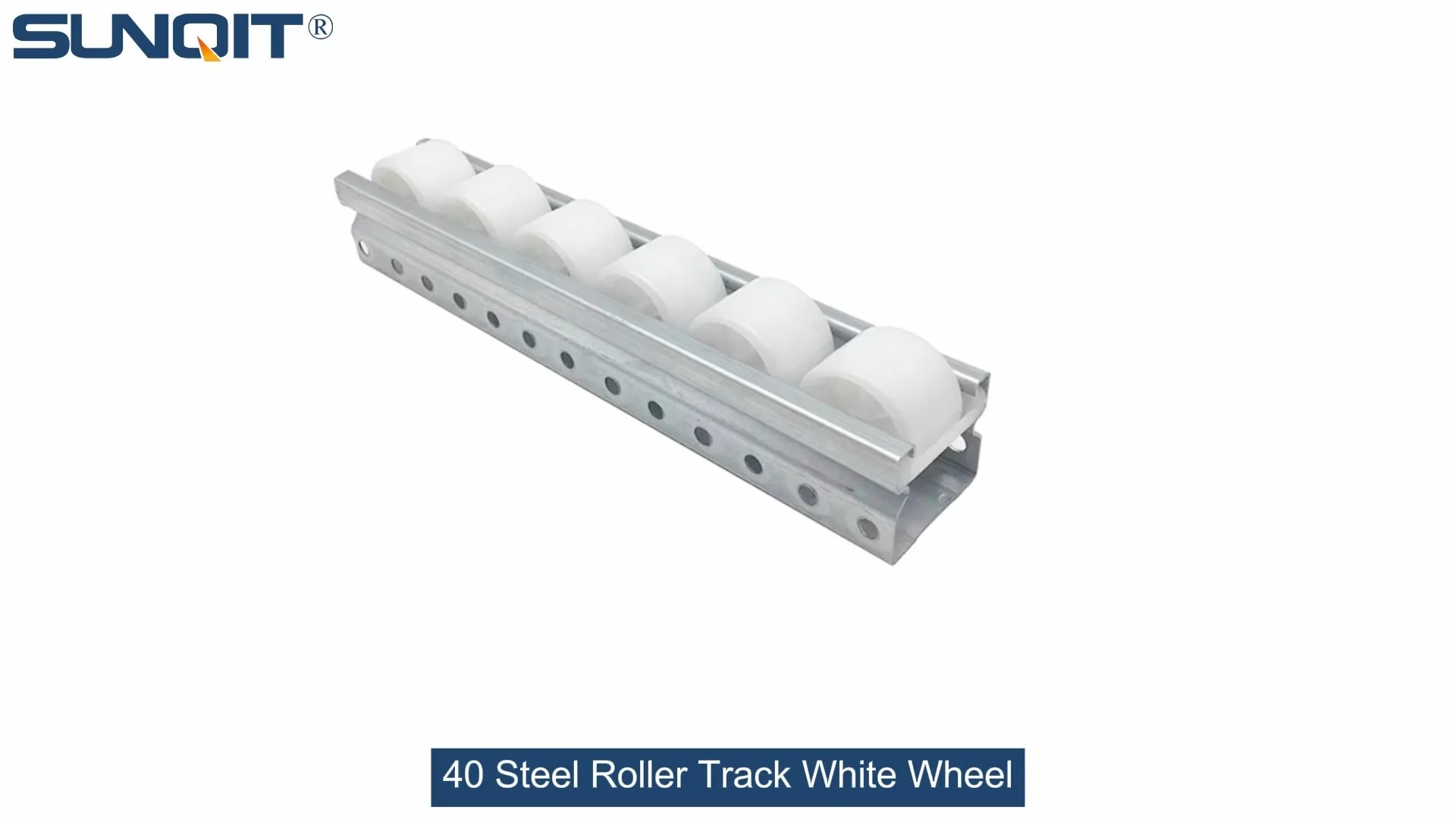
If you've ever walked through a well-organized factory floor, you've probably seen those smooth-rolling white wheels on conveyor belts or flow racks—those are 40 steel roller track white wheels, and they're the unsung heroes of lean manufacturing. These small components play a huge role in keeping production lines moving efficiently, reducing friction between parts, and ensuring that materials flow seamlessly from one station to the next. Whether you're setting up a new flow rack for your warehouse or upgrading an existing conveyor system, choosing the right supplier for these roller tracks can make all the difference in your operation's productivity and bottom line.
In this article, we'll break down the key factors to consider when evaluating 40 steel roller track white wheel suppliers, focusing on the delicate balance between quality and price. We'll look at what makes a high-quality roller track, how pricing structures vary across different suppliers, and which type of supplier might be the best fit for your specific needs—whether you're a small business looking for a few replacement parts or a large manufacturer in need of bulk wholesale orders.
First, let's dive into the quality aspects that should top your checklist when shopping for these roller tracks.
Key Quality Factors to Evaluate
When it comes to 40 steel roller track white wheels, not all products are created equal. A cheap roller might save you money upfront, but it could lead to frequent breakdowns, slow production lines, and higher maintenance costs over time. Here are the critical quality factors to look for:
1. Material Composition
The core of any roller track is its steel. You want to know what grade of steel is used—higher-grade steel (like Q235 or S45C) is more durable and resistant to bending under heavy loads. The thickness of the steel tube is another important point; a thicker wall (1.2mm or more) can handle more weight without deforming.
Then there's the white wheel finish. Is it a powder coat or a plastic coating? A good powder coat will resist scratches, chips, and corrosion, keeping the wheels looking clean and functioning smoothly even in dusty or humid factory environments. Some suppliers use a high-quality plastic that's non-toxic and has low friction, which is ideal for delicate parts like those in 3C assembly lines.
2. Manufacturing Precision
Precision matters a lot here. If the rollers aren't all the same diameter, they won't rotate evenly, leading to jams or uneven material flow. Check if the supplier uses automated machinery to ensure consistent sizing. The bearings inside the rollers should be smooth—no squeaking or sticking when you spin them. Load capacity is another key metric; make sure the roller can handle the weight of your typical materials (e.g., boxes of components, finished products).
3. Durability & Longevity
Ask the supplier for test results or customer testimonials about how long their roller tracks last. A reliable supplier will have data on things like cycle life (how many times the roller can rotate before wearing out) or resistance to impact. For example, szsunqit.com, a lean pipe supplier specializing in custom solutions, often shares case studies where their roller tracks have been in use for 5+ years without major issues. That kind of longevity can save you a lot of money in replacement costs.
4. Compatibility
Your roller tracks don't exist in isolation—they need to work with other components in your lean system. Do the white wheels fit with your existing roller track connectors or aluminum profiles? A good supplier will offer compatible accessories, like plastic roller track guide rails (yellow or grey) or aluminum guide rails, to ensure a seamless integration. This is especially important if you're building a custom lean solution for your 3C assembly or medical device manufacturing line.
Price Considerations: What's Hidden in the Tag?
Price is always a factor, but it's not just about the initial cost per unit. Let's look at the different pricing elements to consider:
1. Bulk Pricing Models
If you're buying in large quantities, wholesale pricing can save you a significant amount. Many suppliers (like szsunqit.com) offer tiered pricing— the more you buy, the lower the cost per roller. For example, a single 40 steel roller track white wheel might cost $2, but if you order 1000 units, the price could drop to $1.20 each. This is great for manufacturers who need to stock up on parts for multiple lines.
2. Customization Costs
Do you need a specific length of roller track? Or a different finish than white? Customization usually adds to the price. For instance, if you need rollers that are 10cm longer than the standard size, the supplier might have to adjust their production line, which increases the cost. However, some specialized lean solution providers (like those offering custom workbenches or flow racks) include customization in their package prices, so it's worth asking.
3. Hidden Costs
Don't forget about the costs that aren't on the price tag. Shipping fees can be high, especially if you're ordering from an international supplier. Maintenance costs—if the rollers wear out quickly, you'll have to replace them more often. Also, consider the cost of downtime if a roller breaks; a cheap roller that fails could stop your entire line for hours, costing you more than the savings from buying it.

Comparing Supplier Types: Which Is Right for You?
Now that we know what to look for in quality and price, let's compare the main types of suppliers you'll encounter:
| Supplier Type | Quality Score (1-10) | Average Price per Unit | Key Benefits | Key Drawbacks |
|---|---|---|---|---|
| Local Lean Solution Provider | 8-9 | $1.50-$2.50 | Fast delivery, custom solutions, easy support | Higher cost than wholesale |
| International Wholesale | 6-8 | $0.80-$1.50 | Low unit cost, large inventory | Long shipping times, language barriers |
| Specialized Lean Pipe Supplier | 9-10 | $2.00-$3.00 | High-quality, integrated lean systems | Premium pricing, minimum order quantities |
1. Local Lean Solution Providers (e.g., szsunqit.com)
Local suppliers are great if you need fast turnaround or custom designs. For example, if you're in the 3C assembly industry and need roller tracks that fit a specific flow rack or conveyor system, a local provider can work with you to design and manufacture exactly what you need. They also offer easier communication—you can pick up the phone or visit their facility to discuss your requirements. Szsunqit.com, for instance, specializes in custom lean solutions for industries like medical devices and, so they understand the unique needs of these sectors.
2. International Wholesale Suppliers
If you're looking for the lowest possible cost per unit, international wholesale suppliers might be an option. They often have large factories and can produce roller tracks in bulk at a lower cost. However, you have to factor in shipping time (which could be 4-6 weeks) and potential customs fees. Language barriers can also be a problem—if there's an issue with your order, it might take longer to resolve.
3. Specialized Lean Pipe Suppliers
These suppliers focus exclusively on lean manufacturing components, like lean pipes, workbenches, and roller tracks. They know the ins and outs of lean systems, so they can help you design an integrated solution that optimizes your workflow. For example, a specialized supplier might offer a package that includes 40 steel roller track white wheels, flow racks, and ESD workbenches—all compatible with each other. This saves you time and ensures everything works together seamlessly. The downside is that their prices are usually higher than general wholesale suppliers.

Case Study: How szsunqit.com's Roller Tracks Improved a 3C Assembly Line
Let's look at a real-world example of how choosing the right supplier can impact your operation. A mid-sized 3C assembly company in Shenzhen was having issues with their existing conveyor system—their old roller tracks were frequently jamming, leading to delays in production. They decided to switch to szsunqit.com's 40 steel roller track white wheels.
First, the szsunqit team conducted a site visit to understand the company's needs. They found that the old rollers were made of low-grade steel and had a thin coating that was chipping off. The team recommended their 1.2mm thick steel roller tracks with a high-quality powder coat finish. These rollers were compatible with the company's existing aluminum profiles and roller track connectors, so no major modifications were needed.
After installing the new rollers, the company saw a 20% reduction in downtime due to jams. The smooth rotation of the white wheels also reduced friction, making it easier to move delicate components without damage. Over the next year, they saved over $10,000 in maintenance and replacement costs. This case shows that investing in quality roller tracks can lead to significant long-term savings.

Balancing Quality and Price: Practical Tips
So how do you find the sweet spot between quality and price? Here are some tips:
1. Test Samples First
Before placing a bulk order, ask the supplier for a few samples. Test them in your actual working environment—see how they hold up under your typical loads, how smooth they rotate, and if they fit with your existing setup. This small investment can save you from buying thousands of subpar rollers.
2. Negotiate Bulk Deals
If you need a large number of rollers, don't be afraid to negotiate with the supplier. Many will offer better pricing if you commit to a larger order. For example, szsunqit.com offers wholesale discounts for orders over 500 units, which can lower your cost per unit significantly.
3. Calculate Total Cost of Ownership
Instead of just looking at the price tag, calculate the total cost over the lifespan of the roller. A $2 roller that lasts 5 years is better than a $1 roller that needs replacement every year. Factor in maintenance costs, downtime, and replacement parts to get the true cost.
4. Choose a Supplier with Integrated Solutions
If you're building a lean system from scratch, consider a supplier that offers all the components you need—roller tracks, flow racks, workbenches, etc. This ensures compatibility and can often lead to package discounts. Szsunqit.com, for example, provides custom lean solutions that include all these elements, making it easier to set up your system without worrying about mismatched parts.
Conclusion
Choosing the right supplier for 40 steel roller track white wheels is a decision that affects your operation's efficiency, cost, and long-term success. By focusing on key quality factors like material composition, manufacturing precision, and durability, and considering pricing elements like bulk discounts and hidden costs, you can make an informed choice.
Whether you opt for a local lean solution provider like szsunqit.com, an international wholesale supplier, or a specialized lean pipe supplier, the most important thing is to align your choice with your specific needs. If you value fast delivery and custom designs, a local supplier is the way to go. If cost is your top priority, wholesale might be better. And if you need an integrated lean system, a specialized provider is ideal.
Remember, the cheapest option isn't always the best. Investing in high-quality roller tracks can save you money in the long run by reducing downtime and maintenance costs. So take your time, evaluate your options carefully, and choose a supplier that helps you achieve your lean manufacturing goals.