- Company Articles
- Products and Technology
- Product knowledge
- Comparing 40 Steel Roller Track Yellow Wheels: Brand Options & Quality Differences

Comparing 40 Steel Roller Track Yellow Wheels: Brand Options & Quality Differences
Related Product
40 Steel Roller Track Yellow Wheel
The roller track can be installed with multiple accessories to create different slopes and configurations of flow racks.All steel conveyor 40 roller track accessories are engineered to perfectly fit the sliding rail.
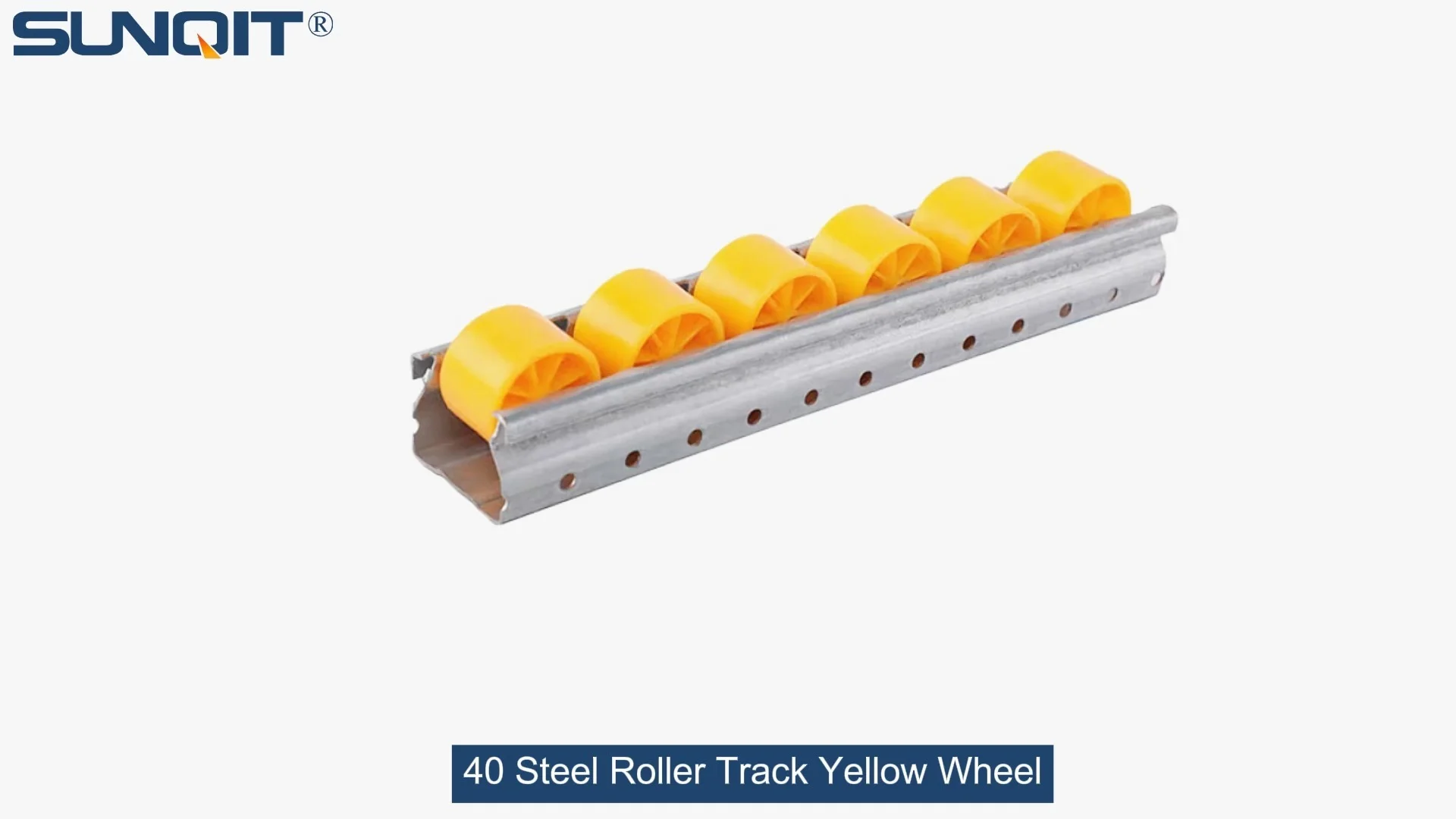
In the bustling rhythm of modern manufacturing plants, where every second counts and efficiency is the heartbeat of production, there's an unsung hero quietly keeping things moving—literally. The 40 steel roller track yellow wheel might not grab headlines, but ask any production manager, and they'll tell you: these small, vibrant components are the backbone of smooth material flow. Whether it's conveying delicate 3C components, heavy automotive parts, or medical devices, the right roller wheel can turn a chaotic assembly line into a symphony of precision. Today, we're diving deep into the world of 40 steel roller track yellow wheels—exploring brand options, dissecting quality differences, and helping you find the perfect match for your lean system.
What Are 40 Steel Roller Track Yellow Wheels, Anyway?
Let's start with the basics. A 40 steel roller track yellow wheel is a specialized component designed for roller track systems—those conveyor-like setups that use a series of wheels to slide materials from one workstation to another. The "40" refers to the standard size, typically a 40mm diameter, making it compatible with most lean pipe and aluminum profile systems. The steel construction ensures durability, while the bright yellow color isn't just for aesthetics: it enhances visibility on the factory floor, reducing the risk of collisions and making maintenance checks a breeze.
But these wheels are more than just metal discs on axles. Inside each one, you'll find precision bearings that minimize friction, a robust outer rim designed to withstand repeated impacts, and often a protective coating to resist rust and wear. They're the reason your lean system lives up to its name—flexible, efficient, and built for continuous improvement. After all, what's a lean solution without components that can keep up with changing production needs?
Quick Fact: The yellow color isn't arbitrary. In manufacturing, yellow is often used for "attention" or "caution" signals, but here, it serves a dual purpose: it makes the roller tracks stand out in busy environments, and studies show high-visibility colors can reduce errors during material handling by up to 15%.
Brand Options: Navigating the Market
Walk into any industrial supply store or browse online, and you'll be met with a dizzying array of options for 40 steel roller track yellow wheels. From budget-friendly generic brands to premium, industry-specific manufacturers, each claims to offer the "best" solution. Let's break down the most common players in the market:
Budget-Friendly Generics – These are the workhorses for small-scale operations or low-intensity applications. Priced competitively, they're often made with standard carbon steel and basic ball bearings. They get the job done for light loads—think small electronic parts or packaging materials—but may struggle with heavy-duty, 24/7 use.
Mid-Range Specialists – Brands in this category focus on balancing quality and cost. They typically use higher-grade steel (like Q235 or Q345) and upgrade to sealed bearings to prevent dust and debris from jamming the wheels. Many also offer customizations, such as adjustable axles or ESD (electrostatic discharge) coatings, making them popular in 3C and medical device manufacturing.
Premium Lean System Partners – These brands are the gold standard for industries where failure is not an option: automotive assembly, aerospace, or high-volume consumer electronics. They use heat-treated steel for maximum strength, precision-machined roller tracks, and bearings rated for millions of rotations. What really sets them apart? Compatibility. They're designed to seamlessly integrate with lean pipe workbenches, conveyors, and even turnover trolleys, supporting the "reusable, continuously improvable" ethos of modern lean systems.

Quality Differences: Why Details Matter
At first glance, two 40 steel roller track yellow wheels might look identical. But under the surface, tiny differences can lead to huge gaps in performance, durability, and cost over time. Let's dissect the key factors that separate the best from the rest:
1. Steel Quality: Not All Metal Is Created Equal
The type of steel used in the wheel's construction is the foundation of its quality. Budget brands often cut corners with low-carbon steel, which is prone to bending under heavy loads. Mid-range options step up to Q235 steel, a common structural steel with good tensile strength. Premium brands, however, opt for Q345 or even alloy steel, which offers higher yield strength—meaning it can handle more weight without deforming. For example, a Q345 steel wheel might support 100kg per wheel, while a low-carbon alternative maxes out at 50kg. In a high-capacity automotive parts line, that difference could mean the wheel lasts 5 years instead of 18 months.
2. Bearing Type: The Silent Efficiency Driver
If the steel is the wheel's skeleton, the bearing is its heart. Bearings reduce friction, allowing the wheel to spin smoothly even under load. Here's where you'll see major splits in quality:
- Open Ball Bearings: Found in budget wheels, these are simple but unprotected. Dust, oil, and metal shavings can easily sneak in, causing jams or premature wear. Great for clean, low-use environments (like a small workshop), but risky for busy factories.
- Sealed Ball Bearings: Mid-range brands often use these. A rubber or metal seal keeps contaminants out, extending the bearing life by 2-3 times. Perfect for general manufacturing, from (home appliances) to light automotive parts.
- Roller Bearings: Premium wheels sometimes upgrade to roller bearings, which distribute weight more evenly than ball bearings. They're ideal for heavy loads—think 85kg+ per wheel—and high-speed applications, like conveyor systems in 3C assembly lines.
3. Coating & Rust Resistance: Battling the Elements
Factories are tough places for metal. Humidity, oil spills, and chemical exposure can turn even sturdy steel into rust in months. That's why the coating on your 40 steel roller track yellow wheel matters. Budget options might skip coating altogether, relying on a thin layer of paint that chips off easily. Mid-range wheels often use electroplating (zinc or nickel) for basic protection. The best? Hot-dip galvanizing or powder coating. Hot-dip galvanizing dips the entire wheel in molten zinc, creating a thick, corrosion-resistant layer that can withstand years of exposure to moisture—critical for food processing or medical device plants where hygiene standards are strict.
4. Compatibility: Playing Nice with Your Lean System
What good is a high-quality wheel if it doesn't fit your existing setup? Lean systems thrive on flexibility, so compatibility with lean pipes, aluminum profiles, and workbench components is non-negotiable. Premium brands design their wheels to work with standard 28mm lean tubes, 4040 aluminum profiles, and even specialized connectors like internal rotary aluminum joints. Generic wheels, however, might have slightly off measurements—maybe the axle hole is 0.5mm too small, or the wheel width doesn't align with your roller track brackets. Suddenly, you're stuck modifying parts, wasting time, and defeating the purpose of a "lean" workflow.
5. Installation & Maintenance: Time Is Money
Ever spent an hour trying to hammer a wheel onto a track because the axle was misaligned? We've all been there. Quality wheels come with precision-machined axles and pre-lubricated bearings, so installation is as simple as sliding them into place. They also make maintenance a breeze: some premium models even have removable bearing caps, letting you re-lubricate without replacing the entire wheel. Compare that to budget wheels, which often require special tools to install and can't be repaired—when they wear out, you throw them away and buy new ones. Over time, those "cheap" wheels end up costing more in labor and replacements.

Side-by-Side: A Quality Comparison Table
To make it easier, let's put these differences into a table. Below is a comparison of three common options you might encounter (note: brand names are generalized for illustration):
| Feature | Budget Generic | Mid-Range Specialist | Premium Lean Partner |
|---|---|---|---|
| Steel Grade | Low-carbon steel | Q235 structural steel | Q345 alloy steel |
| Max Load per Wheel | 40-50kg | 70-85kg | 100-120kg |
| Bearing Type | Open ball bearing | Sealed ball bearing | Sealed roller bearing |
| Coating | Basic paint (easily chipped) | Zinc electroplating | Hot-dip galvanizing + powder coating |
| Compatibility | Limited (fits only specific cheap tracks) | Broad (works with most 40mm roller tracks) | Universal (lean pipes, aluminum profiles, conveyor systems) |
| Expected Lifespan (in heavy use) | 6-12 months | 2-3 years | 5-7 years |
| Best For | Light workshops, low-volume tasks | General manufacturing (home appliances, 3C assembly) | Heavy-duty lines (automotive, aerospace, medical devices) |

Choosing the Right Wheel: It's About Your Workflow
Now that you know what to look for, how do you decide which 40 steel roller track yellow wheel is right for you? It all comes down to your unique needs. Ask yourself:
What are you moving? If it's small, lightweight items like smartphone components (3C assembly), a mid-range wheel with sealed bearings should suffice. For heavy parts, like engine blocks in automotive manufacturing, splurge on premium alloy steel and roller bearings.
How busy is your line? A 24/7 production line can't afford frequent breakdowns. In high-cycle environments, the extra cost of a premium wheel pays off in reduced downtime. For lines that run 8 hours a day, 5 days a week, mid-range might be the sweet spot.
What's your environment like? A dry, clean workshop (think medical device assembly) might get away with basic zinc plating. But if your factory is humid or exposed to chemicals (like some electronics manufacturing), hot-dip galvanizing is a must to prevent rust.
Are you building for the future? Lean systems are all about adaptability. A premium wheel that works with multiple lean pipe accessories (like internal rotary aluminum joints or aluminum guide rails) gives you the flexibility to reconfigure your line as needs change. Why buy wheels that lock you into one setup when you can invest in ones that grow with your business?
Real-World Impact: A 3C Assembly Line Success Story
Let's put this into context with a real example. A leading 3C manufacturer in Shenzhen was struggling with frequent jams on their assembly line for wireless earbuds. They were using budget 40 steel roller track yellow wheels, and after just 8 months, the bearings were seizing up, causing production delays. The maintenance team was replacing wheels weekly, costing time and money.
They switched to mid-range wheels with Q235 steel and sealed bearings. The result? Jams dropped by 90%, and the wheels lasted 2.5 years before needing replacement. Better yet, the new wheels were compatible with their existing lean pipe workbench and conveyor system, so they didn't have to overhaul the entire line. The plant manager later joked: "We used to call the maintenance guy the 'wheel whisperer'—now he actually has time to focus on improving the line instead of fixing it."
Final Thoughts: Invest in the Wheels That Move Your Business Forward
At the end of the day, 40 steel roller track yellow wheels might seem like small parts, but they play a huge role in your lean system's success. Choosing between budget, mid-range, or premium options isn't just about cost—it's about investing in efficiency, durability, and the future of your production line. Whether you're assembling smartphones, building car parts, or packaging medical devices, the right wheel will keep your materials flowing, your team productive, and your lean solution living up to its promise of continuous improvement.
So next time you're shopping for roller track components, remember: the best 40 steel roller track yellow wheel isn't the cheapest or the flashiest—it's the one that fits your workflow, supports your goals, and keeps your line moving forward, one smooth rotation at a time.