- Company Articles
- Products and Technology
- Product knowledge
- Comparing 40 Steel Roller Track Yellow Wheels: Single vs. Double Row Designs

Comparing 40 Steel Roller Track Yellow Wheels: Single vs. Double Row Designs
Related Product
40 Steel Roller Track Yellow Wheel
The roller track can be installed with multiple accessories to create different slopes and configurations of flow racks.All steel conveyor 40 roller track accessories are engineered to perfectly fit the sliding rail.
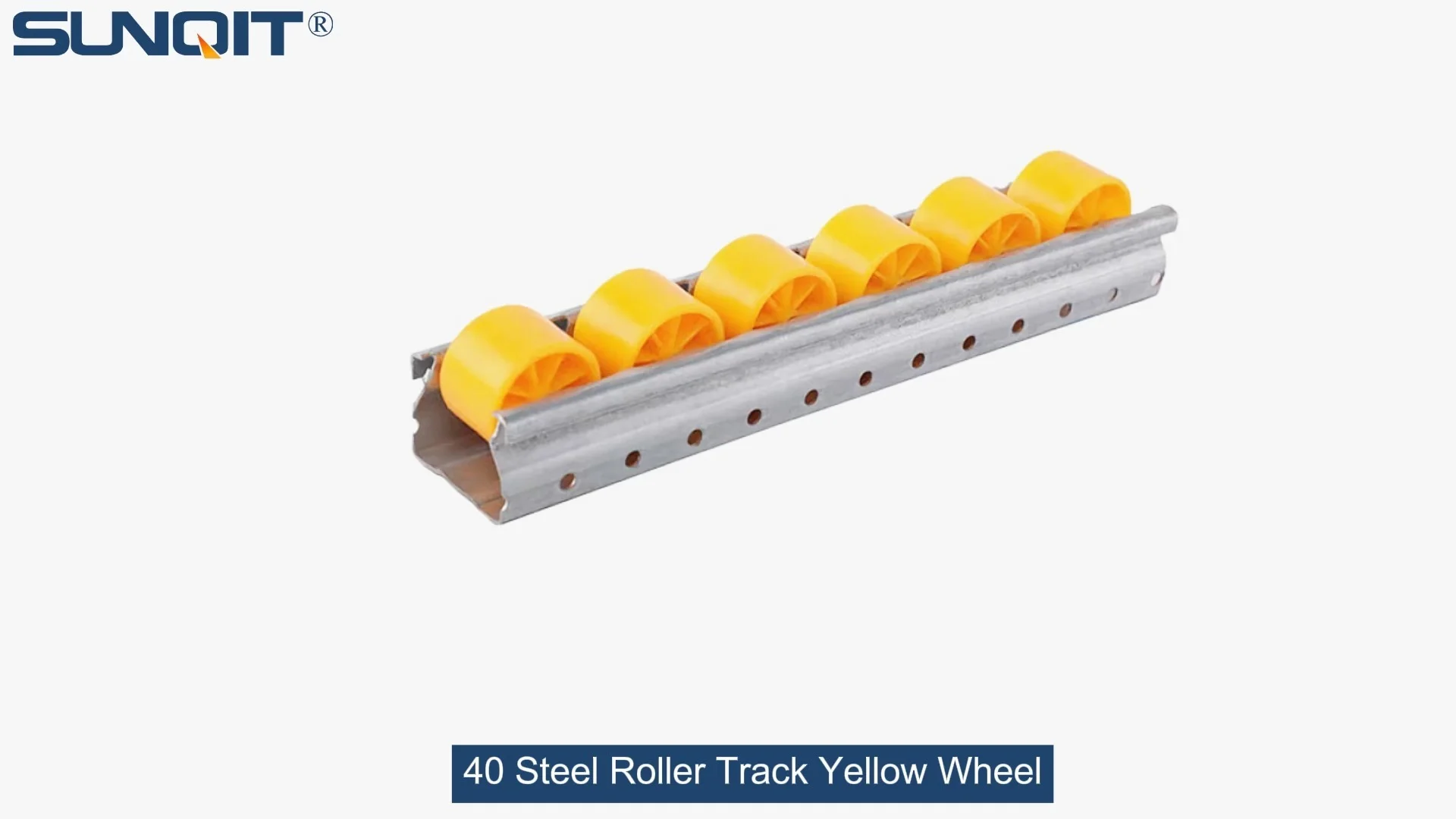
In the fast-paced world of manufacturing, where every second and every movement counts, the equipment you choose can make or break your production efficiency. Today, we're diving deep into a component that's often overlooked but critical to smooth operations: the 40 steel roller track with yellow wheels. Specifically, we'll compare two popular designs—single row and double row—to help you decide which one fits your workflow best. Whether you're setting up a new production line or upgrading an existing flow rack, understanding the nuances of these roller tracks will save you time, money, and headaches down the line.
What Are 40 Steel Roller Tracks, Anyway?
Before we jump into the single vs. double row debate, let's make sure we're all on the same page about what a 40 steel roller track actually is. These tracks are the workhorses of material handling, designed to move products smoothly from one point to another in assembly lines, warehouses, and distribution centers. The "40" refers to the standard width (40mm), a common size that balances versatility with stability. The yellow wheels? That's not just for aesthetics—yellow is highly visible, making it easier for operators to track items and maintain safety protocols on the factory floor.
Made from high-grade steel, these tracks are built to withstand the daily grind of manufacturing environments. The yellow wheels, typically made from durable plastic or rubber, reduce friction, allowing items to glide along with minimal effort. Now, the real question: when should you opt for a single row of these wheels, and when does a double row make more sense?
Single Row 40 Steel Roller Track Yellow Wheels: The Flexible Performer
Let's start with the single row design. As the name suggests, this track features a single line of yellow wheels running along its length. At first glance, it might seem simpler, but don't let that fool you—its simplicity is its superpower. Here's why it's a go-to for many manufacturers:
Structure & Mechanics
Single row tracks have wheels spaced evenly (usually 50-80mm apart) along a single aluminum or steel frame. The wheels are mounted on axles that allow them to spin freely, reducing friction to near-zero. This design keeps the track lightweight, which means it's easy to install, reposition, and integrate into existing systems—perfect for facilities that need to adapt quickly to changing production needs.
Key Advantages
1. Cost-Effective: With fewer wheels and a simpler frame, single row tracks are generally more budget-friendly upfront. If your operation doesn't require heavy-duty performance, this can translate to significant savings.
2. Space-Saving: The slim profile (typically 40mm wide) makes single row tracks ideal for tight spaces. Think narrow assembly lines in 3C electronics manufacturing, where every inch of floor space is precious.
3. Easy Maintenance: Fewer moving parts mean fewer things to break. Cleaning and replacing wheels is a breeze—no need for specialized tools or lengthy downtime. This is a big plus for high-volume facilities where stopping production even for an hour can cost thousands.
4. Gentle on Lightweight Items: The reduced contact points (only one row of wheels) minimize pressure on delicate products. For example, in medical device assembly, where components like syringes or small sensors need careful handling, single row tracks prevent damage during transport.
Where It Shines: Real-World Applications
We've seen single row 40 steel roller tracks excel in industries like:
- 3C Assembly: Moving circuit boards, phone screens, and small electronic parts between workstations.
- Pharmaceutical Packaging: Transporting lightweight pill bottles or blister packs through labeling and sealing stations.
- Small-Part Warehousing: As part of flow racks for storing and picking small components like screws, nuts, or connectors.
One of our clients, a leading smartphone manufacturer, uses single row tracks in their final assembly line. They needed a system that could handle lightweight (under 10kg) phone bodies without scratching the delicate finishes—and the single row design delivered, cutting their material handling time by 15%.

Double Row 40 Steel Roller Track Yellow Wheels: The Heavy-Duty Workhorse
Now, let's turn to the double row design. This track features two parallel rows of yellow wheels, side by side, along the frame. It's like upgrading from a bicycle to a truck—built for strength and stability. Here's what sets it apart:
Structure & Mechanics
Double row tracks have a reinforced frame (often thicker steel or aluminum) to support two rows of wheels. The wheels are usually spaced closer together (30-50mm apart) than in single row tracks, creating a denser contact surface. This design distributes weight more evenly, making it capable of handling heavier loads without bending or warping.
Key Advantages
1. Higher Load Capacity: This is the big one. Double row tracks can typically handle 2-3 times the weight of single row designs (we're talking 50-100kg per linear meter, depending on the frame). If you're moving car parts, large components, or metal brackets, this extra strength is non-negotiable.
2. Stability for Uneven Loads: Items that are bulky or irregularly shaped (like engine parts or washing machine drums) can wobble on single row tracks. The double row design keeps them centered and steady, reducing the risk of spills or damage.
3. Faster Throughput: Because the wheels are denser, heavier items glide more smoothly, allowing for faster transport speeds. In automotive manufacturing, where time is critical, this can mean moving more parts per hour and hitting production targets consistently.
4. Longevity: The reinforced frame and extra support mean double row tracks stand up to wear and tear better over time. While the upfront cost is higher, the longer lifespan often makes it a smarter investment for heavy-use environments.
Where It Dominates: Real-World Applications
Double row tracks are the backbone of industries that deal with heavy or bulky items:
- Automotive Manufacturing: Transporting engine blocks, transmission parts, or door panels along assembly lines.
- Heavy Machinery: Moving large metal components for industrial equipment like generators or pumps.
- Warehouse Logistics: As part of conveyor systems for loading/unloading pallets or storing heavy inventory in flow racks.
A recent project with a major automotive parts supplier illustrates this perfectly. They needed to move 80kg gearboxes from the machining area to assembly—single row tracks kept failing under the weight. Switching to double row 40 steel roller tracks eliminated breakdowns and increased their daily output by 20%.

Single vs. Double Row: A Head-to-Head Comparison
To make it easier to see how these two designs stack up, let's put them side by side. The table below breaks down key factors like load capacity, cost, and ideal use cases:
| Factor | Single Row 40 Steel Roller Track | Double Row 40 Steel Roller Track |
|---|---|---|
| Load Capacity | Up to 30kg per linear meter | 50-100kg per linear meter |
| Upfront Cost | Lower (30-40% less than double row) | Higher (due to extra wheels and frame reinforcement) |
| Space Requirements | Slim (40mm width), ideal for tight spaces | Slightly wider (60-80mm), needs more floor space |
| Maintenance Needs | Low (fewer wheels to replace/clean) | Moderate (more wheels, but still straightforward) |
| Best For | Lightweight, delicate items; 3C electronics, medical devices, small parts | Heavy/bulky items; automotive, heavy machinery, warehouse pallets |
| Speed | Moderate (lighter items move quickly but may slow with uneven weight) | Consistent (heavier items glide steadily without slowing) |
| Durability | Good for light use; frame may bend under heavy loads | Excellent for heavy use; reinforced frame resists warping |

Beyond the Basics: How Lean Principles Shape the Choice
At the heart of any manufacturing decision is the goal to be leaner—eliminating waste, improving efficiency, and creating systems that can adapt and grow. Both single and double row roller tracks play into this, but the right choice depends on how they align with your lean strategy.
For example, if your priority is flexibility (a core lean principle), single row tracks shine. They're easy to reconfigure when production needs change—say, shifting from assembling one phone model to another in 3C manufacturing. Our clients often tell us that being able to rearrange their roller tracks in hours (not days) helps them stay ahead of market demands.
On the other hand, if long-term reliability is key, double row tracks reduce waste from breakdowns and downtime. In lean terms, that's eliminating "non-value-added" time spent fixing equipment. A double row track that lasts 5+ years with minimal maintenance is a far better investment than a cheaper single row track that needs replacing every 2 years.
And let's not forget sustainability —another pillar of modern lean thinking. Both designs are built to be reusable and recyclable, but our aluminum frames take it a step further. They're corrosion-resistant, so they last longer, and when it's time for an upgrade, the materials can be repurposed into new components. It's lean manufacturing with a green twist.
How to Choose: 5 Questions to Ask Yourself
Still on the fence? Asking these five questions will help you narrow it down:
- What's the average weight of the items I'm moving? If it's under 30kg, single row is likely sufficient. Over 50kg? Go double row.
- How much space do I have? Tight quarters (like small assembly cells) benefit from single row's slim profile. Open warehouses can accommodate double row.
- What's my budget—short-term vs. long-term? Single row saves upfront, but double row may be cheaper over time for heavy use.
- How often do I need to reconfigure my layout? Frequent changes? Single row's lightweight design is easier to move.
- Are my products delicate? Light, fragile items (electronics, medical parts) need the gentle handling of single row tracks.
When in doubt, our team of lean experts can help. We've worked with hundreds of manufacturers to design custom roller track systems—often blending single and double row designs to fit unique needs. For example, one client needed to move both small circuit boards (light) and heavy battery packs (heavy) on the same line. We combined single row sections for the boards and double row sections for the batteries, creating a hybrid system that saved them from building two separate lines.
Why Our 40 Steel Roller Track Yellow Wheels Stand Out
At the end of the day, the design (single or double row) is just one piece of the puzzle. What really matters is the quality of the roller track itself. Here's why manufacturers trust our 40 steel roller track yellow wheels:
Built for the Long Haul
We use high-grade steel for the frame and industrial-strength yellow wheels (made from a proprietary plastic blend) that resist wear, oil, and chemicals. This means our tracks can handle the messiest manufacturing environments—from automotive shops with oil spills to food processing plants with frequent washdowns.
Customization at Every Step
No two factories are the same, so why settle for one-size-fits-all? We offer custom lengths, wheel spacing, and frame materials (aluminum for lightweight needs, stainless steel for corrosion resistance). Need a track that integrates with your existing conveyor system or flow rack? Our engineers will design it to fit seamlessly.
Lean to the Core
Every component is designed with "kaizen" (continuous improvement) in mind. Our tracks are easy to modify—add wheels, extend lengths, or change angles—so your system can grow with your business. It's not just equipment; it's a long-term partner in your lean journey.
Expert Support, From Design to Delivery
We don't just sell roller tracks—we solve problems. Our team includes former manufacturing engineers who understand the challenges you face. We'll visit your facility, analyze your workflow, and recommend the perfect single or double row solution (or a mix of both). And once it's installed, we're here for ongoing support—maintenance tips, replacement parts, whatever you need to keep things running smoothly.
Final Thoughts: It's About Finding Your Perfect Fit
Single row and double row 40 steel roller track yellow wheels each have their strengths. Single row is the flexible, budget-friendly choice for light, delicate items and tight spaces. Double row is the heavy-duty workhorse for bulky loads and high-throughput environments. The "best" one depends on your unique needs—weight, space, budget, and long-term goals.
But here's the good news: whichever you choose, you're investing in a system that will make your production line more efficient, your workers' lives easier, and your operations leaner. And when you partner with us, you're not just getting roller tracks—you're getting a team committed to helping you succeed.
Ready to take the next step? Whether you need a single row track for your 3C assembly line or a double row system for automotive parts, we're here to help you build a solution that fits like a glove. Let's make your manufacturing process smoother, faster, and smarter—together.