- Company Articles
- Products and Technology
- Procurement Guidelines
- Comparing 4040F EU Standard Aluminum Profile Suppliers: What to Look For

Comparing 4040F EU Standard Aluminum Profile Suppliers: What to Look For
Related Product
4040F EU Standard Aluminum Profile
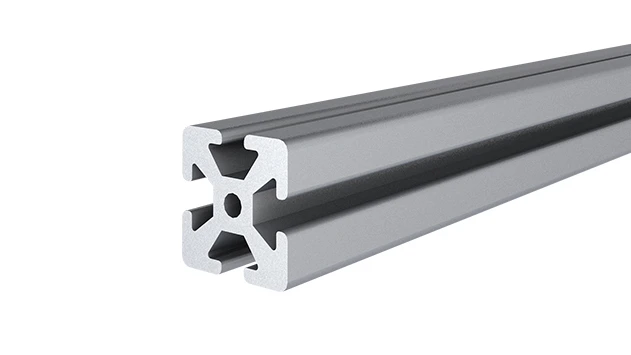
4040F is a 4.00x4.00 CM fractional 40 series square extrusion T-slot profile with four side open T-slots, each side with 4.00cm face. The profile has align-a-grooves to assist in aligning connecting profiles.
If you've ever walked through a manufacturing plant, a warehouse, or even a tech startup's workshop, you've probably seen them—those sleek, silver frames holding up workbenches, shelving units, or automated machinery. Chances are, many of those structures are built with aluminum profiles, and among the most versatile is the 4040F EU standard aluminum profile. With its 40mm x 40mm cross-section, standardized T-slots, and adherence to strict European quality norms, the 4040F is a workhorse in industries ranging from automotive to electronics. But here's the catch: not all suppliers of this profile are created equal. Whether you're a small business building custom workstations or a large manufacturer scaling up production, choosing the right 4040F EU standard aluminum profile supplier can make or break your project's efficiency, cost-effectiveness, and durability. In this guide, we'll break down the key factors to consider when comparing suppliers, from quality control to customer support, and even how to spot red flags. Let's dive in.
Understanding the 4040F EU Standard Aluminum Profile
Before we jump into comparing suppliers, let's make sure we're all on the same page about what the 4040F actually is. The "4040" refers to its dimensions: 40mm in width and 40mm in height. The "F" denotes a specific slot configuration—typically, it has two T-slots on each side, spaced to allow compatibility with a wide range of aluminum profile accessories. As an "EU standard" profile, it must meet strict criteria for material composition, extrusion precision, and surface treatment set by European standards bodies (like DIN or EN). This ensures consistency, so a 4040F from one certified supplier should fit seamlessly with accessories (like brackets, connectors, or 4040 aluminum profile end caps) from another—no guesswork, no ill-fitting parts.
Why does this matter? Imagine ordering 100 meters of 4040F profiles for a production line, only to find the slots are slightly misaligned. Suddenly, the aluminum profile accessories you ordered (like corner brackets or sliding nuts) won't fit, grinding your project to a halt. That's the difference between a supplier who takes EU standards seriously and one who cuts corners. So, when evaluating suppliers, the first question should be:
Do their 4040F profiles truly meet EU standards?
Look for certifications—ISO 9001 for quality management, or specific EN certifications for aluminum extrusion profiles—to back this up.
Key Factors to Compare When Choosing a Supplier
Now that we know what we're looking for in the profile itself, let's explore the factors that separate top-tier suppliers from the rest. These aren't just checkboxes—they're the building blocks of a successful, long-term partnership.
1. Quality Control: It's All in the Details
The 4040F's strength and functionality depend on three things: the aluminum alloy used, the precision of the extrusion process, and the surface treatment. A reputable supplier will use high-grade aluminum (often 6063-T5, known for its strength and corrosion resistance) and have tight control over the extrusion process. This ensures the profile's dimensions are consistent (no warping or uneven slots), and the T-slots are cut to precise tolerances—critical for compatibility with aluminum profile accessories. Surface treatment is another telltale sign. Most 4040F profiles are anodized (a process that creates a protective oxide layer), which gives them that matte silver finish and resistance to scratches and corrosion. A supplier with poor quality control might rush this step, leading to uneven coloring, thin anodization (which wears off quickly), or even visible defects like pits or stains. Ask to see samples—run your finger along the surface; it should feel smooth and uniform. If possible, request a material certificate (mill test report) to verify the alloy composition and mechanical properties (like tensile strength).2. Product Range: Beyond Just the Profile
Unless you're buying 4040F profiles for a very simple project, you'll likely need aluminum profile accessories to go with them. Think 4040 aluminum profile end caps (to cover sharp edges), corner connectors (to join profiles at 90 degrees), sliding nuts (to attach shelves or panels), or even specialized brackets for motors or lighting. A supplier with a limited range might force you to source accessories from multiple vendors, increasing the risk of compatibility issues and shipping delays. The best suppliers don't just sell profiles—they offer a full ecosystem. Look for a catalog that includes not only 4040F but also complementary aluminum extrusion profiles (like 2020 or 3030 for smaller structures), a variety of connectors (45°, 90°, 135°), and even custom parts. For example, if you need a workbench with a specific height, can they provide adjustable feet or leveling brackets? If you're building a mobile cart, do they have casters that bolt directly into the 4040F's T-slots? The more comprehensive the range, the smoother your project will run.3. Customization: Tailored to Your Needs
No two projects are identical. Maybe you need your 4040F profiles cut to exact lengths (down to the millimeter) to minimize waste. Or perhaps you require a specific color anodization (like black or gold) for branding. Or maybe you need holes drilled at precise intervals for mounting equipment. A supplier that offers customization can save you time and money—no more cutting profiles yourself with a hacksaw, or paying a third party for anodizing. Ask about minimum order quantities (MOQs) for custom work. Some suppliers will only customize for large bulk orders, which is fine if you're a major manufacturer but a dealbreaker if you're a small business needing 10 custom-cut profiles. Also, inquire about lead times for custom orders—you don't want to wait 6 weeks for a batch of anodized profiles when your project deadline is in 2.4. Lead Times and Logistics: Can They Deliver When You Need It?
Even the highest-quality profiles are useless if they arrive after your project deadline. Lead times vary widely between suppliers—some keep 4040F profiles in stock (allowing next-day shipping for standard lengths), while others manufacture to order (taking 2–4 weeks). If you're in a time crunch, stock availability is critical. But don't just ask about "how fast"—ask about reliability. A supplier who promises 3-day delivery but misses the mark 50% of the time is worse than one who's upfront about a 5-day lead time and hits it every time. Logistics matter too. Do they offer multiple shipping options? (Express for emergencies, standard for bulk orders.) Can they ship internationally, and do they handle customs paperwork for EU-bound orders? (This is especially important if you're based outside the EU but need EU-standard profiles.) Hidden shipping costs (like fuel surcharges or residential delivery fees) can also eat into your budget, so ask for a detailed quote that includes all fees upfront.5. Customer Support: More Than Just Sales
Let's say you're designing a complex structure with 4040F profiles and need help figuring out the best connectors to use. Or you receive a batch of profiles with a defective slot and need a replacement ASAP. In these moments, good customer support isn't a luxury—it's essential. A top supplier will have a technical team that can answer questions about load capacities, assembly techniques, or aluminum profile accessories compatibility. They'll also have a clear process for returns or replacements, with responsive communication (no waiting days for an email reply). How to gauge this? Test them before you buy. Send an email with a technical question (e.g., "What's the maximum load a 4040F profile can support when used as a cantilever?") or call their sales line. Do they respond quickly? Do they seem knowledgeable, or do they pass you off to a generic FAQ? A supplier that invests in customer support is one that values your business beyond the initial sale.6. Pricing: Transparency Over Low Ball Offers
Let's talk money. It's tempting to go with the supplier offering the lowest price per meter, but beware of hidden costs. A "cheap" profile might be made with thinner aluminum (compromising strength), have rough edges (requiring extra finishing work), or come with minimal warranty. On the flip side, a higher price doesn't always mean better quality—some suppliers inflate costs for "premium" branding without delivering better products. Look for transparency. A good supplier will provide a detailed quote that includes: the price per meter of 4040F, any customization fees (cutting, anodizing), aluminum profile accessories costs, shipping, and taxes. They'll also be upfront about bulk discounts—for example, "10% off orders over 500 meters." If a quote seems too vague ("contact us for pricing"), or if the supplier hesitates to explain what's included, that's a red flag. Remember: the goal is value, not just the lowest price.
A Side-by-Side Comparison: What to Expect
To make this concrete, let's imagine comparing three fictional suppliers—we'll call them Supplier X, Supplier Y, and Supplier Z—based on the factors above. This isn't an endorsement of any real company, but a realistic example of how these factors play out in practice.
So, which would you choose? Supplier Z is pricier than X, but offers better quality, faster lead times, and a full range of aluminum profile accessories—meaning you won't have to source parts elsewhere. Supplier Y is the cheapest, but the lack of certification, poor quality, and hidden fees make it a risky bet. Supplier X is solid but limited in customization and accessories. The "best" choice depends on your priorities: if you need a quick, budget order for a simple project, X might work. But for a long-term partnership, Z is worth the extra cost.
| Factor | Supplier X | Supplier Y | Supplier Z |
|---|---|---|---|
| EU Standard Compliance | ISO 9001 certified; provides EN 755-2 test reports. | Claims EU compliance but can't provide certification. | ISO 9001 certified; EN 755-2 and REACH compliant. |
| Quality Control | 6063-T5 alloy; ±0.1mm tolerance on dimensions; 10µm anodization. | Unknown alloy; visible surface scratches on samples. | 6063-T5 alloy; ±0.05mm tolerance; 12µm anodization (thicker, more durable). |
| Product Range | 4040F, 2020, 3030 profiles; limited accessories (only basic brackets). | 4040F only; no accessories—must source elsewhere. | Full range: 4040F, 2020–4080 profiles; aluminum profile accessories (end caps, connectors, casters, etc.). |
| Customization | Cut-to-length (MOQ: 100m); standard anodization only. | No customization—only stock lengths (3m). | Cut-to-length (MOQ: 10m); custom anodization (black, gold); drilled holes available. |
| Lead Time | 5–7 business days for stock profiles; 2–3 weeks for custom. | 3–4 business days for stock; no custom option. | 2–3 business days for stock; 1 week for custom (expedited available). |
| Customer Support | 24-hour email response; technical team available via phone. | Slow replies (48+ hours); no technical support. | 12-hour email response; dedicated account manager; online design tool for projects. |
| Pricing (per meter, 4040F) | $12.50 (bulk discount: 5% over 200m). | $9.99 (but no accessories included; hidden $50 shipping fee). | $14.00 (bulk discount: 10% over 500m; free shipping on orders over $1000). |
Red Flags to Watch Out For
Even with careful research, some suppliers can slip through the cracks. Here are a few warning signs to keep an eye on:
- Vague or Unverifiable Claims: If a supplier says, "Our profiles meet EU standards!" but can't produce a certification or test report, walk away. EU standards are strict—there's no excuse for not having documentation.
- Poor Sample Quality: Always request a sample before placing a large order. If the sample has rough edges, uneven coloring, or slots that don't align with a standard 4040 aluminum profile end cap, the full order will likely be the same.
- Inconsistent Communication: If they take days to reply to emails or avoid your questions about lead times or customization, imagine how they'll handle issues after you've paid.
- Limited Payment Options: Suppliers who only accept wire transfers to obscure bank accounts (no credit card, PayPal, or escrow) are often untrustworthy. Legitimate suppliers offer secure, flexible payment methods.
- No After-Sales Support: If a supplier says, "Once it's shipped, we're not responsible," run. Even the best profiles can have defects—you need a supplier who will replace faulty parts quickly.
Final Thoughts: It's About Partnership
Choosing a 4040F EU standard aluminum profile supplier isn't just a transaction—it's the start of a partnership. The right supplier will understand your needs, help you avoid costly mistakes, and grow with your business. They'll provide high-quality profiles that fit perfectly with aluminum profile accessories, deliver on time, and stand behind their products.
So, take your time. Request samples. Ask for references. Grill them on their quality control process. Compare quotes with an eye for transparency, not just cost. And remember: the cheapest option rarely saves you money in the long run.
Whether you're building a single workbench or outfitting an entire factory, the 4040F is a foundation of your operation. Invest in a supplier who treats it like the critical component it is. Your projects, your team, and your bottom line will thank you.