- Company Articles
- Products and Technology
- Procurement Guidelines
- Comparing 4080A EU Standard Aluminum Profile Suppliers: What to Look For

Comparing 4080A EU Standard Aluminum Profile Suppliers: What to Look For
Related Product
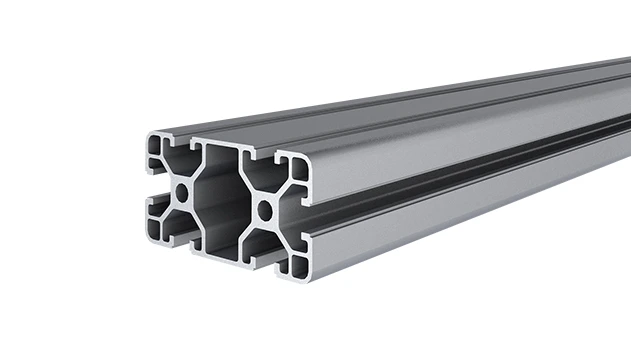
4080A EU Standard Aluminum Profile
4080A is a 4.00x8.00 CM fractional 40 series square extrusion T-slot profile with two side open T-slots, each side with 4.00cm face, two side with 8.00cm face. The profile has align-a-grooves to assist in aligning connecting profiles.
If you've ever walked through a manufacturing plant, visited a warehouse, or even peeked behind the scenes of a tech assembly line, you've probably seen them—those sleek, modular metal frames holding up conveyor belts, workbenches, or storage racks. Chances are, many of those frames are made from aluminum profiles, and one of the most versatile, widely used types is the 4080A EU standard aluminum profile. But here's the thing: not all 4080A profiles are created equal, and the supplier you choose can make or break your project, budget, and sanity.
Whether you're building custom workstations for a small workshop, scaling up production with automated conveyor systems, or designing a modular storage solution for a large facility, the 4080A profile is a workhorse. Its 40mm x 80mm cross-section strikes a perfect balance between strength and flexibility, making it ideal for everything from lightweight shelving to heavy-duty machine frames. But to unlock its full potential, you need a supplier who doesn't just sell you metal—they partner with you to deliver quality, reliability, and peace of mind.
In this guide, we'll walk through the key factors to consider when comparing 4080A EU standard aluminum profile suppliers. We'll skip the jargon, focus on real-world challenges, and help you ask the right questions so you can avoid costly mistakes (like profiles that warp under load or accessories that don't fit) and find a supplier who becomes a long-term asset to your business.
First Things First: What Even Is a 4080A EU Standard Aluminum Profile?
Before we dive into suppliers, let's make sure we're all on the same page about the star of the show: the 4080A EU standard aluminum profile. If you're new to aluminum extrusion profiles, this might sound like just a random string of numbers and letters, but it's actually a code that tells you everything you need to know about its size, design, and compliance.
The "4080" refers to the profile's cross-sectional dimensions: 40mm in width and 80mm in height. The "A" typically denotes a specific groove design or slot configuration—usually T-slots, which are the secret to the profile's modularity. These T-slots let you attach brackets, panels, or accessories without drilling holes, making it easy to assemble, disassemble, and reconfigure structures on the fly. And "EU standard" means the profile meets strict European norms (like DIN 6060 or EN 755) for material quality, dimensional accuracy, and surface treatment—think consistent wall thickness, smooth edges, and corrosion resistance.
Why does this matter? Because EU standards aren't just a stamp of approval—they're a guarantee that the profile will perform as expected. For example, a 4080A profile meeting EN 755 will have a minimum tensile strength of 110 MPa, ensuring it can handle the weight of heavy equipment or constant use in high-traffic areas. Non-standard profiles, on the other hand, might cut corners on alloy quality or extrusion precision, leading to bent frames, loose connections, or even safety hazards down the line.
Key Factor #1: Material Quality—It's All About the Alloy
Let's start with the basics: the aluminum itself. The 4080A profile is typically made from 6063-T5 aluminum alloy, a go-to for extrusions because it's lightweight, strong, and easy to machine. But not all 6063-T5 is the same. A reputable supplier will source high-purity aluminum billets (the raw material for extrusion) and carefully control the alloying process to ensure consistent mechanical properties.
So, what should you ask a supplier about their material quality? Start with certification. A trustworthy supplier will provide a material test report (MTR) for each batch, detailing the alloy composition, tensile strength, yield strength, and elongation. If a supplier hesitates to share this, that's a red flag. You should also inquire about their billet suppliers—are they sourcing from certified mills, or cutting costs with lower-grade material?
Another telltale sign is surface finish. EU standard profiles should have a smooth, uniform anodized coating (usually 10-15 microns thick) that resists scratches, corrosion, and fading. Run your finger along the profile—if it feels rough, has uneven coloring, or shows signs of pitting, that's a sign of poor anodizing. In humid or industrial environments, a subpar finish can lead to rust-like oxidation, weakening the profile over time.
Don't just take their word for it, either. Ask for samples. A good supplier will send you a few 1-meter lengths of 4080A profile so you can inspect the finish, measure the dimensions (a caliper will tell you if the 40mm x 80mm is accurate to within ±0.2mm, as EU standards require), and even test its strength by applying pressure. If a supplier charges exorbitant fees for samples or drags their feet sending them, they're not confident in their product—and you shouldn't be either.

Key Factor #2: Extrusion Precision—Why Tight Tolerances Save You Headaches
Imagine this: you order 100 meters of 4080A profile to build a set of workbenches. You get them delivered, start assembling, and realize half the profiles are slightly warped—so when you try to attach a crossbeam with brackets, the holes don't line up. Cue the frustration, delays, and extra costs of returning or reworking the material. This scenario is all too common with suppliers who cut corners on extrusion precision.
Extrusion is the process of pushing heated aluminum billets through a die to form the profile's shape. For 4080A, the die must be machined with extreme accuracy to ensure consistent dimensions, straightness, and slot alignment. EU standards specify tolerances for straightness (no more than 0.5mm per meter), squareness (90° angles within ±0.5°), and slot width (critical for compatibility with accessories). A supplier with outdated or poorly maintained extrusion equipment will struggle to meet these tolerances.
How can you assess a supplier's extrusion precision? Ask about their die-making process. Do they use computer numerical control (CNC) machines to carve dies, or rely on manual methods? CNC dies are far more precise and consistent. Also, inquire about their quality control checks during production. Do they measure every 10th profile for straightness? Use laser alignment tools to check slot positions? A supplier with a robust QC process will have no problem walking you through their steps.
Slot alignment is especially critical if you're using T-slot accessories like nuts, brackets, or hinges. The T-slots in 4080A profiles are designed to fit standard M8 or M10 bolts, and if the slot width is off by even 0.1mm, the bolts won't seat properly, leading to loose connections. Over time, those loose connections can cause vibrations, noise, and even structural failure. A supplier who prioritizes precision will ensure the slot width, depth, and spacing are consistent across every profile, so your accessories fit like a glove.
Key Factor #3: Aluminum Profile Accessories—The Extras That Make or Break Modularity
A 4080A profile is only as useful as the accessories that go with it. After all, you can't build a workbench with just the frame—you need end caps to cover sharp edges, brackets to connect profiles at 90°, T-slot nuts to secure shelves, and maybe even rubber strips to dampen noise. That's why the best 4080A suppliers don't just sell profiles—they offer a full ecosystem of aluminum profile accessories designed to work seamlessly with their products.
When evaluating a supplier's accessory range, start with compatibility. Are their accessories specifically designed for 4080A EU standard profiles? For example, a 90° aluminum profile connector should have a cross-section that perfectly matches the 40mm x 80mm profile, with screws that align with the T-slots. If a supplier's accessories are generic or "one-size-fits-all," you'll likely end up with wobbly connections or gaps that compromise safety.
Variety matters too. Look for suppliers who stock everything from basic end caps (like the 4080 aluminum profile end cap, designed to snap into the profile's ends) to specialized parts like adjustable feet, cable management clips, or even custom brackets. A supplier with a limited accessory lineup will force you to source parts from multiple vendors, increasing the risk of compatibility issues and complicating your supply chain.
Quality of accessories is just as important as the profiles themselves. Take T-slot nuts, for example—cheap nuts are often made from soft steel that strips easily when tightened, while high-quality ones use hardened steel with a zinc coating to resist corrosion. Similarly, plastic end caps should be made from durable, impact-resistant polypropylene, not brittle PVC that cracks when dropped. Ask the supplier about the material and manufacturing process for their accessories—if they can't tell you, they're probably sourcing from the lowest bidder.
| Accessory Type | What to Look For | Red Flags |
|---|---|---|
| 90° Connectors | Machined from aluminum alloy, tight fit with 4080A profile, pre-drilled holes aligned with T-slots | Loose fit, plastic construction (weak for heavy loads), misaligned holes |
| T-slot Nuts | Hardened steel, zinc-plated finish, smooth sliding in T-slots | Soft metal, rust spots, rough edges that catch on slot walls |
| End Caps | Impact-resistant polypropylene, snug snap-fit, no sharp edges | Brittle plastic, loose fit, visible mold flash (excess plastic from manufacturing) |
| Adjustable Feet | Threaded steel rod, rubber anti-slip base, easy height adjustment | Stripped threads, flimsy plastic bases, hard-to-turn adjustment knobs |
Key Factor #4: Lead Times and Reliability—Why "On Time" Matters More Than You Think
Let's say you've found a supplier with great material quality, precise extrusions, and a full line of accessories. Now, the big question: can they deliver when you need them? In manufacturing, delays cost money—missed deadlines, idle workers, rushed shipping fees. A supplier with unreliable lead times can turn a well-planned project into a logistical nightmare.
Start by asking for their standard lead times. For stock 4080A profiles (uncoated or standard anodized), a good supplier should be able to ship within 3-5 business days. For custom orders—like profiles with special coatings, cut-to-length pieces, or custom colors—lead times might stretch to 2-3 weeks, but they should be upfront about it. If a supplier gives vague answers ("it depends" or "we'll get back to you") without a clear timeline, proceed with caution.
Also, inquire about their production capacity. Do they have multiple extrusion presses? How many tons of aluminum do they extrude monthly? A supplier with limited capacity might struggle to fulfill large orders (say, 10,000 meters) or rush production, leading to quality issues. On the flip side, a supplier with excess capacity might offer faster turnaround times during peak seasons.
Communication is key here, too. A reliable supplier will assign you a dedicated account manager who keeps you updated on your order status—when it's in production, when it's shipping, and if there are any delays (and why). If you have to chase them down for updates or get passed around to different reps, that's a sign of poor customer service. Look for suppliers who use order tracking software or portals where you can log in and check status 24/7.
Don't forget to ask about their shipping partners. Do they work with reputable carriers, or do they use the cheapest option with a history of lost or damaged packages? A good supplier will offer shipping insurance, trackable delivery, and even help with customs documentation if you're importing from overseas. And if a shipment arrives damaged? They should replace it immediately, no questions asked—no blaming the carrier or making you jump through hoops.
Key Factor #5: Technical Support—When You Need More Than Just a Sales Pitch
Even if you're a seasoned engineer, there will be times when you need help with your 4080A project. Maybe you're unsure if the profile can support the weight of a 500kg machine, or you need advice on designing a modular frame that can be disassembled for relocation. That's where technical support comes in—and it's often the difference between a good supplier and a great one.
A supplier with strong technical support will have a team of engineers or application specialists on staff who can answer your questions, review your designs, and suggest optimizations. For example, if you're building a conveyor system, they might recommend reinforcing the 4080A profiles with cross-braces at certain intervals to prevent sagging. Or if you're working in a cleanroom, they can advise on anti-static anodizing options.
How do you gauge a supplier's technical expertise? Start with their website. Do they have resources like CAD drawings, 3D models (STEP files), or application guides for the 4080A profile? A supplier that invests in these tools is committed to helping customers succeed. You can also test their knowledge by asking specific questions: "What's the maximum span I can use for a 4080A profile supporting a 200kg load?" or "Which accessories would you recommend for a quick-assembly workstation that needs to be reconfigured monthly?"
Training is another aspect of technical support. Some suppliers offer workshops or webinars on 4080A profile assembly, accessory usage, or design best practices. If you're new to aluminum extrusion profiles, this can be invaluable. Even if you're experienced, a supplier that invests in customer education is invested in your long-term success.
Finally, post-purchase support matters. Suppose you assemble your workbench and notice a squeaking noise from a connector. A good supplier will troubleshoot with you over the phone, send a replacement part if needed, or even dispatch a technician to your site (for large orders). If they treat you like a one-time transaction and ghost you after payment, you're on your own when problems arise.
Key Factor #6: Pricing Transparency—Avoid Hidden Costs
Let's talk money. It's tempting to go with the supplier offering the lowest price per meter for 4080A profile, but that's rarely the best deal. Low upfront prices often come with hidden costs: rush fees, minimum order quantities (MOQs) that force you to buy more than you need, shipping surcharges, or fees for accessories that should be included.
A transparent supplier will provide a detailed quote that breaks down all costs: profile price per meter, accessory prices, cutting fees (if you need custom lengths), anodizing costs (if not standard), shipping, and taxes. They'll also be clear about MOQs—for example, "Our MOQ for 4080A is 50 meters, but we can accommodate smaller orders with a 10% surcharge." If a supplier's quote is vague ("around $X per meter") or doesn't itemize, ask for a detailed breakdown. If they refuse, they're hiding something.
Also, consider the total cost of ownership, not just the initial price. A slightly more expensive profile from a reputable supplier might save you money in the long run by lasting longer, requiring fewer replacements, and reducing assembly time (thanks to precise tolerances and compatible accessories). On the flip side, a cheap profile with warped sections or mismatched accessories could cost you hours of rework, not to mention the risk of project delays.
Don't be afraid to negotiate, either. If you're placing a large order (1000+ meters), most suppliers will offer volume discounts. Some also offer loyalty programs for repeat customers. A supplier that's willing to work with you on pricing shows they value your business—not just your current order.
Key Factor #7: Sustainability—Why Green Practices Matter (Even If You Don't Think They Do)
Sustainability might not be the first thing on your mind when buying aluminum profiles, but it's becoming increasingly important—for your brand, your customers, and the planet. Aluminum is 100% recyclable, and recycling it uses 95% less energy than producing new aluminum. A supplier that prioritizes sustainability can help you reduce your carbon footprint and meet ESG (environmental, social, governance) goals.
So, what should you ask about a supplier's sustainability practices? Start with recycled content. Do they use recycled aluminum in their billets? Many EU suppliers now offer profiles with 30-50% recycled content without compromising quality. They should also be able to share their carbon footprint per ton of extruded aluminum—look for suppliers with certifications like ISO 14001 (environmental management) or EPD (Environmental Product Declaration).
Energy efficiency is another factor. Extrusion is energy-intensive, so suppliers with modern, energy-efficient presses (like those using variable frequency drives) or solar-powered factories will have a lower environmental impact. They should also have waste reduction programs—recycling scrap aluminum from the extrusion process, reusing water in anodizing, or minimizing packaging waste.
Why does this matter for you? More and more customers, especially in industries like automotive, aerospace, and consumer electronics, are requiring their suppliers to meet sustainability standards. Partnering with a green 4080A supplier can make your business more attractive to these customers. Plus, sustainable practices often go hand-in-hand with efficiency—suppliers that reduce waste and energy use are often more cost-effective, too.
Putting It All Together: How to Vet a Supplier (A Quick Checklist)
By now, you're probably thinking, "This is a lot to check—how do I even start?" Here's a simple checklist to help you vet 4080A EU standard aluminum profile suppliers efficiently:
- Material Quality: Ask for MTRs, inspect sample finishes, and test dimensional accuracy.
- Extrusion Precision: Check tolerances (straightness, squareness, slot alignment) and ask about die-making and QC processes.
- Accessories: Verify compatibility with 4080A profiles, check accessory quality, and ensure a full product lineup.
- Lead Times & Reliability: Get clear timelines, ask about production capacity, and assess communication practices.
- Technical Support: Look for CAD resources, application specialists, and post-purchase assistance.
- Pricing Transparency: Demand detailed quotes with no hidden fees and negotiate volume discounts if applicable.
- Sustainability: Inquire about recycled content, energy use, and environmental certifications.
Remember, the goal isn't to find the "perfect" supplier—it's to find one that aligns with your priorities. If you're on a tight budget, you might trade some accessory variety for lower prices. If you need ultra-precise profiles for a medical device frame, you'll prioritize extrusion accuracy and material certifications over cost. The key is to be clear about your needs and ask the right questions.
Final Thoughts: Your Supplier Is Your Partner
At the end of the day, choosing a 4080A EU standard aluminum profile supplier isn't just about buying metal—it's about building a partnership. The right supplier will understand your challenges, anticipate your needs, and grow with your business. They'll turn a transactional purchase into a collaborative relationship that saves you time, money, and stress.
So, take your time. Research multiple suppliers, ask tough questions, and don't settle for "good enough." The 4080A profile is a versatile, durable solution for countless applications—but its success depends on the supplier behind it. With the right partner, you'll not only get high-quality profiles and accessories—you'll get the confidence to take on bigger projects, innovate, and build better.
Now, go out there and find your supplier. Your next project (and your peace of mind) will thank you.