- Company Articles
- Products and Technology
- Product knowledge
- Comparing Aluminum Honeycomb Panels to Fiberglass: Strength & Weight Considerations

Comparing Aluminum Honeycomb Panels to Fiberglass: Strength & Weight Considerations
Related Product
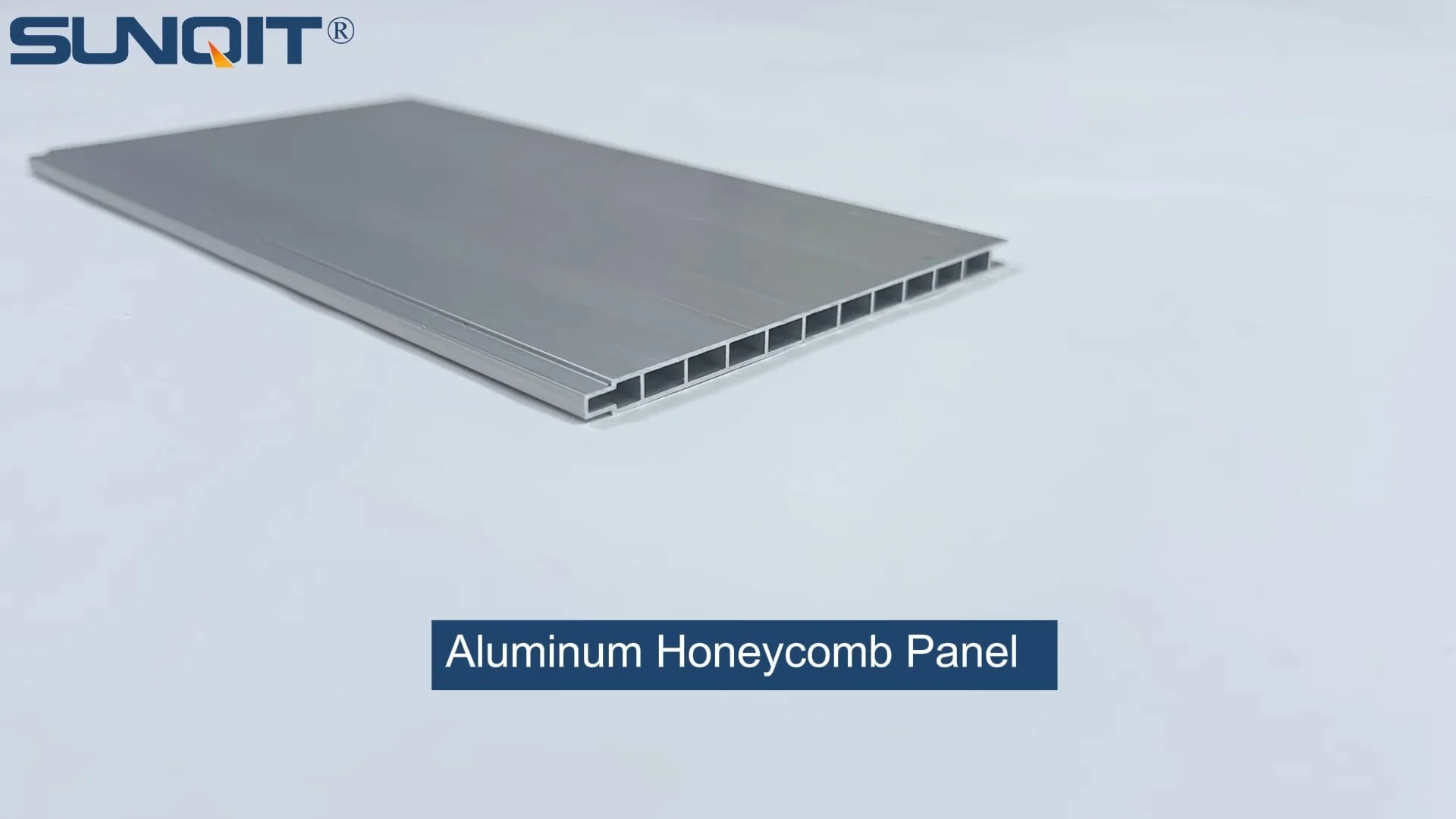
Aluminum Honeycomb Panel
Aluminum honeycomb panel used as table top, side wall, it is connected one pcs by one pcs from the side slot to make a full pieces.This panel width 105mm, 55mm, 35mm are optional for slection.
Choosing the right material for a project is like picking the perfect tool for a job—get it right, and everything runs smoothly; get it wrong, and you might end up with inefficiencies, added costs, or even safety risks. In industries ranging from aerospace and automotive to manufacturing and construction, two materials often stand out for their balance of strength and weight: aluminum honeycomb panels and fiberglass. Both have earned reputations for durability, but they shine in different scenarios. Let's dive into what makes each unique, how they stack up in terms of strength and weight, and where each truly excels.
What Are Aluminum Honeycomb Panels?
Picture a beehive—thousands of tiny hexagonal cells working together to create a structure that's both lightweight and surprisingly strong. That's the genius behind aluminum honeycomb panels. These panels are engineered with a core that mimics that honeycomb pattern, sandwiched between two thin sheets (or "skins") of aluminum. The result? A material that punches far above its weight class.
The magic starts with the manufacturing process. The honeycomb core is typically made from thin aluminum sheets that are cut, folded, and bonded together to form the hexagonal cells. This core is then glued or bonded to the outer aluminum skins, which are often made from aluminum extrusion profiles—precision-engineered aluminum shapes that add rigidity without extra bulk. The combination creates a panel that's lightweight because the honeycomb core uses minimal material, yet incredibly strong because the hexagonal cells distribute weight evenly across the entire structure.
Think of it this way: if you tried to crush a single honeycomb cell, it might collapse easily. But when thousands of cells are connected, they support each other, turning a fragile structure into one that can withstand heavy loads. That's why aluminum honeycomb panels are a favorite in applications where every pound counts—like airplane interiors, ship decks, or even high-end furniture where strength and sleek design go hand in hand.
What Is Fiberglass?
Fiberglass, on the other hand, is a material with a more straightforward (but no less clever) design. It's made by embedding tiny glass fibers—often thinner than human hair—into a resin matrix, usually polyester or epoxy. These fibers act like the "bones" of the material, while the resin holds them together and protects them from damage. The result is a material that's strong, flexible, and resistant to corrosion, chemicals, and weather.
Fiberglass comes in many forms: sheets, tubes, rods, and even custom-molded shapes. Unlike aluminum honeycomb panels, which are rigid by design, fiberglass can be shaped into complex curves and contours, making it ideal for parts with irregular geometries. You've probably seen fiberglass in action without realizing it—boat hulls, car body panels, bathtubs, and even some types of insulation all rely on its unique properties.
One of fiberglass's biggest selling points is its versatility. By adjusting the type of resin, the density of the glass fibers, or the manufacturing process (like hand-layup vs. pultrusion), engineers can tweak its strength, flexibility, and weight to fit almost any need. It's like a customizable material that can be dialed in for specific tasks, from lightweight panels to heavy-duty structural components.

Strength Considerations: How Do They Hold Up?
Strength isn't a one-size-fits-all metric. A material might be great at resisting pulling forces (tensile strength) but weak when pushed (compressive strength), or vice versa. Let's break down how aluminum honeycomb panels and fiberglass perform in key strength categories.
Tensile Strength: Resisting the Pull
Tensile strength is all about how well a material can withstand being stretched or pulled apart. Fiberglass excels here. The glass fibers in fiberglass are incredibly strong in tension—stronger than many metals, in fact. When force is applied, the fibers bear the load, while the resin keeps them aligned and prevents them from fraying. This makes fiberglass a top choice for applications like boat masts, where the material needs to handle the constant pull of sails without snapping.
Aluminum honeycomb panels, while not weak in tension, rely more on their outer aluminum skins for this property. The honeycomb core itself isn't designed to take much tensile load, but the skins—typically made from high-strength aluminum alloys—provide decent resistance. However, their real strength lies elsewhere, as we'll see next.
Compressive Strength: Standing Up to Pressure
Compressive strength is about withstanding crushing or pushing forces—and this is where aluminum honeycomb panels truly shine. The hexagonal cells of the honeycomb core act like tiny pillars, distributing compressive loads evenly across the panel. Imagine standing on a sheet of aluminum foil: it would crumple instantly. But if you shape that foil into a honeycomb and sandwich it between two rigid sheets, suddenly it can support your weight. That's the power of the honeycomb structure.
Fiberglass, by contrast, is less impressive in compression. While the resin matrix can handle some pressure, the glass fibers aren't as effective at resisting crushing forces. In high-compression scenarios—like the floor of a commercial airplane or a heavy-duty workbench—fiberglass might deform or crack under sustained pressure, whereas an aluminum honeycomb panel would stay rigid.
Flexural Strength: Bending Without Breaking
Flexural strength (or bending strength) measures how well a material can bend without snapping. Here, both materials have their merits, but for different reasons. Fiberglass is naturally flexible, thanks to its resin matrix, which allows it to bend and then return to its original shape. This flexibility makes it ideal for parts that need to absorb impacts, like motorcycle fairings or sports equipment, where a rigid material might shatter.
Aluminum honeycomb panels, on the other hand, are rigid but not brittle. The honeycomb core acts as a shock absorber, spreading out bending forces across the panel. This makes them great for applications like wall panels in buildings or partitions in factories, where the material needs to stay straight but can tolerate minor flexing without permanent damage.

Weight Considerations: Lightweight Champions?
In many industries—aerospace, automotive, and even manufacturing—weight is just as critical as strength. A lighter material can mean lower fuel costs for planes and cars, easier handling for workers, and reduced structural stress on buildings. Let's compare the two materials in terms of weight.
Aluminum Honeycomb Panels: The Lightweight Leaders
Aluminum honeycomb panels are designed to be lightweight by nature. The honeycomb core is mostly air, which cuts down on material usage without sacrificing strength. A typical aluminum honeycomb panel might weigh as little as 3-5 pounds per square foot, depending on the thickness of the skins and the density of the core. Compare that to a solid aluminum sheet of the same thickness, which could weigh 10-15 pounds per square foot, and the difference is clear.
This lightness makes them a favorite in aerospace, where every pound saved translates to thousands of dollars in fuel costs over a plane's lifetime. They're also used in portable workbenches (there's that keyword!) in manufacturing facilities—workers can easily move the benches around the shop floor without straining, but the panels still support heavy tools and equipment.
Fiberglass: Light, but Not as Light
Fiberglass is no heavyweight, either. It's significantly lighter than steel, cast iron, or even solid aluminum, which is why it's used in everything from RV walls to lightweight boat hulls. A typical fiberglass sheet might weigh 5-8 pounds per square foot, which is lighter than many metals but heavier than aluminum honeycomb panels of similar thickness.
The tradeoff? Fiberglass is often thicker than aluminum honeycomb panels for the same strength, which can add up in large-scale applications. For example, a fiberglass airplane panel might need to be twice as thick as an aluminum honeycomb panel to achieve the same rigidity, negating some of its weight savings.
Real-World Applications: Where Each Material Shines
To truly understand the difference between aluminum honeycomb panels and fiberglass, let's look at how they're used in real industries. This is where their unique strengths and weaknesses become most apparent.
Aluminum Honeycomb Panels in Action
Aerospace: Commercial airplanes use aluminum honeycomb panels for interior walls, ceilings, and overhead bins. These panels need to be lightweight to save fuel, rigid to meet safety standards, and fire-resistant—all boxes aluminum honeycomb panels check.
Manufacturing: Heavy-duty workbenches in factories often feature aluminum honeycomb tops. They're lightweight enough for workers to reposition, yet strong enough to support power tools, machinery, and raw materials. The honeycomb core also dampens vibrations, making them ideal for precision work like electronics assembly.
Construction: Curtain walls (the outer skins of modern skyscrapers) frequently use aluminum honeycomb panels. They provide insulation, reduce the building's overall weight (lowering foundation costs), and can be customized with different finishes for a sleek look.
Fiberglass in Action
Marine: Boat hulls and decks are often made from fiberglass. It's resistant to saltwater corrosion, flexible enough to handle waves without cracking, and easy to mold into complex shapes—perfect for boat designers.
Automotive: Sports cars use fiberglass for body panels to reduce weight and improve performance. It's also used in parts like fenders and bumpers, where its flexibility helps absorb impacts in minor collisions.
Renewable Energy: Wind turbine blades are often made from fiberglass (or a fiberglass-carbon fiber blend). The material is strong enough to withstand high winds, lightweight to keep the turbine efficient, and durable enough to last for decades in harsh weather.
A Side-by-Side Comparison
| Property | Aluminum Honeycomb Panels | Fiberglass |
|---|---|---|
| Weight (per sq. ft.) | 3-5 lbs | 5-8 lbs |
| Tensile Strength | Good (depends on aluminum skin thickness) | Excellent (glass fibers excel in tension) |
| Compressive Strength | Excellent (honeycomb core distributes load) | Fair (resin matrix weakens under pressure) |
| Flexibility | Rigid (little bending before breaking) | Flexible (can bend and return to shape) |
| Corrosion Resistance | Good (aluminum resists rust; can be coated for extra protection) | Excellent (resistant to water, chemicals, and salt) |
| Cost | Higher (complex manufacturing process) | Lower (easier to produce in bulk) |
Pros and Cons: Choosing the Right Material for Your Project
No material is perfect, so let's summarize the upsides and downsides of each to help you decide.
Aluminum Honeycomb Panels
Pros:
- Exceptionally lightweight, making it ideal for weight-sensitive applications.
- Superior compressive strength and rigidity, great for structural panels and workbenches.
- Recyclable and sustainable, appealing for eco-conscious industries.
- Good thermal and acoustic insulation properties.
Cons:
- Higher upfront cost due to complex manufacturing.
- Not as flexible as fiberglass; can crack under extreme bending.
- Aluminum skins can corrode in highly acidic or alkaline environments (though coatings can help).
Fiberglass
Pros:
- Lower cost and easier to mold into custom shapes.
- Excellent corrosion resistance, perfect for marine and chemical environments.
- High tensile strength and flexibility, ideal for impact-resistant parts.
- Good electrical insulation properties.
Cons:
- Heavier than aluminum honeycomb panels for the same strength.
- Weaker in compression; can deform under heavy, sustained loads.
- Not easily recyclable (though some recycling methods exist), which may be a drawback for sustainability-focused projects.
Conclusion: It's All About the Project
Aluminum honeycomb panels and fiberglass are both exceptional materials, but they're like two different tools in a toolbox—each has a job it does best. If your project demands lightweight rigidity, excellent compressive strength, and sustainability—think airplane panels, workbenches, or skyscraper cladding—aluminum honeycomb panels are the way to go. If you need flexibility, corrosion resistance, and lower cost—like boat hulls, sports car parts, or chemical-resistant equipment—fiberglass is the better choice.
At the end of the day, the "best" material depends on your priorities: weight, strength, cost, environment, and design. By understanding how aluminum honeycomb panels and fiberglass stack up, you can make a choice that keeps your project efficient, durable, and successful—now and for years to come.