- Company Articles
- Products and Technology
- Product knowledge
- Comparing Aluminum Honeycomb Panels to Solid Wood: Industrial Workbench Applications

Comparing Aluminum Honeycomb Panels to Solid Wood: Industrial Workbench Applications
Related Product
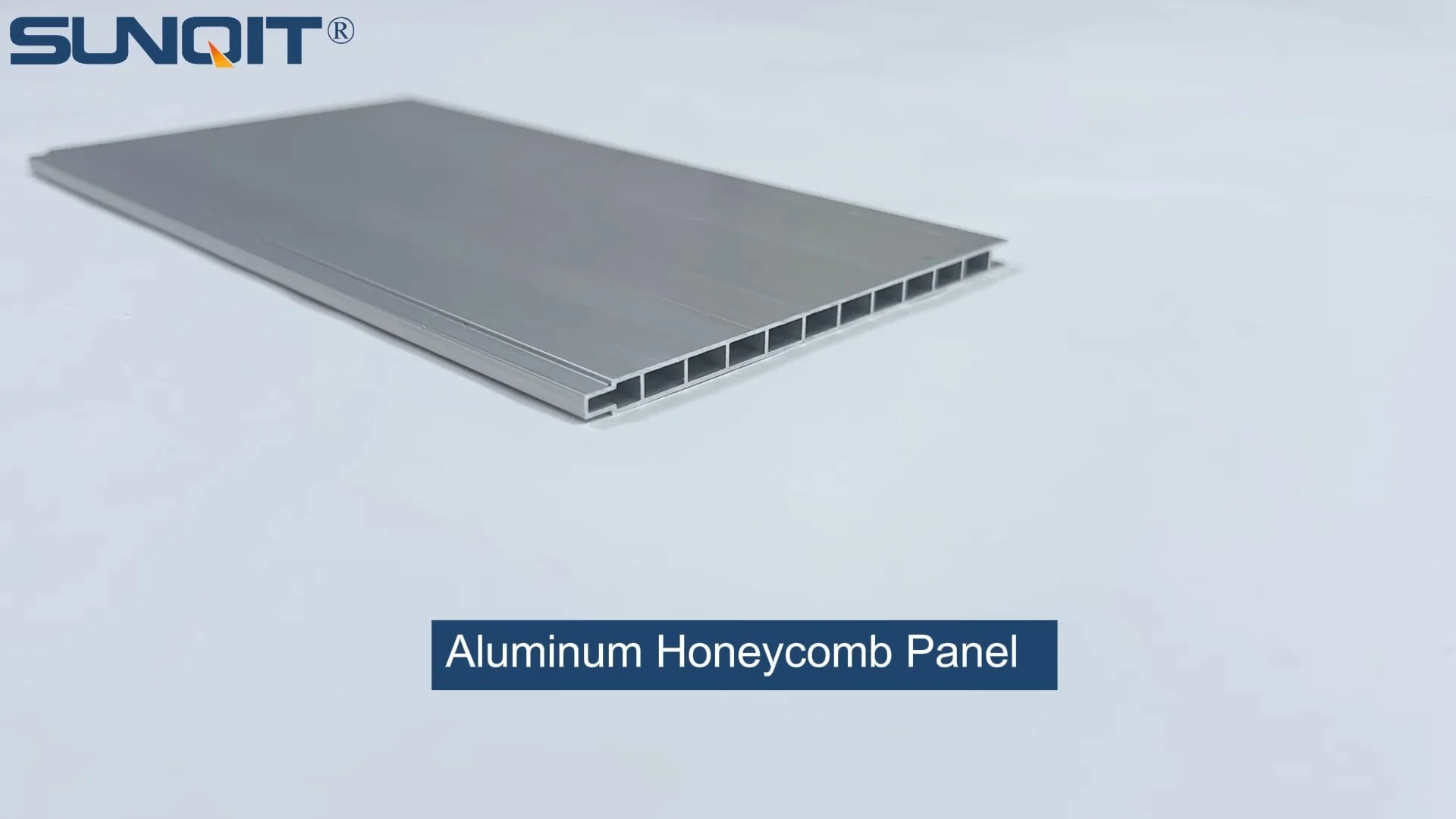
Aluminum Honeycomb Panel
Aluminum honeycomb panel used as table top, side wall, it is connected one pcs by one pcs from the side slot to make a full pieces.This panel width 105mm, 55mm, 35mm are optional for slection.
Walk into any workshop, factory floor, or laboratory, and you'll likely spot a familiar workhorse: the workbench. It's where ideas take shape, components get assembled, and precision meets productivity. For decades, solid wood has been the go-to material for these essential surfaces, prized for its warmth, durability, and that classic, hands-on feel. But as industries evolve—demanding lighter, more resilient, and adaptable solutions—a new contender has emerged: aluminum honeycomb panels. Today, we're diving into the showdown between these two materials, exploring how they stack up in real-world industrial settings, and why the choice matters more than you might think.
The Legacy of Solid Wood Workbenches: Craftsmanship Meets Tradition
Let's start with the veteran in the room: solid wood. For generations, woodworkers, mechanics, and artisans have relied on solid wood workbenches. There's a reason for that—wood feels human . It's a material with history, one that carries the marks of years of use: a nick here from a wayward hammer, a stain there from a spilled can of lubricant, all telling the story of the work that happened on its surface. But beyond nostalgia, solid wood brings tangible benefits to the table.
What Makes Solid Wood a Classic Choice?
Solid wood workbenches are typically crafted from hardwoods like oak, maple, or beech—dense, sturdy woods that stand up to heavy use. Think about a traditional automotive repair shop: the mechanic slams down a wrench, and the wood absorbs the shock, protecting both the tool and the surface underneath. That natural shock absorption is a big plus. Wood also has a slight "give" to it, which can be gentler on delicate parts compared to harder materials. And let's not forget aesthetics: a well-made oak workbench adds a touch of warmth to an otherwise industrial space, making long shifts feel a little less sterile.
Repairability is another feather in wood's cap. Scratched or dented? Sand it down, apply a fresh coat of varnish, and it's good as new. Unlike some modern materials that crack or shatter when damaged, wood is forgiving. For small workshops or family-owned businesses that value longevity, this is a huge advantage. Why replace an entire bench when you can refinish the top for a fraction of the cost?
The Downsides: When Tradition Meets Modern Demands
But solid wood isn't without its flaws—especially in fast-paced, high-volume industrial settings. Let's start with weight. A typical 6-foot solid oak workbench can weigh upwards of 300 pounds. Try moving that across a factory floor when you need to reconfigure your workspace for a new production line. It's not just heavy; it's a logistical headache, often requiring forklifts or multiple workers. In lean manufacturing environments, where agility and quick setup changes are key, that bulk becomes a liability.
Then there's moisture. Wood is a natural material, and it reacts to its environment. In humid factories or labs, it can swell; in dry climates, it can shrink or crack. That warping isn't just unsightly—it can throw off precision work. Imagine a electronics assembler trying to align tiny components on a bench that's developed a slight curve. Suddenly, that "character" becomes a quality control issue.
Maintenance is another ongoing chore. Wood needs regular sealing to resist stains from oils, chemicals, or water. Spill a bottle of cleaning solvent, and if it seeps in, you might end up with a permanent mark. And while refinishing works for minor damage, major gouges or rot can compromise the structural integrity, forcing a replacement sooner than expected. For large facilities with dozens of workbenches, that upkeep adds up in time and money.
Aluminum Honeycomb Panels: The New Kid on the Bench (But Far from Flimsy)
Now, let's turn to the challenger: aluminum honeycomb panels. At first glance, they might seem cold or clinical compared to wood, but don't let appearances fool you. These panels are engineered for performance, designed to tackle the exact pain points that solid wood struggles with. But what are aluminum honeycomb panels, exactly?
Inside the Honeycomb: A Design Marvel
Picture a beehive: thousands of tiny hexagonal cells, each reinforcing the others, creating a structure that's both lightweight and incredibly strong. Aluminum honeycomb panels borrow that genius design. They consist of a thin, hollow core shaped like a honeycomb (usually made of aluminum or fiberglass) sandwiched between two thin aluminum sheets. The result? A panel that's up to 70% lighter than solid wood but just as strong—if not stronger. It's the same principle that makes airplane wings light enough to fly but tough enough to withstand turbulence.
This design isn't just about weight, though. The honeycomb core acts as a natural insulator, keeping the work surface stable in extreme temperatures—perfect for factories with hot machinery or cold storage areas. And because the panels are made from aluminum, they're inherently resistant to moisture, chemicals, and corrosion. Spill a caustic cleaning agent? Wipe it off with a cloth, and the surface won't stain or degrade. That's a game-changer for industries like food processing, pharmaceuticals, or chemical labs, where hygiene and durability are non-negotiable.
Why Industries Are Making the Switch
Let's talk about adaptability. Aluminum honeycomb panels are highly customizable. Need a specific size? They can be cut to fit any workspace. Want a specialized surface? Add a layer of ESD (electrostatic discharge) material to protect sensitive electronics, or a non-slip coating for assembly lines. This flexibility makes them ideal for modern workbench setups, like the modular lean pipe workbench systems used in lean manufacturing. These systems use lightweight aluminum pipes and joints to build configurable workstations, and pairing them with aluminum honeycomb tops creates a setup that's easy to adjust, expand, or reconfigure as production needs change.
Weight is another huge advantage. A 6-foot aluminum honeycomb workbench top might weigh as little as 40 pounds—light enough for two workers to carry and reposition in minutes. In a busy warehouse where floor plans change weekly, this saves time, reduces the risk of injury, and keeps operations running smoothly. And because aluminum is recyclable, these panels align with the sustainability goals many companies are prioritizing today. Unlike solid wood, which requires cutting down trees, aluminum can be recycled repeatedly without losing quality, making it a greener choice for eco-conscious businesses.
Are There Drawbacks to Aluminum Honeycomb?
No material is perfect, and aluminum honeycomb panels have their own set of considerations. The biggest one is upfront cost. While they're often cheaper to maintain long-term, the initial investment can be higher than solid wood, especially for high-end configurations with ESD coatings or custom sizes. For small businesses on tight budgets, this might be a barrier—though many find the savings in maintenance and longevity make up for it over time.
Another thing to note is sound. Unlike wood, which absorbs noise, aluminum is more reflective. In a loud factory, this can amplify echoes, making the workspace noisier. That said, many manufacturers address this by adding sound-dampening layers to the honeycomb core, so it's often a solvable issue. And let's be honest: for most industrial settings, a little extra noise is a small price to pay for the benefits of a lighter, more durable surface.

Head-to-Head: How Do They Compare in Real-World Use?
To really understand the difference, let's put solid wood and aluminum honeycomb panels side by side. Below is a breakdown of how they perform in key areas that matter to industrial users:
| Criteria | Solid Wood Workbenches | Aluminum Honeycomb Panels |
|---|---|---|
| Weight | Heavy (200–400 lbs for a 6-foot bench); difficult to move. | Lightweight (30–60 lbs for a 6-foot panel); easy to reposition. |
| Durability | Resistant to impacts but prone to warping, cracking, and staining. | Impact-resistant, moisture/chemical-proof, and corrosion-resistant; minimal wear over time. |
| Maintenance | Requires regular sanding, sealing, and refinishing to prevent damage. | Low maintenance: wipe clean with soap and water; no sealing needed. |
| Customization | Limited: mostly size and wood type; adding specialized coatings is difficult. | Highly customizable: ESD coatings, non-slip surfaces, cut-to-size, and integration with lean pipe systems. |
| ESD Compatibility | Not inherently ESD-safe; requires additional (often temporary) treatments. | Easily modified with permanent ESD layers, ideal for electronics manufacturing. |
| Sustainability | Depends on wood source; may involve deforestation if not from sustainable forests. | Highly sustainable: aluminum is 100% recyclable and reusable. |
| Cost | Lower upfront cost; higher long-term maintenance expenses. | Higher upfront cost; lower long-term maintenance and replacement costs. |

Industry Spotlight: Where Each Material Shines
To get a clearer picture, let's look at how these materials perform in specific industries. After all, what works for a small woodworking shop might not cut it for a high-tech electronics plant.
Solid Wood: Still Thriving in Niche Spaces
Solid wood hasn't disappeared—and for good reason. In artisanal workshops, custom furniture makers, or small-scale repair shops, the benefits of wood still outweigh the drawbacks. A luthier crafting violins needs a surface that won't damage delicate wood components, and a solid maple bench provides the perfect balance of strength and gentleness. Similarly, in heritage restoration projects, where preserving traditional methods is key, a solid wood workbench fits right in. It's also popular in educational settings, like trade schools, where students learn the ropes on the same material their predecessors used decades ago.
Aluminum Honeycomb: Dominating Modern Industrial Settings
Aluminum honeycomb panels, on the other hand, are becoming the standard in industries where efficiency, precision, and adaptability are critical. Take electronics manufacturing: here, ESD workbenches are a must to prevent static electricity from frying microchips. Aluminum honeycomb panels can be coated with ESD-safe materials, creating a surface that dissipates static charge and protects sensitive components. Pair that with a modular lean pipe workbench frame, and you've got a setup that can be adjusted to fit different assembly lines—whether you're building smartphones or circuit boards.
Automotive production lines are another big adopter. With their high resistance to oils, greases, and chemicals, aluminum honeycomb tops stand up to the harsh conditions of a car factory. They're also lightweight enough to integrate into moving assembly lines, where workbenches need to shift positions as vehicles move through production stages. And in food and beverage facilities, where hygiene is paramount, the non-porous surface of aluminum honeycomb panels makes them easy to sanitize, reducing the risk of contamination.
The Verdict: Why Aluminum Honeycomb Is Gaining Ground
So, which material comes out on top? It depends on your needs—but for most industrial applications, aluminum honeycomb panels are pulling ahead. They address the biggest pain points of solid wood: weight, maintenance, and adaptability. In a world where industries are racing to keep up with changing consumer demands, lean manufacturing principles, and sustainability goals, a workbench that's lightweight, customizable, and built to last isn't just a nice-to-have—it's a necessity.
That said, solid wood still has a place. For small shops, traditional crafts, or settings where aesthetics and heritage matter, it's hard to beat the warmth and character of a well-made wooden bench. But for the majority of factories, labs, and production facilities? Aluminum honeycomb panels are the future. They're a material designed for the way we work now: fast, flexible, and focused on long-term efficiency.
Final Thoughts: Choosing the Right Workbench for Your Team
At the end of the day, the best workbench material is the one that makes your team's job easier. It's the bench that doesn't slow down production because it's too heavy to move. The one that doesn't warp or stain, so your workers can focus on building quality products instead of maintaining surfaces. The one that grows with your business, adapting to new projects, new tools, and new ways of working.
Solid wood has earned its place in history, but aluminum honeycomb panels are writing the next chapter—one where durability, adaptability, and sustainability go hand in hand. So whether you're setting up a new lean pipe workbench system, upgrading an ESD workstation, or just looking to make your shop floor more efficient, it's worth giving aluminum honeycomb panels a closer look. Your team (and your bottom line) might thank you.