- Company Articles
- Products and Technology
- Procurement Guidelines
- Comparing Aluminum Workbench D Prices: Is It Worth the Investment?

Comparing Aluminum Workbench D Prices: Is It Worth the Investment?
Related Product
Aluminum Workbench D
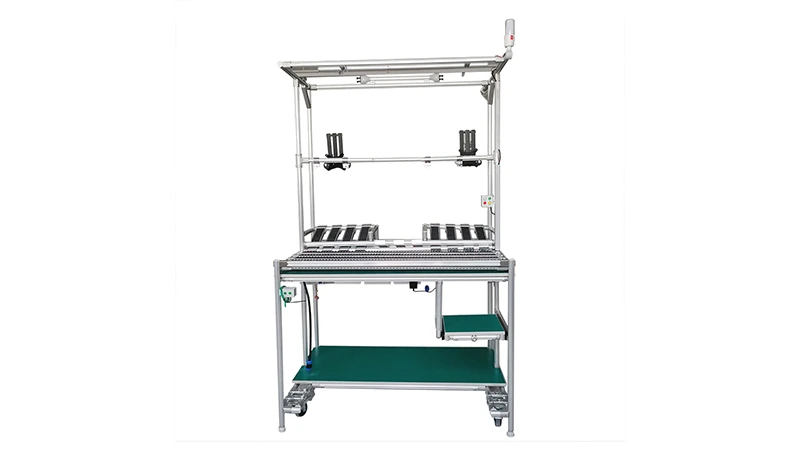
Aluminum tube workbench is more flexible and durable, compared with traditional PE/ABS coated steel tube. It is easy to assemble, anti corrosion, rust protection, and recycle use after disassemble.
Introduction: The Workhorse of Modern Workspaces
Walk into any bustling workshop, electronics assembly line, or small-scale manufacturing unit today, and you'll likely spot a common sight: sleek, modular workbenches that seem to effortlessly blend durability with flexibility. Among these, the aluminum workbench D has emerged as a quiet favorite—praised by shop managers, warehouse supervisors, and lean system enthusiasts alike. But here's the question that often lingers: with prices ranging from a few hundred to several thousand dollars, is this workbench truly worth the investment? In this article, we'll dive deep into the world of aluminum workbench D, unpack the factors that shape its price tag, compare costs across different suppliers, and help you decide if it's the right fit for your workspace.
First, let's set the stage. Aluminum workbench D isn't just another table. It's a product of careful engineering, designed to align with the principles of lean systems —those focused on minimizing waste, maximizing efficiency, and adapting to evolving needs. Unlike clunky wooden benches or rigid steel structures, this workbench leans on aluminum profile technology, which offers a unique mix of strength, lightness, and modularity. But how does that translate to cost? And more importantly, does the price reflect long-term value?
What Exactly Is Aluminum Workbench D?
Before we start comparing prices, let's make sure we're all on the same page about what aluminum workbench D is. At its core, it's a single-deck workbench (though some variants may offer double decks) typically designed without casters—meaning it's stationary, built to anchor a specific workflow station. Its defining feature? The frame, constructed from high-grade aluminum extrusion profile —hollow, lightweight tubes with precision-engineered T-slots that allow for easy attachment of accessories. Think tool holders, shelves, bins, or even monitor mounts—all without drilling or welding.
If you've ever struggled with a traditional wooden workbench that warped after a year of use, or a steel bench that required a forklift to reposition, you'll appreciate why aluminum workbench D stands out. The aluminum profile isn't just lightweight; it's resistant to corrosion, easy to clean, and surprisingly strong. Many models can support loads of 300–500 pounds, making them ideal for heavy tools, assembly projects, or material storage. And because the aluminum extrusion profile is standardized, replacing parts or reconfiguring the bench down the line is a breeze—no need to buy a whole new setup if your needs change.
But perhaps its biggest selling point is its role in lean system implementation. Lean manufacturing (or lean management, more broadly) is all about creating value with fewer resources. Aluminum workbench D fits this ethos perfectly: its modular design reduces clutter, its durability minimizes replacement costs, and its adaptability ensures it can grow with your business. For small businesses scaling up or large facilities streamlining operations, this workbench isn't just furniture—it's a tool for efficiency.

Breaking Down the Price Tag: What Influences Aluminum Workbench D Costs?
Now, let's get to the heart of the matter: why do aluminum workbench D prices vary so much? You might find a basic model online for $300, while a custom-built version from a specialty supplier could set you back $2,000 or more. To understand this range, we need to look at the key factors that drive cost.
1. Material Quality: Not All Aluminum Profiles Are Created Equal
The foundation of any aluminum workbench D is its aluminum profile , and here's where quality makes a huge difference. Aluminum extrusion profiles come in different grades (like 6061 or 6063, common in industrial use) and wall thicknesses (ranging from 1.2mm to 3mm or more). Thicker profiles and higher-grade alloys (like 6061-T6, known for strength) will cost more upfront but offer better load-bearing capacity and resistance to bending or warping over time. A workbench made with 1.2mm thin-walled aluminum might save you money today, but if it sags under the weight of your tools in six months, you'll end up replacing it sooner—costing more in the long run.
Another material consideration is the worktop. Most aluminum workbench D models come with a single deck, but the material of that deck varies. Options include plain aluminum sheets, aluminum honeycomb panels (for lighter weight with added rigidity), or even composite surfaces (like phenolic resin) for chemical resistance. A honeycomb panel, for example, could add $100–$200 to the price, but it reduces the bench's overall weight without sacrificing strength—ideal if you ever need to move it (casters sold separately, of course).
2. Size and Dimensions: Bigger Isn't Always Better (But It Costs More)
It's no surprise that size plays a role in pricing. A compact aluminum workbench D (say, 48 inches long x 24 inches deep) will cost less than a sprawling 72-inch model designed for multiple workers. But it's not just length and width—height matters too. Adjustable-height models (with telescoping aluminum profiles) are growing in popularity, as they allow workers to switch between sitting and standing positions, boosting ergonomics. However, this adjustability adds complexity to the design, often increasing the price by 20–30% compared to fixed-height versions.
When evaluating size, think about your actual needs. A small electronics repair shop might thrive with a 48-inch bench, while a automotive parts assembly line could require 6-foot or 8-foot models. Overbuying on size means paying for unused space; undersizing leads to cramped workspaces and inefficiency—both costly mistakes.
3. Accessories: The Extras That Add Up
Here's where things get tricky: a "base" aluminum workbench D might sound affordable, but once you start adding accessories, the price can climb quickly. Common add-ons include aluminum profile accessories like side shelves, tool rails, LED task lights, or cable management clips. Even seemingly small items—like a set of anti-slip matting for the worktop or ESD (electrostatic discharge) protection for electronics work—can add $50–$150 to the total cost.
One accessory that often sparks debate is casters. Remember, aluminum workbench D is typically sold "without caster" (as noted in some product listings), but many suppliers offer optional caster wheels for mobility. A set of heavy-duty locking casters can add $80–$150, but for workshops that need to reconfigure layouts frequently, this might be a worthwhile investment. The key is to prioritize accessories that directly impact your workflow—skip the frills if they don't add value.
4. Supplier Type: Wholesale vs. Retail, Local vs. Global
Who you buy from matters almost as much as what you buy. Aluminum workbench D supplier s come in all shapes and sizes: global wholesalers, local distributors, online retailers, and even custom fabricators. Let's break down how each type affects price:
- Wholesale Suppliers : These are the manufacturers or direct distributors who sell in bulk. If you're buying 10+ workbenches, a wholesale supplier might offer prices 30–40% lower than retail. For example, a wholesale order of 10 basic aluminum workbench D units could cost $250–$400 each, compared to $400–$600 each at a retail store.
- Local Suppliers : Local shops often provide personalized service, faster delivery, and easier returns—but they may mark up prices by 15–25% to cover overhead. However, the trade-off is convenience: if you need a workbench tomorrow, a local supplier might be your only option.
- Online Retailers : Platforms like Amazon or industrial supply sites offer a middle ground. Prices are often lower than local stores but higher than wholesale, and you'll need to factor in shipping costs (which can add $50–$100 for heavy items). Plus, returns can be a hassle if the workbench arrives damaged.

Comparing Prices: A Look at Real-World Examples
To make this tangible, let's compare aluminum workbench D prices across different supplier types. Below is a table based on market research (prices are approximate and may vary by region, size, and customization):
| Supplier Type | Average Price Range (USD) | Key Features Included | Minimum Order | Lead Time |
|---|---|---|---|---|
| Global Wholesale Supplier | $250–$500 | Basic aluminum profile frame, single deck, standard height, no accessories | 10+ units | 4–6 weeks (including shipping) |
| Local Industrial Supplier | $450–$800 | Mid-grade aluminum profile, optional height adjustment, basic tool rail | 1 unit | 3–5 days |
| Online Retailer (e.g., Amazon, Uline) | $350–$700 | Standard aluminum profile, some accessories (e.g., shelf, ESD mat), free shipping | 1 unit | 5–7 days |
| Custom Fabricator | $800–$2,000+ | Heavy-duty aluminum extrusion profile, custom size, premium accessories (LED lights, power strips, ESD protection) | 1 unit | 2–4 weeks |
As you can see, the price gap is significant. A global wholesale order offers the lowest per-unit cost but requires a large upfront purchase and long wait. A custom fabricator delivers a tailor-made solution but at a premium. For most small to medium businesses, the sweet spot often lies with local suppliers or online retailers—offering a balance of price, convenience, and flexibility.
Is It Worth the Investment? The Value Beyond the Price Tag
At this point, you might be thinking, "Okay, I get why prices vary—but is this workbench actually worth spending more on?" To answer that, we need to look beyond the upfront cost and consider long-term value. Let's break it down into three key areas: durability, efficiency, and adaptability.
1. Durability: Aluminum vs. Wood vs. Steel
Wooden workbenches are cheap upfront ($100–$300) but prone to warping, staining, and damage from moisture or heavy tools. A steel workbench might cost $300–$600 and last longer, but it's heavy (hard to move without casters) and can rust if not properly coated. Aluminum workbench D, by contrast, is built to last. High-grade aluminum profiles resist corrosion, dents, and warping, even in humid or dusty environments. Many suppliers offer 5–10 year warranties, and with basic maintenance (occasional cleaning, tightening of joints), these workbenches can easily serve 15–20 years.
Let's do the math: A $300 wooden bench might need replacement every 3–5 years. Over 15 years, that's 3–5 replacements, totaling $900–$1,500. A $500 aluminum workbench D, lasting 15+ years, ends up being cheaper in the long run. It's a classic case of "pay now or pay later."
2. Efficiency: Time Saved = Money Earned
In lean systems, time is money. A cluttered, unstable workbench forces workers to waste time searching for tools, adjusting positions, or fixing wobbling surfaces. Aluminum workbench D, with its modular aluminum profile accessories , lets you organize tools exactly where you need them. A tool rail above the deck, bins for small parts, and a cable management system under the bench can reduce "search time" by 10–15 minutes per worker per day. For a team of 5 working 250 days a year, that's 1,250–1,875 hours saved—equivalent to 6–9 extra workweeks of productivity.
Ergonomics also plays a role. Adjustable-height aluminum workbench D models reduce strain on workers' backs, shoulders, and wrists, lowering the risk of injuries and absenteeism. The Occupational Safety and Health Administration (OSHA) estimates that musculoskeletal disorders cost U.S. businesses $20–$50 billion annually in medical bills and lost productivity. Investing in an ergonomic workbench isn't just kind to your team—it's a smart financial move.
3. Adaptability: Growing with Your Business
The biggest advantage of aluminum workbench D might be its adaptability. As your business grows, your needs change. Maybe you start with a basic bench for small parts assembly, but a year later, you need to add a shelf for larger components or a monitor arm for digital work instructions. With aluminum extrusion profiles and T-slot accessories, you can reconfigure the bench in hours, not days. No need to buy a new workbench—just add the parts you need.
Compare this to a fixed wooden or steel bench: if you need a shelf, you'd have to drill holes (damaging the bench) or buy a separate unit, cluttering your space. Aluminum workbench D grows with you, ensuring your initial investment continues to deliver value for years.
Common Misconceptions About Aluminum Workbench D Pricing
Despite its benefits, some businesses hesitate to invest in aluminum workbench D due to misconceptions about cost. Let's debunk a few:
Myth 1: "It's Just Aluminum—It Should Be Cheaper Than Steel"
Yes, aluminum is lighter than steel, but high-grade aluminum extrusion profiles (the kind used in industrial workbenches) are precision-engineered. The extrusion process—heating aluminum billets and forcing them through dies to create T-slots—requires specialized equipment and tight tolerances, driving up production costs. Additionally, aluminum's corrosion resistance and modularity add value that steel often can't match. When you factor in long-term durability and adaptability, aluminum workbench D is often the more cost-effective choice.
Myth 2: "We Don't Need a 'Fancy' Workbench—Our Old One Works Fine"
If your current workbench is wobbly, cluttered, or causing delays, it's not "working fine"—it's costing you money. Every minute a worker spends searching for a tool, adjusting a uneven surface, or dealing with a stuck drawer is a minute lost to productivity. Aluminum workbench D isn't about being "fancy"—it's about eliminating waste, which is the core of lean systems. Sometimes, the cost of doing nothing is higher than the cost of upgrading.
Myth 3: "We Can't Afford It Right Now—Maybe Later"
Delaying the investment might seem like a way to save money, but it often backfires. Every day you use a subpar workbench, you're losing productivity, increasing injury risks, and missing out on opportunities to streamline workflows. Many suppliers offer financing or payment plans, making it easier to spread the cost. Plus, if you're buying in bulk, wholesale suppliers often have seasonal discounts or promotions that can lower the upfront cost.
How to Get the Best Deal on Aluminum Workbench D
Ready to take the plunge? Here are a few tips to ensure you get the most bang for your buck:
- Buy in Bulk (If You Can) : Even if you only need 2–3 workbenches now, ask a aluminum workbench D supplier about bulk pricing for future orders. Many will lock in a lower rate if you commit to buying more later.
- Skip Unnecessary Accessories : Start with the basics (worktop, frame, maybe a tool rail) and add accessories as needed. You can always buy aluminum profile accessories later when you've identified specific pain points.
- Compare Warranties : A longer warranty (5+ years) often indicates better quality. Don't just look at the price—check what's covered (parts, labor, defects) and how easy it is to make a claim.
- Consider Used/Refurbished Models : Some suppliers sell demo units or lightly used workbenches at 20–30% off. Just ensure they're inspected for damage and come with a short warranty.
Conclusion: The Verdict on Aluminum Workbench D
So, is aluminum workbench D worth the investment? For most businesses—yes. While the upfront cost may be higher than wooden or basic steel benches, the long-term benefits of durability, efficiency, and adaptability make it a smart choice. Whether you're a small workshop looking to upgrade your setup or a large manufacturer streamlining operations, this workbench delivers value that goes far beyond its price tag.
Remember, the goal isn't to buy the cheapest workbench—it's to buy the one that will help your business thrive. Aluminum workbench D, with its aluminum profile strength, lean system compatibility, and modular design, does exactly that. It's not just a piece of furniture; it's an investment in your team's productivity, your workspace's efficiency, and your business's future.
So, the next time you're evaluating workbench options, ask yourself: "What's the cost of not investing in efficiency?" Chances are, aluminum workbench D will come out on top.