- Company Articles
- Products and Technology
- Product knowledge
- Comparing Corrugated Aluminum Pipe and Steel Pipe: Cost-Efficiency Analysis

Comparing Corrugated Aluminum Pipe and Steel Pipe: Cost-Efficiency Analysis
Related Product
Corrugated Aluminum Pipe
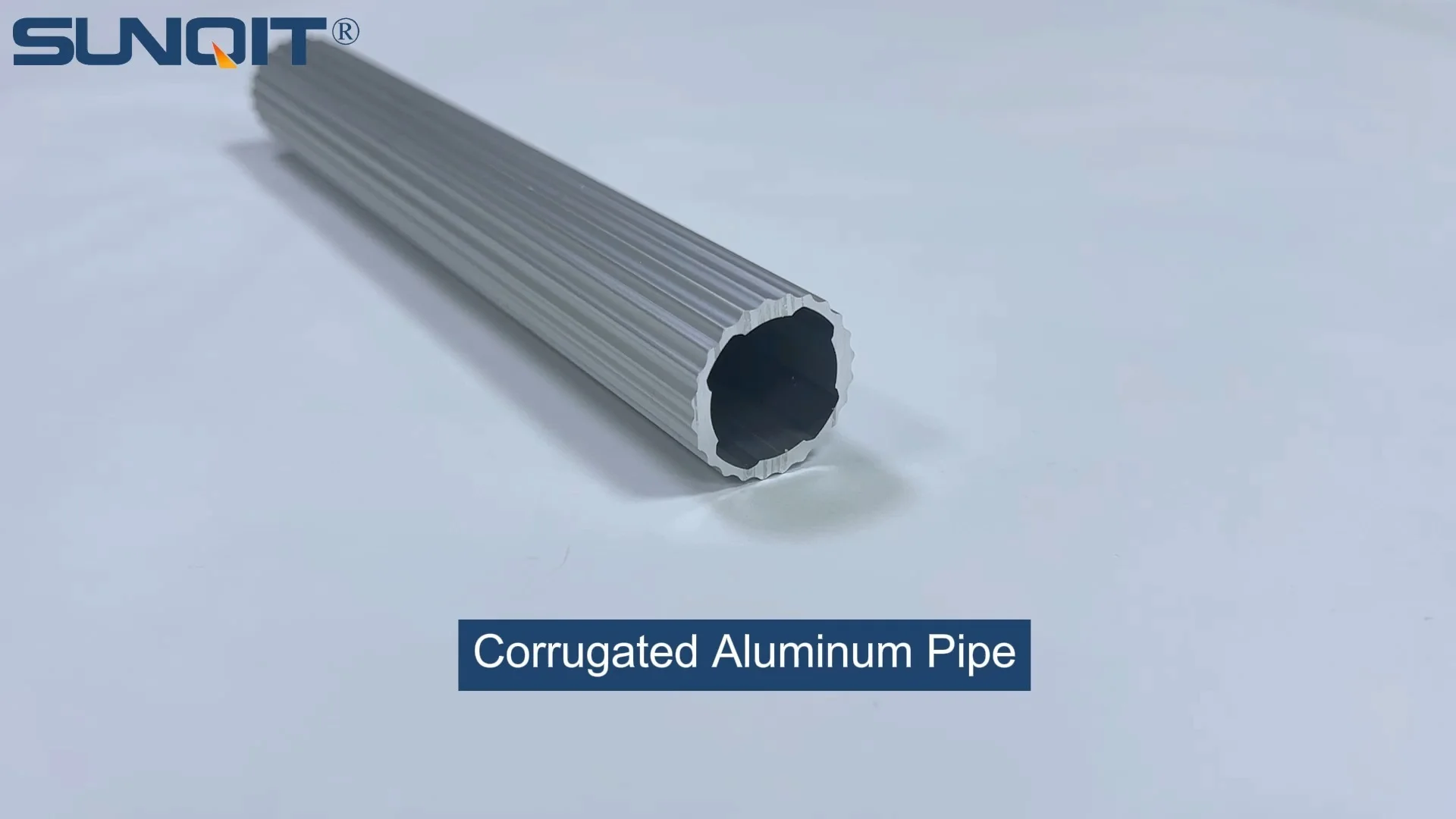
Product Description The slot side is 10mm which can work with a T sliding block for connection accessories Quick Detail Product name Corrugated Aluminum pipe model GLT28-T-3010A Material Science 6005-T6 thickness 1.7mm surface treatment anodic oxidat
Walk into any modern manufacturing facility, and you'll notice a silent backbone holding everything together: the pipes and frames that support workbenches, flow racks, conveyor systems, and material handling trolleys. For production managers and facility planners, choosing between materials like corrugated aluminum pipe and steel pipe isn't just a matter of preference—it's a decision that ripples through operational costs, efficiency, and long-term sustainability. In today's lean system environments, where every dollar and minute counts, cost-efficiency extends far beyond the initial price tag. It encompasses installation time, maintenance demands, durability, and even the energy required to transport and assemble components. Let's dive into a detailed comparison of two heavyweights in industrial piping: corrugated aluminum pipe and steel pipe, to uncover which truly delivers better value over time.
Understanding Corrugated Aluminum Pipe: More Than Just Lightweight
Corrugated aluminum pipe, often crafted from aluminum extrusion profile , has become a staple in lean manufacturing setups. Unlike smooth-walled pipes, its corrugated design—characterized by alternating ridges and grooves—blends strength with flexibility, making it ideal for dynamic environments. But what exactly sets it apart?
First, its manufacturing process. Aluminum extrusion involves forcing heated aluminum alloy through a die to create custom cross-sectional shapes, including the corrugated pattern. This method ensures consistency in wall thickness and structural integrity, while allowing for intricate designs that balance weight and strength. For example, a 38mm corrugated aluminum pipe might weigh just 0.8 lbs per foot, compared to a similar-sized steel pipe that could tip the scales at 2.5 lbs or more. This lightweight nature isn't just about ease of handling; it translates to lower shipping costs, reduced strain on assembly workers, and even less wear on floor surfaces and casters for mobile equipment like turnover trolleys.
Corrosion resistance is another standout feature. Aluminum naturally forms a protective oxide layer when exposed to air, shielding it from rust and degradation—even in humid or chemical-prone environments like food processing plants or electronics manufacturing facilities (where ESD workstations demand clean, stable structures). Unlike steel, which may require additional coatings or galvanization, corrugated aluminum pipe maintains its integrity with minimal upkeep, making it a low-maintenance option for busy operations.
Flexibility is yet another advantage. The corrugated design allows for slight bending without cracking, which is invaluable when setting up custom workbenches or material racks that need to fit unique floor plans. This adaptability reduces the need for custom-cutting or welding, a boon for lean systems where rapid reconfiguration is key to responding to production changes.
Stainless Steel Pipe Series: The Traditional Workhorse
On the other side of the ring is the stainless steel pipe series , a tried-and-true option with a legacy in heavy industry. Available in various thicknesses—from 0.8mm thin-wall variants to robust 2.0mm stainless steel pipes—this material has long been prized for its raw strength. Steel's high tensile strength makes it a go-to for applications requiring maximum load-bearing capacity, such as supporting heavy machinery or storing dense materials in multi-tiered racks.
Stainless steel, in particular, offers corrosion resistance similar to aluminum, thanks to its chromium content. However, not all steel pipes are created equal. Carbon steel, for instance, is prone to rust if not properly coated, while stainless steel (like the 2.0mm stainless steel pipe in many industrial catalogs) holds up better in harsh conditions but at a higher cost than its carbon counterparts. This makes the stainless steel pipe series a popular choice for environments where hygiene is critical, such as pharmaceutical manufacturing, or where extreme temperatures are a factor.
Steel's rigidity is a double-edged sword. On one hand, it provides exceptional stability for fixed structures like heavy-duty workbenches or permanent conveyor frames. On the other hand, its stiffness makes on-site modifications challenging—bending or cutting steel often requires specialized tools, and mistakes can lead to wasted materials and delays. For facilities with static layouts, this may not be an issue, but for those embracing lean principles of continuous improvement and reconfiguration, steel's inflexibility can become a bottleneck.

Initial Cost Showdown: Upfront Price vs. Hidden Expenses
When comparing corrugated aluminum pipe and steel pipe, the first number that catches the eye is the upfront cost per foot. At first glance, steel often seems cheaper—raw steel prices are generally lower than aluminum, and a 2.0mm stainless steel pipe might cost $3–$5 per foot, while a similar-sized corrugated aluminum pipe could range from $5–$7 per foot. But this surface-level comparison ignores critical hidden costs that can flip the script.
Let's break it down with a hypothetical scenario: a facility needing 500 feet of pipe to build a series of flow racks and workbenches. The initial steel pipe cost might be $2,500 (500ft x $5/ft), versus $3,500 for aluminum. But steel's weight—remember, 2.5x heavier than aluminum—drives up shipping costs. A steel shipment could cost $400, while aluminum might only cost $150. Installation labor adds another layer: steel pipes require more workers to lift and position, and cutting or welding (often needed for custom angles) adds hours of labor. If steel installation takes 10 hours at $60/hour, that's $600; aluminum, with its lightweight and easy-to-assemble joints (like internal rotatory aluminum joints), might take just 5 hours, costing $300. Suddenly, the gap narrows: steel's total upfront cost (material + shipping + labor) is $2,500 + $400 + $600 = $3,500, while aluminum's is $3,500 + $150 + $300 = $3,950—a difference of only $450, not the $1,000 initially assumed.
But the real story unfolds over time. Let's examine the total cost of ownership (TCO) over a 10-year lifespan, including maintenance, replacement, and operational impacts.
Durability and Lifespan: How Long Will They Really Last?
A pipe's lifespan directly impacts TCO. In dry, indoor environments, both aluminum and stainless steel can last decades, but real-world conditions are rarely ideal. Let's consider three common industrial scenarios:
Humid/Coastal Environments: Salt air or high humidity accelerates corrosion. Steel, even stainless, may develop surface rust over time if scratches expose the base metal. A 2.0mm stainless steel pipe in a coastal warehouse might need replacement after 8–10 years. Corrugated aluminum pipe, with its natural oxide layer, could last 15–20 years without degradation.
Heavy Impact Zones: In areas with frequent material handling—like near conveyor loading points—pipes endure bumps and collisions. Steel's rigidity makes it prone to denting; a sharp impact might bend a steel pipe, requiring replacement. Aluminum's flexibility allows it to absorb minor impacts without permanent damage, though severe blows could still cause deformation. However, its lighter weight in mobile applications (like turnover trolleys) reduces the force of collisions in the first place.
Chemical Exposure: In facilities using solvents or coolants, steel pipes may require regular coating touch-ups to prevent corrosion. Aluminum, resistant to most industrial chemicals, remains intact with occasional wiping. For example, a steel pipe in an automotive parts cleaning area might need a $200 coating refresh every 2 years, adding $1,000 over 10 years—costs aluminum avoids entirely.
Maintenance Demands: Time Is Money
Maintenance is often the silent budget drainer. Steel pipes, especially non-stainless variants, demand regular inspections for rust, particularly at joints and welds. A facility with 500 feet of steel pipe might spend 20 hours annually on inspections, rust removal, and touch-up painting—costing $1,200/year ($60/hour x 20 hours). Over 10 years, that's $12,000. Corrugated aluminum pipe, by contrast, needs minimal maintenance: a quick wipe-down with a damp cloth to remove dust or debris, totaling maybe 2 hours per year—$120/year, or $1,200 over 10 years. That's a $10,800 difference in maintenance costs alone.
Repairs tell a similar story. A dented steel pipe section might require cutting out the damaged portion and welding a new segment—$150 per repair. Aluminum, with its modular joints (like parallel aluminum joint A or 90° aluminum pipe joint inside connection), allows for quick swaps: loosen a few bolts, replace the section, and you're back up and running in 30 minutes, costing $50 per repair. If each material averages 5 repairs over 10 years, steel adds $750, aluminum $250—a $500 gap.
The ROI Table: Crunching the 10-Year Numbers
| Cost Category | Corrugated Aluminum Pipe | Stainless Steel Pipe Series | 10-Year Difference (Aluminum vs. Steel) |
|---|---|---|---|
| Initial Material Cost | $3,500 | $2,500 | +$1,000 |
| Shipping | $150 | $400 | -$250 |
| Installation Labor | $300 | $600 | -$300 |
| Annual Maintenance | $120/year ($1,200 total) | $1,200/year ($12,000 total) | -$10,800 |
| Repairs (5 over 10 years) | $250 | $750 | -$500 |
| Replacement (if needed) | $0 (lasts >10 years) | $2,500 (replaced at 8 years) | -$2,500 |
| 10-Year Total Cost of Ownership | $5,400 | $18,750 | -$13,350 (Aluminum saves $13,350) |
The numbers speak volumes: while steel has a lower initial material cost, its higher shipping, labor, maintenance, and replacement expenses make it far more costly over a decade. Corrugated aluminum pipe, despite a higher upfront price, delivers $13,350 in savings—an ROI that's hard to ignore for lean system operators focused on long-term efficiency.
Application-Specific Considerations: When to Choose Which
Of course, no material is universally superior. There are scenarios where steel pipe still shines. For example, in heavy-load applications like supporting 5,000+ lb machinery, a thick-walled stainless steel pipe (like the 2.0mm stainless steel pipe from the stainless steel pipe series ) offers unmatched structural rigidity. Similarly, in extremely high-temperature environments (over 400°F), steel's heat resistance outperforms aluminum, which may soften slightly.
But for the majority of lean system applications—workbenches, flow racks, conveyor guides, material trolleys, and light-to-medium load racks—corrugated aluminum pipe is the smarter choice. Its lightweight design reduces energy use for mobile equipment (casters last longer under less weight), its corrosion resistance lowers downtime, and its modularity aligns perfectly with the lean principle of rapid reconfiguration. For instance, a electronics manufacturer using ESD workstations can quickly adjust their corrugated aluminum flow racks to accommodate new product sizes by swapping out sections with internal rotatory aluminum joints—no welding or heavy tools required.
Conclusion: The Lean System's Material of Choice
When we look beyond the initial price tag and focus on total cost of ownership, corrugated aluminum pipe emerges as the clear cost-efficient leader for most industrial applications. Its blend of lightweight design, corrosion resistance, low maintenance, and modular flexibility aligns seamlessly with the goals of a lean system , where efficiency, adaptability, and long-term value are paramount. While the stainless steel pipe series has its place in heavy-load or extreme-condition scenarios, for the average facility, corrugated aluminum pipe—crafted from durable aluminum extrusion profile —delivers superior ROI, frees up maintenance resources, and supports the agile, cost-conscious operations that drive modern manufacturing success. So, the next time you're planning a facility upgrade or new installation, remember: the smart choice isn't just about what you pay today, but what you save tomorrow.