- Company Articles
- Products and Technology
- Product knowledge
- Comparing Costs: 40 Aluminum Roller Track Green vs. Plastic Roller Tracks

Comparing Costs: 40 Aluminum Roller Track Green vs. Plastic Roller Tracks
Related Product
40 Aluminum Roller Track Green
Durable and smooth-running modular roller rails. The system is fully assembled. The roller rail profile contains plastic rollers mounted on steel axles. Aluminum frame with plastic wheel make it anti corrosion,and material convey more smooth.
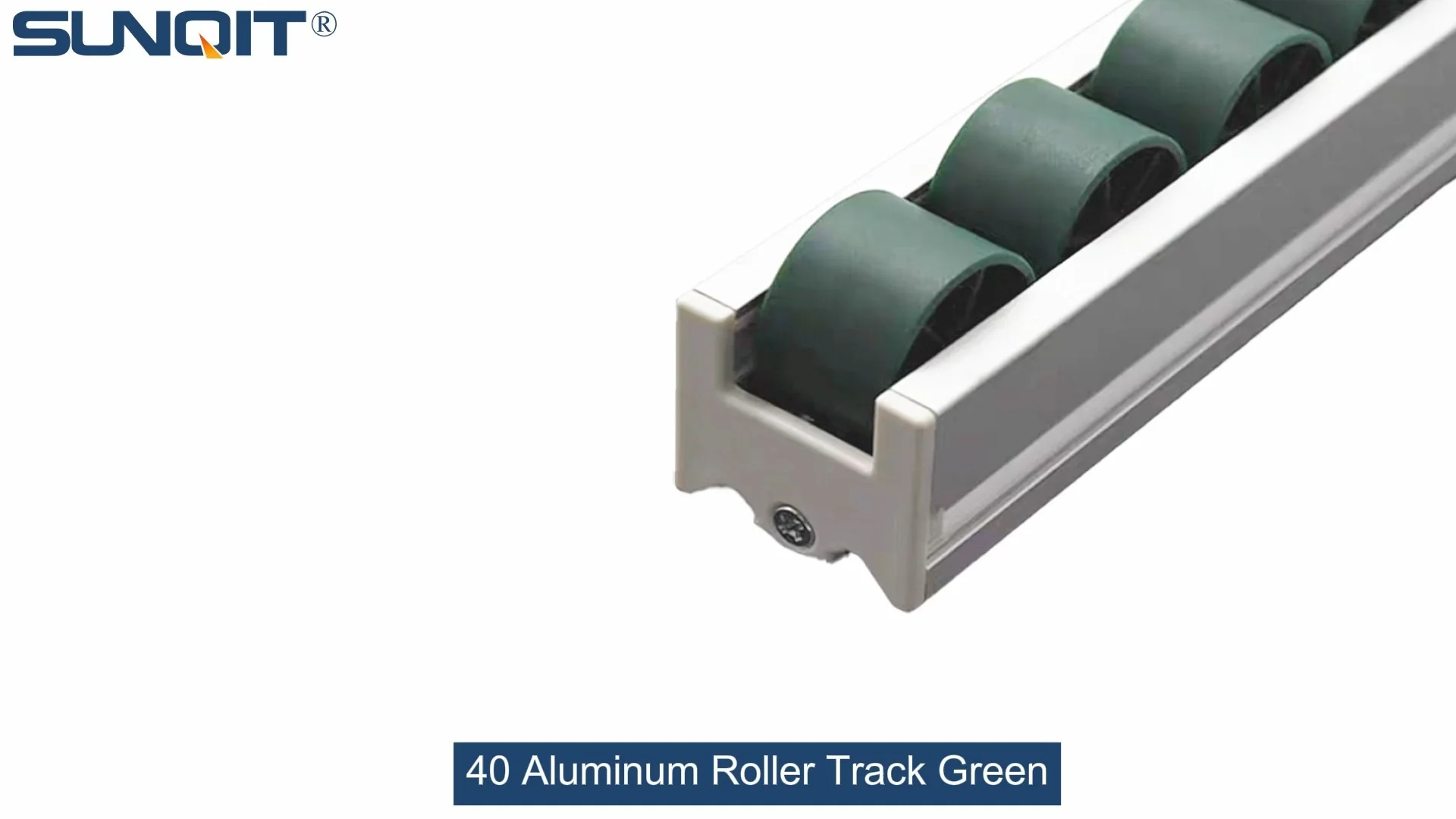
Roller tracks are the unsung heroes of modern manufacturing and logistics. They keep products moving smoothly in flow racks, power conveyors, and form the backbone of lean solutions designed to boost efficiency. But when it comes to choosing between 40 Aluminum Roller Track Green and plastic roller tracks, the decision often boils down to cost—both upfront and over time. In this article, we'll break down every cost angle to help you decide which option gives you the best bang for your buck.
Material Composition: What Are They Made Of?
First, let's get to know what each track is made of. The 40 Aluminum Roller Track Green is crafted from high-quality aluminum profile, a durable metal known for its strength-to-weight ratio. The green coating isn't just for looks—it adds an extra layer of protection against corrosion and scratches, making it ideal for busy warehouses and production lines. The aluminum profile used here is extruded to precise specifications, ensuring consistent dimensions and strength across every piece.
On the other hand, plastic roller tracks are typically made from high-density polyethylene (HDPE) or polypropylene. These materials are lightweight and affordable, molded into shape with rollers that are either integrated or attached separately. While HDPE is resistant to impact and chemicals, it's not as strong as aluminum, especially under heavy loads or prolonged stress.
Initial Cost Analysis: Upfront Investment
When you first look at the price tag, plastic roller tracks seem like the cheaper option. Let's take a hypothetical but realistic example based on industry standards. A 2-meter length of plastic roller track might cost between $20 and $36, while the same length of 40 Aluminum Roller Track Green could range from $50 to $70. That's a significant difference upfront—aluminum tracks cost roughly 2-3 times more per unit length. But before you jump to conclusions, let's look at the bigger picture.
Below is a table comparing the initial costs of both options:
| Track Type | Price per Meter (Estimated) | Typical Length per Unit | Unit Cost (Range) |
|---|---|---|---|
| 40 Aluminum Roller Track Green | $25 - $35 | 2 meters | $50 - $70 |
| Plastic Roller Track (Yellow/Grey) | $10 - $18 | 2 meters | $20 - $36 |

Long-Term Cost: Durability, Maintenance, and Replacement
Durability is where aluminum tracks shine. A well-maintained 40 Aluminum Roller Track Green can last 10 years or more, even under heavy daily use. The aluminum profile resists wear and tear, and the green coating prevents rust and corrosion—critical for environments like food processing or outdoor storage. Plastic tracks, however, have a shorter lifespan—usually 2 to 3 years—especially if they're used to transport heavy items or exposed to harsh conditions like extreme temperatures or UV light.
Maintenance costs are another factor. Aluminum tracks require minimal upkeep: just occasional cleaning to remove dust and debris. Plastic tracks might need more attention, like checking for cracks or warping, but even then, the real cost comes from replacement. Over a 5-year period, you might need to replace plastic tracks twice, while aluminum ones stay strong without needing a swap.
Let's crunch the numbers to see the total cost over 5 years:
| Track Type | Expected Lifespan | Annual Maintenance Cost | Replacement Frequency (5 Years) | Total Cost Over 5 Years |
|---|---|---|---|---|
| 40 Aluminum Roller Track Green | 10+ Years | $5 per unit | 0 | $50 - $70 + ($5*5) = $75 - $95 |
| Plastic Roller Track | 2-3 Years | $3 per unit | 2 times (replace at year 2 and 4) | $20 - $36 + ($3*5) + ($20-$36)*2 = $75 - $123 |
As you can see, the total cost of plastic tracks over 5 years can exceed that of aluminum tracks, especially if replacement costs are high. This is because each replacement adds to the total expenditure, and downtime from replacing tracks can also cost money in lost productivity.

Performance Impact on Cost Efficiency
Performance factors directly affect how much you spend in the long run. Let's look at a few key areas:
Load Capacity:
Aluminum tracks can handle heavier loads—up to 500 kg per meter—making them ideal for industrial applications. Plastic tracks, on the other hand, typically support 150-200 kg per meter. If you use plastic tracks for heavy items, you'll likely see more frequent failures, leading to downtime and repair costs. For example, a plastic track that's overloaded might crack, requiring immediate replacement and halting production.
Smoothness of Operation:
Aluminum rollers roll more smoothly than plastic ones, reducing friction. This not only makes for quieter operation but also saves energy if used in conveyors. Over time, those energy savings add up, cutting your operational costs further.
Resistance to Environmental Factors:
Aluminum tracks are resistant to moisture, UV light, and chemicals. Plastic tracks might degrade faster in humid or outdoor environments, leading to premature replacement. For instance, plastic tracks left in direct sunlight for years can become brittle and break easily.

Best Fit Scenarios: When to Choose Which?
Plastic roller tracks are great for light-duty applications. If you're setting up a temporary flow rack for small parts or a short-term project, plastic's low upfront cost makes sense. They're also a good choice for environments where corrosion isn't a concern and loads are light—like a small workshop for assembling toys or stationery.
Aluminum tracks, though pricier upfront, are the way to go for long-term, heavy-use setups. Think about a lean solution for a 3C assembly line, where products move constantly and loads are moderate to heavy. Or a conveyor system in a warehouse that runs 24/7—aluminum's durability will keep it going without frequent replacements. Another scenario is outdoor use: aluminum's corrosion resistance means it can handle rain and humidity, while plastic might degrade faster under these conditions.
Real-World Case Studies
Let's look at two real-world examples to see how these choices play out:
Case Study 1: Small Electronics Workshop
A small 3C assembly workshop decided to use plastic roller tracks for their flow racks. The upfront cost was low, which fit their tight budget. But after 2 years, half of the tracks started showing signs of wear—cracks in the plastic and rollers that stuck. They had to replace all the tracks, costing them almost as much as the initial investment. Over 5 years, they replaced the tracks twice, totaling $120 per unit length. The downtime from replacements also cost them an estimated $500 in lost productivity.
Case Study 2: Automotive Parts Warehouse
An automotive parts warehouse opted for 40 Aluminum Roller Track Green in their conveyors. The upfront cost was higher, but they didn't have to replace any tracks in the first 5 years. Maintenance was minimal—just monthly cleaning. The total cost over 5 years was $85 per unit length, which was less than the plastic option in the first case. Plus, the aluminum tracks handled heavy parts without any issues, reducing downtime significantly. The warehouse estimated that the aluminum tracks saved them over $2,000 in downtime costs in the first 3 years alone.
Final Verdict: Total Cost of Ownership Matters Most
At the end of the day, the choice between 40 Aluminum Roller Track Green and plastic roller tracks isn't just about the initial price. It's about total cost of ownership. Plastic might save you money today, but aluminum will pay off in the long run for most industrial applications.
If you need a track that's durable, handles heavy loads, and requires little maintenance, the 40 Aluminum Roller Track Green is the way to go. It's an investment that will keep your operations running smoothly for years. For light, short-term use, plastic is a viable option—but don't forget to factor in replacement costs and downtime down the line.
No matter which you choose, make sure it aligns with your specific needs. After all, the best cost-saving measure is picking the right tool for the job from the start.