- Company Articles
- Products and Technology
- Procurement Guidelines
- Comparing Costs: 60 Steel Roller Track White vs. Other Solutions

Comparing Costs: 60 Steel Roller Track White vs. Other Solutions
Related Product
60 Steel Roller Track White
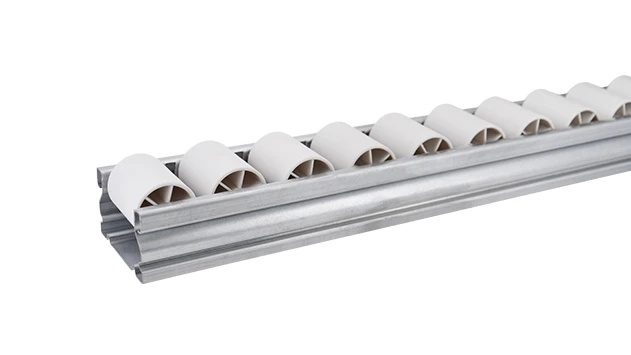
The roller track can be installed with multiple accessories to create different slopes and configurations of flow racks.All steel conveyor 60 roller track accessories are engineered to perfectly fit the sliding rail.It is enable the movement of SLC boxes.
In manufacturing and logistics, every dollar spent on equipment shapes your operational efficiency and profitability. Material handling systems are the unsung heroes of smooth operations, but picking the right one requires balancing upfront costs, long-term maintenance, and adaptability. Today, we're focusing on the 60 Steel Roller Track White—how it performs, its cost profile, and how it stacks up against four common alternatives to help you make a smart, budget-friendly choice.
What Is 60 Steel Roller Track White?
The 60 Steel Roller Track White is a robust material handling component designed for seamless product flow in production lines, warehouses, and assembly stations. Crafted from high-grade steel with a protective white coating, it's built to handle heavy loads while resisting rust and wear. Its precision-engineered rollers ensure items glide smoothly, cutting down on friction and reducing strain on workers and equipment alike.
Key features include:
- Durable steel construction with matte white finish for corrosion resistance and clean aesthetics
- High load capacity (up to 500kg per meter) suitable for automotive parts, large boxes, and industrial components
- Easy installation via compatible brackets (like roller track placon mounts) and connectors
- Minimal maintenance—only occasional cleaning to keep rollers debris-free
- Compatibility with lean system components for modular setup adjustments
This track shines in industries like automotive manufacturing, production, and, where efficient material movement directly impacts throughput. It integrates easily into existing lines or forms the backbone of new workstations tailored to specific tasks.
Cost Comparison: 60 Steel Roller Track White vs. Alternatives
To gauge its true value, let's compare the 60 Steel Roller Track White against four popular solutions. Below is a detailed table of key metrics, followed by in-depth analysis of each option.
| Solution Name | Initial Cost | Annual Maintenance Cost | Durability (Lifespan) | Flexibility | Best For |
|---|---|---|---|---|---|
| 60 Steel Roller Track White | Medium-Low | Low ($50-$150) | High (10-15 years) | Medium | Heavy-load, high-volume material flow |
| 60 Aluminum Roller Track White | Medium-High | Low ($40-$120) | High (8-12 years) | Medium | Clean environments (medical, 3C) with light-to-medium loads |
| Flow Rack (Material Rack B) | Low | Very Low ($20-$80) | Medium (5-8 years) | Low | Static storage of small-to-medium parts |
| Basic Conveyor System | High | Medium-High ($200-$500) | High (10-15 years) | Low | Continuous, fixed-path material transport |
| Custom Lean Solution | Very High | Medium ($100-$300) | High (10-15 years) | Very High | Dynamic lines with frequent layout changes |
1. 60 Steel Roller Track White vs. 60 Aluminum Roller Track White
Steel and aluminum roller tracks are both smooth-flow solutions, but their differences lie in cost, weight, and ideal use cases.
Initial Cost: Steel tracks cost 20-30% less upfront than aluminum. For example, a 2-meter steel track section might cost $150, while aluminum costs $200+. This makes steel a better choice for budget-conscious operations.
Maintenance: Both have low maintenance. Aluminum resists rust naturally, but the steel track's white coating minimizes corrosion. Over 10 years, the maintenance difference is negligible—maybe $100 total.
Durability: Steel handles heavier loads (up to 500kg/m vs. aluminum's 300kg/m) without bending. It's perfect for automotive parts, while aluminum suits lighter items like medical devices.
Flexibility: Both can be cut to length and connected with brackets, but neither matches lean pipe systems for full reconfiguration. Choose steel for heavy loads, aluminum for clean, light environments.
2. 60 Steel Roller Track White vs. Flow Rack (Material Rack B)
Flow racks (like Material Rack B, a 3-row/3-floor model) use gravity to move items front-to-back, ideal for static storage.
Initial Cost: Flow racks are cheaper upfront—$100-$150 for a basic unit vs. $150+ for a steel track section. But scale matters: 10 flow racks might cost more than a single roller track system handling the same volume.
Maintenance: Flow racks have almost no maintenance (no motors, few moving parts). Occasional roller checks are all needed, costing $20-$80/year.
Durability: Flow racks last 5-8 years (plastic rollers wear out), while steel tracks last 10-15. For long-term use, steel is more cost-effective.
Flexibility: Flow racks are fixed—you can't adjust their layout. Steel tracks can be reconfigured slightly (extended, shortened) to adapt to new needs.
Best For: Flow racks for static storage; steel tracks for dynamic material movement.
3. 60 Steel Roller Track White vs. Basic Conveyor System
Conveyors automate material transport along fixed paths, common in large-scale manufacturing.
Initial Cost: Conveyors cost 3-5x more than steel tracks. A basic 5-meter conveyor might cost $1,500+, while steel tracks cost $300-$500.
Maintenance: Conveyors have higher costs ($200-$500/year) due to motors, belts, and sensors. A broken motor can halt production, whereas a steel track section can be replaced in 30 minutes.
Durability: Both last 10-15 years, but conveyors have more failure points. Steel tracks are simpler and more reliable for non-continuous flow.
Flexibility: Conveyors are fixed—changing their path requires major construction. Steel tracks are modular, allowing quick adjustments.
Best For: Conveyors for 24/7 continuous flow; steel tracks for flexible, on-demand movement.
4. 60 Steel Roller Track White vs. Custom Lean Solution
Custom lean solutions use lean pipe, aluminum profiles, and accessories to create fully optimized workspaces (e.g., 3C assembly lines).
Initial Cost: Lean solutions are the most expensive—$2,000+ for a custom workstation vs. $500 for a steel track setup. The design, custom parts, and installation drive up costs.
Maintenance: Medium cost ($100-$300/year). Lean systems are modular, so parts are easy to replace, but spare inventory costs add up.
Durability: Both last 10-15 years. Lean components are designed for frequent reconfiguration, making them perfect for dynamic lines.
Flexibility: Lean solutions are unmatched—you can reconfigure a workstation in hours. Steel tracks are less flexible but cheaper.
Best For: Lean solutions for changing production lines; steel tracks for stable, heavy-load processes.

Choosing the Right Solution
Ask these questions to decide:
Budget: Tight budget? Go steel track or flow rack. More to spend? Lean solution or conveyor.
Load Weight: Heavy (300kg+)? Steel track. Light (under 300kg)? Aluminum or flow rack.
Process Changes: Frequent changes? Lean solution. Static? Conveyor or flow rack.
Industry: Automotive? Steel. Medical? Aluminum. 3C Assembly? Lean solution.

Conclusion
The 60 Steel Roller Track White is a cost-effective, durable solution for heavy-load material flow. It beats aluminum on cost, flow racks on flexibility, conveyors on maintenance, and lean solutions on upfront price.
If you need a reliable, low-cost system for heavy items, steel track is your best bet. For clean environments, choose aluminum. For static storage, flow racks. For continuous flow, conveyors. For maximum flexibility, invest in a custom lean solution.
No matter your choice, prioritize efficiency and waste reduction. The right material handling system will save you money and boost productivity for years.
To explore the 60 Steel Roller Track White or other solutions, visit the official website for product details and custom options.