- Company Articles
- Products and Technology
- Product knowledge
- Comparing Duplex Aluminum Pipe Joint Sizes: Which Fits Your Needs?

Comparing Duplex Aluminum Pipe Joint Sizes: Which Fits Your Needs?
Related Product
Duplex Aluminum Pipe Joint
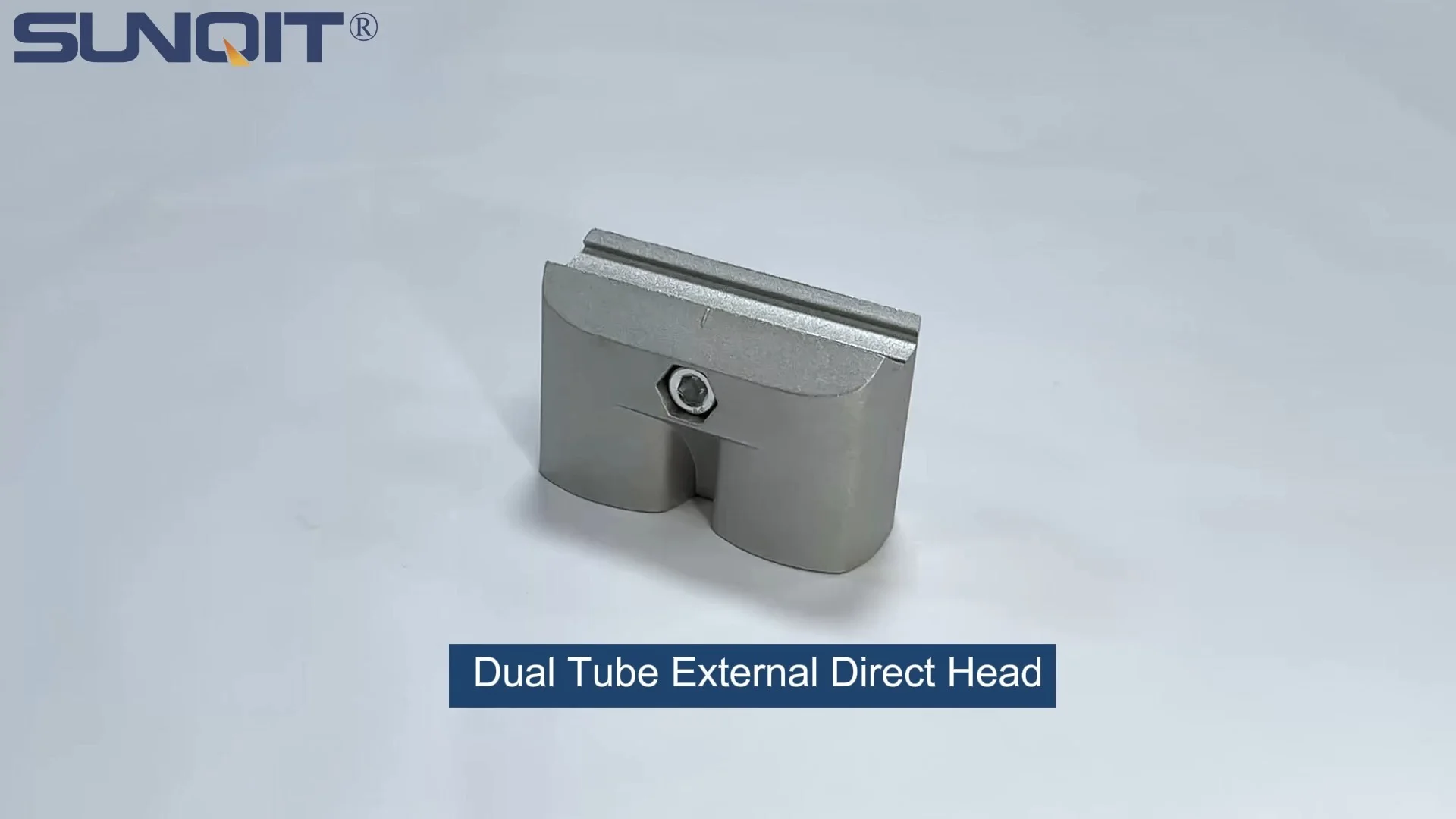
Duplex Aluminum pipe joint used for one pcs 28pcs aluminum pipe and one pcs of 28mm duplex pipe connection in straight angle.
Picture this: A mid-sized electronics assembly shop is gearing up to launch a new production line. The team has invested in sleek aluminum pipes, a handful of workbenches, and a set of material racks—all part of their push to adopt lean manufacturing principles. But when they start putting it all together, frustration sets in. The joints they ordered don't quite align with the pipes, leaving gaps that rattle when touched. The workbench wobbles under the weight of tools, and the material rack sags slightly in the middle. What went wrong? More often than not, the culprit is a mismatch in duplex aluminum pipe joint sizes.
In the world of lean systems, workbenches, and material handling, duplex aluminum pipe joints are the unsung heroes. These small but critical components hold everything together, ensuring stability, flexibility, and efficiency in your workspace. But with a range of sizes available, choosing the right one can feel like solving a puzzle—especially if you're not sure what to look for. In this guide, we'll break down the most common duplex aluminum pipe joint sizes, explore how they're used, and help you figure out which size fits your specific needs. Whether you're building a lean pipe workbench, a conveyor system, or a turnover trolley, understanding these sizes will save you time, money, and plenty of headaches.
What Are Duplex Aluminum Pipe Joints, Anyway?
Before diving into sizes, let's make sure we're on the same page about what duplex aluminum pipe joints actually are. Simply put, these are specialized connectors designed to link aluminum pipes (or aluminum lean pipes) together. Unlike basic plastic or steel joints, duplex aluminum joints are engineered for durability and versatility—two must-haves in fast-paced manufacturing, warehousing, or workshop environments.
The "duplex" in their name refers to their dual functionality: they can often connect pipes at different angles (like 90°, 45°, or even 135°) and are compatible with a range of aluminum pipe accessories, from end caps to clamps. Made from high-grade aluminum alloy, they're lightweight yet strong enough to support heavy loads, resist corrosion, and stand up to the wear and tear of daily use. Think of them as the "glue" that turns individual pipes into functional systems—whether that's a sturdy workbench, a smooth-rolling conveyor, or a space-saving material rack.
Pro Tip:
Duplex aluminum joints are often confused with standard aluminum profile connectors, but they're designed specifically for round pipes, not square or rectangular aluminum extrusion profiles. If you're working with square tubing, you'll need a different type of connector—keep that in mind when ordering!
Common Duplex Aluminum Pipe Joint Sizes: A Closer Look
Duplex aluminum pipe joints come in a variety of sizes, but the most widely used options are defined by the diameter of the pipes they're designed to connect. The key here is matching the joint size to the outer diameter (OD) of your aluminum pipes—if they don't align, the connection will be weak, unstable, or even impossible to assemble. Let's break down the three most common sizes you'll encounter, along with their typical uses and limitations.
1. 20mm Duplex Aluminum Pipe Joints
The smallest of the bunch, 20mm duplex joints are designed for pipes with a 20mm outer diameter. These are lightweight and ideal for applications where load capacity is minimal, and flexibility is key. Think of small-scale projects like:
- Light-duty shelving for tools or small parts
- Mobile trolleys for transporting lightweight materials (e.g., electronic components, small boxes)
- Side rails for workbenches (to prevent items from sliding off)
- Temporary or modular displays (like in retail or trade shows)
One of the biggest advantages of 20mm joints is their versatility. They're easy to assemble and disassemble, making them perfect for teams that need to reconfigure their workspace frequently. However, they're not built for heavy loads—exceeding 50kg per joint can lead to bending or loosening over time. If you're building something that needs to support tools, machinery, or large batches of materials, you'll want to size up.
2. 30mm Duplex Aluminum Pipe Joints
The workhorse of the group, 30mm duplex joints are the most popular choice for medium-duty applications. They pair with 30mm aluminum pipes, offering a balance of strength and flexibility that works for most lean manufacturing setups. Common uses include:
- Lean pipe workbenches (the backbone of assembly lines, where workers stand or sit to build products)
- Material racks (like the 3-row, 3-floor material rack B from many suppliers)
- Flow racks with aluminum guide rails (to slide materials smoothly from one workstation to the next)
- Standard-duty conveyors for parts weighing up to 150kg
30mm joints can handle around 100–150kg of evenly distributed weight per connection, making them sturdy enough for daily use in busy workshops. They're also compatible with a wide range of aluminum pipe accessories, from swivel roller balls to caster wheels, which means you can customize your setup without worrying about compatibility issues. If you're not sure which size to choose, 30mm is a safe bet for most general manufacturing or warehouse needs.
3. 40mm Duplex Aluminum Pipe Joints
For heavy-duty applications, 40mm duplex joints are the way to go. These robust connectors are designed for 40mm aluminum pipes and are built to support substantial weight—up to 250kg per joint in some cases. They're the go-to choice for:
- Heavy-duty workbenches (e.g., for assembling large machinery or automotive parts)
- Industrial material racks (holding heavy components like metal sheets, engine parts, or large containers)
- Conveyor systems for bulky items (e.g., pallets, large boxes, or machinery parts)
- Structural supports (like the legs of a workbench or the frame of a production line)
The tradeoff with 40mm joints is their weight and rigidity. They're bulkier than 20mm or 30mm options, which can make them harder to maneuver during assembly. They also require more space, so they're not ideal for tight workspaces where every inch counts. But when you need a connection that won't budge—even under stress—40mm joints deliver.
Real-World Example: The Bakery That Sized Up
A local bakery recently switched to lean manufacturing to streamline their packaging process. Initially, they used 20mm joints to build a rack for holding boxes of pastries. But within a month, the rack began to sag under the weight of stacked boxes (each box weighed about 8kg, and they often stacked 5–6 per shelf). After consulting with a supplier, they upgraded to 30mm joints and pipes. The new rack not only stopped sagging but also felt sturdier when workers loaded and unloaded boxes—proving that choosing the right size isn't just about "fit" but about long-term reliability.

Factors to Consider When Choosing Joint Sizes
Now that you know the basics of 20mm, 30mm, and 40mm joints, how do you decide which one is right for your project? It's not just about picking the biggest (or smallest) option—you'll need to consider a few key factors to ensure a perfect fit. Let's walk through them.
Load Capacity: How Much Weight Will It Support?
The first question to ask is: What will this structure hold? If you're building a workbench for assembling smartphones, a 20mm or 30mm joint might be enough. But if you're building a rack for 50kg toolboxes, 40mm is non-negotiable. Always check the manufacturer's load rating for both the joint and the pipe—remember, the weakest link in the system (whether it's the joint, the pipe, or even the caster wheels) will determine the overall capacity.
Pipe Compatibility: Check the Outer Diameter (OD)
This might seem obvious, but it's how often teams mix up inner diameter (ID) and outer diameter (OD) when ordering. Duplex joints are sized to fit the outer diameter of the pipe, so measure your pipe's OD with a caliper before ordering. For example, a 30mm joint won't work with a pipe that has a 30mm inner diameter but a 32mm outer diameter—it will be too loose.
Application Type: Static vs. Dynamic Loads
Static loads (items that sit still, like a toolbox on a shelf) are easier on joints than dynamic loads (items that move, like a trolley being pushed across a floor or parts sliding down a conveyor). If your structure will experience a lot of movement or vibration, opt for a slightly larger joint than you think you need—this adds extra stability. For example, a mobile trolley with 30mm joints might hold up better than one with 20mm joints, even if the load is light, because the movement puts stress on the connections.
Existing Infrastructure: Matching What You Already Have
If you're adding to an existing setup (like expanding a lean pipe workbench or adding a new section to a conveyor), always match the joint size to your current pipes. Mixing sizes (e.g., 30mm joints with 20mm pipes) will create weak points and make the system look messy. If you're not sure what size you already have, measure a pipe or take a sample joint to your supplier—they'll help you identify it.

Practical Applications: Which Size for Which Project?
To make this more concrete, let's map specific projects to the ideal joint sizes. Below are common scenarios you might encounter, along with recommendations based on load, use case, and industry best practices.
Lean Pipe Workbenches
Lean pipe workbenches are the centerpiece of many assembly lines, so their joints need to be strong enough to support tools, materials, and even the occasional lean from a worker. For a standard workbench (1.2m–1.5m long, used for light to medium assembly), 30mm joints are the sweet spot. They support the bench top (which might hold 100–150kg) and any overhead racks for tools. If you're building a heavy-duty workbench (e.g., for welding or machinery repair), upgrade to 40mm joints to handle 200kg+ loads.
Material Racks (Like Material Rack B: 3 Row and 3 Floor)
Material racks, especially multi-tiered ones like the "Material Rack B (3 row and 3 floor)" mentioned in many supplier catalogs, need to support evenly distributed weight across multiple shelves. For a rack holding small parts or boxes (each shelf under 50kg), 30mm joints work well. If you're storing heavier items (e.g., 80kg per shelf), 40mm joints are safer. Avoid 20mm joints here—they'll buckle under the weight of stacked shelves.
Conveyors and Roller Tracks
Conveyors use a mix of joints and aluminum guide rails to move parts smoothly. For light-duty conveyors (e.g., moving small electronics along a 2m track), 30mm joints are sufficient. For heavier conveyors (e.g., moving boxes or metal parts), 40mm joints provide the rigidity needed to keep the track straight and stable. Avoid 20mm joints for conveyors—even light parts can cause vibration that loosens small joints over time.
Mobile Trolleys
Trolleys are all about mobility, so you need a balance of strength and weight. For small trolleys (carrying tools or documents), 20mm joints keep the trolley lightweight. For medium trolleys (carrying boxes or parts up to 100kg), 30mm joints are better. Heavy-duty trolleys (carrying machinery or large equipment) require 40mm joints and thick-walled pipes.

Comparison Table: Sizes, Loads, and Uses
To summarize, here's a quick reference table comparing the three main duplex aluminum pipe joint sizes, their load capacities, ideal uses, and key considerations.
| Joint Size (mm) | Compatible Pipe OD (mm) | Max Static Load (per joint) | Ideal Applications | Best For Industries | Key Considerations |
|---|---|---|---|---|---|
| 20mm | 20mm | Up to 50kg | Light shelving, small trolleys, side rails | Retail, small electronics, offices | Not for heavy loads or dynamic use |
| 30mm | 30mm | 50kg–150kg | Lean pipe workbenches, material racks, medium trolleys, conveyors | Manufacturing, automotive, logistics | Most versatile; balance of strength and flexibility |
| 40mm | 40mm | 150kg–250kg | Heavy workbenches, industrial racks, heavy trolleys, large conveyors | Aerospace, heavy machinery, construction | Bulkier; requires more space and heavier pipes |
Expert Tips for Installation and Longevity
Even with the right size joint, poor installation can lead to weak connections. Here are some pro tips to ensure your duplex aluminum pipe joints perform well for years:
Use the Right Tools:
Tighten joints with a hex key (Allen wrench) rather than pliers or a screwdriver—this prevents stripping the threads. Most joints have a set screw that needs to be tightened firmly but not overly (over-tightening can crack the joint).
Add Reinforcement for Long Spans:
If you're building a structure with long pipe spans (e.g., a 2m shelf), add extra joints in the middle for support. For example, a 2m shelf with 30mm pipes should have a joint every 60cm–80cm, not just at the ends.
Check for Wear Regularly:
Over time, joints can loosen from vibration. Inspect them monthly and retighten any set screws that feel loose. If a joint is cracked or bent, replace it immediately—don't try to "fix" it with tape or extra screws.
Case Study: A Automotive Shop's Success Story
A local automotive repair shop was struggling with a wobbly workbench used for engine repairs. They initially used 30mm joints, but the bench shook whenever they used a wrench on heavy engine parts. After consulting with a lean system supplier, they realized the bench's legs were too far apart (1.8m span with only two joints at the ends). By adding a third 30mm joint in the middle of each leg span and upgrading to thicker-walled 30mm pipes, the bench became rock-solid. The key wasn't just the joint size—it was how they spaced the joints to distribute the load.
Troubleshooting Common Joint Size Issues
Even with careful planning, you might run into issues. Here's how to troubleshoot the most common problems:
Problem: The joint is too loose on the pipe.
Cause:
The joint size is larger than the pipe's OD (e.g., a 30mm joint on a 28mm pipe).
Solution:
replace with the correct size joint. If you can't return the wrong joints, wrap a thin layer of Teflon tape around the pipe (where the joint connects) to add thickness—this is a temporary fix, though; for a permanent solution, get the right size.
Problem: The joint is too tight to slide onto the pipe.
Cause:
The joint size is smaller than the pipe's OD or the pipe has burrs on the end.
Solution:
Check the pipe's OD with a caliper—if it's correct, use a file to smooth any burrs on the pipe's end. If the joint is still too tight, it's likely the wrong size.
Problem: The joint keeps loosening, even after tightening.
Cause:
The set screw is stripped, or the joint is damaged.
Solution:
replace the joint. If multiple joints are loosening, consider upgrading to a larger size (e.g., from 20mm to 30mm) to handle the load or vibration.
Conclusion: Size Matters—But So Does Planning
Choosing the right duplex aluminum pipe joint size isn't rocket science, but it does require a bit of planning. Start by assessing your project's load needs, measuring your pipes, and considering how the structure will be used (static vs. dynamic). For most workshops and manufacturing setups, 30mm joints will be your go-to—they're versatile, strong enough for medium loads, and compatible with a wide range of aluminum pipe accessories. For light-duty or small projects, 20mm joints work well, while heavy-duty applications demand 40mm joints.
Remember, the goal is to build systems that are stable, efficient, and adaptable. By taking the time to match your joints to your pipes and your project's needs, you'll avoid the frustration of wobbly workbenches, sagging racks, and wasted time. And if you're ever unsure, don't hesitate to reach out to a reputable lean pipe supplier—they'll help you find the perfect fit. After all, in the world of lean manufacturing, every detail counts—and that includes the size of your joints.