- Company Articles
- Products and Technology
- Product knowledge
- Comparing Flat Swivel Castor Wheels: Heavy-Duty vs. Light-Duty Applications

Comparing Flat Swivel Castor Wheels: Heavy-Duty vs. Light-Duty Applications
Related Product
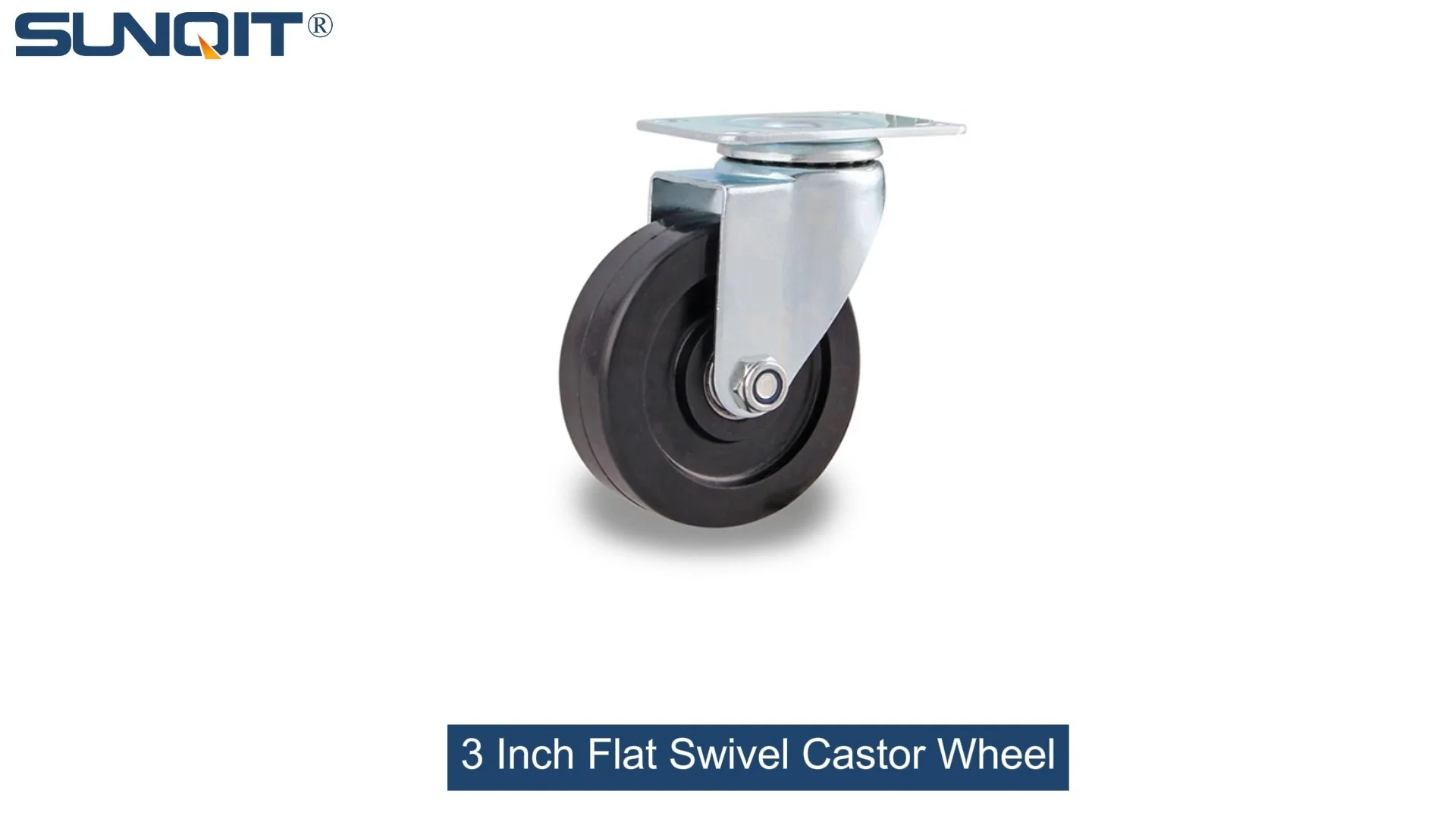
Flat Swivel Castor Wheel
Chair Casters Ball Bearing Wheels Rubber Base. Resistant to abrasion, impact and corrosion. Heavy payload can hold 70-90Kgs per pcs,which can make it works at a stable and smooth status.
Think about the last time you pushed a cart through a grocery store, rearranged your office desk, or watched a warehouse worker glide a loaded trolley across the floor. Chances are, you didn't give much thought to the small but mighty components making that movement possible: caster wheels. These unassuming devices are the unsung heroes of mobility, quietly supporting everything from your morning coffee cart to multi-ton industrial equipment. Among the many types of caster wheels, flat swivel castor wheels stand out for their unique blend of flexibility and stability. But not all flat swivel castor wheels are built the same. There's a world of difference between those designed for light tasks and those engineered to tackle heavy loads.
In this article, we're going to take a deep dive into flat swivel castor wheels, breaking down the key differences between heavy-duty and light-duty options. Whether you're a small business owner looking to outfit your retail shelves, a warehouse manager upgrading equipment, or just someone curious about how these tiny tools make big things move, this guide will help you understand which type of caster wheel is right for your needs. We'll cover design, materials, load capacity, applications, maintenance, and even common mistakes to avoid. By the end, you'll be equipped to choose a caster wheel that doesn't just roll— it rolls smart .
What Are Flat Swivel Castor Wheels, Anyway?
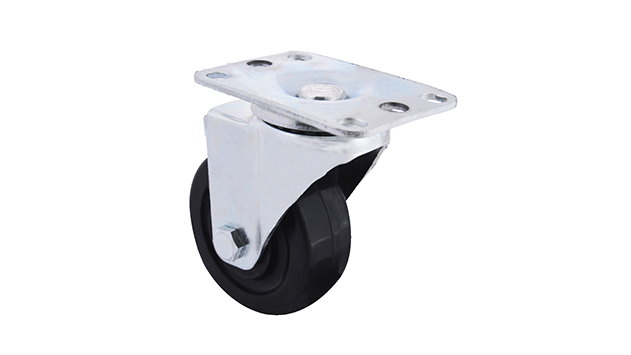
Before we jump into comparisons, let's make sure we're all on the same page: what exactly is a flat swivel castor wheel? At its core, a caster wheel is a wheel mounted on a frame (called a yoke or fork) that's attached to an object, allowing it to roll. The "swivel" part means the yoke can rotate 360 degrees, so the wheel can turn in any direction—no more struggling to pivot a heavy cabinet or cart. The "flat" refers to the mounting plate: a flat, rigid base (usually metal or heavy-duty plastic) that bolts or welds onto the bottom of the object, creating a stable connection between the caster and whatever it's moving.
Flat swivel castor wheels come in all shapes and sizes, but they share a few key components: the mounting plate, the swivel joint (which lets it rotate), the wheel itself, and often additional caster accessories like brakes, bearings, or seals. These accessories aren't just add-ons—they can make or break a caster's performance. For example, a brake on a medical cart's caster wheel prevents it from rolling during patient care, while sealed bearings in a warehouse caster keep dust and debris out, extending its life.
What makes flat swivel castor wheels so popular? Their versatility. Unlike fixed casters (which only roll forward and backward) or spherical casters (which are great for omnidirectional movement but less stable), flat swivel casters strike a balance: they're easy to maneuver, stable under load, and compatible with almost any object that needs to move. From a tiny kitchen cart to a massive assembly line workbench, if it has wheels, there's a good chance it's using flat swivel castor wheels— or at least should be.
Heavy-Duty vs. Light-Duty: The Core Differences
Now, let's get to the heart of the matter: how do heavy-duty and light-duty flat swivel castor wheels differ? It's not just about "strong" vs. "weak"— it's a combination of design, materials, and purpose that makes each type excel in specific scenarios. Let's break down the key areas where they diverge.
1. Load Capacity: How Much Can They Handle?
The most obvious difference is load capacity— how much weight each caster wheel can support without failing. Light-duty flat swivel castor wheels are typically rated for loads between 50 and 200 pounds per wheel. That might sound like a lot, but consider this: a standard office chair has four casters, so each one only needs to support about 50 pounds (for a 200-pound person). A small retail display rack with two casters? Maybe 100 pounds total, so 50 pounds per wheel. These are the everyday, "around the house or office" weights.
Heavy-duty casters, on the other hand, are built for the big leagues. Their load ratings start at 500 pounds per wheel and go up— way up. Some industrial-grade heavy-duty casters can handle 10,000 pounds or more per wheel. Think about a warehouse pallet loaded with 4,000 pounds of goods: if it's on four casters, each needs to support at least 1,000 pounds. Or a manufacturing workbench with heavy machinery bolted to it: that could easily hit 2,000 pounds, requiring casters rated for 500+ pounds each.
Why the huge gap? It all comes down to engineering. Heavy-duty casters have thicker mounting plates, stronger swivel joints, and reinforced wheels to distribute weight evenly. Light-duty casters, designed for smaller loads, prioritize maneuverability and cost over raw strength.
2. Materials: What They're Made Of
Materials play a starring role in determining a caster's strength, durability, and performance. Let's start with the mounting plate— the part that connects the caster to the object. Light-duty casters often use thin steel (1/8 inch or less), aluminum, or even high-impact plastic for the plate. These materials are lightweight and affordable, which is great for things like furniture or small carts where weight matters.
Heavy-duty casters? Their mounting plates are thick, often ¼ inch or more of steel, and sometimes even forged (heated and shaped under pressure) for extra strength. Some industrial models use stainless steel for corrosion resistance, which is crucial in damp or chemical-heavy environments like factories or food processing plants.
Next, the wheel itself. Light-duty caster wheels are usually made of rubber, polyurethane, or plastic. Rubber is great for quiet movement and protecting floors (think office chair casters on hardwood), while polyurethane offers a balance of grip and durability for light industrial use, like a restaurant food cart. Plastic wheels are the most affordable but wear quickly on rough surfaces.
Heavy-duty wheels, by contrast, are built to withstand abuse. You'll find materials like cast iron (incredibly strong, but loud and hard on floors), steel (great for high temperatures), and heavy-duty polyurethane (durable and floor-friendly). Some even use composite materials or rubber with steel cores for a mix of strength and shock absorption. The bearings inside the wheel also differ: light-duty casters might use plain bearings or roller bearings, while heavy-duty ones opt for precision ball bearings or tapered roller bearings to handle high loads smoothly.
3. Design: Stability vs. Maneuverability
Light-duty flat swivel castor wheels are all about agility. Their swivel joints are designed to rotate easily with minimal force, so even a small push can send a cart gliding across the floor. The yoke (the frame holding the wheel) is often narrower, and the wheel diameter is smaller (2-4 inches), making them ideal for tight spaces— like navigating between office cubicles or around kitchen islands.
Heavy-duty casters, however, prioritize stability over speed. Their swivel joints are stiffer, with larger raceways (the circular track the swivel bearing rides on) to prevent wobbling under heavy loads. The yoke is wider and reinforced, and wheel diameters are bigger (4-12 inches or more), which helps distribute weight and roll more easily over uneven surfaces like warehouse concrete or outdoor gravel. Ever noticed how a loaded pallet jack feels "solid" when you push it? That's the heavy-duty design at work— minimizing bounce and maximizing control.
Another design feature to watch: brakes. Both types can come with caster accessories like brakes, but they're engineered differently. Light-duty brakes are often simple foot-operated levers that press against the wheel to stop movement— great for a office chair or a food cart. Heavy-duty brakes, though, are industrial-grade: some clamp the swivel joint to prevent rotation, others have dual-locking mechanisms (wheel and swivel) to keep the caster completely stationary, even on a slope. In settings like construction sites or manufacturing plants, these brakes aren't just convenient— they're life-saving.
4. Applications: Where They Shine
To really understand the difference, let's look at real-world applications. Light-duty flat swivel castor wheels are everywhere in our daily lives:
- Home Use: Kitchen carts, laundry hampers, mobile storage units, and even some furniture (like rolling bookcases or under-bed drawers).
- Office Settings: Desk chairs, file cabinets, mobile whiteboards, and AV carts.
- Retail and Hospitality: Display racks, cash register stands, hotel luggage carts, and restaurant serving trolleys.
- Light Industrial: Small tool carts in workshops, lab equipment trolleys, and medical carts in clinics (where smooth, quiet movement is key).
Heavy-duty casters, by contrast, live in environments where "tough" is the minimum requirement:
- Warehousing and Logistics: Pallet jacks, order pickers, and loading dock equipment. These casters need to handle heavy pallets, rough floors, and constant use.
- Manufacturing: Assembly line workbenches, material handling trolleys, and machine tool carts. They often operate in dirty, greasy environments and need to support heavy machinery.
- Construction and Mining: Tool carts, generator trolleys, and equipment transporters. These casters face extreme conditions— mud, gravel, and heavy vibrations.
- Aerospace and Automotive: Aircraft maintenance stands, car assembly line trollies, and parts storage racks. Precision and reliability are non-negotiable here.
One quick example: A bakery uses light-duty casters on its dough mixer trolley— it only needs to move 200 pounds of dough, and the wheels need to be gentle on the tiled floor. A steel mill, though, uses heavy-duty casters on its scrap metal cart, which hauls 5,000 pounds of hot steel across concrete floors. Same basic idea (a wheel on a plate), but worlds apart in design and purpose.
Side-by-Side Comparison: Key Features
| Feature | Light-Duty Flat Swivel Castor Wheels | Heavy-Duty Flat Swivel Castor Wheels |
|---|---|---|
| Load Capacity (per wheel) | 50–200 lbs | 500–10,000+ lbs |
| Mounting Plate Material | Thin steel, aluminum, or plastic | Thick steel (¼ inch+), forged steel, or stainless steel |
| Wheel Material | Rubber, polyurethane, or plastic | Cast iron, steel, heavy-duty polyurethane, or composite |
| Wheel Diameter | 2–4 inches | 4–12+ inches |
| Swivel Joint | Lightweight, easy rotation | Stiff, reinforced, large raceway |
| Common Caster Accessories | Basic foot brakes, plastic wheel guards | Dual-locking brakes, shock absorbers, sealed bearings |
| Typical Applications | Office chairs, home carts, retail displays | Warehouse trolleys, manufacturing equipment, construction tools |
| Cost (per wheel) | $5–$30 | $30–$200+ |
This table gives a snapshot, but remember: there are exceptions. Some "medium-duty" casters bridge the gap, and specialized models (like those for medical or food-grade use) might have unique features. Still, these are the general rules that apply to most flat swivel castor wheels on the market.

Choosing the Right One: A Step-by-Step Guide
Now that you know the differences, how do you choose between heavy-duty and light-duty flat swivel castor wheels? It's not just about picking the "strongest" one— overkill can be just as problematic as underkill. Here's a step-by-step process to find your perfect match.
Step 1: Calculate the Load Per Wheel
Start with the total weight of the object plus the maximum load it will carry. Let's say you have a mobile workbench that weighs 100 pounds, and you'll put 300 pounds of tools on it— total weight is 400 pounds. If the workbench has four casters, each caster needs to support 100 pounds (400 ÷ 4). But always add a safety margin — aim for 20-30% more than the calculated load. So in this case, look for casters rated for at least 120–130 pounds. For light-duty, that's easy. If your total load is 1,000 pounds on four casters (250 pounds each), you'll need heavy-duty casters rated for 300+ pounds each.
Step 2: Assess the Environment
Where will the caster wheel live? Consider:
- Floor Type: Smooth floors (hardwood, tile) work well with light-duty rubber or polyurethane wheels. Rough floors (concrete, gravel) need heavy-duty larger wheels with tough materials like steel or cast iron.
- Debris and Contaminants: Factories with oil or chemicals? Look for heavy-duty casters with sealed bearings and corrosion-resistant materials. Clean offices or homes can use standard light-duty casters.
- Temperature: Extreme heat (like near ovens) or cold (freezers) requires specialized wheels— heavy-duty casters often have high-temperature rated materials, while light-duty might crack in cold.
- Noise: Hospitals or offices need quiet movement— go with light-duty rubber or polyurethane wheels. Warehouses might not care about noise, so steel or cast iron is fine.
Step 3: Think About Maneuverability
Do you need to navigate tight spaces? Light-duty casters with small wheels and easy swivel are better. Moving heavy loads over long distances? Heavy-duty casters with larger wheels roll more easily, reducing push force. For example, a warehouse worker pushing a loaded trolley across 100 feet will appreciate the bigger wheels of heavy-duty casters— they'll save energy and reduce fatigue.
Step 4: Don't Forget Safety Features
Brakes are a must in most cases, but the type matters. Light-duty casters with simple foot brakes work for stationary objects like office chairs. For heavy loads or slopes, heavy-duty dual-locking brakes (which lock both the wheel and swivel joint) are non-negotiable. Other caster accessories like wheel guards (to prevent debris from getting stuck) or shock absorbers (for fragile loads) might also be necessary depending on your use case.
Step 5: Consider Long-Term Costs
Light-duty casters are cheaper upfront, but if you use them for heavy loads, they'll wear out quickly— costing you more in replacements. Heavy-duty casters cost more initially but last longer, especially in industrial settings. Do the math: if a light-duty caster costs $10 and lasts 6 months, vs. a heavy-duty one at $50 that lasts 5 years, the heavy-duty option is actually cheaper over time. It's an investment in reliability.

Common Mistakes to Avoid
Even with the best intentions, it's easy to pick the wrong caster wheel. Here are some common mistakes and how to steer clear of them.
Mistake 1: Underestimating the Load
This is the biggest culprit. People often forget to include the weight of the object itself, only thinking about the load it carries. A "light" cart might weigh 50 pounds empty, but with 200 pounds of goods, that's 250 pounds— too much for a 50-pound-rated caster. Always calculate total weight (object + load) and add that safety margin.
Mistake 2: Ignoring the Floor Surface
Using hard plastic light-duty casters on hardwood floors? You'll scratch the floor and wear out the wheels quickly. Putting soft rubber wheels on rough concrete? They'll tear and lose traction. Match the wheel material to the floor— it's a simple step that saves time and money.
Mistake 3: Overlooking Maintenance
Caster wheels aren't "set it and forget it." Light-duty casters need occasional cleaning to remove hair or debris from the swivel joint. Heavy-duty casters require regular lubrication of bearings and inspection of caster accessories like brakes. Neglecting maintenance leads to squeaky wheels, stiff swivel, and premature failure.
Mistake 4: Choosing Heavy-Duty When You Don't Need It
Heavy-duty casters are strong, but they're also heavier and harder to maneuver. If you're only moving 100 pounds in an office, a heavy-duty caster will feel clunky and overkill. Save the heavy-duty for when you really need the strength— your back (and budget) will thank you.
The Future of Flat Swivel Castor Wheels
As technology advances, even something as "simple" as a caster wheel is evolving. Here's what to watch for in the coming years.
Sustainable Materials
Light-duty casters are leading the way in eco-friendly design, with manufacturers using recycled rubber, plant-based polyurethane, and biodegradable plastics for wheels and mounting plates. Some companies are even experimenting with bamboo fiber composites for lightweight, durable components— great for home and office use where sustainability is a priority.
Smart Casters with IoT Integration
Heavy-duty casters are getting smarter. Imagine a warehouse caster with built-in sensors that track load weight, wheel temperature, and swivel joint wear— sending alerts to your phone or computer when maintenance is needed. Some prototypes even have GPS tracking, so you can locate a misplaced trolley in a massive facility. These "smart casters" could revolutionize industrial efficiency and safety.
Advanced Shock Absorption
For delicate loads (like electronics or medical equipment), new caster designs are incorporating advanced shock absorbers and suspension systems. These casters use air-filled tires or spring-loaded yokes to smooth out bumps, reducing vibration and protecting sensitive cargo— bridging the gap between light-duty maneuverability and heavy-duty protection.
Final Thoughts
Flat swivel castor wheels might seem like small parts, but they play a huge role in keeping our world moving— from the office to the factory floor. Heavy-duty and light-duty options each have their place, and choosing between them comes down to understanding your load, environment, and needs. Remember: it's not about "better" or "worse," but about "right for the job."
Whether you're upgrading your kitchen cart with smooth-rolling light-duty casters or outfitting a warehouse with rugged heavy-duty ones, take the time to assess your requirements, calculate the load, and consider long-term durability. And don't forget the little things— like caster accessories that enhance safety and performance. With the right flat swivel castor wheel, you'll turn every push, pull, and pivot into a seamless, stress-free experience.
After all, the best caster wheel is the one you never have to think about— because it just works.