- Company Articles
- Products and Technology
- Product knowledge
- Comparing Heavy Duty Split Foot Seats: Brand A vs. Our Lean Pipe Solutions

Comparing Heavy Duty Split Foot Seats: Brand A vs. Our Lean Pipe Solutions
Related Product
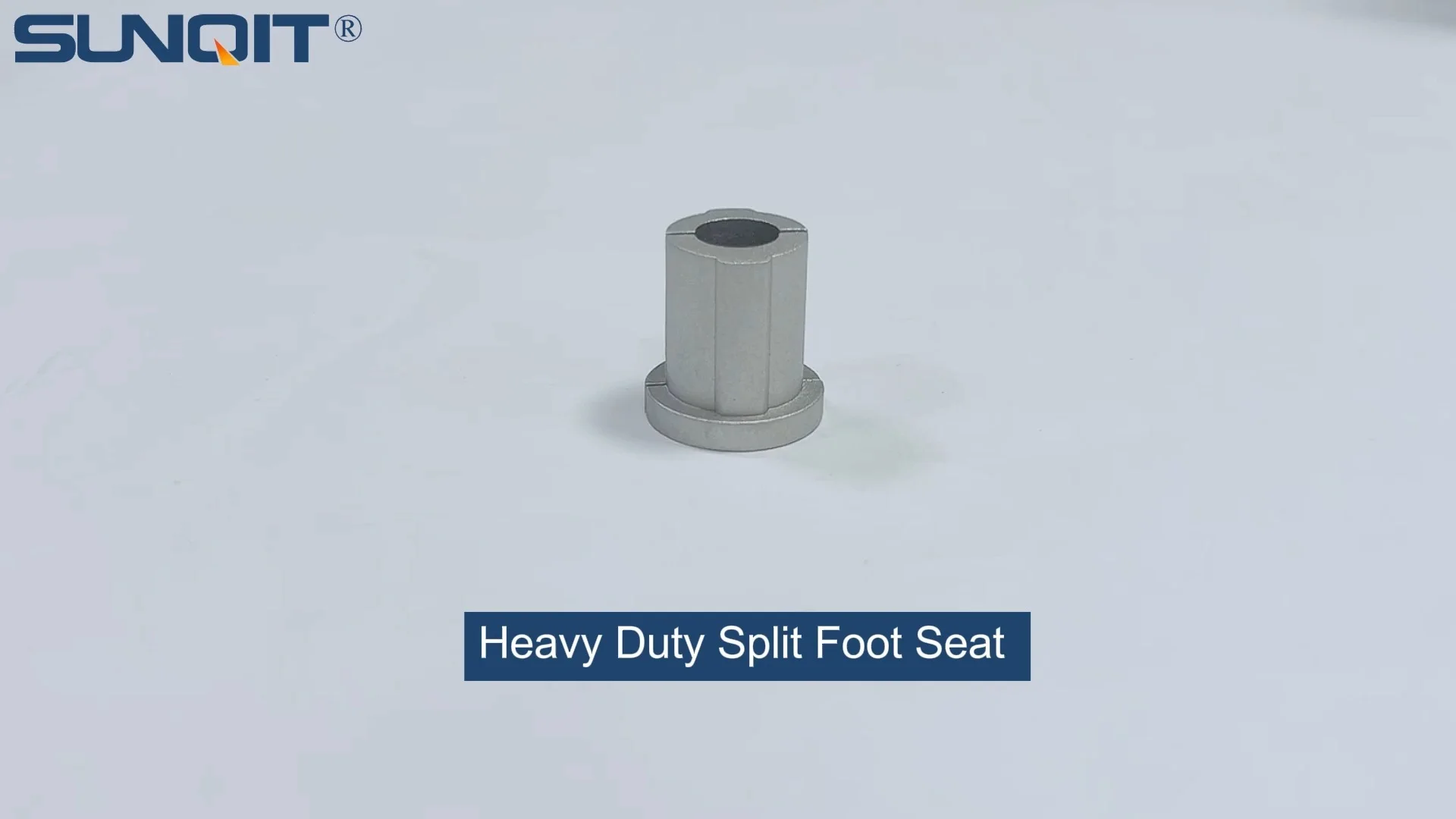
Heavy Duty Split Foot Seat
M10 aluminum heavy duty split foot deat with foot adjuster for workbench and flow rack.
Introduction: The Unsung Heroes of Workspace Stability
If you've ever spent a morning adjusting a wobbly workbench or replacing a bent foot seat on a material rack, you know how much these small components can disrupt your day. Heavy duty split foot seats might not be the first thing you think about when designing a workspace, but they're the unsung heroes keeping your operations steady—literally. Whether you're running a bustling factory floor, a busy workshop, or a precision assembly line, the right foot seats can mean the difference between smooth, uninterrupted workflow and costly downtime.
In this article, we're diving deep into the world of heavy duty split foot seats, focusing on a head-to-head comparison between a well-known competitor—let's call them Brand A—and our own lean pipe solutions. We'll explore what makes a foot seat effective, where Brand A falls short, and how our approach, rooted in lean pipe and aluminum lean pipe technology, delivers more than just stability. We'll also touch on real-world applications, compatibility with tools like workbenches and roller tracks, and why choosing the right foundation matters for your long-term efficiency.
Let's start by breaking down what heavy duty split foot seats actually do, and why they deserve more attention than they often get.
Understanding Heavy Duty Split Foot Seats: More Than Just "Feet"
At their core, heavy duty split foot seats are the foundation (quite literally) of stable workbenches, racks, and lean pipe structures. They attach to the bottom of frames, distributing weight evenly and preventing wobbling, even under heavy loads. Think of them as the "feet" of your workspace furniture—if they're weak, uneven, or poorly designed, everything above them suffers.
So, what makes a good heavy duty split foot seat? Let's break down the key factors:
Load Capacity: They need to support the weight of the structure they're holding, plus any tools, materials, or products placed on it. A flimsy foot seat might work for a lightweight shelf but will buckle under a fully loaded workbench or a multi-tier material rack.
Stability: Even if a foot seat can handle the weight, it needs to keep the structure steady. This means minimal wobble, resistance to lateral movement (like when someone bumps into a rack), and adjustability for uneven floors.
Durability: Workspaces are tough environments. Foot seats face daily wear and tear, exposure to dust, moisture, and sometimes chemicals. They need to stand up to rust, corrosion, and repeated stress without deforming.
Compatibility: A great foot seat shouldn't limit your options. It should work with the frames, pipes, and accessories you already use—whether that's steel pipes, aluminum lean pipe, or specialized profiles. Rigid, one-size-fits-all designs can trap you in a rigid workspace that's hard to adapt as your needs change.
With these factors in mind, let's turn our attention to Brand A, a common choice in industrial hardware circles, and see how they stack up.
Load Capacity: They need to support the weight of the structure they're holding, plus any tools, materials, or products placed on it. A flimsy foot seat might work for a lightweight shelf but will buckle under a fully loaded workbench or a multi-tier material rack.
Stability: Even if a foot seat can handle the weight, it needs to keep the structure steady. This means minimal wobble, resistance to lateral movement (like when someone bumps into a rack), and adjustability for uneven floors.
Durability: Workspaces are tough environments. Foot seats face daily wear and tear, exposure to dust, moisture, and sometimes chemicals. They need to stand up to rust, corrosion, and repeated stress without deforming.
Compatibility: A great foot seat shouldn't limit your options. It should work with the frames, pipes, and accessories you already use—whether that's steel pipes, aluminum lean pipe, or specialized profiles. Rigid, one-size-fits-all designs can trap you in a rigid workspace that's hard to adapt as your needs change.
With these factors in mind, let's turn our attention to Brand A, a common choice in industrial hardware circles, and see how they stack up.

Brand A's Heavy Duty Split Foot Seats: The Traditional Approach
Brand A has been around for decades, and their heavy duty split foot seats are a staple in many older factories. Their design is straightforward: a solid steel block with a split base, intended to clamp onto steel pipes or frames. On paper, they check some boxes—they're marketed as "industrial-grade," with a load capacity of up to 600kg per seat, and they're widely available through standard hardware distributors.
But let's dig deeper. Talk to maintenance managers or workshop supervisors who've used Brand A's seats long-term, and a pattern of frustrations emerges.
First,
weight
. Steel is strong, but it's also heavy. A single Brand A foot seat can weigh 3-4 pounds, and when you're installing them on a rack with four or six legs, that adds up. Lifting and positioning these seats often requires two people, slowing down setup or reconfiguration. For teams that need to rearrange workstations frequently (a common practice in lean manufacturing), this extra weight translates to longer downtime and higher labor costs.
Second,
corrosion resistance
. While Brand A offers a powder-coated finish, steel is still prone to rust in humid environments, near wash stations, or in facilities that use water-based cleaning solutions. Over time, that rust weakens the seat's structure, leading to cracks or instability—and eventually, replacement.
Third,
limited adjustability
. Brand A's seats have fixed heights and minimal leveling options. If your floor is uneven (and let's be honest, most workshop floors are), you'll end up with wobbly racks or workbenches. Some users resort to shimming with washers or wood blocks, but that's a temporary fix that undermines the seat's intended purpose.
Finally,
compatibility issues
. Brand A's seats are designed to work with their own line of steel pipes and frames. If you're using lean pipe, aluminum lean pipe, or third-party accessories (like caster wheels for mobile workstations), you'll likely need adapters or custom modifications. This adds complexity and cost, turning a simple installation into a headache.
Don't get us wrong—Brand A's seats have their place. They're a solid choice for static, low-movement setups in dry environments. But in today's fast-paced, adaptable workspaces, they often feel like a relic of a bygone era.

Our Lean Pipe Solutions: Built for Modern Workspaces
At our core, we believe workspace components should do more than just "work"—they should
enable
efficiency. That's why our heavy duty split foot seats are designed from the ground up to integrate seamlessly with lean pipe, aluminum lean pipe, and the entire ecosystem of lean manufacturing tools. We didn't just repurpose a steel design; we reimagined what a foot seat could be, focusing on flexibility, durability, and compatibility.
Let's start with
materials
. Unlike Brand A's steel-heavy approach, our split foot seats are crafted from high-grade aluminum lean pipe components. Aluminum brings two huge advantages: it's lightweight (a single seat weighs just 1.2 pounds, making installation a one-person job) and naturally resistant to corrosion. That means no rust, even in damp environments or facilities that require regular cleaning. For food processing plants, pharmaceutical labs, or coastal workshops, this is a game-changer.
But aluminum alone isn't enough—we paired it with a reinforced internal structure to ensure load capacity matches (and often exceeds) Brand A's. Our standard foot seats support up to 700kg per unit, and we offer heavy-duty variants for specialized setups (like industrial material racks) that handle up to 1,000kg. How? By engineering the split base to distribute weight more evenly, reducing stress on the clamping mechanism and the pipe itself.
Adjustability
is another area where we shine. Our foot seats feature built-in, tool-free leveling feet. Simply twist the base to raise or lower the seat by up to 15mm—perfect for uneven floors or when you need to align multiple workbenches in a straight line. No shims, no washers, no guesswork. This small feature alone has saved our clients hours of setup time and eliminated the "rocking rack" frustration.
Now, let's talk
compatibility
—the cornerstone of our lean pipe philosophy. Our split foot seats work with standard lean pipe (28mm diameter), aluminum lean pipe, and even aluminum profile systems. They clamp securely to pipes using a reinforced plastic grip that won't scratch or damage the pipe surface, and they're compatible with all standard lean pipe joints. Need to add caster wheels for a mobile workstation? Just swap out the foot seat for a caster wheel adapter—no tools required. Building a roller track system for material flow? Our seats integrate seamlessly with roller track connectors, ensuring the entire structure stays stable even as products glide along the track.
We also didn't forget about
versatility
. Our foot seats come in three sizes to fit different pipe diameters and load needs, and they're available in both standard and ESD (electrostatic discharge) variants for electronics manufacturing. For workshops that need to label or color-code zones, we offer custom powder-coating in a range of colors—yellow, grey, blue—to match your workspace aesthetics.
In short, our foot seats aren't just components—they're part of a larger lean pipe ecosystem designed to grow and adapt with your business.

Key Comparisons: Brand A vs. Our Lean Pipe Solutions
To make this comparison concrete, let's break down how Brand A and our lean pipe solutions stack up across the key factors we discussed earlier: load capacity, stability, durability, compatibility, and cost-effectiveness.
As the table shows, our lean pipe solutions outperform Brand A in nearly every category, especially when it comes to adaptability and long-term value. But numbers only tell part of the story—let's look at how these differences play out in real-world scenarios.
| Feature | Brand A | Our Lean Pipe Solutions |
|---|---|---|
| Material | Carbon steel with powder coating | High-grade aluminum with reinforced plastic grip |
| Load Capacity (per seat) | Up to 600kg | Standard: 700kg; Heavy-duty: 1,000kg |
| Weight (per seat) | 3.5 lbs (1.6kg) | 1.2 lbs (0.5kg) |
| Adjustability | Fixed height; no built-in leveling | Tool-free leveling (±15mm); height-adjustable base |
| Corrosion Resistance | Moderate (powder coating prone to chipping) | High (aluminum resists rust; plastic grip is chemical-resistant) |
| Compatibility | Limited to Brand A steel pipes/frames | Works with lean pipe, aluminum lean pipe, aluminum profiles, caster wheels, roller track, and standard lean pipe joints |
| Installation Time | 20-30 minutes per seat (requires two people) | 5-10 minutes per seat (one-person job) |
| ESD Options | Not available | Yes (ESD-safe plastic grip for electronics manufacturing) |
| Long-Term Cost | Higher (replacement every 2-3 years due to rust; adapters for compatibility) | Lower (5+ year lifespan; no adapters needed; lightweight design reduces labor costs) |
Real-World Application: Precision Electronics' Success Story
Precision Electronics, a mid-sized manufacturer of circuit boards in Ohio, was struggling with their workspace setup before switching to our lean pipe solutions. They'd been using Brand A's steel foot seats on their assembly line workbenches for years, but two issues kept cropping up:
First, their production line needed to be reconfigured monthly to accommodate different circuit board models. With Brand A's heavy steel seats, reconfiguring a single workbench required two workers and took over an hour—time that could have been spent assembling products.
Second, their wash stations, located near the assembly line, created a humid environment that caused Brand A's steel seats to rust within 18 months. The rust not only looked unprofessional but also weakened the seats, leading to wobbly workbenches and, in one case, a minor spill of sensitive components.
After hearing about our lean pipe solutions, they decided to test our aluminum lean pipe foot seats on one assembly line. The results were immediate:
- Faster reconfiguration: A single worker could now reposition the workbench in 20 minutes, cutting downtime by 67%.
- No more rust: After six months, the aluminum seats showed zero signs of corrosion, even near the wash stations.
- Seamless integration: The seats worked with their existing lean pipe racks and roller track system, so they didn't need to replace any other equipment.
Within a year, Precision Electronics had replaced all Brand A seats with our lean pipe solutions. They estimate the switch saved them $12,000 in labor costs alone, plus an additional $8,000 in avoided equipment replacements. "It's not just about the seats," their operations manager told us. "It's about how the entire system works together. We can adapt faster, keep the line cleaner, and focus on making circuit boards—not fixing workbenches."
First, their production line needed to be reconfigured monthly to accommodate different circuit board models. With Brand A's heavy steel seats, reconfiguring a single workbench required two workers and took over an hour—time that could have been spent assembling products.
Second, their wash stations, located near the assembly line, created a humid environment that caused Brand A's steel seats to rust within 18 months. The rust not only looked unprofessional but also weakened the seats, leading to wobbly workbenches and, in one case, a minor spill of sensitive components.
After hearing about our lean pipe solutions, they decided to test our aluminum lean pipe foot seats on one assembly line. The results were immediate:
- Faster reconfiguration: A single worker could now reposition the workbench in 20 minutes, cutting downtime by 67%.
- No more rust: After six months, the aluminum seats showed zero signs of corrosion, even near the wash stations.
- Seamless integration: The seats worked with their existing lean pipe racks and roller track system, so they didn't need to replace any other equipment.
Within a year, Precision Electronics had replaced all Brand A seats with our lean pipe solutions. They estimate the switch saved them $12,000 in labor costs alone, plus an additional $8,000 in avoided equipment replacements. "It's not just about the seats," their operations manager told us. "It's about how the entire system works together. We can adapt faster, keep the line cleaner, and focus on making circuit boards—not fixing workbenches."
Why Choose Our Lean Pipe Solutions? It's About More Than Just Foot Seats
At this point, you might be thinking, "Okay, your foot seats sound better, but why should I switch to a whole lean pipe system?" The answer is simple: efficiency thrives on integration. A great foot seat is just one piece of the puzzle; when paired with lean pipe, aluminum lean pipe, roller track, and other accessories, it becomes part of a workspace that works
with
you, not against you.
Here are three reasons our clients keep coming back:
1. Adaptability for Changing Needs Modern manufacturing and workshop environments aren't static. Product lines change, order volumes fluctuate, and new tools or technologies are introduced. Our lean pipe system is designed to evolve with these changes. Need to add a new shelf to a material rack? Just clamp on a few more lean pipe joints. Want to turn a static workbench into a mobile cart? Swap out the foot seats for caster wheels. No welding, no drilling, no waiting for custom parts. This adaptability has helped clients reduce their "workspace redesign" costs by up to 40% compared to rigid steel systems.
2. Lean Principles Built In Lean manufacturing is all about eliminating waste—whether that's time, materials, or unnecessary movement. Our lean pipe solutions are engineered with this in mind. Roller track systems reduce the effort needed to move materials across the floor. Adjustable workbenches minimize bending or reaching for tools. ESD-safe components prevent costly damage to sensitive electronics. Even our foot seats play a role: their lightweight design reduces the energy (and labor) required to reconfigure workspaces, aligning with the lean goal of continuous improvement.
3. A Partner, Not Just a Supplier When you work with us, you're not just buying foot seats or lean pipe—you're gaining access to a team of workspace design experts. We offer free consultations to help you optimize your layout, 3D modeling to visualize changes before installation, and ongoing support to tweak your setup as needed. One client, a automotive parts manufacturer in Texas, told us, "We didn't just get better foot seats—we got a workspace that actually helps us hit our production targets. The team at [our company] took the time to understand our process, not just sell us parts."
In the end, choosing between Brand A and our lean pipe solutions isn't just about a foot seat—it's about choosing a partner in efficiency. Brand A offers a one-size-fits-all steel block; we offer a flexible, durable, and future-proof foundation for your workspace.
1. Adaptability for Changing Needs Modern manufacturing and workshop environments aren't static. Product lines change, order volumes fluctuate, and new tools or technologies are introduced. Our lean pipe system is designed to evolve with these changes. Need to add a new shelf to a material rack? Just clamp on a few more lean pipe joints. Want to turn a static workbench into a mobile cart? Swap out the foot seats for caster wheels. No welding, no drilling, no waiting for custom parts. This adaptability has helped clients reduce their "workspace redesign" costs by up to 40% compared to rigid steel systems.
2. Lean Principles Built In Lean manufacturing is all about eliminating waste—whether that's time, materials, or unnecessary movement. Our lean pipe solutions are engineered with this in mind. Roller track systems reduce the effort needed to move materials across the floor. Adjustable workbenches minimize bending or reaching for tools. ESD-safe components prevent costly damage to sensitive electronics. Even our foot seats play a role: their lightweight design reduces the energy (and labor) required to reconfigure workspaces, aligning with the lean goal of continuous improvement.
3. A Partner, Not Just a Supplier When you work with us, you're not just buying foot seats or lean pipe—you're gaining access to a team of workspace design experts. We offer free consultations to help you optimize your layout, 3D modeling to visualize changes before installation, and ongoing support to tweak your setup as needed. One client, a automotive parts manufacturer in Texas, told us, "We didn't just get better foot seats—we got a workspace that actually helps us hit our production targets. The team at [our company] took the time to understand our process, not just sell us parts."
In the end, choosing between Brand A and our lean pipe solutions isn't just about a foot seat—it's about choosing a partner in efficiency. Brand A offers a one-size-fits-all steel block; we offer a flexible, durable, and future-proof foundation for your workspace.
Conclusion: Invest in Stability, Adaptability, and Growth
Heavy duty split foot seats may be small, but their impact on your workspace is huge. They're the foundation of stable workbenches, secure material racks, and efficient production lines. Brand A's steel seats have served their purpose in the past, but they're increasingly out of step with the needs of modern, adaptable workspaces—heavy, prone to rust, and limited in compatibility.
Our lean pipe solutions, built around aluminum lean pipe and a commitment to flexibility, offer a better alternative. Lightweight, corrosion-resistant, adjustable, and compatible with a wide range of lean manufacturing tools, they're designed to grow with your business. Whether you're a small workshop looking to organize your space or a large manufacturer aiming to reduce downtime, our foot seats and lean pipe ecosystem can help you work smarter, not harder.
So, the next time you're evaluating workspace components, remember: the best solutions aren't just about what works today—they're about what enables you to thrive tomorrow. Choose stability. Choose adaptability. Choose lean pipe.