- Company Articles
- Products and Technology
- Product knowledge
- Comparing Imported vs Domestic Aluminum Profile Rubber Strips: Quality and Cost

Comparing Imported vs Domestic Aluminum Profile Rubber Strips: Quality and Cost
Related Product
Aluminum Profile Rubber Strip
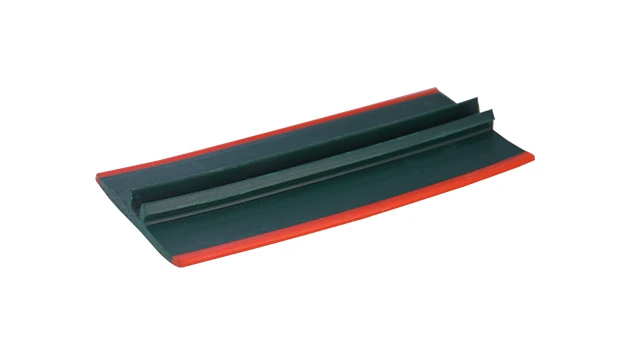
The tread strip fits into a T-slot channel and provides an anti-slip ribbed surface. It has a key pad that presses into a T-slot and is commonly used for adding traction on steps or as padding for doors. Tread strip can be ordered by rolls. The high quali
In the bustling world of manufacturing, logistics, and industrial design, it's often the smallest components that keep operations running smoothly. Take, for example, the humble aluminum profile rubber strip—a seemingly unassuming part of the broader category of aluminum profile accessories. These strips play a quiet yet critical role: sealing gaps, cushioning impacts, reducing noise, and protecting the edges of aluminum extrusion profiles. Whether you're building a workbench for an assembly line, a conveyor system for material handling, or a flow rack in a warehouse, the right rubber strip can mean the difference between a setup that lasts for years and one that requires constant repairs. But when it comes to sourcing these essential accessories, a common dilemma arises: imported or domestic? In this article, we'll dive deep into the quality and cost considerations of imported vs. domestic aluminum profile rubber strips, helping you make an informed choice for your specific needs.
The Role of Aluminum Profile Rubber Strips in Modern Manufacturing
Before we compare imported and domestic options, let's first understand why these rubber strips matter. Aluminum extrusion profiles are the backbone of countless industrial structures—think workbenches, conveyor frames, machine guards, and material racks. Their versatility, strength, and modularity make them a favorite in lean system environments, where efficiency and adaptability are paramount. But aluminum profiles alone aren't enough. To maximize their performance, they rely on (supporting) aluminum profile accessories, and rubber strips are among the most vital.
Aluminum profile rubber strips are typically made from elastomeric materials like EPDM (ethylene propylene diene monomer), silicone, or PVC. They're designed to fit snugly into the T-slots or along the edges of aluminum profiles, serving multiple functions: sealing out dust and moisture in outdoor or factory settings, dampening vibrations to reduce noise in busy workspaces, preventing scratches on delicate materials sliding across profiles, and even enhancing safety by softening sharp edges. In lean systems, where every second of downtime or inefficiency eats into productivity, these small components contribute to smoother workflows, fewer disruptions, and longer lifespans for equipment.
Given their importance, choosing between imported and domestic rubber strips isn't just about cost—it's about ensuring that your aluminum extrusion profiles perform as intended, day in and day out. Let's break down how the two options stack up in terms of quality and cost.
Quality Comparison: Imported vs. Domestic Aluminum Profile Rubber Strips
Quality is a multifaceted metric, encompassing material composition, manufacturing precision, performance under stress, and long-term durability. When evaluating imported and domestic aluminum profile rubber strips, these factors paint a nuanced picture of strengths and trade-offs.
Material Composition: The Foundation of Quality
Imported rubber strips, particularly those from European or Japanese manufacturers, have long been associated with premium materials. Many adhere to strict international standards, such as ISO 9001 or DIN (German Institute for Standardization) guidelines, which mandate rigorous testing of raw materials. For example, top-tier imported strips often use high-purity EPDM or silicone blends, chosen for their excellent resistance to heat, ozone, and aging. These materials are sourced from specialized suppliers, ensuring consistency in chemical composition—critical for predictable performance.
Domestic manufacturers, on the other hand, have made significant strides in material quality over the past decade. While some lower-cost options still rely on recycled rubber or filler-heavy compounds (which can compromise elasticity), mid-to-high-end domestic suppliers now use virgin EPDM and silicone, often sourced from local petrochemical giants. This shift has narrowed the gap in material purity, though imported strips still tend to prioritize specialized formulations for extreme conditions—such as silicone blends that withstand temperatures as low as -60°C or as high as 200°C, a boon for industries like aerospace or food processing.
Performance Metrics: How They Stand Up to Stress
To truly compare quality, we need to look at measurable performance metrics. Let's break down key indicators like tensile strength, elongation at break, temperature resistance, and aging resistance—all critical for determining how well a rubber strip will hold up in real-world use.
| Performance Metric | Imported Aluminum Profile Rubber Strips | Domestic Aluminum Profile Rubber Strips (Mid-to-High End) |
|---|---|---|
| Tensile Strength (MPa) | 10–15 MPa (resists tearing under force) | 8–12 MPa (sufficient for most standard applications) |
| Elongation at Break (%) | 300–400% (stretches significantly before breaking) | 250–350% (adequate for regular expansion/contraction) |
| Temperature Resistance Range | -40°C to 150°C (suits extreme industrial environments) | -30°C to 120°C (ideal for general manufacturing, logistics) |
| Aging Resistance (5000h UV Exposure) | Retains 80–90% of original elasticity | Retains 65–75% of original elasticity |
| Manufacturing Precision (Tolerance) | ±0.1mm (snug fit with aluminum extrusion profiles) | ±0.2–0.3mm (may require minor adjustments for tight fits) |
Take tensile strength, for instance: imported strips often hit 12–15 MPa, meaning they can withstand significant pulling force without tearing—essential for applications like conveyor systems where rubber strips are repeatedly stretched as materials glide over them. Domestic strips, while slightly lower at 8–12 MPa, still perform well in standard setups like workbenches or static material racks, where stress is minimal. Similarly, elongation at break (how much a strip can stretch before snapping) is higher in imported strips, making them more durable in dynamic environments with frequent movement, such as roller tracks or turnover trolleys.
Temperature resistance is another area where imported strips shine. A German-made silicone rubber strip might handle -50°C to 180°C, making it perfect for cold-storage warehouses or high-heat assembly lines. Domestic strips, by contrast, typically top out at 120°C, which is more than enough for most factories, where ambient temperatures rarely exceed 40°C. For businesses operating in moderate conditions, this difference is negligible—but for those with extreme needs, imported strips offer peace of mind.
Manufacturing Precision: The Art of the Extrusion
Aluminum profile rubber strips are almost always made via extrusion—a process where molten rubber is forced through a die to create a specific shape. The precision of this die and the consistency of the extrusion process directly impact how well the strip fits into aluminum profile T-slots. Imported manufacturers often use computer-controlled extrusion lines with laser-calibrated dies, ensuring that the strip's width, thickness, and groove alignment match aluminum extrusion profiles down to ±0.1mm. This tight tolerance means no gaps, no rattling, and a seamless seal when installed.
Domestic manufacturers have invested heavily in upgrading extrusion equipment, with many now using CNC dies and automated quality checks. However, tolerance ranges are still slightly wider, typically ±0.2–0.3mm. For most users, this is unnoticeable—you'll still get a snug fit. But in high-precision applications, like aerospace component assembly workbenches, even a 0.2mm gap can allow debris to enter, potentially compromising sensitive parts. In such cases, imported strips' tighter tolerances justify the premium.
Aging Resistance: Longevity in the Field
A rubber strip's true test is how it ages over time. Exposure to UV light, ozone, and repeated wear can cause hardening, cracking, or brittleness—all of which reduce its ability to seal or cushion. Imported strips, thanks to their high-quality materials and additives like anti-aging agents, excel here. After 5,000 hours of UV exposure (roughly equivalent to 5 years of outdoor use), they retain 80–90% of their original elasticity. Domestic strips, while improved, typically retain 65–75% under the same conditions, meaning they may need replacement 1–2 years earlier in outdoor or high-UV environments.
That said, in indoor settings with controlled lighting and minimal ozone exposure (common in most factories), both imported and domestic strips can last 5–7 years. The difference in aging resistance only becomes significant in harsh conditions, making domestic strips a strong choice for standard indoor applications.

Cost Analysis: Upfront Price vs. Total Cost of Ownership
Cost is often the first factor businesses consider, but it's rarely as simple as comparing per-meter prices. To make a smart choice, we need to weigh upfront costs against long-term value—including maintenance, replacement frequency, and downtime risks. Let's break it down.
Upfront Costs: The Sticker Price
Imported aluminum profile rubber strips come with a higher upfront price tag. On average, you'll pay $2–$5 per meter for standard EPDM strips, and $5–$10 per meter for specialized silicone blends. This includes costs like international shipping ($0.50–$1.50 per meter), import tariffs (5–15%, depending on the country of origin), and brand markup (European and Japanese brands often command a 20–30% premium for their reputation).
Domestic strips, by contrast, are significantly cheaper. Mid-to-high-end domestic EPDM strips cost $0.80–$2 per meter, with silicone options ranging from $2–$4 per meter. There are no import fees, and shipping is minimal—often $0.10–$0.30 per meter for domestic deliveries. Labor costs also play a role: domestic factories have lower overhead, allowing them to price competitively without sacrificing quality. For businesses buying in bulk (e.g., a manufacturer ordering 10,000 meters for a new production line), this can translate to savings of $10,000–$30,000 upfront.
Total Cost of Ownership: Beyond the Initial Purchase
While domestic strips are cheaper upfront, imported strips often offer better long-term value in high-stress environments. Let's consider a hypothetical scenario: a warehouse using aluminum profile flow racks with rubber strips to guide packages. If they use domestic strips costing $1 per meter, replacing them every 3 years (due to moderate wear), the total cost over 10 years is $3.33 per meter. An imported strip costing $3 per meter, lasting 7 years, would cost $4.29 per meter over the same period. On the surface, domestic is cheaper—but if the warehouse experiences downtime during replacements (e.g., halting flow rack operations for a day), the cost of lost productivity could push domestic total ownership costs higher.
Conversely, for a small workshop using aluminum profile workbenches with rubber strips to protect edges, the domestic strip is the clear winner. The workbench sees minimal wear, so the strip lasts 5 years, and replacement takes 10 minutes—no downtime, no hassle. Here, the $2 per meter saved upfront outweighs the slightly shorter lifespan.
Market Factors: Supply Chain and Lead Times
Cost isn't just about money—it's also about time. Imported strips often have lead times of 4–8 weeks, thanks to shipping and customs delays. For businesses with tight project deadlines, this can be a dealbreaker. Domestic suppliers, by contrast, typically deliver in 3–7 days, with rush orders available in 24–48 hours. In industries where lean system efficiency depends on minimizing inventory, this agility is invaluable. A car parts manufacturer, for example, can't afford to wait 2 months for rubber strips when a sudden production spike demands more workbenches—domestic suppliers let them scale quickly without stockpiling.

Real-World Applications: How Industries Choose
To ground this comparison in reality, let's look at how two different industries—automotive manufacturing and cold-storage logistics—navigate the imported vs. domestic decision.
Case Study 1: Automotive Manufacturing
A mid-sized automotive parts plant in Guangzhou produces engine components for domestic car brands. Their assembly lines rely on aluminum extrusion profiles for workbenches and roller tracks, with rubber strips to reduce noise and prevent metal-on-metal wear. Initially, they used imported German rubber strips, costing $4 per meter, which lasted 6 years. In 2020, they switched to a domestic supplier offering EPDM strips at $1.20 per meter. After 3 years of use, the domestic strips showed minimal cracking, and noise levels remained comparable to the imported ones. The plant saved $28,000 annually on rubber strip costs, with no increase in maintenance downtime. For their needs—moderate temperatures, standard wear—domestic strips proved more than adequate.
Case Study 2: Cold-Storage Logistics
A cold-storage warehouse in Harbin stores frozen seafood at -25°C. Their aluminum profile material racks use rubber strips to seal gaps and prevent condensation from damaging products. They tested both imported silicone strips ($8 per meter, -60°C to 200°C resistance) and domestic EPDM strips ($3 per meter, -30°C to 120°C resistance). The domestic strips became brittle after 8 months in the cold, cracking and losing their seal. The imported strips, by contrast, remained flexible after 2 years. The warehouse now uses imported strips exclusively—while pricier, they avoid product losses from condensation and reduce replacement labor costs.
These case studies highlight a key takeaway: the "better" option depends on your specific environment. For standard industrial conditions, domestic strips offer unbeatable value. For extreme temperatures, high precision, or critical safety roles, imported strips justify their cost.
Conclusion: Making the Right Choice for Your Business
The debate between imported and domestic aluminum profile rubber strips isn't about which is universally better—it's about which aligns with your priorities. Imported strips excel in extreme conditions, tight tolerances, and long-term durability, making them ideal for specialized industries like aerospace, pharmaceuticals, or cold storage. Domestic strips, meanwhile, offer cost savings, fast delivery, and sufficient quality for most standard applications, from automotive factories to e-commerce warehouses.
As domestic manufacturers continue to invest in materials and technology, the quality gap will only shrink further. Today, the smartest approach is to assess your needs: What's your temperature range? How critical is precision? Can you tolerate longer lead times? For many businesses, a hybrid strategy works best—using imported strips for high-stress equipment and domestic strips for everyday setups. After all, in the world of lean systems, efficiency isn't just about the parts you use—it's about using the right parts for the job.