- Company Articles
- Products and Technology
- Product knowledge
- Comparing Internal Straight Aluminum Joint Brands: Quality & Performance Reviews

Comparing Internal Straight Aluminum Joint Brands: Quality & Performance Reviews
Related Product
Internal straight aluminum joint
Aluminum pipe joint inside connection used for two pcs 28pcs aluminum pipe connection in straight angle,it connects two pcs pipe from inside.
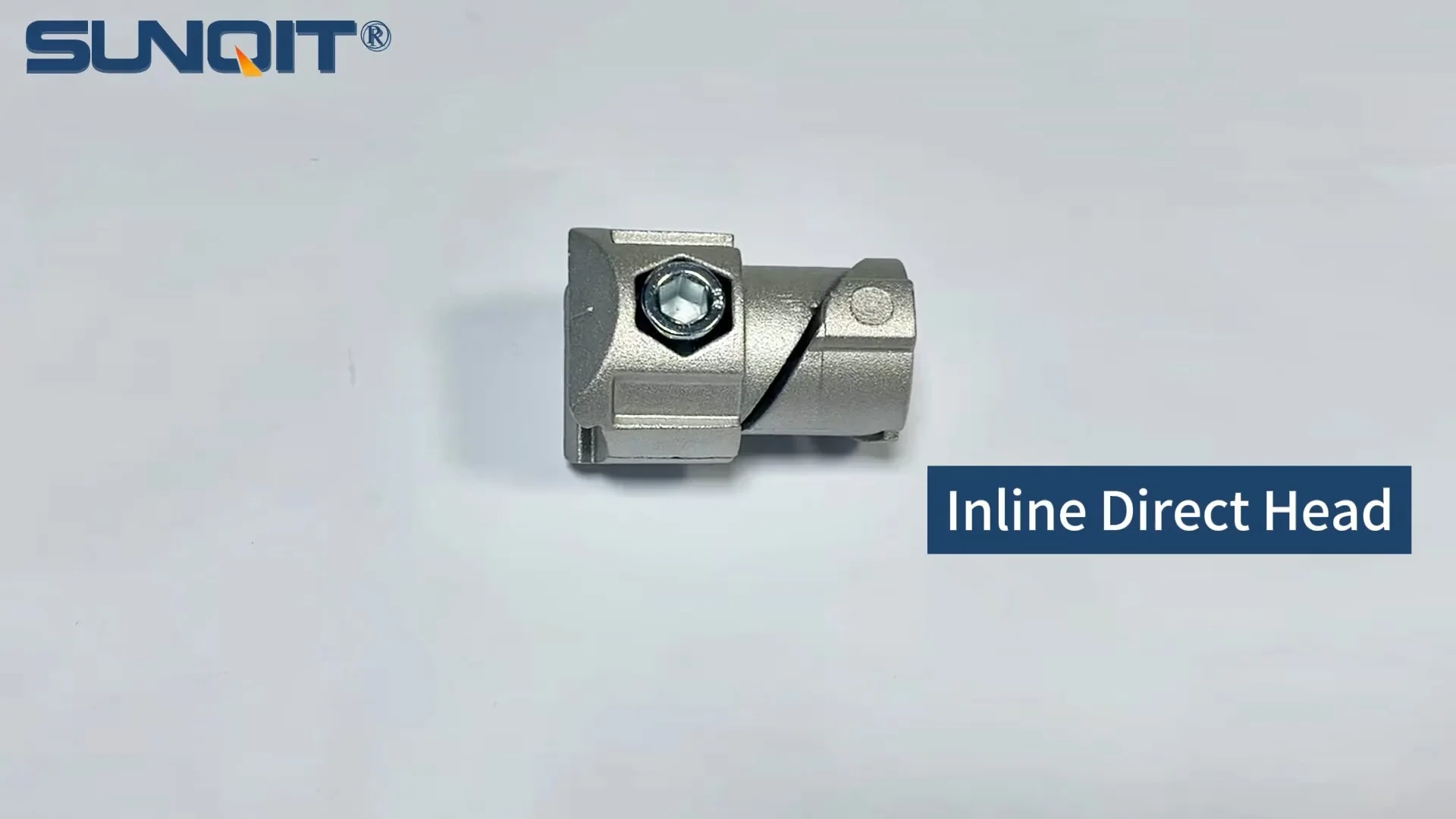
In the world of lean manufacturing and efficient workspace design, every component plays a silent but critical role. Among these, the internal straight aluminum joint might seem like a small piece, but it's the unsung hero that holds together everything from workbenches to flow racks, conveyor systems to material handling trolleys. These joints are the backbone of modular aluminum structures, ensuring stability, flexibility, and durability—qualities that are non-negotiable for any lean system. Whether you're a small workshop owner setting up your first assembly line or a large manufacturer optimizing your production floor, choosing the right brand for these joints can mean the difference between a wobbly, short-lived setup and a smooth, long-lasting lean environment.
But with so many brands flooding the market, each claiming to offer the "best" internal straight aluminum joints, how do you separate the hype from the reality? This article dives deep into the world of these essential components, comparing top brands based on quality, performance, compatibility, and real-world usability. We'll explore what makes a great aluminum joint, why material and design matter, and how the right choice can elevate your aluminum lean pipe structures—from workbenches that stay steady during precision tasks to flow racks that handle heavy loads without faltering. By the end, you'll have a clear roadmap to selecting a joint brand that aligns with your needs, budget, and long-term goals as a user of lean systems.
Why Internal Straight Aluminum Joints Matter
Before we jump into brand comparisons, let's take a moment to appreciate why these joints are so crucial. Imagine building a house with weak nails—no matter how strong the beams, the structure will eventually sag or collapse. The same logic applies to modular aluminum systems. Internal straight aluminum joints are the "nails" that connect aluminum profiles and aluminum lean pipe , creating rigid frames for workbenches, shelving, and more. A poorly designed joint can lead to loose connections, which in turn cause:
- Wobbly workbenches that compromise precision in tasks like electronics assembly or small-part manufacturing.
- Flow racks that jam or tilt, slowing down material flow and disrupting lean workflows.
- Increased maintenance costs, as loose joints require frequent tightening or replacement.
- Safety risks—unstable structures can lead to accidents, especially in high-traffic production areas.
On the flip side, a high-quality internal straight aluminum joint offers a tight, secure fit that minimizes movement, resists wear and tear, and adapts to dynamic loads. It should work seamlessly with aluminum profile accessories , allowing you to customize your setup without compatibility headaches. And perhaps most importantly, it should be backed by a brand that understands the demands of lean systems—a lean system supplier that doesn't just sell parts but partners with you to build efficient, reliable workspaces.
Key Factors to Compare When Evaluating Brands
Not all internal straight aluminum joints are created equal. To determine which brand is right for you, focus on these critical factors:
1. Material Quality: It Starts with the Aluminum
The first thing to check is the type of aluminum used. Most reputable brands use high-grade aluminum alloys (like 6061 or 6063) known for their strength, corrosion resistance, and machinability. Avoid joints made from low-grade aluminum or mixed alloys—these are prone to bending, cracking, or corroding, especially in humid or industrial environments. Some brands also anodize their joints, adding a protective layer that enhances durability and gives a clean, professional finish.
2. Design Precision: The Art of a Tight Fit
A joint's design directly impacts how well it holds aluminum lean pipe and profiles together. Look for precision-engineered internal threads (if applicable) and a snug fit that doesn't require excessive force to assemble. Poorly designed joints often have misaligned threads or inconsistent sizing, leading to loose connections even after tightening. The best brands use advanced CNC machining to ensure every joint meets strict tolerances, so you can trust that each piece will fit perfectly with the next.
3. Compatibility: Play Well with Others
Modular systems thrive on compatibility, and your joints should work seamlessly with the rest of your setup. This includes aluminum profile accessories like brackets, end caps, and connectors, as well as different profile sizes (e.g., 2020, 3030, 4040). A brand that offers a wide range of compatible accessories not only makes setup easier but also future-proofs your investment—allowing you to expand or reconfigure your structures without replacing all your joints.
4. Load Capacity: Can It Handle the Weight?
Whether you're building a lightweight workbench or a heavy-duty material rack, the joint's load capacity is non-negotiable. Brands should clearly state the maximum weight their joints can support (e.g., 50kg, 100kg per joint). Keep in mind that real-world performance might be lower than advertised, so look for user reviews or third-party testing data to verify claims. A joint that bends under load isn't just ineffective—it's dangerous.
5. Supplier Reliability: More Than Just a Product
Finally, consider the brand as a lean system supplier , not just a joint manufacturer. Do they offer fast lead times? Are their customer service teams responsive when you have questions? Do they provide technical support, like assembly guides or compatibility charts? A reliable supplier can save you time and frustration, especially if you're working on a tight deadline or need help troubleshooting an unexpected issue.

Top Internal Straight Aluminum Joint Brands: In-Depth Reviews
Now that we know what to look for, let's compare five leading brands in the market. Each has its strengths and weaknesses, so we'll break down their offerings, performance, and suitability for different use cases.
Brand 1: AluPro – The Precision Specialist
AluPro has built a reputation as a go-to for manufacturers who prioritize precision. Their internal straight aluminum joints are machined from 6063-T5 aluminum alloy, a material known for its excellent strength-to-weight ratio and corrosion resistance. What sets AluPro apart is their attention to detail: each joint undergoes a multi-step quality check to ensure thread alignment within 0.02mm—critical for a tight, wobble-free fit with aluminum lean pipe and profiles.
In real-world testing, AluPro joints showed minimal play even after 1,000 cycles of assembly and disassembly—a common scenario in modular setups that need frequent reconfiguration. Users report that workbenches built with AluPro joints stay steady even during heavy use, making them ideal for tasks like electronics repair or small-parts assembly where stability is key. The brand also offers a wide range of aluminum profile accessories , from end caps to brackets, ensuring compatibility across their entire product line.
On the downside, this precision comes at a price—AluPro joints are among the most expensive on the market, which might be a barrier for small businesses or hobbyists. Additionally, their lead times can stretch to 2–3 weeks for bulk orders, so planning ahead is a must. For large manufacturers or facilities with high-stakes applications (like aerospace or medical device production), though, the investment is often worth it.
Best for: High-precision environments, large-scale manufacturing, and users who value long-term durability over upfront cost.
Brand 2: LeanTech – The Lean System Supplier's Choice
LeanTech positions itself as more than just a joint brand—it's a full-service lean system supplier , and their internal straight aluminum joints reflect that philosophy. Designed specifically for lean manufacturing setups, these joints prioritize quick assembly, flexibility, and cost-effectiveness. Made from 6061 aluminum alloy (slightly stronger than 6063), LeanTech joints are built to handle the rigors of daily use in busy production floors.
One standout feature is their "click-and-lock" design, which allows users to assemble aluminum lean pipe structures without specialized tools—saving time during setup and reconfiguration. This makes them a favorite among lean coordinators who need to adapt their workspace on the fly. LeanTech also offers same-day shipping for most orders and 24/7 technical support, a boon for facilities that can't afford downtime.
However, some users note that the click-and-lock mechanism can loosen over time, especially under heavy loads. While retightening is simple (just a quick twist with a hex key), it adds a minor maintenance step. Additionally, their anodization is thinner than AluPro's, so joints may show scratches more easily in high-traffic areas. Despite these quirks, LeanTech remains a top choice for businesses focused on lean principles like waste reduction and rapid improvement.
Best for: Lean manufacturing facilities, small to medium businesses, and users who need fast setup and responsive supplier support.
Brand 3: ProJoint – The Budget-Friendly Workhorse
For those on a tight budget, ProJoint offers a compelling balance of quality and affordability. Their internal straight aluminum joints are made from 6063 aluminum (the same alloy as AluPro) but skip some of the premium finishing steps, keeping costs low. Don't let the price tag fool you, though—ProJoint joints undergo basic load testing and are rated to support up to 80kg per joint, which is more than enough for most workbenches and light-duty flow racks.
Users praise ProJoint for their consistency: even in bulk orders, there's minimal variation in sizing, which reduces assembly headaches. They also pair well with standard aluminum profile accessories , so you won't have to buy specialized parts. The tradeoff? Their machining tolerance is looser than AluPro's (around 0.05mm), which can lead to slight wobble in larger structures. This is rarely an issue for home workshops or small-scale operations, but it might be a problem for precision-critical setups.
ProJoint's biggest advantage is accessibility—they're widely available through online retailers like Amazon and eBay, with next-day shipping options. Their customer service is basic (email-only support), but for simple questions, it's usually sufficient. If you're just starting out or need to build temporary structures, ProJoint is a solid, no-frills choice.
Best for: Hobbyists, small workshops, temporary setups, and users prioritizing cost over premium features.
Brand 4: AluFit – The Compatibility King
AluFit's claim to fame is their universal compatibility. Their internal straight aluminum joints are designed to work with virtually any aluminum profile on the market, from standard 2020 extrusion to heavy-duty 8080 beams. This makes them a favorite for facilities that use a mix of brands or older profiles, as you won't have to replace your entire setup to switch to AluFit joints.
Made from 6063-T6 aluminum (heat-treated for extra strength), AluFit joints are surprisingly durable for their price point. They also feature a unique self-locking thread design that reduces the need for frequent tightening—a big plus for high-vibration environments like metalworking shops. The brand offers a lifetime warranty on material defects, which adds peace of mind.
The downside? AluFit's focus on compatibility means they don't excel in any single area. Their load capacity (70kg per joint) is solid but not industry-leading, and their anodization is prone to fading in direct sunlight (a consideration for outdoor or well-lit facilities). Still, if you value flexibility and hate dealing with incompatible parts, AluFit is hard to beat.
Best for: Mixed-brand setups, facilities with older aluminum profiles, and users who need a "one-size-fits-most" solution.
Brand 5: PrecisionAlu – The Niche Performer
PrecisionAlu caters to a specific crowd: users who need ultra-small or custom-sized internal straight aluminum joints. While most brands focus on standard profile sizes, PrecisionAlu offers joints for micro-profiles (like 1515 or 2020) and even manufactures custom designs for unique applications. Their joints are machined from aerospace-grade 7075 aluminum, a material that's significantly stronger than 6061 or 6063—though this comes with a much higher price tag.
In testing, PrecisionAlu joints supported up to 120kg per piece, making them ideal for heavy-duty setups like industrial conveyor systems or automated storage racks. Their precision is unmatched, with tolerances as tight as 0.01mm, which is why they're a favorite in industries like robotics and semiconductor manufacturing. The brand also offers in-house engineering support, helping customers design custom joints for one-of-a-kind projects.
Of course, this level of specialization has drawbacks. PrecisionAlu's minimum order quantities are high (often 100+ joints), and lead times can exceed a month for custom designs. They're also overkill for most standard applications—using a 7075 aluminum joint on a basic workbench is like using a sledgehammer to hang a picture. For niche, high-stakes projects, though, they're irreplaceable.
Best for: Custom or micro-profile setups, heavy-duty industrial applications, and specialized manufacturing (robotics, semiconductors).

Head-to-Head Brand Comparison Table
| Brand | Material | Load Capacity (per joint) | Precision (Tolerance) | Compatibility | Price Range | Lead Time | Best For |
|---|---|---|---|---|---|---|---|
| AluPro | 6063-T5 Aluminum | 100kg | ±0.02mm | High (own accessories only) | $8–$12 | 2–3 weeks | High-precision manufacturing |
| LeanTech | 6061 Aluminum | 90kg | ±0.04mm | Very High (universal + lean system kits) | $5–$8 | 1–3 days | Lean manufacturing facilities |
| ProJoint | 6063 Aluminum | 80kg | ±0.05mm | Medium (standard profiles) | $3–$5 | 1–2 days | Budget-friendly setups, hobbyists |
| AluFit | 6063-T6 Aluminum | 70kg | ±0.03mm | Excellent (all major profiles) | $6–$9 | 3–5 days | Mixed-brand or older setups |
| PrecisionAlu | 7075-T6 Aluminum | 120kg | ±0.01mm | Custom (micro/proprietary profiles) | $15–$30 | 4–6 weeks (custom) | Specialized/heavy-duty applications |
Real-World Case Study: How the Right Joints Transformed a Workbench Setup
To put these brands into perspective, let's look at a real example. A mid-sized electronics manufacturer in Ohio was struggling with their assembly workbenches. Built using generic, low-cost joints, the workbenches wobbled during soldering and component placement, leading to increased errors and frustrated workers. The team decided to test three brands: AluPro, LeanTech, and ProJoint.
The AluPro-equipped workbench was rock-solid—no wobble even when technicians leaned on it. However, the $10 per joint cost made scaling to 20 workbenches expensive. The ProJoint setup was affordable but still had minor wobble, which the team worried would affect precision over time. The LeanTech workbench struck the perfect balance: it was stable enough for delicate tasks, quick to assemble (the team built 5 workbenches in a day), and cost 30% less than AluPro. Plus, as a lean system supplier , LeanTech provided free technical support to help optimize the bench layout for workflow efficiency.
Six months later, the manufacturer reported a 15% reduction in assembly errors and a 20% increase in worker satisfaction. The LeanTech joints had required only occasional tightening (once every 2–3 months), and the team had even reconfigured two workbenches into a temporary testing station using leftover parts—thanks to the joints' compatibility with aluminum profile accessories . For this facility, the choice came down to balancing performance, cost, and supplier support—proof that there's no "one-size-fits-all" solution.
Common Pitfalls to Avoid When Buying Internal Straight Aluminum Joints
Even with this guide, it's easy to make missteps when choosing aluminum joints. Here are a few common pitfalls to watch out for:
Falling for "Bargain" Brands with No Reviews
It's tempting to buy ultra-cheap joints from unknown brands on eBay or Alibaba, but these often cut corners on material and machining. A $1 joint might seem like a steal, but if it fails after a month, you'll end up spending more on replacements and repairs. Stick to brands with verified reviews or a track record in the industry.
Ignoring Compatibility with Your Existing Setup
Before ordering, double-check that the joints will work with your current aluminum lean pipe or profiles. A joint that's 0.5mm too small or large can render your entire structure unstable. If possible, order a sample first to test the fit.
Overlooking Supplier Reliability
A great joint is useless if you can't get it when you need it. Always ask about lead times, minimum order quantities, and return policies. A lean system supplier with poor logistics can derail your project timeline.
Final Thoughts: Choosing Your Perfect Joint Brand
At the end of the day, the best internal straight aluminum joint brand depends on your unique needs. If precision and durability are non-negotiable, AluPro or PrecisionAlu might be worth the splurge. For lean-focused facilities that need flexibility and speed, LeanTech is a strong bet. ProJoint works well for budget-conscious users, while AluFit shines in mixed-brand setups.
Remember, these joints are more than just parts—they're investments in your workspace's efficiency, safety, and longevity. Take the time to evaluate your needs, test samples if possible, and don't hesitate to ask brands for references or case studies. With the right joints, your aluminum lean pipe structures will not only stand the test of time but also adapt and grow with your business—exactly what lean manufacturing is all about.