- Company Articles
- Products and Technology
- Product knowledge
- Comparing Load Capacities: Flat Adjustable Swivel Castor Wheels for Light vs. Heavy Loads

Comparing Load Capacities: Flat Adjustable Swivel Castor Wheels for Light vs. Heavy Loads
Related Product
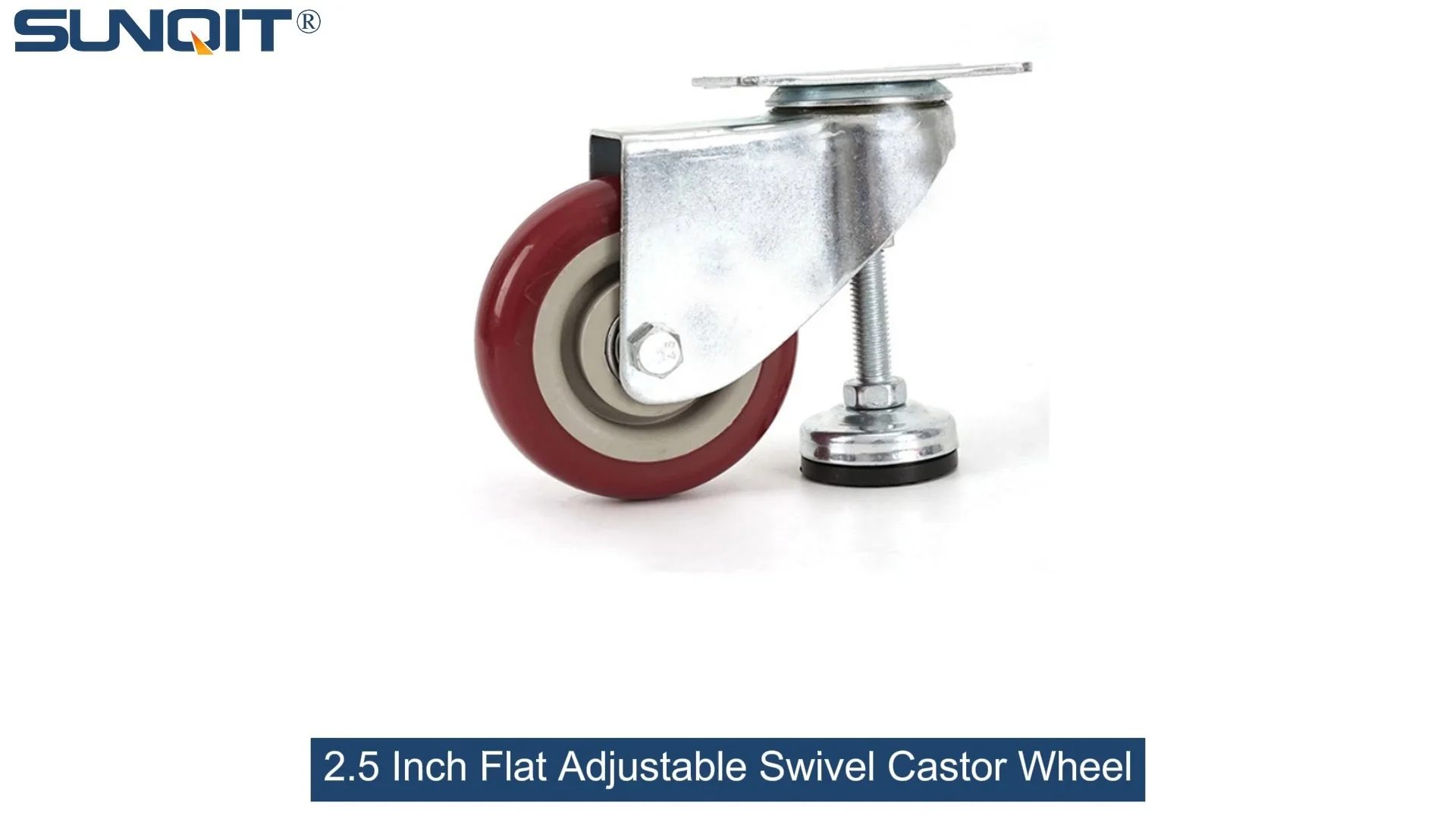
Flat Adjustable Swivel Castor Wheel
Swivel Chair Casters Ball Bearing Wheels Rubber Base with adjustable height function. Resistant to abrasion, impact and corrosion. Heavy payload can hold 80Kgs per pcs,which can make it works at a stable and smooth status.
Introduction: The Unsung Heroes of Workplace Mobility
Walk into any factory, workshop, or even a busy garage, and you'll notice something that rarely gets the attention it deserves: the wheels under the equipment. From the workbench where a technician assembles circuit boards to the turnover trolley and rack shuttling boxes of parts across the warehouse, mobility is the backbone of efficiency. And at the heart of that mobility? Caster wheels . Specifically, flat adjustable swivel castor wheels—those unassuming yet critical components that let us move heavy, awkward, or delicate equipment with ease.
But here's the thing: not all caster wheels are created equal. A caster wheel that works perfectly for a lightweight tool cart might crumble under the weight of a loaded turnover trolley and rack . Choosing the wrong one isn't just a hassle—it can slow down production, damage equipment, or even put workers at risk. That's why understanding load capacities, especially when it comes to flat adjustable swivel castors, is so important. In this article, we'll break down the differences between castors designed for light loads and those built for heavy-duty work, exploring what makes them tick, when to use each, and how to avoid common pitfalls.
What Are Flat Adjustable Swivel Castor Wheels, Anyway?
Before we dive into load capacities, let's make sure we're all on the same page about what these castors actually are. Flat adjustable swivel castor wheels combine three key features: a flat mounting base (hence "flat"), the ability to adjust height (the "adjustable" part), and a swivel mechanism that lets the wheel rotate 360 degrees (the "swivel" bit). Together, these features make them incredibly versatile—perfect for situations where you need precision, mobility, and a stable base.
Let's break down the parts: The caster wheel itself is the part that touches the floor, made from materials like rubber, polyurethane, or steel. Then there's the bracket, which connects the wheel to the equipment (like a workbench or trolley). The adjustment mechanism—usually a screw or lever—lets you tweak the height, ensuring the equipment sits level even on uneven floors. And many models include a brake to lock the wheel in place, preventing unwanted movement when you're working.
What sets them apart from fixed or non-adjustable castors? Imagine trying to level a workbench on a slightly sloped factory floor. Without adjustable castors, you'd be shimming it with pieces of wood or metal, a frustrating and temporary fix. With flat adjustable swivel castors, a quick turn of the adjustment screw levels the bench in seconds. Or picture moving a turnover trolley and rack loaded with fragile components: the swivel feature lets you navigate tight corners without jerking the load, reducing the risk of damage.

Defining "Light" vs. "Heavy" Loads: It's All Relative
When we talk about "light" and "heavy" loads, there's no one-size-fits-all definition. What feels heavy for a home DIY cart might be light for an industrial setting. But industry standards and common sense can help us draw lines. Generally, light loads are considered anything under 100 kg (about 220 lbs) per castor. Heavy loads? Typically 500 kg (1,100 lbs) or more per castor. In between is the medium range, but for this article, we'll focus on the extremes to highlight the key differences.
Context matters, too. A workbench used for assembling small electronics might weigh 80 kg total, meaning each of its four castors carries just 20 kg—definitely a light load. On the flip side, a turnover trolley and rack in an automotive plant might carry a 2,000 kg engine block, requiring four castors each rated for at least 500 kg. If you skimp on the castor rating here, you're asking for trouble: bent brackets, seized wheels, or worse, a trolley that collapses mid-move.
Another factor is dynamic vs. static loads. Static load is the weight when the equipment is stationary—like a workbench parked in place. Dynamic load is when it's moving, which adds stress from bumps, turns, and inertia. A castor rated for 500 kg static might only handle 400 kg dynamically, so it's crucial to account for movement when choosing.

Key Factors That Determine Load Capacity
So, what makes a caster wheel capable of handling heavy loads versus light ones? It's a mix of materials, design, and engineering. Let's break down the most critical factors:
1. Wheel Material: The wheel is the first point of contact with the floor, so its material directly impacts load capacity. For light loads, soft materials like rubber or polyurethane work well—they're quiet, absorb shocks, and protect floors from scratches. But rubber can deform under heavy weight, leading to wobbly movement. Heavy loads demand harder, stronger materials: steel wheels are tough but noisy, while reinforced polyurethane (with a steel core) offers a balance of strength and floor protection.
2. Bracket Strength: The bracket (or "yoke") holds the wheel and connects to the equipment. Light-duty brackets are often made of aluminum or thin steel—lightweight and corrosion-resistant, but not built for heavy stress. Heavy-duty brackets use thick, high-grade steel or even reinforced aluminum alloys, with extra bracing at stress points (like where the swivel joint attaches). You'll notice the difference just by picking one up: a heavy-duty bracket feels solid, while a light-duty one might flex if you squeeze it.
3. Swivel Joint Quality: The swivel joint is what allows the wheel to rotate. For light loads, a simple ball bearing or nylon bushing might suffice—smooth and cheap, but prone to wear if overloaded. Heavy loads require precision-machined steel bearings or roller bearings, with sealed housings to keep out dirt and debris. A high-quality swivel joint won't "stick" when turning, even under heavy weight, which is crucial for controlling a loaded turnover trolley and rack .
4. Adjustment Mechanism: The adjustability feature adds complexity. Light-duty castors might use plastic adjustment knobs, which are fine for small height tweaks but can strip if you over-tighten them. Heavy-duty models use metal screws and gears, often with a hex head for wrench adjustment, ensuring they can handle the torque needed to level a heavy workbench or trolley.
5. Caster Accessories : Even small parts matter. For example, brake mechanisms on light castors might be plastic levers that snap under pressure, while heavy-duty brakes use steel pedals and strong springs to lock the wheel securely. Similarly, mounting plates (the flat part that bolts to the equipment) are thicker on heavy-duty castors, preventing bending when the load shifts.

Light Load Castors: When Precision and Portability Matter Most
Light load flat adjustable swivel castors are the workhorses of precision environments. Think of a workbench in a lab, where delicate instruments are assembled, or a mobile cart in a hospital carrying medical supplies. These applications demand smooth movement, quiet operation, and the ability to position the equipment exactly where it's needed—without sacrificing stability.
Common Light Load Applications:
- Workbenches: A benchtop for electronics assembly might weigh 50-80 kg, including tools and parts. Light castors (rated 30-50 kg each) make it easy to reposition the bench for team collaboration or cleaning.
- Small Tool Carts: Carts carrying drills, screwdrivers, or paint supplies—loads under 100 kg total—benefit from light castors' smooth swivel and quiet wheels, which won't disturb office or lab environments.
- Retail Displays: Adjustable castors let store owners tweak the height of display racks to match shelving, while swivel wheels make rearranging layouts a breeze during seasonal changes.
Why Light Load Castors Work Here: Their lightweight design reduces strain on floors (important for retail spaces with polished concrete or labs with sensitive flooring). The soft wheel materials (like rubber or standard polyurethane) absorb vibrations, protecting delicate items on the workbench . And since the loads are small, the simpler swivel joints and plastic caster accessories (like brake levers) last longer—no need to over-engineer them.
But here's the catch: Light castors fail spectacularly when overloaded. I once saw a workshop try to use light-duty castors on a workbench loaded with metalworking tools (easily 200 kg total). Within a week, the plastic adjustment knobs stripped, the wheels started wobbling, and one bracket even bent when someone tried to push the bench. The fix? Upgrading to medium-duty castors, but the damage was done—time lost, tools damaged, and a lesson learned: never skimp on load rating for light castors.
Heavy Load Castors: Built to Bear the Brunt
On the other end of the spectrum are heavy load flat adjustable swivel castors—built for the tough jobs. These are the castors you'll find under industrial turnover trolley and rack units, large material storage racks, or even mobile machinery like small presses. When the load is measured in hundreds of kilograms, "good enough" isn't good enough—you need castors that can handle constant use, rough floors, and sudden shifts in weight.
Common Heavy Load Applications:
- Turnover Trolley and Rack Systems: These trolleys often carry stacked pallets of parts, engine blocks, or finished products—loads of 500 kg or more. Heavy castors (rated 200-500 kg each) ensure they roll smoothly, even over factory floor cracks.
- Industrial Workbenches: A bench used for assembling heavy machinery (like automotive parts) might weigh 300 kg empty, plus another 200 kg of tools and materials. Heavy castors with steel wheels and reinforced brackets prevent sagging or tipping.
- Warehouse Material Racks: Mobile racks for storing heavy inventory (like metal sheets or large containers) rely on heavy castors to move safely, even when fully loaded. The adjustability feature ensures the racks stay level, preventing items from sliding off.
Why Heavy Load Castors Work Here: Everything is over-engineered (in the best way). Steel wheels handle rough floors without chipping, while sealed swivel joints keep out grease and metal shavings common in industrial settings. The adjustment mechanisms use metal components, so you can crank them tight without worrying about stripping. And the brakes—often dual-lock (locking both the wheel and swivel)—keep the load secure, even on inclines. I visited a automotive plant once where a turnover trolley and rack loaded with transmission parts had been using heavy castors for over a decade—still rolling smoothly, with only the wheels replaced once.
But heavy load castors aren't perfect for every situation. They're heavier, which makes them harder to move when unloaded (though you rarely use them unloaded). They're also more expensive—so using them on a light workbench is overkill, like using a sledgehammer to hang a picture. Plus, their steel wheels can damage soft floors (like wood or vinyl), so they're best suited for concrete or industrial flooring.
Side-by-Side Comparison: Light vs. Heavy Load Castors
To make it easier to see the differences, let's put light and heavy load flat adjustable swivel castors head-to-head in a table. We'll focus on key features, materials, and best uses:
| Feature | Light Load Castors (Under 100 kg per castor) | Heavy Load Castors (500 kg+ per castor) |
|---|---|---|
| Wheel Material | Rubber, standard polyurethane, or nylon | Steel, reinforced polyurethane (with steel core), or cast iron |
| Bracket Material | Aluminum or thin steel (1-2 mm thick) | Thick steel (3-5 mm thick) or reinforced aluminum alloy |
| Swivel Joint | Nylon bushing or basic ball bearing | Sealed steel roller bearings or precision ball bearings |
| Adjustment Mechanism | Plastic knob or small metal screw | Metal screw with hex head (wrench-adjustable), gear-driven |
| Caster Accessories (Brakes, etc.) | Plastic lever brakes (wheel lock only) | Steel dual-lock brakes (wheel and swivel lock), metal mounting hardware |
| Best For | Workbenches, small tool carts, retail displays | Turnover trolley and rack systems, industrial workbenches, heavy material racks |
| Price Point | Budget-friendly ($10-$30 per castor) | Premium ($50-$150+ per castor) |
Notice the pattern? Every choice in design and material reflects the intended load. Light castors prioritize cost and mobility; heavy castors prioritize durability and safety. There's no "better" option—only the right option for the job.
Choosing the Right Castor: A Step-by-Step Guide
Now that you know the differences, how do you choose between light and heavy load castors for your specific needs? It's not as hard as it seems—just follow these steps:
1. Calculate the Total Load (and Then Add More): Start by figuring out how much weight the equipment will carry. For a workbench , add the weight of the bench itself, tools, materials, and even the person using it (if they'll be standing on it). For a turnover trolley and rack , calculate the maximum load it will ever carry (don't just go by average—plan for worst-case scenarios). Then, divide that total by the number of castors (most equipment uses 4 castors). That gives you the minimum load rating per castor. But here's the pro tip: add a 20-30% safety margin. If your calculation says 80 kg per castor, go for 100-120 kg. Unexpected loads happen—better safe than sorry.
2. Consider the Environment: Where will the castors be used? If it's a clean lab with smooth floors, light castors with rubber wheels are fine. If it's a factory with concrete floors full of cracks and metal shavings, heavy castors with steel wheels are a must. Also, think about floor protection: rubber or polyurethane wheels are gentler on wood or tile, while steel wheels are better for concrete. Don't forget about temperature—extreme heat or cold can affect wheel materials (rubber hardens in cold, softens in heat).
3. Evaluate Mobility Needs: Do you need to move the equipment frequently, or is it mostly stationary? Light castors are easier to push when moving often, but heavy castors are more stable when parked. Swivel radius matters too: a workbench in a tight corner needs a castor with a small swivel radius to maneuver, while a turnover trolley and rack in a warehouse can handle a larger radius.
4. Check Adjustability Requirements: How level is your floor? If it's perfectly smooth, adjustability might not be critical. But most industrial floors have slight slopes or unevenness, so adjustable castors save time and frustration. For heavy loads, prioritize metal adjustment mechanisms—they'll last longer and handle more torque.
5. Don't Skimp on Caster Accessories : Brakes are a must if the equipment needs to stay in place during use. For light loads, a simple wheel lock might suffice. For heavy loads, dual-lock brakes are worth the extra cost. Also, consider mounting hardware: heavy castors need heavy-duty bolts (not just screws) to attach to the equipment. Cheap hardware can shear under load, even if the castor itself is strong.
Maintenance Tips: Making Your Castors Last
Once you've chosen the right castors, proper maintenance will extend their life and keep them performing well. Here's how to care for both light and heavy load models:
For Light Load Castors: Keep them clean—wipe off dust and debris from the swivel joint and wheels regularly. Lubricate the swivel joint every 3-6 months with light machine oil (avoid heavy grease, which can attract dirt). Check the adjustment knobs for cracks, and replace them if they start to strip. If the wheels develop flat spots (from sitting in one place too long), rotate them occasionally to even out wear. On a workbench , this might mean moving it a few inches every week, even if you don't need to reposition it.
For Heavy Load Castors: Inspect them monthly—look for cracks in the bracket, loose bolts, or worn wheel bearings. Clean the swivel joint with a wire brush to remove built-up grime, then lubricate with heavy-duty grease (the kind used in automotive applications). Check the brakes: ensure the pads make full contact with the wheel, and replace them if they're worn down. For steel wheels, check for rust and treat with a rust inhibitor if needed. In industrial settings, it's a good idea to have a spare set of wheels and caster accessories (like brake pads) on hand—downtime waiting for parts is expensive.
One final tip: Train your team to use the castors properly. Slamming a loaded turnover trolley and rack into a wall or over a curb can damage even heavy castors. Gentle handling goes a long way.
Conclusion: The Right Castor for the Job
Flat adjustable swivel castor wheels might not be the most glamorous part of your equipment, but they're essential. Whether you're outfitting a light workbench or a heavy turnover trolley and rack , choosing the right load capacity ensures safety, efficiency, and longevity. Light load castors excel in precision, portability, and cost, while heavy load castors bring durability and strength to industrial settings.
Remember: It all starts with calculating the load, considering the environment, and not cutting corners on quality. A $20 castor might save money upfront, but replacing it (and fixing the damage from a failed load) will cost far more in the long run. So next time you're shopping for caster wheels , take a moment to think about what they'll carry—not just today, but tomorrow. Your back, your equipment, and your bottom line will thank you.