- Company Articles
- Products and Technology
- Product knowledge
- Comparing One Way Rotatory Straight Lean Pipe Joints to Welded Connections

Comparing One Way Rotatory Straight Lean Pipe Joints to Welded Connections
Related Product
One Way Rotatory Straight Lean Pipe Joint
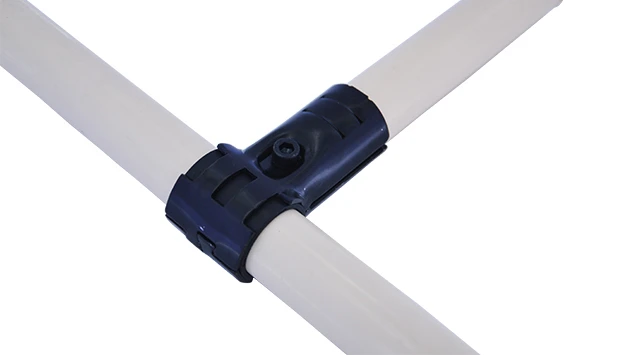
Two way lean pipe joint for 2 pcs 28MM lean pipe connection in straight angle with rotatory fucntion, which used widely in workbench, flow rack, hand trolley frame connection.
Walk into any modern manufacturing facility, and you'll notice a quiet revolution happening on the factory floor. Gone are the days of clunky, fixed equipment that stays bolted to the ground for decades. Instead, you'll see sleek workbenches, nimble flow racks, and conveyor systems that seem to adapt as easily as a chameleon changes color. This transformation isn't magic—it's the power of lean pipe systems. But here's the thing: the most critical part of any lean system isn't the pipes themselves. It's how those pipes connect. And in that world, two approaches stand out: the traditional welded connections and the innovative one way rotatory straight lean pipe joints. Today, we're diving deep into this showdown to help you understand which option deserves a spot in your facility.
1. What Are Lean Pipe Systems, and Why Do Connections Make or Break Them?
First, let's get back to basics. Lean pipe systems—often made from aluminum, stainless steel, or PE-coated steel—are the unsung heroes of efficient manufacturing. They're the building blocks for everything from workbenches and material racks to roller tracks and turnover trolleys. Think of them as the industrial equivalent of Legos: modular, versatile, and designed to be built, taken apart, and rebuilt again. But unlike Legos, the strength and flexibility of a lean system depend entirely on how its pieces connect. A weak connection can turn a sturdy workbench into a wobbly hazard; a rigid connection can turn a "lean" system into a clunky relic that resists the very changes it's supposed to enable.
At their core, lean systems are about adaptability . In a world where product lifecycles shrink from years to months, and customer demands shift overnight, manufacturers can't afford to be tied down by fixed infrastructure. That's why the choice between welded connections and modular joints like the one way rotatory straight lean pipe joint isn't just a technical decision—it's a strategic one. It's about choosing between a system that locks you into the present and one that grows with your future.
2. Meet the Contender: One Way Rotatory Straight Lean Pipe Joints
Let's start with the new kid on the block (though it's been around long enough to prove its worth): the one way rotatory straight lean pipe joint. If you've ever assembled furniture with cam locks or quick-connect fittings, you'll get the idea—only these joints are built for the rigors of industrial use. Take the one way rotatory straight lean pipe joint chrome as an example. Chrome-plated for durability and resistance to corrosion, this little component is a masterclass in engineering simplicity. It's designed to connect two straight lean pipes at a fixed angle (usually 90 degrees or straight), but with a twist: it can rotate in one direction, allowing for (fine adjustments) during assembly without needing to loosen the entire connection.
Here's how it works: slide the joint onto the end of a lean pipe, tighten the set screw with a hex key, and repeat with the second pipe. No welding torches, no sparks, no waiting for metal to cool. In minutes, you've got a connection that's strong enough to support heavy materials but flexible enough to tweak if your measurements were slightly off. And unlike some joints that lock into place permanently, the one way rotatory design lets you rotate the connected pipes in a single direction—say, to align a shelf perfectly with a conveyor—before locking it down tight. It's like having a built-in "oops, let me adjust that" button.
But the real genius? These joints are reusable. Tear down a workbench at the end of a production run, and those chrome-plated joints can be popped off, wiped clean, and used to build a flow rack the next day. In a world where sustainability and cost-efficiency matter, that reusability is gold. It's no wonder that lean pipe suppliers now stock these joints alongside basic aluminum tubes and caster wheels—they've become a staple for facilities that refuse to be stuck in the past.

3. The Heavyweight Champion: Welded Connections in Lean Systems
Now, let's talk about the old reliable: welded connections. For decades, welding was the default way to build industrial structures. If you wanted two pipes to stay together, you heated them until they melted, fused them, and called it a day. And to be fair, welding has its perks. A well-executed weld is strong— really strong. It can handle heavy loads, vibrations, and the wear and tear of a busy factory without so much as a creak. For applications where the structure will never, ever need to change—think of a permanent conveyor support beam in a food processing plant—welding makes sense. It's simple, time-tested, and (at first glance) cost-effective.
But here's the catch: "never, ever need to change" is a risky bet in modern manufacturing. Let's say you weld together a material rack for a specific product line. Six months later, that product is discontinued, and you need a rack for a larger component. Suddenly, that "permanent" welded structure becomes a problem. To repurpose it, you'll need to cut the welds (which is messy, time-consuming, and risks damaging the pipes), grind down the metal (creating dust and sharp edges), and then re-weld the pieces into a new shape (requiring a certified welder and hours of labor). By the time you're done, you've spent more on modifications than you saved on the initial weld. And if the pipes are damaged during cutting? Now you're buying new materials, too.
Welding also has hidden costs. It requires skilled labor—certified welders don't come cheap—and specialized equipment (torches, protective gear, ventilation systems to handle fumes). There's also the issue of precision: a slight miscalculation during welding can throw off the entire structure, turning a level workbench into a lopsided disaster. And let's not forget safety: welding involves open flames, high temperatures, and toxic fumes, adding risk to your shop floor.

4. Head-to-Head: Joints vs. Welding in the Real World
To really understand the difference, let's put these two connection methods side by side. We'll break down the key factors that matter most to manufacturers: flexibility, cost, installation time, maintenance, and safety. Spoiler: the results might surprise you.
| Factor | One Way Rotatory Straight Lean Pipe Joints | Welded Connections |
|---|---|---|
| Flexibility | High. Joints can be rotated, adjusted, or completely disassembled. Need to shorten a workbench? Loosen the joints, remove a pipe, and re-tighten. Want to reangle a flow rack? Rotate the joint and lock it in place. No cutting, no grinding—just adaptability. | Low. Welds are permanent. To adjust a structure, you'll need to cut the welds (damaging pipes), rework the metal, and re-weld. Even minor tweaks require major effort. |
| Installation Time | Minutes per connection. No special skills needed—any worker with a hex key can assemble a basic structure in an hour. For example, building a simple workbench with 10 joints? You'll be done before lunch. | Hours per connection. Welding requires setup (ventilation, protective gear), prepping the metal (cleaning, aligning), welding itself, and cooling time. A single welded joint can take 30 minutes; a full workbench could take a full day. |
| Cost (Upfront) | Higher. Quality joints—like the one way rotatory straight lean pipe joint chrome—cost more than a spool of welding wire. Expect to pay $5–$15 per joint, depending on size and material. | Lower. Welding materials (wire, gas) are cheap, and if you already have a welder on staff, labor costs might seem minimal upfront. A welded joint might cost $2–$5 in materials alone. |
| Cost (Long-Term) | Lower. Joints are reusable—you can take apart a structure and rebuild it elsewhere, saving on new materials. Modifications take hours, not days, reducing downtime. Over time, this adaptability saves far more than the initial joint cost. | Higher. Modifications require cutting, re-welding, and new materials (if pipes are damaged). Downtime during rework can cost thousands in lost production. And if you need to replace a welded structure entirely? You're back to square one. |
| Maintenance | Simple. Over time, joints might loosen slightly—just grab a hex key and tighten them. No special tools, no mess, no downtime. Chrome-plated joints resist corrosion, so they'll look and work like new for years. | Tricky. Welds can crack over time (especially under vibration), requiring re-welding. Corrosion can eat away at welds, weakening the structure. Fixing a cracked weld means shutting down the area, bringing in a welder, and grinding down the repair—all while production stalls. |
| Safety | Safer. No open flames, fumes, or high heat during installation. Joints have smooth edges (no sharp burrs like welded metal), reducing injury risks. Even during disassembly, there's no risk of sparks or burns. | Riskier. Welding involves open flames (fire hazard), toxic fumes (respiratory risks), and electric shock (from welding equipment). Post-installation, poorly ground welds can leave sharp edges that cut workers. Long-term, cracked welds pose structural safety risks. |
5. Real-World Stories: When Joints Saved the Day (and Welding Didn't)
Numbers and tables tell part of the story, but real life tells the rest. Let's look at two manufacturers—one that stuck with welding and one that switched to one way rotatory joints—to see how their choices played out.
Case Study 1: The Electronics Manufacturer Stuck in the Past
A mid-sized electronics company in Ohio used welded aluminum lean pipe workbenches for their smartphone assembly line. When they landed a contract to produce a larger tablet, they needed wider workbenches to accommodate bigger circuit boards. Their welded workbenches were too narrow, so they tried to modify them. The process? Cut the welds, grind the pipes, re-weld the frames wider, and repaint to prevent corrosion. The result? Three days of downtime (costing $40,000 in lost production), $3,000 in welding labor, and warped pipes that had to be replaced ($1,500 in new materials). Six months later, when the tablet line ended, those modified workbenches were too wide for their next project—so they sat unused in a corner, collecting dust.
Case Study 2: The Automotive Supplier That Adapted in Hours
A Michigan-based auto parts supplier switched to one way rotatory straight lean pipe joints for their material racks. When a major client suddenly changed a component design (increasing its size by 20%), they needed to adjust their flow racks overnight. Here's what happened: workers used hex keys to loosen the joints, added longer aluminum pipes, repositioned the crossbars, and tightened everything back up. Total time? 2 hours. No downtime, no extra labor costs, and no new materials (they reused the old pipes elsewhere). The client was impressed; the supplier kept the contract and later expanded their use of joints to all their lean systems.
The difference? One company saw their connections as permanent, the other as temporary. In manufacturing, temporary wins.
6. When Does Welding Still Make Sense?
To be clear, we're not saying welding is dead. There are still scenarios where it's the right choice. For example:
- Heavy-Duty, Static Structures: If you're building a support beam for a 5-ton conveyor that will never move, weld away. The joint's flexibility isn't needed, and the weld's strength is an asset.
- Corrosive Environments: In chemical plants or marine facilities, welded stainless steel connections might hold up better than joints (though high-quality stainless steel joints with rubber gaskets can also work).
- Low-Volume, Unchanging Production: If you're making the same product for 20 years and have zero plans to innovate, welded structures could save money upfront. Just be prepared to replace them entirely when (not if) things change.
But for 90% of modern manufacturers—those dealing with short product cycles, custom orders, and the need to pivot quickly—joints are the smarter bet. They're not just a tool; they're an investment in your ability to adapt.
7. The Future of Lean Systems: Joints Lead the Way
As Industry 4.0 takes hold—with smart factories, IoT sensors, and automated workflows—lean systems are becoming more critical than ever. These systems need to integrate with robots, adjust to real-time data, and reconfigure for small-batch production. Welded connections can't keep up. One way rotatory straight lean pipe joints, on the other hand, are built for this future. They work with aluminum profiles, stainless steel pipe series, and even smart accessories like sensor mounts. They let you add, remove, or reposition components without disrupting the entire line. In short, they're the connective tissue of the agile factory.
And it's not just about adaptability. Joints are also more sustainable. By reusing pipes and joints, manufacturers reduce waste—no more cutting up welded structures and sending scrap metal to the landfill. They also reduce energy use: welding consumes electricity; assembling with joints uses nothing but human effort (and a little elbow grease).
Final Thoughts: Choose Connections That Grow With You
At the end of the day, the choice between one way rotatory straight lean pipe joints and welded connections comes down to one question: Do you want a system that serves your today, or one that serves your tomorrow? Welding is a relic of a time when manufacturing moved at a glacial pace; joints are built for the speed of now.
If you're still on the fence, start small. replace a few welded workbenches with joint-based ones. See how quickly your team can adapt them. Watch the downtime shrink when you need to reconfigure. Then, ask yourself: Why didn't we do this sooner?
In the world of lean manufacturing, the best connections aren't the ones that hold things together—they're the ones that let things change.