- Company Articles
- Products and Technology
- Product knowledge
- Comparing Parallel Lean Pipe Joint Models: Which Suits Your Workstation?

Comparing Parallel Lean Pipe Joint Models: Which Suits Your Workstation?
Related Product
Parallel Lean Pipe Joint
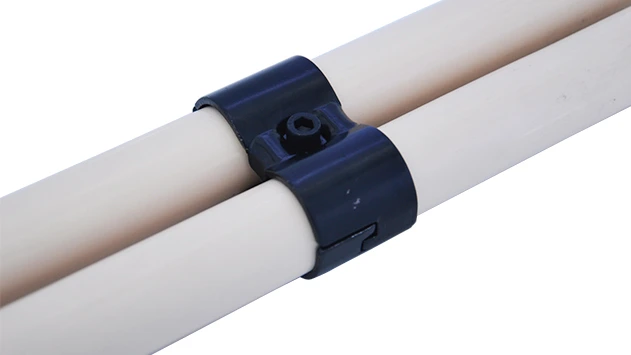
Parallel lean pipe joint used for 2 pcs 28MM lean pipe connection in parallel direction to enhance frame structure, usually for heavy payload requirement for workbench. flow rack, hand trolley.
The Heartbeat of Lean Workstations: Why Parallel Joints Matter
Walk into any well-oiled production facility, and you'll notice a silent rhythm: workstations hum with purpose, materials flow seamlessly, and every tool has its place. Behind this harmony lies a critical, often overlooked component: the lean pipe system . These modular setups—built from pipes, joints, and accessories—are the backbone of modern lean manufacturing, offering flexibility, durability, and cost-efficiency. But within this system, one part stands out as a linchpin for stability and adaptability: the parallel lean pipe joint .
Parallel lean pipe joints are the connectors that hold parallel pipes together, ensuring alignment, distributing weight evenly, and enabling the creation of sturdy structures like lean pipe workbenches , material racks, and turnover trolleys. Imagine building a workbench without them: pipes would sag, tools would wobble, and the entire setup would feel like a house of cards. These joints aren't just hardware—they're the glue that turns individual components into a cohesive, functional workspace.
But not all parallel joints are created equal. From fixed chrome models to rotating aluminum variants, each design serves a unique purpose. Choosing the right one can mean the difference between a workstation that adapts to your team's needs and one that becomes a bottleneck. In this guide, we'll dive into the world of parallel lean pipe joints, comparing key models, their features, and how to match them to your specific workstation goals.
What Are Parallel Lean Pipe Joints, Anyway?
Let's start with the basics. A parallel lean pipe joint is a specialized connector designed to join two or more lean pipes that run parallel to each other. Unlike 90-degree joints (which connect pipes at right angles) or swivel joints (which allow rotation), parallel joints focus on horizontal or vertical alignment, ensuring pipes stay evenly spaced and rigid. This is critical for structures like workbench frames, where stability directly impacts worker safety and productivity.
Think of it this way: if a lean pipe system is a skeleton, parallel joints are the ribs—they keep the structure from collapsing inward. Without them, even a slight load (like a heavy toolbox on a workbench) could cause pipes to bow or shift, leading to misaligned workflows or, worse, accidents. Whether you're building a lightweight assembly station or a heavy-duty material rack, the parallel joint's job is to maintain structural integrity while keeping the system modular enough to reconfigure as needs change.
Now, let's break down the most common types of parallel lean pipe joints on the market. We'll focus on four key models: fixed chrome parallel joints, internal rotary aluminum parallel joints, parallel aluminum joint A, and parallel aluminum joint B. Each has its own strengths, and understanding their differences is the first step toward choosing the right fit.

Diving Into the Models: A Closer Look at Parallel Joint Designs
To make sense of the options, let's start by categorizing parallel joints based on two key factors: material and adjustability. Most joints are made from either chrome-plated steel or aluminum, each offering distinct benefits. Chrome is known for strength and affordability, while aluminum shines in lightweight, corrosion-resistant applications. Adjustability, meanwhile, refers to whether the joint allows pipes to rotate or pivot—a game-changer for workstations that need frequent reconfiguration.
1. Fixed Chrome Parallel Lean Pipe Joint
The fixed chrome parallel joint is the workhorse of the industry. Made from high-strength steel with a chrome plating, it's built to handle heavy loads (often up to 200kg per joint) and resist wear and tear in tough industrial environments. Its design is simple: two parallel pipe sleeves connected by a rigid bridge, with set screws to lock pipes in place. Once installed, there's no movement—making it ideal for static structures like material rack B (3 row and 3 floor) or fixed workbenches where stability is non-negotiable.
Pros? It's affordable, easy to install, and compatible with standard 28mm lean pipes. Cons? No adjustability. If you need to angle pipes or reconfigure the structure later, you'll have to disassemble and rebuild—a time-consuming process. This joint is best for teams with consistent workflows and minimal need for changes.
2. Internal Rotary Aluminum Parallel Joint
Enter the internal rotary aluminum parallel joint—a newer, more flexible option. Crafted from aluminum lean pipe (a lightweight, rust-resistant material), this joint features a hidden rotating mechanism that lets parallel pipes pivot up to 180 degrees. Imagine a workbench where the side shelves can fold down when not in use, or a material rack that tilts to unload goods more easily—that's the flexibility this joint offers. It's perfect for dynamic environments like assembly lines or labs where workflows evolve weekly.
Aluminum's natural corrosion resistance makes this joint a star in humid or cleanroom settings (think food processing or electronics manufacturing). It's also lighter than chrome, which reduces overall structure weight—great for mobile trolleys or overhead racks. The tradeoff? Load capacity tops out around 150kg per joint, and the rotating mechanism adds a slight premium to the price tag. Still, for teams prioritizing adaptability, it's often worth the investment.
3. Parallel Aluminum Joint A & B: Specialized for Precision
Aluminum parallel joints come in two specialized variants: A and B. Joint A is designed for tight spaces, with a slim profile that fits into narrow gaps between pipes—ideal for compact workbenches or shelving units. Joint B, on the other hand, has a reinforced bridge and extra set screws, boosting its load capacity to 180kg. It's the go-to for medium-heavy applications like workbench E (single deck-without caster) , where you need a balance of flexibility and strength.
Both A and B joints share aluminum's lightweight, corrosion-resistant perks, but they're not rotatory—they're fixed. This makes them a middle ground between the rigid chrome joint and the flexible rotary aluminum joint. If your workstation needs stability but might require minor pipe adjustments (like changing shelf heights), these joints let you loosen the set screws, reposition, and lock back in—no full disassembly needed.

Side-by-Side: Comparing Key Features in a Table
To help you visualize the differences, here's a detailed comparison of the four models we've discussed. We'll focus on load capacity, adjustability, material, compatibility, and best-use scenarios:
| Model | Material | Max Load Capacity | Adjustability | Compatible Pipes | Best For |
|---|---|---|---|---|---|
| Fixed Chrome Parallel Joint | Chrome-plated steel | 200kg/joint | None (fixed) | 28mm steel/PE-coated lean pipes | Static structures (material racks, fixed workbenches) |
| Internal Rotary Aluminum Parallel Joint | Aluminum | 150kg/joint | 180° rotation | 28mm aluminum lean pipes | Dynamic workstations (assembly lines, folding structures) |
| Parallel Aluminum Joint A | Aluminum | 150kg/joint | Fixed, but adjustable via set screws | 28mm aluminum lean pipes | Compact workbenches, lightweight shelving |
| Parallel Aluminum Joint B | Aluminum | 180kg/joint | Fixed, but adjustable via set screws | 28mm aluminum lean pipes | Medium-heavy workbenches, semi-static racks |
Beyond the Joint: How Compatibility Shapes Your Choice
Choosing a parallel joint isn't just about the joint itself—it's about how it plays with other components in your lean system. Let's talk compatibility, because a joint that doesn't work with your pipes, roller track , or workbench accessories is useless.
First, pipe size. Most parallel joints are designed for 28mm pipes, but double-check! Some aluminum joints are made for 30mm aluminum profile pipes, which are slightly thicker. Mixing sizes will lead to loose connections and instability.
Next, accessories. If your workstation uses roller track and accessories (like plastic roller track guide rails or swivel roller balls), you'll need joints that leave space for these add-ons. The fixed chrome joint, with its rigid bridge, might block roller track installation, while the slimmer aluminum joint A could fit seamlessly. Similarly, if you're adding casters to a trolley, ensure the joint's base has pre-drilled holes for caster mounts—many aluminum joints do, but chrome models often require drilling.
Finally, ESD (electrostatic discharge) requirements. In electronics manufacturing, static can damage sensitive components. Look for joints with ESD-safe coatings (some aluminum models have this) or pair chrome joints with ESD workbench surfaces to avoid issues.
Matching Joints to Your Workstation: A Practical Guide
Now comes the fun part: figuring out which joint fits YOUR workstation. Let's walk through three common scenarios to see how the decision plays out.
Scenario 1: High-Volume Assembly Line Workbench
Your team assembles smartphones, with 10 workers per shift and a constant flow of small parts. The workbench needs to hold tools, a roller track for part bins, and withstand daily use. You rarely reconfigure, but need to clean under the bench often. Solution? Fixed chrome parallel joints. They're strong enough for the load, compatible with roller track accessories, and the rigid structure keeps bins from sliding. Plus, the low cost lets you outfit multiple workbenches on a budget.
Scenario 2: Flexible Lab Workstation for R&D
Your lab tests new prototypes, so workflows change weekly. One day, you're assembling a small device; the next, you need a flat surface for soldering. You need a workbench that can tilt, fold, and adapt. Here, the internal rotary aluminum parallel joint shines. Its 180° rotation lets you angle the work surface, and aluminum's lightweight design makes reconfiguring easy. Pair it with aluminum lean pipe for corrosion resistance (labs are often humid) and add ESD-safe mats to protect prototypes.
Scenario 3: Heavy-Duty Material Rack for Automotive Parts
You're storing engine components—heavy, greasy, and bulky. The rack needs to hold 500kg per shelf and resist oil and grime. Material rack B (3 row and 3 floor) is your structure of choice. Go with parallel aluminum joint B: it handles 180kg per joint, aluminum resists corrosion from oil, and the adjustable set screws let you tweak shelf heights if part sizes change. Skip the rotary joint here—you don't need movement, and the extra load capacity is worth the rigidity.
The Future of Parallel Joints: What's Next?
As lean manufacturing evolves, so do parallel lean pipe joints. Manufacturers are now integrating smart features: joints with built-in sensors that alert teams when pipes loosen, or magnetic connections for tool-free assembly. Aluminum extrusion profile joints are getting slimmer, allowing for more compact structures, while 3D-printed plastic joints are emerging for lightweight, low-cost applications (though they're not yet strong enough for heavy loads).
Sustainability is also a trend. Recycled aluminum joints are hitting the market, and some suppliers offer take-back programs for old chrome joints to reduce waste. For forward-thinking teams, choosing eco-friendly options isn't just good for the planet—it can also qualify for green manufacturing grants.
Final Thoughts: Your Joint, Your Workflow
At the end of the day, the best parallel lean pipe joint is the one that fits your unique needs. It's not about picking the "best" model overall, but the one that aligns with your workflow, load requirements, and future goals. Whether you opt for the tried-and-true fixed chrome joint or the flexible internal rotary aluminum joint, remember: this small component has a big impact. A well-chosen joint will keep your workstation running smoothly, your team productive, and your lean system adaptable for years to come.
So, take stock of your workspace, talk to your team about their pain points (Is the current setup too rigid? Are shelves sagging?), and use this guide to narrow down options. And when in doubt, reach out to a trusted lean pipe supplier—they can help test joints in your environment and ensure you make the right call. Here's to building workstations that work as hard as you do.