- Company Articles
- Products and Technology
- Procurement Guidelines
- Comparing Prices: One Side Rotatory Chrome Parallel Lean Pipe Joints Across Brands

Comparing Prices: One Side Rotatory Chrome Parallel Lean Pipe Joints Across Brands
Related Product
Parallel Lean Pipe Joint
Parallel lean pipe joint used for 2 pcs 28MM lean pipe connection in parallel direction to enhance frame structure, usually for heavy payload requirement for workbench. flow rack, hand trolley.
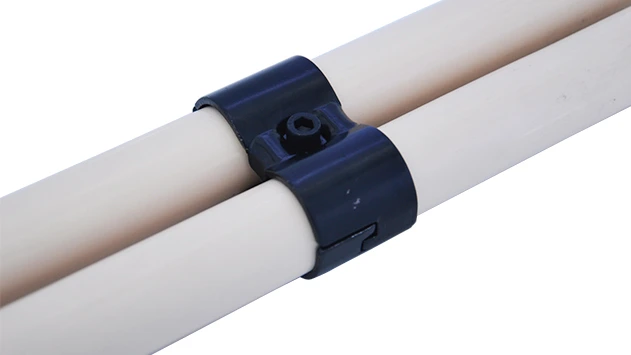
In the world of lean manufacturing, where efficiency is king and every component plays a role in keeping operations running smoothly, few parts are as yet critical as the lean pipe joint. These small, unassuming connectors are the backbone of everything from workbenches and flow racks to turnover trolleys and conveyor systems. Today, we're zeroing in on a specific workhorse: the one side rotatory chrome parallel lean pipe joint . Whether you're setting up a new production line, upgrading an existing lean system, or just stocking up on spare parts, understanding how prices vary across brands can save your business thousands—without sacrificing quality. Let's dive in.
Why Bother Comparing Prices? It's About More Than Just Dollars
You might be thinking, "A pipe joint is a pipe joint, right? Just buy the cheapest one and call it a day." But anyone who's worked in manufacturing knows that's rarely the case. A poorly made joint can throw off an entire workflow: it might loosen mid-production, fail to rotate smoothly, or corrode after a few months of use. Suddenly, that "cheap" $5 joint becomes a $500 problem when your assembly line grinds to a halt. On the flip side, overpaying for a premium brand when a mid-range option would work just as well eats into your bottom line—money that could go toward hiring, training, or other growth initiatives.
That's where price comparison comes in. For businesses of all sizes—from small workshops to large factories—finding the sweet spot between cost and quality is key. And when it comes to lean pipe joints , the difference between brands can be stark. Some charge a premium for name recognition, others cut corners to undercut competitors, and a few balance both surprisingly well. Let's break down what actually affects these prices.
What Drives the Price Tag? 5 Factors That Matter
1. Material Quality: Not all chrome is created equal. A high-quality one side rotatory chrome parallel lean pipe joint will have thick, uniform chrome plating (at least 0.0005 inches) to resist rust and wear. The base metal matters too—some brands use low-carbon steel, while others opt for alloy steel for extra strength. Cheaper joints might skimp on plating thickness or use recycled steel, which is more prone to bending or breaking.
2. Manufacturing Precision: Ever tried assembling a workbench where the joints don't line up? Frustrating, right? Precision machining ensures that the joint's threads, rotation mechanism, and connection points meet tight tolerances (think +/- 0.01mm). This level of accuracy costs money—machines, skilled labor, quality checks—but it means your joints will fit perfectly every time, reducing assembly time and errors.
3. Brand Reputation: Established brands with decades of experience (think companies that supply to automotive or aerospace industries) often charge more. Why? Because they've built a reputation for reliability, and businesses are willing to pay for peace of mind. Newer or lesser-known brands might offer similar specs at a lower price to break into the market—they're not worse, just unproven.
4. Supplier Type: Are you buying directly from the manufacturer or through a distributor? Distributors add a markup to cover their costs, so going straight to the source (a lean pipe supplier ) can save you 10-20%. But some manufacturers have high minimum order quantities (MOQs), so if you only need a few joints, a distributor might be more flexible.
5. Extras & Services: A $10 joint from Brand A might come with a 5-year warranty and free technical support, while a $9 joint from Brand B offers no warranty and takes 3 weeks to ship. When comparing prices, factor in these "hidden" costs: downtime from slow shipping, replacement costs from no warranty, or the time spent troubleshooting without support.

How We Compared: Our Process
To give you the most accurate picture, we analyzed 5 leading brands across different price points: premium, mid-range, budget, specialized, and eco-friendly. We gathered data from supplier websites, requested quotes for 100-unit orders (a common MOQ for small to medium businesses), and cross-checked specs with industry standards. We focused on the one side rotatory chrome parallel lean pipe joint specifically, since it's one of the most widely used in workbenches, flow racks, and material handling systems.
Our comparison criteria included: price per unit, MOQ, chrome plating thickness, base metal type, rotation smoothness (tested via customer reviews), warranty length, and lead time. Let's meet the brands.

The Brands: From Premium to Budget
| Brand | Price per Unit (USD) | MOQ | Chrome Plating | Base Metal | Warranty | Lead Time | |||||
|---|---|---|---|---|---|---|---|---|---|---|---|
| GlobalLeanPro (Premium) | $14.50 | 50 units | 0.0008 inches (20μm) | Alloy Steel (45#) | 10 years | 3-5 business days | |||||
| MidTech Solutions (Mid-Range) | $8.75 | 100 units | 0.0005 inches (12μm) | Low-Carbon Steel (Q235) | 5 years | BudgetFlow (Budget) | $4.20 | 200 units | 0.0003 inches (8μm) | Recycled Steel | |
| PrecisionPipe Co (Specialized) | 75 units | 0.0006 inches (15μm) | Stainless Steel (304) | 7 years | EcoLean Supplies (Eco-Friendly) | $9.50 | 150 units | 0.0005 inches (12μm) | Recycled Alloy Steel | 5 years |
Deep Dive: What Makes Each Brand Tick
GlobalLeanPro (Premium): If you're running a high-volume production line where downtime isn't an option, GlobalLeanPro is the gold standard. Their joints use thick chrome plating and alloy steel, which means they can handle heavy loads (up to 500 lbs per joint) and resist corrosion even in humid factories. The 10-year warranty is a standout—they'll replace any joint that fails due to manufacturing defects, no questions asked. The downside? The $14.50 price tag is steep, and their MOQ of 50 units might be too high for small shops. MidTech Solutions (Mid-Range): MidTech hits the sweet spot for most businesses. Their joints use standard low-carbon steel with 12μm chrome plating—plenty durable for average use (think workbenches or light-duty flow racks). At $8.75 per unit, they're 40% cheaper than GlobalLeanPro, and their 5-year warranty covers common issues like loose rotation or plating chipping. The MOQ of 100 units is manageable for medium-sized orders, and their lead time is reasonable. Customer reviews praise their consistency—"We've used 500+ MidTech joints in our assembly line, and only 2 have failed in 3 years," one manufacturer noted. BudgetFlow (Budget): For startups or one-off projects with tight budgets, BudgetFlow is tempting. At $4.20 per unit, they're less than half the price of MidTech. But there are trade-offs: the thin chrome plating (8μm) scratches easily, and recycled steel is prone to bending under heavy stress. Their MOQ of 200 units means you'll need to stock up, and the 1-year warranty is minimal. One customer warned, "We used BudgetFlow joints in a material rack, and after 6 months, 15% had rusted. We ended up replacing them with MidTech, which cost more in the long run." PrecisionPipe Co (Specialized): PrecisionPipe caters to industries where hygiene or corrosion resistance is critical—think food processing or pharmaceutical manufacturing. Their stainless steel joints (304 grade) won't rust, and the 15μm chrome plating adds an extra layer of protection. At $12.90, they're pricier than MidTech but cheaper than GlobalLeanPro. The downside? Stainless steel is heavier, so they're overkill for standard workbenches. If you need specialized materials, though, they're worth the splurge. EcoLean Supplies (Eco-Friendly): For businesses prioritizing sustainability, EcoLean uses recycled alloy steel and eco-friendly chrome plating processes (they reduce water waste by 30% compared to traditional methods). Their price ($9.50) is slightly higher than MidTech, but the environmental benefit is a selling point for companies with green initiatives. Performance-wise, they're on par with MidTech—5-year warranty, 12μm plating—and their customer service includes free sustainability consulting for lean systems. "We chose EcoLean to meet our carbon footprint goals, and their joints work just as well as the non-recycled ones," a green manufacturer shared. |
Real-World Scenarios: Which Brand Fits Your Business?
Let's put this into context with three common business types:
Scenario 1: A Large Automotive Plant
You need 500 joints for a new lean assembly line. Downtime costs $10,000 per hour, so reliability is critical. GlobalLeanPro's 10-year warranty and alloy steel construction minimize risk. Even at $14.50/unit, 500 joints cost $7,250—worth it to avoid costly breakdowns.
Scenario 2: A Small Electronics Workshop
You're building 5 custom workbenches, needing 20 joints total. MidTech's MOQ of 100 is too high, so you go through a distributor (who marks up to $10/unit). For 100 joints ($1,000), you'll have spares for future projects, and the 5-year warranty keeps you covered.
Scenario 3: A Startup Making Handmade Furniture
You need 30 joints for a prototype workbench. BudgetFlow's MOQ of 200 is too much, so you buy 50 from a reseller at $5/unit ($250). If the prototype works, you'll upgrade to MidTech for production—no need to overspend upfront.
The Takeaway: Price Isn't Everything—But It's a Big Part
When it comes to one side rotatory chrome parallel lean pipe joints , there's no "one size fits all" brand. Premium options like GlobalLeanPro make sense for high-stakes operations, while MidTech Solutions offers the best balance for most businesses. BudgetFlow works for short-term projects, but beware of hidden costs. And if you need specialized features (stainless steel, eco-friendly materials), PrecisionPipe or EcoLean are worth considering.
Remember, the cheapest joint isn't always the best deal. Calculate the total cost of ownership: price + MOQ + replacement costs + downtime. A slightly pricier joint with a good warranty might save you money in the long run. And don't forget to vet your lean pipe supplier —a responsive, reliable partner can make all the difference when you need a rush order or technical help.
At the end of the day, your lean system is only as strong as its weakest link. Choose wisely, and your joints will keep your operations running smoothly—without draining your budget.