- Company Articles
- Products and Technology
- Product knowledge
- Comparing Rotational vs. Fixed Three Way Aluminum Pipe Joints

Comparing Rotational vs. Fixed Three Way Aluminum Pipe Joints
Related Product
Three Way Aluminum Pipe Joint
Aluminum 3 way pipe joint for 28mm aluminum pipe connection in 3 direction.
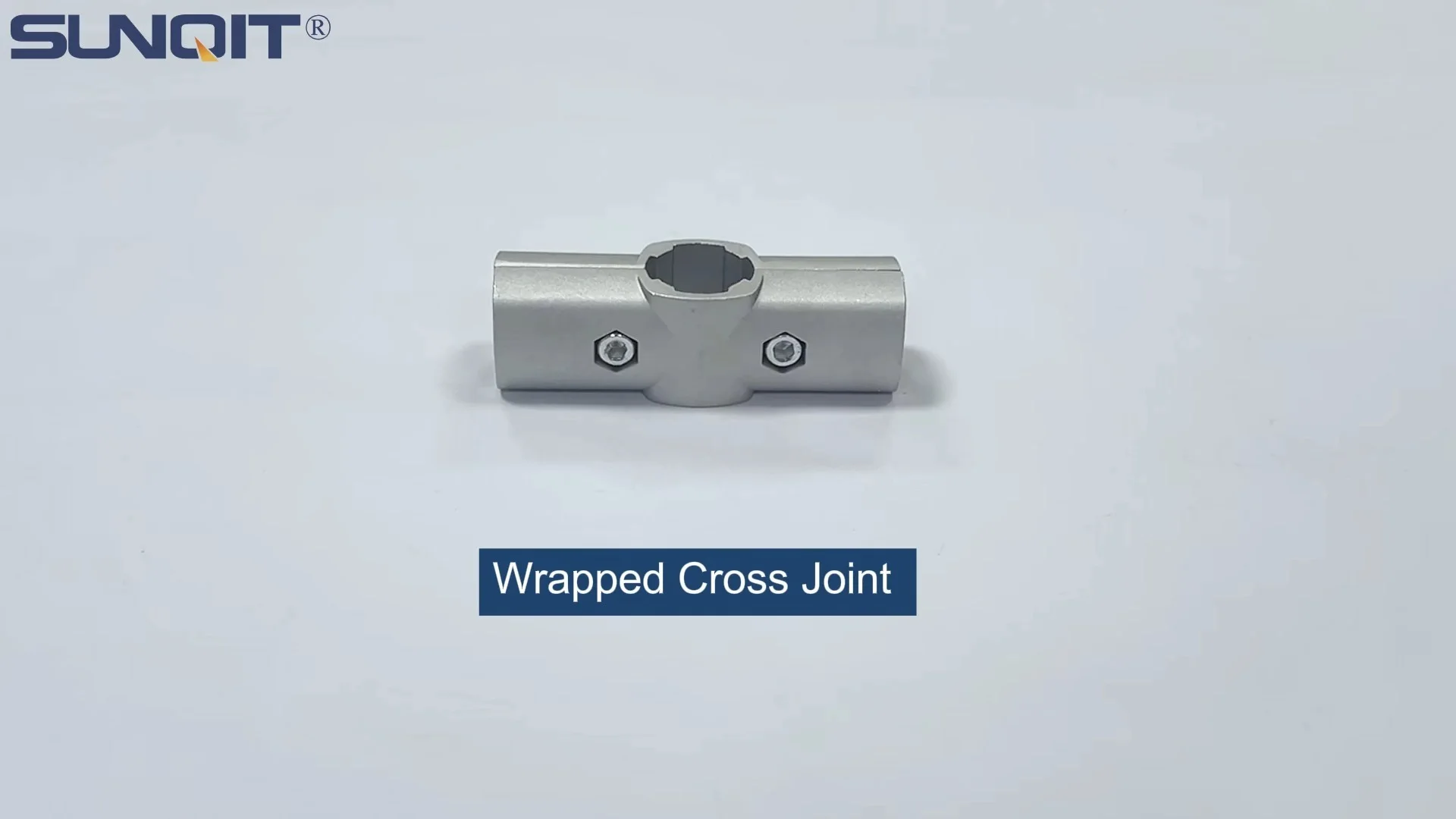
In the bustling world of manufacturing, warehousing, and lean production, the unsung heroes often lie in the details—the small components that hold everything together. If aluminum lean pipe systems are the backbone of modern workspace efficiency, then the joints that connect those pipes are the vertebrae, providing structure, flexibility, and stability. Among these, three-way aluminum pipe joints stand out for their ability to connect three pipes at once, enabling the creation of complex, three-dimensional structures that power everything from workbenches to material racks. But not all three-way joints are created equal. Today, we're diving deep into two critical types: rotational and fixed three-way aluminum pipe joints. By the end, you'll understand how each works, where they shine, and how to choose the right one for your next project—whether you're building a sturdy workbench or a dynamic roller track system.
Understanding Three-Way Aluminum Pipe Joints: The Basics
Before we compare rotational and fixed joints, let's ground ourselves in what three-way aluminum pipe joints actually do. Imagine (oops, scratch that—let's consider ) a simple aluminum pipe system: two pipes connected at a right angle with a two-way joint. Functional, but limited. Now, add a third pipe branching off—suddenly, you're not just building a flat frame; you're creating a shelf, a corner support, or a multi-directional material flow path. That's where three-way joints come in. They're the Swiss Army knives of aluminum profile accessories, allowing engineers and facility managers to build upwards, outwards, and in multiple directions, all while maintaining the system's signature lightweight strength.
Aluminum, as a material, is already a star here. It's lightweight, resistant to corrosion, and strong enough to handle the daily grind of industrial environments. When paired with precision-engineered joints, aluminum lean pipe systems become modular, reusable, and endlessly adaptable—key pillars of lean system philosophy, which prioritizes minimizing waste and maximizing efficiency. But within this category, rotational and fixed joints serve very different purposes, and choosing between them can make or break a system's performance.
Fixed Three-Way Aluminum Pipe Joints: Stability First
Let's start with the workhorse: fixed three-way aluminum pipe joints. As the name suggests, these joints are designed to create a permanent, non-adjustable connection between three pipes. Once installed, the angle between the pipes stays locked in place—no movement, no wiggle room. Think of them as the concrete foundations of your aluminum structure: not flashy, but absolutely critical for stability.
Design & Mechanics
Fixed three-way joints are typically made from die-cast aluminum alloy, chosen for its durability and ability to hold tight tolerances. Their design is straightforward: a central hub with three arms (or ports) where pipes insert. The magic is in the connection mechanism. Most use set screws or bolts that tighten against the aluminum pipe, creating a friction fit that won't budge under normal loads. Some higher-end models might include rubberized grips or serrated edges inside the ports to enhance grip, ensuring the pipes stay put even when jostled or loaded down with heavy materials.
The angles of the arms are pre-determined during manufacturing. The most common is 90°, where each arm is perpendicular to the others—ideal for building square corners or vertical supports. You'll also find 45° fixed joints for diagonal bracing or triangular structures, and even 135° joints for obtuse angles in specialized setups. No matter the angle, once the joint is secured, that's it—reconfiguring requires loosening the screws, adjusting the pipes, and re-tightening, which is doable but not something you'd want to do daily.
Applications: Where Fixed Joints Rule
Fixed joints thrive in environments where stability and consistency are non-negotiable. Let's take workbenches, for example. A standard workbench—say, Workbench E (single deck-without caster) from many suppliers—needs to stay rock-solid while an operator assembles electronics, tightens bolts, or sorts components. A wobbly workbench isn't just annoying; it's a safety hazard and a productivity killer. Fixed three-way joints here ensure the legs, frame, and shelf supports stay aligned, even when the bench is loaded with tools, parts, or heavy equipment.
Material racks are another sweet spot. Consider Material Rack B (3 row and 3 floor), a common setup for storing boxes, bins, or raw materials. Each shelf in that rack is supported by vertical and horizontal pipes connected via fixed joints. The last thing you want is a shelf sagging or shifting under the weight of inventory—fixed joints prevent that by distributing load evenly across the structure. They're also a staple in static structures like machine guards, where the goal is to create a rigid barrier that won't move, even if bumped by a forklift or pallet jack.
Pros & Cons of Fixed Joints
Pros:
- Stability: No contest—fixed joints are the most stable option. Once tightened, they act as a single, rigid unit, making them ideal for heavy loads or high-vibration environments.
- Load Capacity: Because there are no moving parts or weak points (like bearings in rotational joints), fixed joints typically handle higher weight limits. This makes them a go-to for material racks or workbenches supporting heavy machinery.
- Cost-Effective: Simpler design means lower manufacturing costs, so fixed joints are usually cheaper than their rotational counterparts. If you don't need adjustability, why pay extra?
- Low Maintenance: No internal bearings, no locking mechanisms to wear out—just set it and forget it. Fixed joints rarely need adjustments or replacements, even in high-use areas.
Cons:
- Limited Flexibility: The biggest downside. If you need to adjust the angle of a pipe later—say, to reconfigure a workbench or repurpose a material rack—you'll need to disassemble and reassemble, which takes time and may require new joints if the angle is drastically different.
- Installation Precision: Get the angle wrong during installation, and you'll either have a crooked structure or need to start over. There's no "fine-tuning" after the fact.
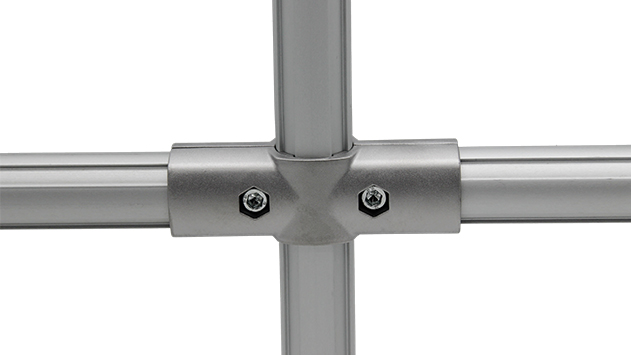
Rotational Three-Way Aluminum Pipe Joints: Flexibility in Motion
Now, let's turn to the chameleons of the joint world: rotational three-way aluminum pipe joints. These joints are built for adaptability, allowing the connected pipes to rotate or pivot around the central hub. Think of them as the ball-and-socket joints of the aluminum pipe world—they add a dynamic element to structures, making them ideal for setups that need to change angles, accommodate varying workflows, or handle materials in motion.
Design & Mechanics
Rotational three-way joints are a bit more complex than their fixed counterparts, but the ingenuity is in the details. The central hub houses a bearing or pivot mechanism that lets one or more of the arms rotate—some models allow 360° rotation, while others are limited to a range (like 0° to 180°). To keep things from spinning freely, most have a locking mechanism: a lever, knob, or set screw that tightens down on the pivot, holding the arm in place once the desired angle is set. This "lock and release" feature is what makes rotational joints so versatile—tighten for stability, loosen to adjust, and repeat as needed.
Materials here still lean (pun intended) toward aluminum alloy, but the moving parts may include stainless steel components for the bearing or pivot to resist wear. Some high-end rotational joints even use nylon or plastic inserts to reduce friction and noise during rotation—important for busy manufacturing floors where excess noise can be a distraction.
Applications: Where Rotational Joints Shine
Rotational joints are the MVPs of dynamic environments. Let's take roller tracks, for example. A roller track system moves materials from point A to point B, but what if point B isn't always in the same place? Or what if you need to adjust the incline to speed up or slow down the flow of parts? Rotational three-way joints here allow the roller track to tilt or pivot, ensuring materials glide smoothly whether the line is running at full speed or needs a gentle nudge. Swivel roller balls (1 inch or 0.5 inch) paired with rotational joints take this a step further, creating multi-directional flow paths that can adapt to shifting production schedules.
Another great application is in ergonomic workstations. Imagine (again, let's consider ) an assembly line where operators alternate between sitting and standing, or where the height of a parts bin needs to adjust for different tasks. A rotational joint in the workstation's frame lets the shelf or bin pivot up or down, keeping tools and materials within easy reach without rebuilding the entire structure. They're also popular in prototype labs or small-batch production facilities, where setups change weekly (or daily!) and reconfiguring with fixed joints would be too time-consuming.
Pros & Cons of Rotational Joints
Pros:
- Unmatched Flexibility: The ability to adjust angles on the fly is a game-changer for dynamic environments. No more disassembling and rebuilding—just loosen, pivot, and lock.
- Adaptability to Workflows: As production needs change, rotational joints let you repurpose existing structures. A material rack today can become a mobile workstation tomorrow with a few quick adjustments.
- Reduced Waste: In lean system terms, rotational joints minimize waste by extending the life of your aluminum pipe setup. Instead of buying new parts for a new configuration, you reuse what you have.
- Ergonomic Benefits: Adjustable angles mean workstations can be tailored to individual operators, reducing strain and improving comfort—key for long shifts.
Cons:
- Higher Cost: The moving parts and precision engineering make rotational joints pricier than fixed ones—sometimes double the cost. For large-scale projects, this can add up.
- Slightly Lower Load Capacity: The pivot mechanism introduces a weak point compared to fixed joints. While modern rotational joints can handle significant weight (often 50-100 lbs per arm), they're not ideal for extremely heavy loads like full pallets of steel.
- More Maintenance: The bearings and locking mechanisms can wear out over time, especially with frequent adjustment. You may need to lubricate the pivot or replace worn parts occasionally.

Rotational vs. Fixed: A Head-to-Head Comparison
To make choosing easier, let's put rotational and fixed three-way joints side by side. The table below breaks down their key features, so you can see at a glance which aligns with your needs:
| Feature | Fixed Three-Way Joints | Rotational Three-Way Joints |
|---|---|---|
| Primary Function | Create permanent, stable connections at fixed angles | Create adjustable connections with rotating/pivoting arms |
| Angle Adjustment | Pre-determined (e.g., 90°, 45°); no adjustment after installation | Variable (0°-360° depending on model); lockable in place |
| Typical Load Capacity (per arm) | 100-200+ lbs (higher for heavy-duty models) | 50-100 lbs (varies by design and locking mechanism) |
| Ideal Applications | Workbenches, static material racks, machine guards, fixed shelving | Roller tracks, adjustable workstations, dynamic material flow systems, prototype setups |
| Cost | Lower ($5-$15 per joint on average) | Higher ($10-$30+ per joint on average) |
| Installation Complexity | Simpler: align pipes, tighten screws/bolts | Slightly more complex: requires setting initial angle and testing lock mechanism |
| Maintenance Needs | Minimal: occasional tightening of screws if loosened by vibration | Moderate: lubricate pivot points, replace worn locking components |
| Best For Lean Systems? | Yes, for stable, long-term setups with low reconfiguration needs | Yes, for agile, high-reconfiguration setups prioritizing adaptability |

Choosing the Right Joint: Practical Considerations
Now that you know the differences, how do you decide between rotational and fixed three-way joints for your project? Here are four key questions to ask:
1. Is Your Setup Static or Dynamic?
If your structure will stay the same for months (or years)—like a dedicated assembly workbench or a permanent storage rack—fixed joints are the way to go. They're cheaper and more stable for long-term, unchanging setups. If your workflow shifts regularly—say, a production line that switches between products weekly, or a lab bench that needs to adapt to different experiments—rotational joints will save you time and money in the long run.
2. How Much Weight Will It Support?
Do a quick load calculation. If each arm of the joint will hold more than 100 lbs regularly, lean toward fixed joints. For lighter loads (under 75 lbs) or intermittent heavy use, rotational joints should suffice. When in doubt, check the manufacturer's specs—most list load capacities clearly.
3. What's Your Budget?
If cost is a major constraint, fixed joints are the economical choice. But don't just look at upfront costs—factor in long-term value. If you anticipate reconfiguring the system multiple times, rotational joints may pay for themselves by reducing the need to buy new pipes and accessories.
4. Who Will Use the System?
If operators or technicians will need to adjust the setup regularly (without calling in a maintenance team), rotational joints with easy-to-use locking levers are better than fixed joints that require tools to reconfigure. On the flip side, if only engineers or facility managers will set up the system once, fixed joints are simpler and less prone to accidental adjustment.
Real-World Examples: When to Use Which
Let's put this into context with two common scenarios:
Scenario 1: Building a Static Assembly Workbench
You're setting up a workbench for electronics assembly. The bench needs to hold a soldering iron, a bin of components, and a small testing station—total load around 80 lbs. The workflow here is consistent: operators stand at the bench, assemble parts, and place finished products on a nearby cart. No need for angle adjustments; stability is key to prevent delicate components from toppling. For this, fixed three-way joints are perfect. They'll keep the bench frame rigid, the shelves level, and the whole setup stable for years. You might even pair them with aluminum guide rail A or B for a smooth surface, ensuring parts glide easily across the bench top.
Scenario 2: Designing a Dynamic Roller Track System
You're creating a roller track to move plastic bins of parts from a storage area to an assembly line. The problem? The storage area is on a slight incline, and the assembly line is at waist height—you need to adjust the track's angle to control how fast the bins roll (too fast, and parts might spill; too slow, and operators wait). Here, rotational three-way joints are indispensable. They let you tilt the roller track incrementally, test the flow, and lock it in place. Add swivel roller balls 1 inch to the track, and you've got a system that can handle bins from multiple directions, adapting as the assembly line's needs change.
The Bottom Line: It's About Balance
At the end of the day, rotational and fixed three-way aluminum pipe joints aren't rivals—they're teammates. Many lean system setups use both: fixed joints for the core structure (like the legs of a workbench or the frame of a material rack) and rotational joints for the dynamic elements (like adjustable shelves or pivoting roller tracks). The key is to match the joint to the job: stability where you need it, flexibility where you don't.
Aluminum lean pipe systems are all about empowering you to build smarter, not harder. Whether you choose fixed or rotational three-way joints, you're investing in a modular, sustainable solution that grows with your business. So next time you're planning a project, take a moment to think about the joints—those small but mighty components that turn pipes into productivity. Your future self (and your workflow) will thank you.