- Company Articles
- Products and Technology
- Product knowledge
- Comparing Single vs. Double Side Rotatory Chrome Parallel Lean Pipe Joints

Comparing Single vs. Double Side Rotatory Chrome Parallel Lean Pipe Joints
Related Product
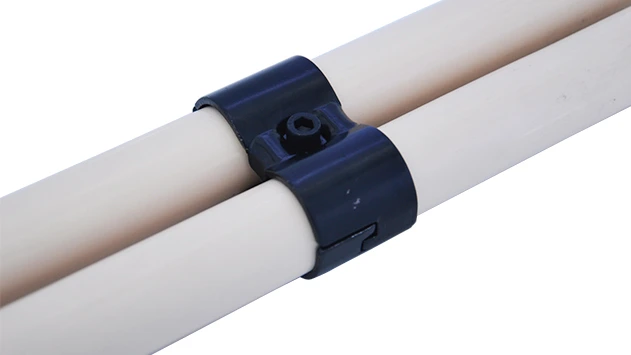
Parallel Lean Pipe Joint
Parallel lean pipe joint used for 2 pcs 28MM lean pipe connection in parallel direction to enhance frame structure, usually for heavy payload requirement for workbench. flow rack, hand trolley.
Walk into any modern manufacturing facility, warehouse, or assembly line, and you'll likely notice a common thread: the quiet efficiency of lean pipe systems. These modular, adaptable structures—made from pipes, joints, and accessories—form the backbone of workbenches, material racks, conveyors, and more. But here's the thing: while the pipes themselves get a lot of attention, it's the joints that truly bring these systems to life. Today, we're diving deep into two critical players in the world of lean pipe joints: single side rotatory chrome parallel lean pipe joints and double side rotatory chrome parallel lean pipe joints. By the end, you'll understand how these small but mighty components can make or break your workflow, and which one deserves a spot in your next project.
Understanding Lean Pipe Systems: The Backbone of Efficient Workspaces
Before we zoom in on the joints, let's take a step back. Lean pipe systems—often called "flexible pipe systems"—are designed around the principles of lean manufacturing: minimizing waste, maximizing efficiency, and adapting quickly to change. They're built using lightweight, durable pipes (like aluminum lean pipe or steel with plastic coatings) and a variety of joints that connect them. What makes these systems so popular? Unlike fixed, custom-built furniture or racks, lean systems can be disassembled, reconfigured, and repurposed in hours, not days. Need to adjust a workbench height? Swap out a joint. Expand a material rack? Add a few pipes and connectors. It's modularity at its finest.
But none of this flexibility would matter without reliable joints. Think of lean pipe joints as the "hinges" of your workspace. They determine how pipes connect, how much weight the structure can bear, and—crucially—how easy it is to adjust or reposition components. And when it comes to parallel connections (where two pipes run side by side, like the rails of a workbench or the sides of a trolley), rotatory joints add another layer of versatility: they let you pivot, tilt, or rotate sections to match the flow of work. That's where single and double side rotatory chrome parallel lean pipe joints come into play.
Single Side Rotatory Chrome Parallel Lean Pipe Joints: The Basics
Let's start with the simpler of the two: single side rotatory chrome parallel lean pipe joints. As the name suggests, these joints are designed to connect two parallel pipes, with rotation limited to one side. Picture a workbench where the upper shelf needs to tilt slightly to make materials easier to reach—this is where a single side rotatory joint might shine. Let's break down their key features:
Design & Construction
Single side rotatory joints are typically made from high-grade steel, coated in a layer of chrome for extra durability and corrosion resistance. The chrome finish isn't just for looks; it protects against rust in humid or industrial environments, ensuring the joint lasts longer even with heavy use. The joint itself has two main parts: a fixed base that attaches to one pipe, and a rotating arm that connects to the parallel pipe. The rotation mechanism is usually a smooth, friction-based pivot (sometimes with a locking pin) that lets you adjust the angle of the rotating arm relative to the fixed base. Most models offer rotation up to 180 degrees, though some are limited to 90 degrees depending on the design.
How They Work in Practice
Imagine you're setting up a basic assembly workbench. The main frame is built with straight pipes and fixed joints, but you want the tool shelf above the work surface to tilt downward slightly so tools are easier to grab. A single side rotatory joint here would connect the shelf's support pipes to the workbench legs. You'd attach one end of the joint to the leg (fixed) and the other to the shelf rail (rotating), then pivot the shelf to the perfect angle and lock it in place. Because rotation is only on one side, the joint keeps the shelf stable while allowing that crucial adjustability. It's simple, straightforward, and ideal for applications where you need one-directional movement.
Best For: Static-Dynamic Hybrid Workspaces
Single side rotatory joints excel in setups where most of the structure is fixed, but a specific section needs occasional adjustment. Think: workbenches with tilting tool trays, material racks where one shelf needs to angle for easier loading, or small turnover trolleys with a pivoting handle. They're also a budget-friendly choice—since they have fewer moving parts than double side joints, they're often less expensive to manufacture and purchase. For small businesses or teams with limited funds, this can be a big plus.

Double Side Rotatory Chrome Parallel Lean Pipe Joints: Taking Flexibility Further
Now, let's meet the more versatile sibling: double side rotatory chrome parallel lean pipe joints. These joints up the ante by allowing rotation on both sides of the parallel connection. Instead of one fixed and one rotating arm, both arms can pivot independently (or sometimes in sync, depending on the design). This might sound like a small difference, but in high-paced, dynamic workspaces, it's a game-changer.
Design & Construction
Like their single side counterparts, double side rotatory joints are made from chrome-plated steel for strength and rust resistance. But their internal mechanism is more complex. Instead of a single pivot point, they have two—one for each arm that connects to the parallel pipes. Some models even include gears or ratchets to lock both arms at specific angles, ensuring they move together smoothly. This added complexity makes them slightly bulkier than single side joints, but it also gives them greater load capacity (we'll get to that later) and range of motion, often up to 360 degrees for each arm.
How They Work in Practice
Let's shift to a busier environment: an automotive parts assembly line where materials need to flow between stations quickly. A conveyor system here might use double side rotatory joints to connect roller tracks. As parts move down the line, workers at different stations need to pivot sections of the conveyor to access components without disrupting the flow. With a double side joint, both sides of the conveyor rail can rotate—so if a worker on the left needs to tilt the track toward them, and a worker on the right needs to adjust their section later, the joint handles both movements independently. No more disassembling and reassembling; just pivot, lock, and keep working.
Another example: a large material rack in a warehouse where different teams access goods from both sides. With double side rotatory joints, the shelves can tilt toward the left for the morning shift and toward the right for the evening shift, adapting to who's working and how they move. It's this two-way adjustability that makes double side joints indispensable in spaces where workflow isn't one-size-fits-all.
Best For: High-Dynamic, Multi-User Workspaces
Double side rotatory joints thrive in environments where flexibility is non-negotiable. Think: large-scale assembly lines, shared workbenches (where different operators have different height/angle preferences), mobile trolleys that need to navigate tight corners (with rotating handles), or conveyor systems that feed into multiple stations. They're also a smart investment for future-proofing your workspace. As your needs change—new products, new processes, new team members—double side joints let you reconfigure without replacing the entire system.

Head-to-Head: Single vs. Double Side Rotatory Joints
To really understand the differences, let's put these two joints side by side. The table below breaks down their key features, pros, and cons:
| Feature | Single Side Rotatory Chrome Parallel Lean Pipe Joint | Double Side Rotatory Chrome Parallel Lean Pipe Joint |
|---|---|---|
| Rotation Range | Typically 90–180 degrees (one side only) | Up to 360 degrees (both sides, independent or synchronized) |
| Load Capacity | Moderate (50–100 kg per joint, depending on size) | Higher (100–200 kg per joint, thanks to reinforced pivot points) |
| Complexity | Simple: One pivot point, fewer moving parts | More complex: Two pivot points, potential for gears/ratchets |
| Cost | More affordable (lower manufacturing costs) | More expensive (due to added components) |
| Installation | Easy: Minimal tools, straightforward alignment | Slightly trickier: Requires precise alignment of both pivot points |
| Maintenance | Low: Fewer parts to lubricate or repair | Moderate: May need regular lubrication of both pivot points |
| Best For | Static setups with occasional one-sided adjustment (e.g., basic workbenches, small racks) | Dynamic, multi-user environments (e.g., conveyor systems, shared workspaces, heavy-duty material handling) |
| Pros |
• Budget-friendly
• Easy to install and maintain • Lightweight, space-efficient |
• Maximum flexibility (two-way rotation)
• Higher load capacity • Adaptable to changing workflows |
| Cons |
• Limited rotation range
• Lower load capacity • Not ideal for multi-directional needs |
• Higher upfront cost
• Bulkier design • Requires more careful installation |
Real-World Impact: How the Right Joint Boosts Efficiency
Numbers and specs tell part of the story, but let's look at how these joints play out in real workplaces. Take a small electronics manufacturer I worked with a few years back. They were using fixed joints for their assembly workbenches, and workers often complained about straining to reach tools on upper shelves. We swapped out a few fixed joints for single side rotatory chrome parallel lean pipe joints, allowing the shelves to tilt downward by 30 degrees. Within a week, error rates dropped by 12% (fewer mistakes from strained workers), and productivity ticked up—all from a simple joint upgrade.
On the flip side, a large automotive plant needed to reconfigure their conveyor system to handle a new line of electric vehicle parts. Their old fixed joints meant they'd have to rebuild entire sections, costing time and money. Instead, they opted for double side rotatory joints. The result? They repositioned the conveyor rails in a weekend, saving weeks of downtime. Workers could now pivot sections to align with new assembly stations, and the system's load capacity meant it could handle heavier battery components without issues.
The takeaway? It's not just about "choosing a joint"—it's about choosing a joint that grows with your needs. Single side joints solve specific, static problems; double side joints future-proof your workspace for whatever comes next.
Installation Tips: Getting It Right the First Time
No matter which joint you choose, proper installation is key. Here's a quick guide to ensure your rotatory joints perform their best:
For Single Side Rotatory Joints
- Align first, tighten later: Before fully tightening the joint to the pipes, test the rotation. Make sure the moving arm pivots smoothly without sticking. If it's stiff, check for debris in the pivot point or misalignment between the pipes.
- Don't over-tighten: Chrome joints are durable, but cranking down too hard on the bolts can strip the threads or warp the pivot mechanism. Use a torque wrench if you have one—most manufacturers recommend 15–20 Nm of torque.
- Pair with the right pipes: Single side joints work best with standard lean pipe (like 28mm diameter steel or aluminum lean pipe). Using oversized or undersized pipes can strain the joint and reduce lifespan.
For Double Side Rotatory Joints
- Level the playing field: Both pipes connected by the joint need to be perfectly parallel. Use a spirit level to check alignment—even a small tilt can cause uneven wear on the pivot points.
- Lubricate early, lubricate often: The two pivot points need regular lubrication (every 3–6 months, depending on use) to stay smooth. Use a lithium-based grease—avoid oil, which can attract dust and gunk up the mechanism.
- Test the locks: If your double side joint has locking pins or gears, test them thoroughly before loading the structure. You don't want a shelf full of parts suddenly tilting because a lock failed.
Pro tip: Always buy lean pipe and accessories from a reputable supplier. Cheap, off-brand joints might save you money upfront, but they're more likely to bend, rust, or fail under load—costing you more in repairs (and downtime) later.
Maintenance: Keeping Your Joints in Top Shape
Even the best joints need a little TLC to last. Here's how to keep your single and double side rotatory chrome parallel lean pipe joints working like new:
Clean regularly: Wipe down chrome surfaces with a damp cloth to remove dust, oil, and debris. For stubborn grime, use a mild detergent—avoid harsh chemicals that can strip the chrome plating.
Lubricate pivot points: For single side joints, lubricate the pivot once a year. For double side joints, lubricate both pivots every 3–6 months. This prevents rust and keeps rotation smooth.
Check for wear: Every few months, inspect the joint for signs of damage: cracks in the chrome, loose bolts, or pivot points that feel "wobbly." If you notice any of these, replace the joint immediately—compromised joints can lead to collapsed structures or workplace accidents.
Choosing Your Joint: A Decision Framework
Still on the fence? Ask yourself these questions to narrow it down:
- What's the load? If you're supporting heavy materials (over 100 kg), double side joints are the safer bet.
- Do you need one-way or two-way rotation? If adjustments only happen on one side, single side joints work. If you need flexibility from both directions, go double.
- What's your budget? Single side joints are better for tight budgets, but if you can afford it, double side joints offer long-term value.
- Will your needs change? If you anticipate reconfiguring the system in the next year or two, double side joints save time and money down the line.
When in doubt, start small. Buy a few of each joint and test them in your workspace. See how they feel, how they hold up, and how your team adapts. Sometimes, real-world testing beats any spec sheet.
Final Thoughts: It's All About the Flow
At the end of the day, single and double side rotatory chrome parallel lean pipe joints are more than just "parts"—they're tools for creating flow. Flow of materials, flow of work, flow of ideas. Single side joints excel at simplifying static setups, while double side joints turn rigid workspaces into dynamic, adaptable ecosystems. The right choice depends on your unique needs, but whichever you pick, remember: investing in quality joints (and a reliable lean pipe supplier) is investing in the efficiency and safety of your team.
So, what's next? Take a walk around your workspace. Look at your current lean pipe systems. Where do you see friction? Where could a little rotation make a big difference? That's where your next joint belongs.