- Company Articles
- Products and Technology
- Product knowledge
- Comparing Standard vs. Custom 2040 Aluminum Profile End Caps

Comparing Standard vs. Custom 2040 Aluminum Profile End Caps
Related Product
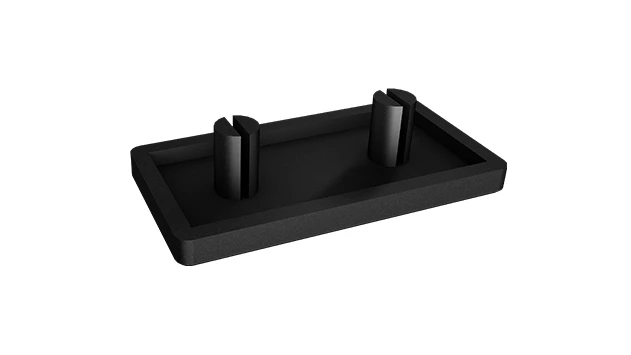
2040 Aluminum Profile End Cap
The aluminum profile end cap adds a finishing touch to your project and closes off profile ends to limit dust and debris buildup, also it can avaid some scratch for material and labor during the assemble work.
When you think about aluminum extrusion profile systems—those versatile frameworks used in everything from factory workbenches to DIY 3D printer enclosures—it's easy to focus on the big components: the sturdy aluminum tubes, the sleek connectors, the functional brackets. But if you've ever assembled one of these systems, you know the small parts often make the biggest difference. Take end caps, for example. Those unassuming little caps that snap onto the ends of aluminum profiles might seem trivial, but they're the unsung heroes that turn a rough, unfinished frame into a polished, safe, and functional structure. Today, we're zeroing in on one specific type: 2040 aluminum profile end caps. More importantly, we're breaking down the age-old debate: standard vs. custom. Which one is right for your project? Let's dive in.
First Things First: What Even Is a 2040 Aluminum Profile?
Before we get to the end caps, let's make sure we're all on the same page about the star of the show: the 2040 aluminum profile. If you're new to the world of aluminum extrusion, the numbers "2040" aren't just random—they tell you the profile's dimensions. In millimeters, it means the profile is 20mm wide and 40mm tall. Picture a long, rectangular tube with T-slots running along its length (those slots are where you attach accessories like brackets, panels, or yes, end caps). These profiles are beloved in industries from manufacturing to robotics because they're lightweight but surprisingly strong, infinitely customizable, and a breeze to assemble without welding or heavy tools.
Think of 2040 profiles as the building blocks of modern modular systems. They're used to build workbenches that hold heavy machinery, material racks that organize inventory, even custom shelving in garages. And while the profiles themselves get most of the attention, the aluminum profile accessories that accompany them—like end caps—are what elevate a basic frame into a refined, functional system.
Why End Caps Matter: More Than Just a "Finishing Touch"
Let's talk about why end caps exist in the first place. Imagine assembling a workbench using 2040 profiles. You've connected all the tubes, tightened the joints, and stood back to admire your handiwork—only to notice the raw, open ends of the profiles. Not only do they look unfinished, but they're also a safety hazard: those sharp edges could scratch hands, catch on clothing, or even damage delicate materials you're working with. Enter end caps. These small, often plastic or rubber pieces snap or press into the open ends of the profile, solving those problems in one simple step.
But their job doesn't stop at safety and aesthetics. End caps also protect the inside of the profile from dust, debris, and moisture. If you've ever stored a profile in a garage or workshop, you know how quickly dirt can accumulate inside those T-slots—end caps keep that gunk out, ensuring your profile stays clean and functional for years. In some cases, they even add a layer of insulation or sealing, especially if paired with an aluminum profile rubber strip for a tighter fit. Simply put, end caps are the final puzzle piece that turns a "good" aluminum system into a "great" one.

Standard 2040 Aluminum Profile End Caps: The "Plug-and-Play" Option
Now, let's focus on standard end caps—the ones you'll find at most hardware stores, online suppliers, or aluminum profile shops. These are the mass-produced, one-size-fits-most solutions designed to work with "off-the-shelf" 2040 profiles. Let's break down what makes them tick.
Design & Features: Simple, Consistent, and Readily Available
Standard 2040 aluminum profile end caps are all about simplicity. Most are made from durable plastics like Nylon or PVC, though you might find some basic rubber versions for extra grip. They're designed to fit snugly into the 20mm x 40mm opening of a standard 2040 profile—no measuring, no custom cutting, no fuss. The installation is usually as easy as pressing them into place; some might have a slight lip or ridge that "snaps" into the profile's inner edge to keep them from falling out. Colors are typically limited to basics: black, white, gray, or clear. If you've ever bought a pre-packaged aluminum profile kit, chances are it came with a handful of these standard end caps.
The Benefits: Cost, Convenience, and Reliability
The biggest advantage of standard end caps is their accessibility. Since they're mass-produced, you can walk into a store or order them online and have them in your hands within days—no waiting for a custom manufacturer. They're also budget-friendly. A pack of 10 standard end caps might cost less than $20, making them ideal for hobbyists, small workshops, or anyone working on a tight budget.
Another plus? Consistency. When you buy standard end caps, you know exactly what you're getting. They'll fit any standard 2040 profile (assuming you're using a reputable brand), so you don't have to worry about compatibility issues. This predictability is a lifesaver for quick projects or when you need to replace a lost end cap in a hurry.
The Limitations: When "One-Size-Fits-Most" Falls Short
Of course, standard end caps aren't perfect. The biggest downside is their lack of flexibility. If your project uses a modified 2040 profile—say, one with a custom cut, a non-standard wall thickness, or a special coating—standard end caps might not fit. I once worked with a client who had sanded down the edges of their 2040 profiles to give them a rounded look; the standard end caps, which rely on a tight fit, kept popping out because the inner dimensions were now slightly off.
They're also limited in functionality. Standard end caps are designed for basic use—no frills. If you need something with extra features, like an integrated gasket for waterproofing, a hole for cable management, or a specific color to match your brand, you're out of luck. And while they're durable for everyday use, they might not hold up in extreme conditions: high temperatures, chemical exposure, or heavy impact could cause plastic standard end caps to crack or melt.
Best For: Quick Projects, Basic Needs, and Budget Builds
So, when should you reach for standard end caps? If you're building a basic workbench in your garage, a simple shelving unit, or a prototype that doesn't require fancy features, standard end caps are your best bet. They're also great for beginners who want to experiment with aluminum profiles without investing in custom parts. Think of them as the "training wheels" of end caps—simple, reliable, and perfect for learning the ropes.

Custom 2040 Aluminum Profile End Caps: Tailored to Your Exact Needs
Now, let's flip the script and talk about custom end caps. These are end caps designed from scratch (or modified from a template) to meet your project's unique requirements. They're not for everyone, but when you need something specific, they're irreplaceable.
When to Choose Custom: Beyond the "Standard" Box
Custom end caps come into play when standard options just won't cut it. Maybe you're building a medical device enclosure where the end caps need to be antimicrobial. Or perhaps you're designing a retail display and want end caps that match your brand's signature blue color. Maybe your 2040 profiles have been modified with custom T-slots or notches, and standard end caps won't fit. In these cases, custom end caps aren't a luxury—they're a necessity.
I once worked with a robotics company that needed end caps with small holes drilled through them to route wires inside the profiles. Standard end caps couldn't accommodate the holes, so we went custom. The result? A cleaner, more professional-looking robot arm with wires neatly hidden from view. That's the power of custom—solving problems standard parts can't.
Design Flexibility: Shape, Size, and Features Galore
The beauty of custom end caps is that they're designed around your needs. Want a unique shape? A manufacturer can mold or machine end caps into ovals, squares with rounded edges, or even custom logos. Need a specific size? If your 2040 profile has been modified (e.g., shortened, widened, or had walls thickened), custom end caps can be tailored to fit perfectly. Features like integrated gaskets (for waterproofing), mounting holes (to attach panels), or even textured surfaces (for grip) are all possible with custom designs.
Materials are another area where custom shines. While standard end caps are usually plastic, custom options can be made from metal (like aluminum or stainless steel) for extra durability, silicone for heat resistance, or even conductive materials for ESD (electrostatic discharge) protection in electronics manufacturing. One client in the automotive industry needed ESD-safe end caps for their assembly line workbenches to protect sensitive circuit boards—standard plastic end caps just couldn't provide that level of protection.
The Benefits: Performance, Branding, and Problem-Solving
The obvious benefit of custom end caps is that they're tailored to your project. They fit perfectly, work exactly how you need them to, and can even enhance your system's performance. For example, if you're building a material rack that needs to withstand heavy loads, metal custom end caps can add extra reinforcement to the profile ends. If you're creating a consumer product, color-matched or branded end caps can make your design look more polished and professional—think of it as a subtle way to say, "We paid attention to the details."
Custom end caps can also solve unique problems. I once helped a client who needed end caps that could withstand frequent pressure washing (their profiles were used in a food processing plant). Standard plastic end caps would warp under the high heat and water pressure, so we designed custom end caps from food-grade stainless steel with a rubber O-ring seal. Problem solved.
The Considerations: Cost, Time, and Minimum Orders
Custom end caps aren't without drawbacks. The biggest is cost. Designing, prototyping, and manufacturing custom end caps is labor-intensive, so they'll cost significantly more than standard options. A single custom end cap could cost $10–$50, depending on materials and complexity. Lead time is another factor; while standard end caps ship in days, custom ones might take weeks (or even months) to design, test, and produce.
Most manufacturers also have minimum order quantities (MOQs). If you only need 5 custom end caps, you might still have to order 100 to meet the MOQ, which can drive up costs even more. For small projects or hobbyists, this makes custom end caps impractical. But for large-scale manufacturers or projects with specific requirements, the investment is often worth it.
Best For: Industrial Projects, Branded Products, and Unique Requirements
Custom end caps are ideal for businesses and projects that demand precision, performance, or branding. Think automotive factories building assembly lines, medical device manufacturers needing sterile components, or furniture designers creating high-end custom pieces. They're also great for projects where standard end caps fail—like modified profiles, extreme environments, or specialized functionality.
Standard vs. Custom End Caps: A Side-by-Side Comparison
| Feature | Standard 2040 Aluminum Profile End Caps | Custom 2040 Aluminum Profile End Caps |
|---|---|---|
| Design Flexibility | Limited to standard shapes, sizes, and colors (black, white, gray). | Unlimited: custom shapes, sizes, colors, and features (holes, gaskets, logos). |
| Cost | Budget-friendly: $1–$3 per end cap (packs of 10+). | Expensive: $10–$50+ per end cap (plus design and prototype costs). |
| Lead Time | Fast: 1–5 days (in-stock availability). | Slow: 2–8 weeks (design, prototype, manufacturing). |
| Material Options | Basic plastics (Nylon, PVC) or rubber. | Wide range: metal (aluminum, stainless steel), specialty plastics, silicone, etc. |
| Applications | Hobby projects, basic workbenches, DIY enclosures, budget builds. | Industrial machinery, medical devices, branded products, modified profiles, extreme environments. |
| Minimum Order | None—buy as few as 1. | Typically 50–100+ (minimum order quantities apply). |
Real-World Scenarios: Which End Cap Should You Choose?
To help you decide, let's walk through a few real-world examples:
Scenario 1: The Garage Hobbyist Building a 3D Printer Enclosure
You're a hobbyist who wants to build a simple enclosure for your 3D printer using 2040 profiles. You need something functional, affordable, and quick to assemble. Standard end caps are the way to go here. They're cheap, easy to find, and more than enough to cover the profile ends, keep dust out, and prevent scratches. No need to overcomplicate things with custom parts—save your money for better printer filament instead.
Scenario 2: The Small Business Owner Building a Custom Workbench
You own a small electronics repair shop and need a sturdy workbench with built-in shelves and tool holders. You're using standard 2040 profiles but want the bench to look professional (you have clients visiting, after all). Standard end caps in a clean white or black would work here—they're affordable, and since you're using unmodified profiles, they'll fit perfectly. If you want a little extra polish, you could paint standard end caps to match your shop's colors (just make sure to sand them first for better paint adhesion).
Scenario 3: The Manufacturer Building ESD-Safe Assembly Lines
You run a factory that assembles sensitive computer components, and you need ESD-safe workstations to prevent static damage. Your 2040 profiles are part of the workstation frames, and the end caps need to be conductive to dissipate static. Standard plastic end caps aren't conductive, so you'll need custom ones made from ESD-safe materials (like carbon-filled plastic or metal). Yes, they'll cost more and take longer, but they're critical for protecting your products—and avoiding costly defects.
Scenario 4: The Furniture Designer Creating a Custom Retail Display
You're a furniture designer hired to create a custom retail display for a high-end clothing brand. The display uses 2040 profiles with a sleek, brushed aluminum finish, and the client wants the end caps to match their brand's signature gold color. Standard end caps only come in black or white, so you'll need custom ones—painted gold, with a smooth finish to complement the aluminum. They'll add cost and lead time, but they'll make the display feel cohesive and premium, which is exactly what the client wants.
Final Thoughts: It's All About Your Needs
At the end of the day, choosing between standard and custom 2040 aluminum profile end caps comes down to your project's requirements, budget, and timeline. Standard end caps are the practical choice for most hobbyists, small projects, and anyone who needs something quick and affordable. They're reliable, easy to find, and get the job done without fuss.
Custom end caps, on the other hand, are for when "good enough" isn't enough. They're the choice for industrial applications, branded products, and projects with unique needs—whether that's a specific material, color, or feature. They cost more and take longer, but they deliver a level of precision and performance standard end caps can't match.
Whichever you choose, remember: end caps might be small, but they play a big role in making your aluminum profile system safe, functional, and polished. So next time you're assembling a frame, take a moment to appreciate those little caps—they're the finishing touch that makes all the difference.