- Company Articles
- Products and Technology
- Product knowledge
- Comparing T Slot Aluminum Pipe with Board Holder Brands: What to Look For

Comparing T Slot Aluminum Pipe with Board Holder Brands: What to Look For
Related Product
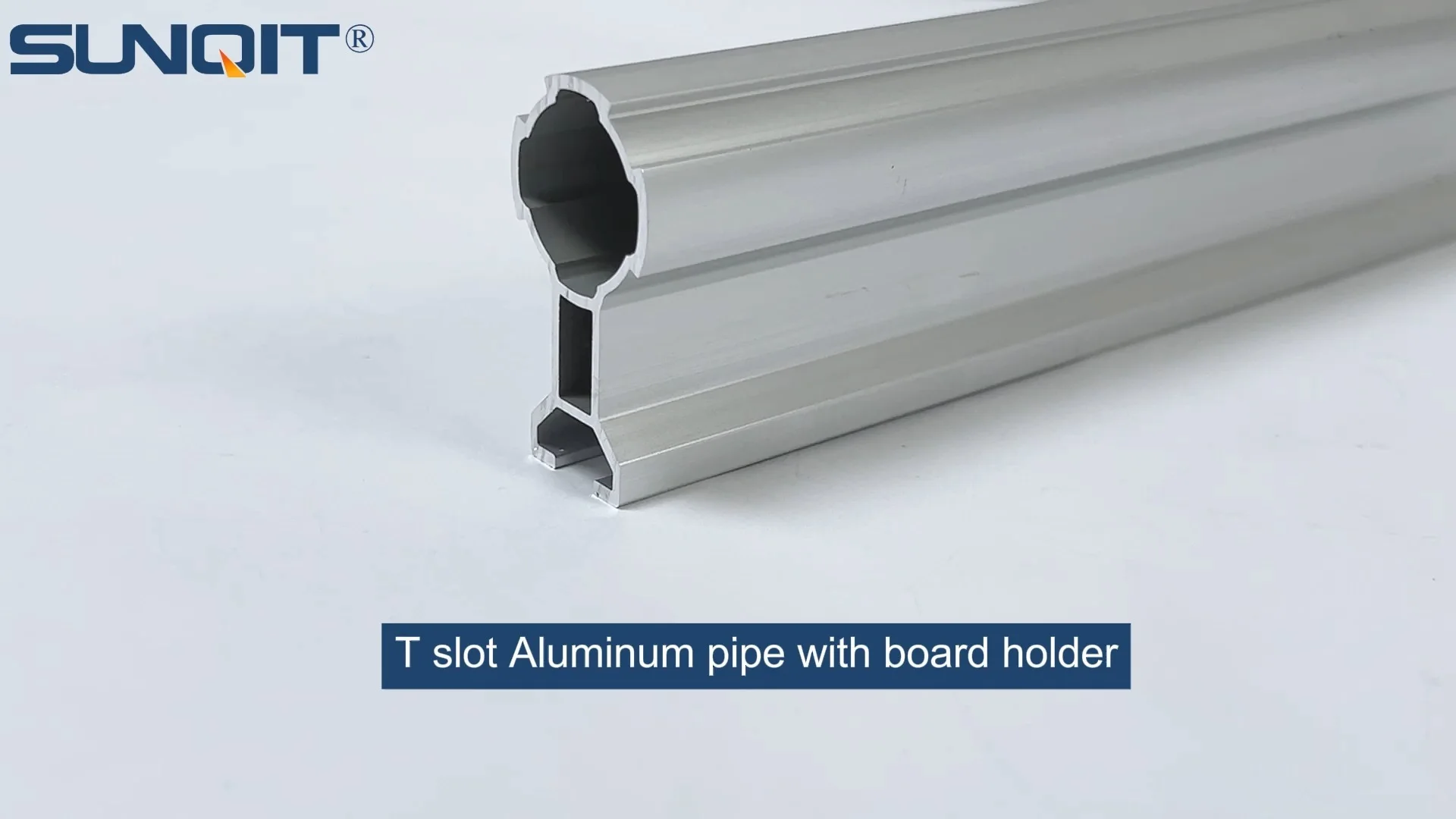
T Slot Aluminum Pipe with Board Holder
T slot Aluminum pipe with board holder,the pipe one side connected by a joint, the other side with a slot which can hold a tray or a aluminum pannel
Walk into any modern factory, workshop, or lab, and you'll likely spot a silent workhorse holding everything together: the T slot aluminum pipe. These unassuming yet versatile structures form the backbone of workbenches, assembly lines, material racks, and even custom shelving. But what truly elevates their utility is the addition of a board holder—a component that transforms a simple pipe into a sturdy platform for tools, materials, or equipment. Whether you're setting up a small home workshop or outfitting a large-scale manufacturing plant, choosing the right brand for your T slot aluminum pipe with board holder can mean the difference between seamless operations and costly disruptions. In this guide, we'll break down the critical factors to consider when comparing brands, helping you make a decision that aligns with your needs, budget, and long-term goals.
Understanding T Slot Aluminum Pipe with Board Holder
Before diving into brand comparisons, let's clarify what exactly we're evaluating. A T slot aluminum pipe is an extruded aluminum profile with a longitudinal "T" shaped groove running along its length. This groove isn't just a design quirk—it's the secret to the pipe's adaptability. It allows for easy attachment of accessories like brackets, shelves, and, yes, board holders, using T-nuts and bolts that slide into the slot and tighten securely. The result? A modular system that can be reconfigured in minutes, no welding or heavy tools required.
The board holder, specifically, is a specialized accessory designed to anchor flat surfaces—plywood, MDF, or metal sheets—to the aluminum pipe. Think of it as the bridge between the pipe and the workspace: it must be strong enough to support the weight of tools, parts, or even workers leaning on the bench, while remaining adjustable to accommodate different board thicknesses. In industrial settings, where precision and safety are paramount, a poorly designed board holder can lead to wobbling surfaces, slipping materials, or even accidents. That's why the combination of a high-quality T slot pipe and a reliable board holder is non-negotiable.
Common applications for these systems include assembly workbenches in automotive plants, lab tables in research facilities, packing stations in warehouses, and shelving units in retail stockrooms. Their popularity stems from three key benefits: flexibility (easily modify or expand the setup), durability (aluminum resists corrosion and wear), and cost-effectiveness (avoid replacing entire structures when needs change). Now, let's explore what separates the best brands from the rest.
Key Factors to Compare When Evaluating Brands
Not all T slot aluminum pipe with board holder brands are created equal. Some prioritize raw strength, others focus on affordability, and a few excel in accessory compatibility. To find the right fit, you'll need to weigh these factors against your specific use case. Below, we'll unpack the most critical criteria.
1. Material Quality: The Foundation of Durability
At the heart of any reliable T slot system is the aluminum itself. The best brands start with high-grade aluminum alloys, typically 6063-T5. Why 6063-T5? This alloy is prized for its excellent extrudability (meaning it can be shaped into precise T slot profiles), corrosion resistance, and balanced strength-to-weight ratio. The "T5" designation refers to the tempering process—artificial aging that strengthens the aluminum without making it brittle. Cheaper brands may cut corners by using lower-grade alloys (like 1050 or 3003) or skipping proper tempering, resulting in pipes that bend under heavy loads or warp over time.
Thickness is another key consideration. Pipe wall thickness (measured in millimeters) directly impacts load capacity. For light-duty use (e.g., a small hobby bench), 1.2mm walls might suffice. But for industrial applications—such as a workbench supporting 500+ pounds—look for 2.0mm or thicker walls. Reputable brands will clearly list wall thickness and maximum load ratings for their pipes, often backed by third-party testing data.
Finish matters too. Most aluminum profiles undergo surface treatments to enhance durability and appearance. Anodizing, a process that creates a protective oxide layer, is the gold standard. It resists scratches, prevents corrosion (critical in humid or chemical-exposed environments), and gives the pipe a clean, professional look. Powder coating is another option, offering more color choices, but it's less durable than anodizing and can chip if the pipe is frequently reconfigured. Avoid brands that skip surface treatments altogether—raw aluminum is prone to staining and oxidation.
Tip: Ask brands for material certification reports. Reputable suppliers will provide documentation confirming the alloy grade, temper, and wall thickness of their aluminum profile .
2. Accessory Ecosystem: Compatibility is Key
A T slot aluminum pipe is only as useful as the accessories it works with. The best brands don't just sell pipes—they offer a full ecosystem of aluminum profile accessories designed to work seamlessly together. This includes board holders, joints, end caps, casters, and brackets. Why does this matter? Mismatched accessories from different brands can lead to loose fits, wobbly structures, or even failure. For example, a board holder from Brand A might not align with the T slot spacing of a pipe from Brand B, requiring you to drill custom holes or use shims—both time-consuming and risky workarounds.
When evaluating brands, check their accessory catalog for depth and variety. Look for essentials like:
- Internal rotatary joints: Allow pipes to pivot, useful for angled workbenches or adjustable shelves.
- End caps: Cover sharp pipe ends to prevent injuries and keep out dust/debris.
- Caster mounts: Attach wheels for mobile workbenches or carts.
- Reinforced brackets: Support heavy loads at joint intersections.
The brand should also provide clear compatibility charts, indicating which accessories work with which pipe sizes (e.g., 20x20mm, 30x30mm, 40x40mm profiles). Some brands even offer "starter kits" with pipes, board holders, and basic accessories, making it easy to test the system before scaling up.
3. Board Holder Design: Safety and Functionality
The board holder is the star of the show here, so let's zoom in on its design. A high-quality aluminum pipe with board holder should excel in three areas: grip, adjustability, and load capacity.
Grip: The holder must securely clamp the board to prevent slipping. Look for designs with rubberized jaws or serrated edges—these increase friction, even when the board is wet or dusty. Avoid plastic holders; while cheaper, they can crack under stress or lose grip over time. Metal (aluminum or steel) holders with powder-coated finishes are more reliable.
Adjustability: Workshops rarely use boards of a single thickness. A good holder should accommodate different materials—from 1/2-inch plywood to 2-inch thick metal plates. This is often achieved via slotted mounting holes or adjustable clamping screws. Some premium brands even offer quick-release mechanisms, letting you swap boards in seconds without tools.
Load capacity: The holder's maximum weight rating should align with your needs. For a packing bench holding lightweight boxes, 50-100 lbs per holder might be enough. For an industrial workbench with power tools, aim for 200+ lbs. Brands should list this rating clearly, ideally tested to industry standards (e.g., ISO 9001). Remember: the total load is distributed across multiple holders, so calculate how many you'll need based on the board's size and weight.
4. Durability Testing and Real-World Performance
Marketing claims about "strength" or "durability" are easy to make, but hard to verify. The best brands back their products with rigorous testing. Ask about: Static load testing (how much weight the pipe/holder can support without bending), dynamic load testing (weight during movement, like a mobile cart), and fatigue testing (how well the system holds up to repeated use over time). Some brands even share video footage of their products under stress—e.g., a 40x40mm pipe supporting a car, or a board holder withstanding 10,000 cycles of clamping/unclamping.
Real-world reviews are equally telling. Check industrial forums, LinkedIn groups, or Google Reviews for feedback from users in similar industries. Common complaints to watch for: "board holder stripped after 3 months," "pipe bent under 300 lbs," or "accessories don't fit as advertised." Conversely, consistent praise for "rock-solid stability" or "still like new after 5 years" is a good sign. If possible, visit a local distributor or trade show to see the products in person—wiggle the board holder, lean on a sample bench, and test the fit of accessories.
For those in lean manufacturing environments, partnering with a lean pipe supplier can be advantageous. These suppliers specialize in systems that support just-in-time production, continuous improvement, and waste reduction—qualities that often translate to more durable, efficiently designed T slot products. Their pipes and holders are engineered to withstand the fast-paced, repetitive demands of lean workflows, making them a smart choice for high-throughput facilities.
5. Customization and Scalability
Every workspace is unique. A brand that offers customization options can tailor the system to your exact needs. This might include custom pipe lengths (avoiding the hassle of cutting down standard 6-meter pipes), special finishes (e.g., food-grade anodizing for kitchen labs), or bespoke board holder designs (e.g., curved holders for circular work surfaces). While customization often adds cost, it can save time and money in the long run by eliminating workarounds.
Scalability is another consideration. As your business grows, can you easily add more pipes, holders, or accessories from the same brand? A brand with a wide range of profile sizes (20x20mm to 80x80mm) and complementary products (like conveyor tracks or shelving units) makes expansion seamless. Avoid brands with limited options—you don't want to outgrow your system in a year and have to start from scratch.
6. Customer Support and Warranty
Even the best products can run into issues. How a brand handles support says volumes about its reliability. Look for: Responsive communication (email/phone support within 24 hours), technical expertise (staff who can help design your setup, not just take orders), and local distributors (for faster shipping and easier returns). Some brands even offer on-site consultations to help plan your workspace layout—a valuable service for complex projects.
Warranty terms are equally important. A standard warranty might cover defects in materials or workmanship for 1-2 years, but top brands often offer 5+ years. Be sure to read the fine print: Does the warranty cover accessories, or just pipes? Are shipping costs included for replacements? A strong warranty shows the brand stands behind its products.

Comparing Top Brands: A Side-by-Side Look
To put these factors into perspective, let's compare five hypothetical brands across key criteria. Note: These are composite examples based on industry trends, not real companies.
| Brand | Material (Pipe) | Board Holder Load Capacity | Accessory Range | Warranty | Price Range (Per Meter of Pipe) | Best For |
|---|---|---|---|---|---|---|
| Brand X | 6063-T5, 2.0mm wall, anodized | 250 lbs (per holder) | Extensive (100+ accessories) | 5 years | $45-$60 | Heavy industrial use (automotive, aerospace) |
| Brand Y | 6063-T5, 1.5mm wall, powder-coated | 150 lbs (per holder) | Moderate (50+ accessories) | 3 years | $30-$40 | Mid-sized workshops, labs |
| Brand Z | 6061-T6, 1.2mm wall, anodized | 100 lbs (per holder) | Limited (30+ accessories) | 2 years | $20-$25 | Small workshops, hobbyists |
| Brand A (Lean Focus) | 6063-T5, 1.8mm wall, anodized | 200 lbs (per holder) | Lean-specific (kanban racks, flow rails) | 4 years | $35-$50 | Lean manufacturing facilities |
| Brand B (Budget) | 3003-H14, 1.0mm wall, no finish | 75 lbs (per holder) | Basic (20+ accessories) | 1 year | $10-$15 | Temporary setups, low-budget projects |
Prices are approximate and vary by pipe size (e.g., 20x20mm vs. 40x40mm) and quantity ordered.

Case Studies: Real-World Success (and Struggles)
To illustrate how these factors play out in practice, let's look at two real-world scenarios (based on anonymized customer experiences).
Case Study 1: Automotive Plant Upgrades to Brand A (Lean Pipe Supplier)
A mid-sized automotive parts manufacturer was struggling with their existing workbenches: the budget-brand T slot pipes bent under the weight of heavy tools, and the board holders frequently slipped, causing parts to fall. Their lean manufacturing team needed a more reliable setup to support their just-in-time production goals. After researching lean pipe supplier options, they chose Brand A, attracted by its 5-year warranty and reputation for durability.
The upgrade involved replacing 20 workbenches with Brand A's 40x40mm pipes (1.8mm wall) and reinforced board holders (200 lbs capacity). The results were striking: production downtime due to bench failures dropped by 90%, and workers reported "noticeably sturdier" surfaces. The compatible accessories (like quick-adjust shelves and mobile caster mounts) also made it easier to reconfigure workstations for new product lines, reducing changeover time by 20%. While the initial cost was 30% higher than their previous setup, the savings in downtime and efficiency made the investment pay off within 8 months.
Case Study 2: Small Electronics Workshop Chooses Brand Y for Balance
A 10-person electronics repair shop needed to expand their workspace on a tight budget. They required workbenches for circuit board assembly—light to moderate load (tools, laptops, small parts) but needed the flexibility to add shelves and tool hooks as the team grew. After comparing options, they settled on Brand Y for its mid-range pricing, 1.5mm walls (sufficient for their needs), and moderate accessory range.
The shop purchased 15 meters of Brand Y pipe, 30 board holders, and a starter kit of accessories (casters, end caps, angle brackets). The assembly was straightforward, with all parts fitting together seamlessly. Six months later, the owner noted, "The board holders still grip like new, and we've added three shelves without any issues. For our size, Brand Y hits the sweet spot between quality and cost." The only minor complaint? The powder-coated finish showed some scratches from moving tools, but this didn't affect functionality.
Avoiding Common Pitfalls
Even with careful research, it's easy to make missteps when choosing a brand. Here are three pitfalls to steer clear of:
- Choosing based solely on price: The cheapest brand might save you money upfront, but bent pipes or failing board holders will cost more in replacements and downtime. Balance cost with quality, especially for high-use areas.
- Ignoring accessory compatibility: Mixing pipes from Brand A with board holders from Brand B is a gamble. Even if they "look" similar, slight differences in T-slot width or thread size can lead to loose fits. Stick to one brand for critical components.
- Overlooking environmental factors: If your workspace is humid (e.g., a food processing plant) or exposed to chemicals (e.g., a lab), prioritize anodized aluminum over powder-coated or raw. A coastal workshop should also opt for anodizing to resist saltwater corrosion.
Final Thoughts: Invest in Your Workspace's Backbone
Your T slot aluminum pipe with board holder system isn't just furniture—it's the backbone of your operation. It supports your tools, your team, and ultimately, your productivity. When comparing brands, prioritize material quality (6063-T5 aluminum, adequate wall thickness), a robust accessory ecosystem ( aluminum profile accessories that play well together), and a board holder designed for your specific load and adjustability needs. Don't forget to factor in real-world reviews, warranty terms, and how well the brand aligns with your long-term goals (scaling, lean manufacturing, etc.).
Remember: the best brand for you isn't necessarily the most expensive or the most popular—it's the one that fits your unique combination of load requirements, budget, and workspace demands. By taking the time to evaluate these factors, you'll ensure your T slot system serves you reliably for years to come, adapting and growing as your needs change. After all, a well-built workspace is the first step toward a well-built business.