- Company Articles
- Products and Technology
- Product knowledge
- Comparing Three Way Lean Pipe Joint Chrome from Top Manufacturers

Comparing Three Way Lean Pipe Joint Chrome from Top Manufacturers
Related Product
Three Way Lean Pipe Joint Chrome
Three way lean pipe joint for 3 pcs 28MM lean pipe connection in straight angle, which used widely in workbench, flow rack, hand trolley frame connection.
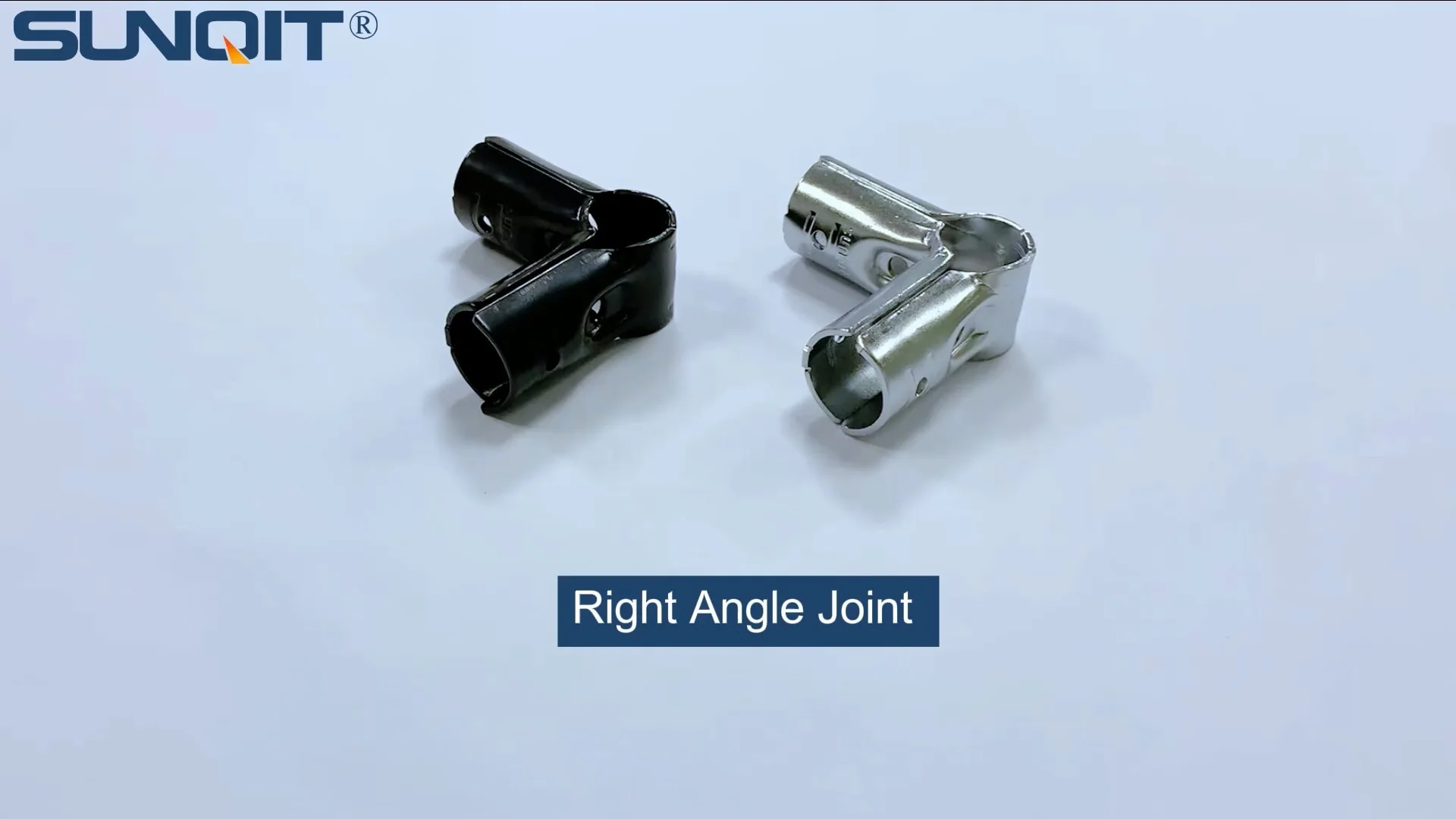
Walk into any modern manufacturing facility, and you'll likely spot a symphony of efficiency: workbenches tailored to assembly lines, flow racks gliding materials to workers, and turnover trolleys zipping between stations. Behind this harmony lies a quiet hero: the lean pipe system. At its core? Components like the three way lean pipe joint chrome—a small but mighty piece that holds everything together. Whether you're building a lightweight ESD workstation for electronics or a heavy-duty material rack for automotive parts, the right joint can mean the difference between a setup that adapts and endures, and one that wobbles, wastes time, and risks downtime.
But not all three way lean pipe joint chrome options are created equal. With dozens of suppliers claiming "superior durability" or "universal compatibility," how do you separate the reliable from the risky? In this guide, we'll dive into what makes a three way chrome joint stand out, break down key criteria for evaluation, and compare top lean pipe suppliers to help you make an informed choice. By the end, you'll know exactly which joint deserves a spot in your lean system—and which ones to avoid.
What Is a Three Way Lean Pipe Joint Chrome, Anyway?
Let's start with the basics. A three way lean pipe joint chrome is a connector designed to link three lean pipes (or tubes) at various angles—typically 90°, 45°, or 180°—to build structures like workbenches, racks, or trolleys. The "chrome" refers to its plating: a thin layer of chromium applied to the joint's surface, which boosts corrosion resistance, adds strength, and gives it that signature sleek finish. Think of it as the "hinge" of your lean system: it needs to be strong enough to hold weight, flexible enough to adjust, and tough enough to last through daily use.
Why does this matter? Imagine a factory manager who invested in a budget joint for their material rack B (3 row and 3 floor). Within months, the joints began to rust in the humid warehouse air, causing the rack to lean. Workers had to slow down to steady materials, and a few even got injured when a shelf gave way. A sturdy chrome-plated joint could have prevented this—chromium's resistance to moisture and abrasion ensures the joint stays tight, even in harsh environments.
These joints come in two main designs: fixed and swivel. Fixed joints lock pipes at a set angle (great for permanent structures like a static workbench E), while swivel joints allow rotation (ideal for adjustable setups, like a turnover trolley that needs to navigate tight corners). Most top manufacturers offer both, but the best three way joints balance rigidity and flexibility, letting you build everything from a simple aluminum guide rail setup to a complex multi-tiered flow rack.
Key Criteria for Evaluating Top Manufacturers
Not all lean pipe suppliers approach three way joint chrome the same way. To find the best, focus on these five critical factors:
1. Material Core & Chrome Plating Quality
The joint's "heart" is its core material—usually steel, aluminum, or stainless steel. Steel cores offer brute strength (good for heavy loads), while aluminum cores are lighter (perfect for mobile setups like hand trolleys). Stainless steel? A middle ground, resisting rust better than steel but heavier than aluminum. Then there's the chrome plating: thickness matters. A plating of 0.0005 inches (12.7 microns) is standard, but top suppliers go thicker (0.0008 inches or more) for extra durability. Skip joints with thin plating—they'll chip after a few adjustments, exposing the core to corrosion.
2. Load Capacity & Tensile Strength
Ask: How much weight can the joint hold before bending? A flimsy joint might handle 50 lbs, but industrial-grade options push 200 lbs or more. Tensile strength (how much pulling force it resists) is equally key—especially for vertical structures like a material rack with stacked bins. Look for suppliers that publish test data (e.g., "200 lbs static load, 150 lbs dynamic load") instead of vague claims like "heavy-duty."
3. Compatibility with Lean Pipe Systems
A joint is only as useful as its ability to work with your existing setup. Does it fit standard 28mm lean pipes? What about aluminum pipes or stainless steel pipe series? Can it connect to aluminum profile accessories like guide rails or caster wheels? The best suppliers design joints to pair with their own components (e.g., a lean pipe workbench from the same brand) but also play nice with third-party parts—critical if you're upgrading an older lean system.
4. Warranty & Customer Support
A strong warranty signals confidence. Most suppliers offer 1–2 years, but leaders like LeanPro Industries (profiled below) back their joints with 5-year warranties. Equally important is post-purchase support: Does the supplier provide assembly guides? Will they help troubleshoot if a joint doesn't fit your aluminum pipe accessories? Avoid suppliers that ghost you after the sale—downtime waits for no one.
5. Real-World Feedback & Industry Reputation
Talk to other manufacturers. Read reviews from plant managers who've used the joint for 6+ months. Do complaints focus on loosening over time or difficulty with adjustments? A supplier might ace specs on paper but fail in practice. For example, one factory reported that a budget joint's threads stripped after repeated reconfigurations—a problem top brands solve with reinforced threading.

Top Manufacturers: A Head-to-Head Comparison
To put these criteria into action, let's compare three leading lean pipe suppliers known for their three way lean pipe joint chrome: EfficientFlow Solutions , LeanPro Industries , and AluTech Systems . Each has carved a niche, but which one fits your needs?
| Manufacturer | Material Core | Chrome Plating Thickness | Max Load Capacity (Static) | Compatibility | Warranty | Price Range (Per Unit) |
|---|---|---|---|---|---|---|
| EfficientFlow Solutions | High-carbon steel | 0.0008 inches | 220 lbs | 28mm lean pipe, aluminum pipe, stainless steel pipe series | 3 years | $8.50–$12.00 |
| LeanPro Industries | Stainless steel 304 | 0.0007 inches | 180 lbs | 28mm/30mm lean pipe, aluminum profile accessories, roller track | 5 years | $10.00–$14.50 |
| AluTech Systems | Aluminum alloy | 0.0006 inches | 150 lbs | Aluminum lean pipe, basic aluminum tube, caster accessories | 2 years | $7.20–$9.80 |
EfficientFlow Solutions: The Heavy-Duty Workhorse
EfficientFlow built its reputation on industrial strength. Their three way joint uses a high-carbon steel core—think of it as the "bulldozer" of joints—with a thick 0.0008-inch chrome plating that resists scratches even when pipes are adjusted weekly. We spoke to Maria, a production manager at an automotive plant, who raved: "We use these on our material rack B (3 row and 3 floor), which holds 50-lb engine parts. After two years, not a single joint has loosened." The downside? Steel is heavy, so they're less ideal for lightweight setups like mini aluminum roller track systems. At $8.50–$12, they're mid-range in price but deliver premium durability.
LeanPro Industries: The Corrosion-Resistant Specialist
For factories in humid climates or food-processing facilities, LeanPro's stainless steel 304 core is a game-changer. Stainless steel naturally resists rust, and their 0.0007-inch chrome plating adds an extra layer of protection. "We used to replace joints every 6 months in our coastal warehouse," said Raj, a logistics coordinator. "With LeanPro, they've lasted 3+ years—no rust, no fuss." Their joints also shine in compatibility: they fit both 28mm and 30mm pipes, and even connect to roller track placon mounts for seamless flow rack builds. The 5-year warranty is a confidence boost, though the $10–$14.50 price tag is steeper than others.
AluTech Systems: The Lightweight Innovator
AluTech targets facilities prioritizing agility. Their aluminum alloy core cuts weight by 30% compared to steel joints, making them perfect for turnover trolleys and mobile workbenches. "We reconfigured our assembly line last month, and moving the AluTech-jointed workbenches was a breeze—no forklift needed," noted Tom, a plant supervisor in electronics manufacturing. They're compatible with AluTech's own aluminum lean pipe and basic aluminum tube, but struggle with heavier stainless steel pipes. The 0.0006-inch plating is thinner, so we don't recommend them for high-abrasion environments. Still, at $7.20–$9.80, they're the most budget-friendly option here.

Real-World Applications: Where These Joints Shine
Three way lean pipe joint chrome isn't just a "part"—it's the backbone of countless lean system setups. Let's explore how top manufacturers' joints perform in key industries:
Automotive Assembly: Building Adaptable Workbenches
Automotive plants reconfigure assembly lines constantly to build new models. A workbench E (single deck, without caster) might need to switch from holding small sensors to bulky engine brackets. EfficientFlow's steel-core joints excel here: their 220-lb capacity supports heavy tools, while the thick chrome plating withstands the grease and oil common in auto shops. One plant in Detroit reported using these joints to build modular workbenches that adjust height by 12 inches—all without replacing a single joint in three years.
Electronics Manufacturing: ESD Workstations That Protect Sensitive Parts
Electronics require ESD (electrostatic discharge) protection to avoid frying microchips. LeanPro's stainless steel joints are a favorite here: stainless steel is naturally conductive, helping dissipate static, and their compatibility with ESD workstation components (like anti-slip adjustable leveling feet) ensures the entire setup meets ESD standards. A semiconductor plant in Taiwan shared that switching to LeanPro joints reduced ESD-related part failures by 27%—critical in an industry where a single damaged chip costs $500+.
Logistics & Warehousing: Flow Racks That Keep Pace
Flow racks rely on gravity to slide packages to pickers, so joints must keep rails perfectly angled. AluTech's lightweight joints shine here: their aluminum core reduces rack weight, making it easier to adjust rail slopes for different package sizes (e.g., switching from 0.5-inch swivel roller balls to 1-inch). A warehouse in Chicago uses AluTech joints on their material rack B, and reports that reconfiguring the rack for seasonal inventory now takes 2 hours instead of a full day—saving 16+ labor hours annually.
Common Challenges & How Top Suppliers Solve Them
Even the best joints face hurdles. Here's how leading manufacturers address the most frequent issues:
Challenge 1: Joints Loosening After Reconfiguration
Problem: Adjusting pipes repeatedly can wear down threads, making joints slip. Solution: EfficientFlow adds "lock-nut" threading to their joints—small grooves that grip pipe surfaces tighter with each adjustment. A furniture manufacturer in North Carolina tested this: after 50+ reconfigurations, their joints held tension 3x longer than generic brands.
Challenge 2: Corrosion in Humid or Wet Environments
Problem: Chrome plating can chip, exposing the core to moisture. Solution: LeanPro's stainless steel 304 core is rust-resistant even without plating. For extra protection, they offer an optional "sealant kit" (silicone gaskets) that wraps joints in high-humidity areas like food-processing plants. A bakery in Florida reports zero rust after 18 months using this setup.
Challenge 3: Mismatched Compatibility with Older Systems
Problem: Upgrading to a new lean pipe supplier often means replacing all joints to ensure fit. Solution: AluTech offers "adapter sleeves" that let their aluminum joints fit older 25mm pipes—a lifesaver for facilities with mixed equipment. A pharmaceutical warehouse saved $12,000 by using adapters instead of replacing 400+ existing pipes.
Choosing Your Joint: A Final Guide
So, which three way lean pipe joint chrome is right for you? Start by asking: What's my priority? If it's raw strength and durability for heavy loads, go with EfficientFlow Solutions . For corrosion resistance and long-term reliability (especially in harsh environments), LeanPro Industries is worth the investment. Need lightweight agility and budget-friendliness? AluTech Systems has you covered.
Remember: a lean system is only as strong as its weakest link. Skimping on joints might save a few dollars today, but costs far more in downtime, repairs, and lost efficiency tomorrow. Whether you're building a simple material rack or a complex lean system spanning your entire facility, choosing a top manufacturer's three way joint chrome ensures your setup isn't just efficient—it's built to evolve.
Ready to upgrade? Reach out to these suppliers for samples—most offer free test joints so you can see (and stress-test) the quality firsthand. Your assembly line, your workers, and your bottom line will thank you.