- Company Articles
- Products and Technology
- Product knowledge
- Comparing Three Way Lean Pipe Joint Chrome with Plastic Joints: Performance Review

Comparing Three Way Lean Pipe Joint Chrome with Plastic Joints: Performance Review
Related Product
Three Way Lean Pipe Joint Chrome
Three way lean pipe joint for 3 pcs 28MM lean pipe connection in straight angle, which used widely in workbench, flow rack, hand trolley frame connection.
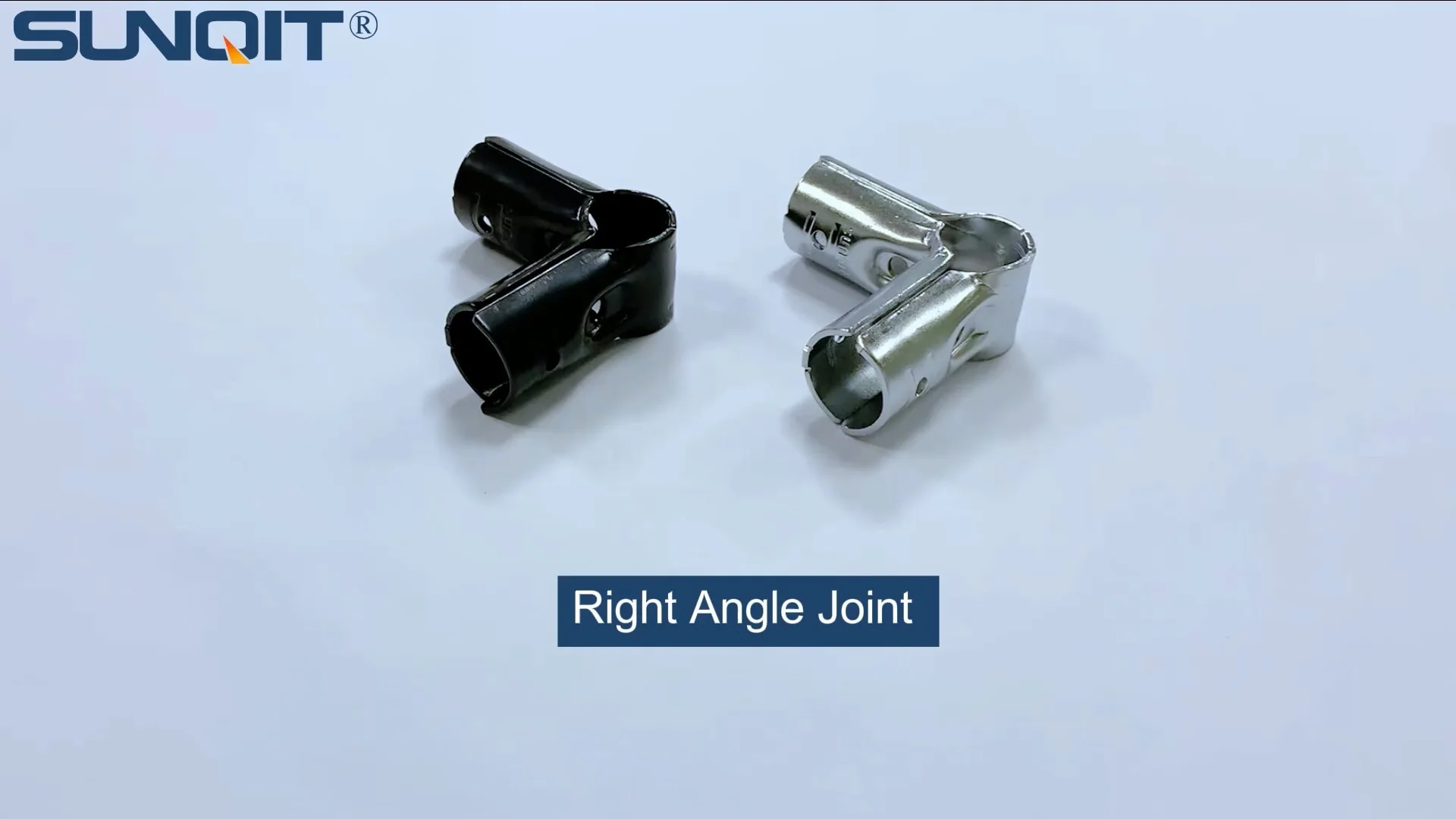
Walk into any modern manufacturing facility, and you'll likely hear the hum of efficiency: assembly lines moving in sync, workers reaching for tools without pause, and materials gliding smoothly from one station to the next. Behind this orchestration lies a silent hero of lean systems—the humble joint. These unassuming connectors hold together lean pipe workbenches, flow racks, and turnover trolleys, turning simple aluminum or steel pipes into customized, productivity-boosting structures. But not all joints are created equal. In the world of lean manufacturing, two types stand out for their popularity yet stark differences: the three way lean pipe joint chrome and plastic joints. Today, we're diving deep into their performance, durability, and real-world impact to help you decide which deserves a spot in your next workflow upgrade.
The Backbone of Lean Systems: Why Joints Matter
Before we pit chrome against plastic, let's talk about why joints are non-negotiable in lean systems. Lean manufacturing thrives on flexibility—adaptable workspaces that can evolve with changing production needs, reduce waste, and minimize downtime. A single lean pipe workbench might start as a simple assembly station, then reconfigure into a testing area, and later transform into a packaging hub. For that to happen, the joints holding it together must be strong enough to support daily use, flexible enough to disassemble and reassemble, and reliable enough to avoid costly breakdowns.
Enter the two contenders: Chrome-plated three-way joints, often made from steel, and plastic joints, typically crafted from nylon or polypropylene. Both promise to connect pipes, but their performance under pressure—literally and figuratively—tells very different stories. Let's break them down.
Material Showdown: What Are They Made Of?
Chrome Three Way Joints: Metal Might
The three way lean pipe joint chrome is a product of industrial strength. At its core is usually cold-rolled steel, chosen for its high tensile strength and rigidity. To boost durability, manufacturers coat this steel with a layer of chrome via electroplating. This isn't just for shine—chrome adds a barrier against corrosion, scratches, and chemical damage, making the joint resilient in harsh factory environments. Run a finger along its surface, and you'll feel the smooth, hard texture that resists dents even when bumped by a loaded turnover trolley.
The "three-way" design is another key feature. These joints connect three lean pipes at 90-degree angles (or adjustable angles, depending on the model), forming the corners and intersections of structures like material racks or workbenches. The precision of their threading or clamping mechanisms ensures pipes stay locked in place, even under heavy loads.
Plastic Joints: Lightweight and Low-Cost
Plastic joints, on the other hand, prioritize cost and convenience. Most are injection-molded from materials like nylon 6 or polypropylene—plastics known for their light weight and moldability. This makes them easy to mass-produce, driving down prices. Their design often features snap-on or twist-lock mechanisms, marketed as "tool-free" assembly. Pick one up, and it feels noticeably lighter than its chrome counterpart, which can be a selling point for quick, on-the-spot reconfigurations.
But here's the catch: Plastic's flexibility is a double-edged sword. While it bends under stress (which can absorb minor impacts), it lacks the inherent rigidity of metal. Over time, this can lead to "creep"—a gradual deformation under constant load—or brittleness from exposure to factory heat or cleaning chemicals.
Durability: Which Lasts Longer in the Trenches?
In manufacturing, "durable" isn't just about lasting a year—it's about surviving the daily grind. Let's paint a picture: A lean pipe workbench in an automotive parts plant. It holds 50kg of tools, gets wiped down with industrial cleaners twice a day, and endures accidental bumps from forklifts. How do chrome and plastic joints fare here?
Chrome Joints: Scratch-Resistant and Corrosion-Proof
Chrome plating is a champion of resilience. Unlike bare steel, which rusts when exposed to moisture, chrome acts as a shield. Even in humid environments or near water-based cleaning solutions, a quality chrome joint will resist tarnishing. Scratches? They're hard to come by. A dropped wrench might leave a mark, but the underlying steel remains protected. In fact, many lean pipe supplier warranties for chrome joints span 5+ years—a testament to their longevity.
Consider temperature swings, too. Factories can get hot in summer and cold in winter, but chrome joints don't care. Steel's thermal stability means they won't expand, contract, or warp, keeping your lean structure's alignment intact. Plastic joints, however, tell a different story.
Plastic Joints: Susceptible to Wear and Tear
Plastic joints start strong but weaken over time. Nylon, while initially tough, can crack under repeated stress—like the constant vibration of a conveyor system or the weight of a fully loaded material rack. UV exposure from factory lights or windows can make them brittle, and harsh cleaning agents (think degreasers) might cause discoloration or softening. I've visited facilities where plastic joints on a 2-year-old lean pipe workbench had to be replaced because they'd "given up" at the connection points, leaving pipes wobbly and unsafe.
Even minor impacts add up. A worker bumping a turnover trolley into a plastic-jointed rack might not notice immediate damage, but over months, that repeated stress can loosen the joint's grip. Suddenly, you're tightening connections weekly instead of focusing on production.
Load Capacity: How Much Weight Can They Handle?
If durability is about time, load capacity is about strength—and this is where chrome joints pull ahead. Let's get technical: A standard three way lean pipe joint chrome, made from 2.0mm steel with chrome plating, can typically support 150-200kg per joint when properly installed. That's enough to hold a fully loaded material rack B (3 rows, 3 floors) stacked with heavy components like engine parts or metal castings.
Plastic joints, by contrast, top out at around 30-50kg per joint . They're fine for lightweight tasks—think a small workbench holding electronics components or a mini flow rack with plastic bins. But push them beyond that, and you risk disaster. I once saw a plastic-jointed workbench collapse when a technician placed a 70kg testing machine on it; the joints snapped cleanly, sending tools crashing to the floor. The cost of repairs paled next to the downtime while the station was rebuilt.
| Performance Metric | Three Way Lean Pipe Joint Chrome | Plastic Joints |
|---|---|---|
| Material | Steel core with chrome plating | Nylon/polypropylene |
| Max Load Capacity (per joint) | 150-200kg | 30-50kg |
| Resistance to Corrosion | High (chrome barrier) | Low (susceptible to chemicals) |
| Expected Lifespan | 5-10 years | 1-3 years |
| Installation Tool Requirement | Hex key/wrench (secure fit) | Often tool-free (snap-on) |
Installation and Flexibility: Speed vs. Security
Lean systems are all about adaptability, so how easy is it to build, break down, and rebuild with each joint type? Plastic joints often market themselves as "quick-assembly" solutions—and they deliver. Many snap onto lean pipes with a twist or click, requiring no tools. For small teams or temporary setups (like a pop-up packing station during peak season), this is a win. You can have a basic lean pipe workbench up in 15 minutes flat.
But speed comes with a trade-off: security. Snap-on plastic joints rely on friction to hold pipes, which loosens over time. Chrome joints, while requiring a hex key or wrench for installation, create a mechanical bond that won't budge. The threading or clamping mechanism digs into the pipe's surface, ensuring a tight fit that stays put even during heavy use. When you reconfigure a chrome-jointed structure, you're not just moving pipes—you're confident they'll hold their new position until you decide to change it again.
For facilities that reconfigure lean systems frequently (a hallmark of agile manufacturing), chrome joints offer peace of mind. A lean pipe supplier once told me, "Customers who switch from plastic to chrome say the same thing: 'I used to spend hours re-tightening plastic joints; now I spend minutes building new structures.'"
Cost: The Upfront vs. Long-Term Debate
Let's talk dollars and cents. Plastic joints are cheaper upfront—sometimes half the cost of chrome three-way joints. For a small business on a tight budget, that's tempting. But lean manufacturing is about total cost, not just initial price. Let's crunch the numbers:
Suppose you build a lean pipe workbench with 10 joints. Plastic joints cost $5 each ($50 total), while chrome joints cost $10 each ($100 total). Year 1: Both work fine. Year 2: Plastic joints start failing—you replace 3 ($15). Year 3: replace 5 more ($25). Year 4: The remaining 2 are too weak; replace all 10 ($50). Total for plastic: $50 + $15 + $25 + $50 = $140 over 4 years. Chrome joints? They're still going strong, with no replacements needed. Total: $100. Over time, chrome pays for itself—and then some—by eliminating replacement costs and downtime.
And let's not forget the hidden cost of plastic failure: accidents. A wobbly material rack due to broken plastic joints could lead to dropped products, damaged equipment, or even worker injuries. Those costs dwarf the price of a few extra joints upfront.
Real-World Applications: When to Choose Which
Chrome Joints: For Heavy-Duty, Long-Term Use
Chrome three-way joints shine in high-stakes environments: automotive plants, heavy machinery workshops, and warehouses with constant material movement. They're ideal for:
• Lean pipe workbenches holding heavy tools or testing equipment
• Material racks storing metal components or large parts
• Conveyor systems and flow racks with continuous vibration
• ESD workstations (chrome's conductivity helps dissipate static, protecting sensitive electronics)
Plastic Joints: For Light, Temporary Setups
Plastic joints have their place—just not in critical, high-use areas. They work best for:
• Temporary workstations (e.g., seasonal packaging lines)
• Light-duty storage racks (holding plastic bins or small parts)
• Prototyping lean systems before finalizing a design
The Verdict: Chrome Joints Are an Investment in Efficiency
At the end of the day, the choice between three way lean pipe joint chrome and plastic joints comes down to priorities. If you want a lean system that lasts, adapts without hassle, and keeps your team focused on production (not repairs), chrome is the clear winner. It's durable, load-bearing, and cost-effective in the long run—qualities that align with the core of lean management: eliminating waste, including the waste of frequent replacements and downtime.
Plastic joints have their niche, but for most manufacturing and warehouse operations, they're a short-term fix. When you partner with a trusted lean pipe supplier to source quality chrome joints, you're not just buying connectors—you're building a foundation for efficiency that grows with your business.
So, the next time you're planning a lean system upgrade, ask yourself: Do I want joints that work for my team, or joints that hold them back ? The answer, as countless efficient factories have discovered, is chrome.