- Company Articles
- Products and Technology
- Product knowledge
- Comparing Three Way Lean Pipe Joint Chrome with Welded Joints: Pros and Cons

Comparing Three Way Lean Pipe Joint Chrome with Welded Joints: Pros and Cons
Related Product
Three Way Lean Pipe Joint Chrome
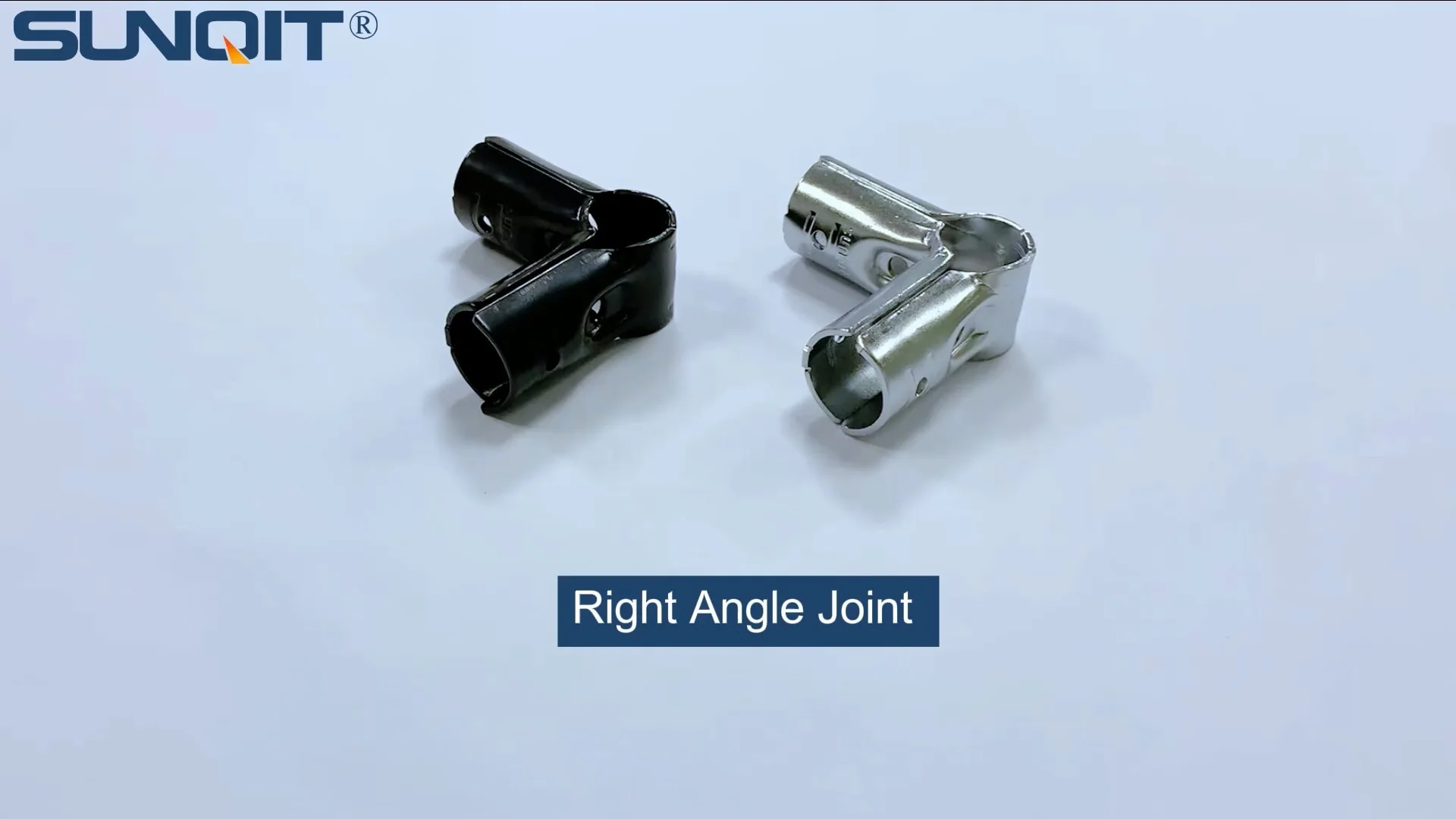
Three way lean pipe joint for 3 pcs 28MM lean pipe connection in straight angle, which used widely in workbench, flow rack, hand trolley frame connection.
In the fast-paced world of manufacturing and warehouse operations, the phrase "time is money" isn't just a cliché—it's a daily reality. Every second spent on reconfiguring a workbench, repairing a faulty joint, or waiting for a welded structure to cool down eats into productivity. That's where lean systems come in, designed to streamline processes, reduce waste, and keep operations running like well-oiled machines. But even the most thoughtful lean setup hinges on one often-overlooked detail: the joints that hold everything together. Today, we're diving into two heavyweights in the joint world: the three way lean pipe joint chrome and the traditional welded joint. Both have their place, but understanding their strengths and weaknesses can mean the difference between a flexible, adaptable workspace and a rigid setup that resists change. Let's break down what makes each tick, when to choose one over the other, and how they impact everything from your lean pipe workbench to your flow rack efficiency.
What Are Three Way Lean Pipe Joints Chrome, Anyway?
If you've ever walked into a modern factory or warehouse, you've probably seen them without realizing it: those shiny, metallic connectors that link lean pipes at 90-degree angles, forming the skeleton of workbenches, material racks, and flow racks. That's the three way lean pipe joint chrome in action. Designed specifically for lean pipe systems—those versatile, modular setups that define lean manufacturing—these joints are the unsung heroes of flexibility.
At their core, three way lean pipe joints chrome are mechanical connectors, typically made from steel with a chrome-plated finish. Their name gives away their main job: they connect three lean pipes (or aluminum pipes, in some cases) at once, creating stable, multi-directional structures. Unlike welded joints, which fuse metal permanently, these joints use a combination of clamping mechanisms—often set screws or friction fits—to hold pipes in place. This design means no welding torches, no molten metal, and no waiting for cooling times. You can assemble a basic lean pipe workbench in minutes with just a hex key, not hours.
The chrome plating isn't just for show, either. It adds a layer of corrosion resistance, making these joints suitable for environments where moisture or humidity might otherwise eat away at metal. Think food processing facilities, cleanrooms, or even outdoor warehouses—places where rust could turn a functional joint into a liability. And because they're part of the lean pipe ecosystem, they play nice with other components: lean tube, aluminum profile accessories, and even specialized parts like roller track connectors. It's like building with high-tech Legos for adults, but instead of castles, you're building production lines.
Welded Joints: The Old Reliable (But Rigid) Option
Welded joints are the grandfathers of metal connection. For decades, if you needed two pieces of metal to stay together forever, you fired up the welding torch. The process is straightforward: apply intense heat to melt the metal at the joint, add a filler material if needed, and let it cool, fusing the pieces into a single, solid unit. It's a permanent bond, and for a long time, that permanence was seen as a strength. After all, if a structure wasn't going anywhere, why not make it as strong as possible?
Welded joints have earned their reputation in heavy industries—think construction, shipbuilding, or steel mills—where load capacity and durability are non-negotiable. A well-welded joint can withstand tons of weight, vibrations, and even extreme temperatures. In fixed structures like a heavy-duty material rack or a permanent assembly line platform, they're hard to beat. But here's the catch: that permanence is a double-edged sword, especially in the context of lean manufacturing, where adaptability is key.

The Case for Three Way Lean Pipe Joint Chrome: Why Flexibility Wins in Lean Systems
Let's start with the obvious: lean manufacturing thrives on change. A product line might shift from assembling smartphones to tablets next quarter, requiring a workbench to be reconfigured for larger components. A warehouse might need to rearrange flow racks to accommodate seasonal inventory spikes. In these scenarios, the three way lean pipe joint chrome shines brighter than a freshly polished chrome finish. Here's why:
1. Modularity: The Ability to "Unbuild" and Rebuild
Imagine you've spent weeks setting up a lean pipe workbench for a new production line, only to realize the workflow would be better if the workbench was 2 feet longer. With welded joints, that's a problem. You'd need to cut the old structure apart, weld new pipes on, and hope the alignment is right. With three way lean pipe joints chrome? Simply loosen the set screws, add a few extra lean pipes, and tighten everything back up. Done. No cutting, no welding, no wasted materials. These joints turn "permanent" structures into temporary setups that can evolve with your needs. It's like having a workspace that can read your mind—or at least your production schedule.
2. Speed: From Blueprint to Build in Hours (Not Days)
Welding isn't just about melting metal; it's about setup, safety gear, cooling time, and cleanup. A single welded joint can take 10-15 minutes when you factor in prep work, and that's if you're an experienced welder. Multiply that by the dozens of joints in a typical flow rack, and you're looking at days of work. Three way lean pipe joints chrome? A team of two can assemble a full lean pipe workbench in under an hour, no prior welding experience needed. That speed is a game-changer for startups or small businesses where every day of downtime hurts, or for large facilities that need to scale up (or down) quickly.
3. Cost-Effectiveness: Save Money by Reusing, Not Replacing
Welded joints are cheap on materials but expensive on labor. A welder's hourly rate, plus the cost of equipment (torch, gas, protective gear), adds up fast. And if you ever need to change the structure? You're essentially throwing away the old welded pieces and starting from scratch. Three way lean pipe joints chrome, on the other hand, are reusable. Disassemble a workbench today, and those same joints can build a turnover trolley tomorrow. Over time, that reusability translates to lower costs—no more paying for new materials or labor every time your needs change. Plus, the chrome plating adds longevity; these joints resist rust and corrosion, so they'll look and work like new for years, even in damp warehouses.
4. Compatibility: Play Nice with Your Lean Ecosystem
Lean systems aren't just about pipes and joints—they're a ecosystem of components, from roller tracks to caster wheels. Three way lean pipe joints chrome are designed to work seamlessly with this ecosystem. Need to add a roller track to your flow rack? The same joints that hold the rack together can anchor the track. Want to mount a shelf on your lean pipe workbench? Just attach a bracket using the joint's existing holes. Welded joints, by contrast, are one-offs; adding a new component often means welding on a custom bracket, which limits compatibility and adds more work.

But They're Not Perfect: The Drawbacks of Three Way Lean Pipe Joint Chrome
For all their flexibility, three way lean pipe joints chrome aren't a magic bullet. There are situations where their strengths become weaknesses, and it's important to go into the decision with your eyes open. Here are the main downsides to keep in mind:
1. Load Capacity: They Can Only Handle So Much
Let's get real: a mechanical joint, even a well-made one, can't match the raw strength of a welded joint. Welded joints fuse metal into a single piece, creating a bond that can withstand extreme weight and vibration. Three way lean pipe joints chrome, by contrast, rely on friction and clamping force. While they're more than capable of handling the day-to-day loads of a typical lean pipe workbench or flow rack (think boxes of components, tools, or small assemblies), they'll start to struggle with heavy-duty applications. If you're building a structure to hold thousands of pounds—like a material rack for steel sheets or automotive parts—welded joints might be the safer bet. Overloading a chrome joint can lead to loosening, bending, or even collapse, which is bad news for both safety and productivity.
2. Loosening Over Time: The "Rattle Factor"
Manufacturing floors are noisy, vibrate constantly, and see a lot of action. All that movement can take a toll on mechanical joints. Over weeks or months of use, the set screws on three way lean pipe joints chrome can loosen, leading to wobbly workbenches or shaky flow racks. It's not a catastrophic failure, but it does mean regular maintenance—checking and tightening joints periodically. Welded joints? Once they're set, they're set. No loosening, no rattling, no mid-shift adjustments. If you're running a 24/7 operation where downtime is impossible, those extra maintenance checks might feel like a hassle.
3. Aesthetics: They're Functional, Not Fancy
Welded joints, when done well, have a sleek, seamless look—two pipes merging into one, no extra bulk. Three way lean pipe joints chrome, with their angular, mechanical design, are more utilitarian. They stick out a bit, adding visual bulk to structures. For some operations, this doesn't matter one bit—functionality trumps looks. But if you're trying to create a polished, customer-facing space (like a showroom for your lean system solutions), the industrial vibe of chrome joints might clash with your aesthetic goals.
Welded Joints: When Permanence and Strength Matter Most
Now, let's flip the script. Welded joints might be old-school, but they've stuck around for a reason: when you need strength, reliability, and permanence, they deliver. Here's where welded joints still hold the upper hand:
1. Unbeatable Strength for Heavy-Duty Jobs
If your operation involves heavy loads—think pallets of raw materials, industrial machinery, or large assemblies—welded joints are the gold standard. The metallurgical bond created by welding is stronger than the pipes themselves, meaning the joint won't fail before the pipe does. For example, a welded flow rack designed to hold 5,000 pounds of inventory will stand firm for years, while a chrome joint setup might start to show strain. In industries like automotive manufacturing or construction, where safety and load capacity are non-negotiable, welded joints aren't just preferred—they're often required by regulations.
2. Zero Maintenance, Minimal Headaches
Once a welded joint cools and sets, it's done. No tightening, no reconfiguring, no periodic checks. This is a huge plus for remote locations, harsh environments, or operations with limited maintenance staff. Imagine a remote mining facility where sending a technician to tighten joints every month isn't feasible—welded structures there would outlast and outperform their modular counterparts.
3. A Smooth, Professional Finish
For applications where appearance matters—like customer-facing displays or high-end manufacturing facilities—welded joints offer a clean, streamlined look. With a little grinding and painting, they can blend into the structure, creating a cohesive, polished aesthetic that chrome joints (with their visible screws and angles) can't match.
The Dark Side of Welded Joints: When Rigidity Becomes a Liability
For all their strength, welded joints come with a big caveat: they're permanent. And in a world where manufacturing needs change faster than ever, that permanence can be a curse. Here's why:
1. No Room for Error (or Change)
Welded a pipe an inch too short? Oops. Need to add a shelf six months down the line? Tough luck. Welded structures are set in stone—literally. Making changes means cutting through metal, re-welding, and refinishing, which is time-consuming and costly. In lean systems, where adaptability is the name of the game, this rigidity can turn a minor adjustment into a major project. For example, if your lean pipe workbench suddenly needs to accommodate a taller assembly, a welded setup would require a complete rebuild, while a chrome joint setup could be adjusted in an hour.
2. High Initial Costs and Setup Time
Welding isn't a DIY job. It requires skilled labor, specialized equipment (torches, gas tanks, safety gear), and time. Even a small welded structure can cost hundreds of dollars in labor alone, not to mention materials. And because welding is a slow process—each joint needs time to heat, cool, and finish—you're looking at days (or weeks) of lead time for larger projects. For small businesses or startups with tight budgets and tight deadlines, this can be a dealbreaker.
3. Repairs Are a Nightmare
If a welded joint cracks or fails, fixing it isn't as simple as tightening a screw. You'll need to grind away the old weld, re-weld the joint, and hope the repair holds as well as the original. In some cases, the damage might be too extensive, requiring you to replace the entire section of pipe. This downtime can bring production to a halt, costing far more than the repair itself.
Side-by-Side: The Comparison Table
| Feature | Three Way Lean Pipe Joint Chrome | Welded Joints |
|---|---|---|
| Flexibility/Modularity | High: Easy to disassemble, reconfigure, and reuse. | Low: Permanent; changes require cutting and re-welding. |
| Strength/Load Capacity | Moderate: Good for light to medium loads (typical workbenches, flow racks). | High: Excellent for heavy loads (industrial machinery, heavy material racks). |
| Assembly Time | Fast: Hours (no welding; basic tools only). | Slow: Days (requires welding, cooling, and finishing). |
| Cost | Lower long-term: Reusable, minimal labor, no specialized equipment. | Higher upfront: Skilled labor, welding equipment, material waste. |
| Maintenance | Regular: Needs periodic tightening to prevent loosening. | Minimal: No maintenance once set (unless damaged). |
| Best For | Lean systems, dynamic workspaces, frequent reconfigurations (lean pipe workbenches, flow racks). | Fixed structures, heavy loads, static environments (permanent material racks, industrial machinery bases). |
| Aesthetics | Functional but bulkier; visible mechanical design. | Sleeker, seamless finish when properly ground and painted. |
Real-World Example: When a Small Electronics Manufacturer Switched to Chrome Joints
Let's put this into context with a real scenario. A mid-sized electronics company in Texas was using welded workbenches for their circuit board assembly line. The setup worked, but when they landed a new client requiring larger circuit boards, they needed to widen their workbenches by 18 inches. The welded structures couldn't be modified, so they had to hire a welder to cut the old benches apart, weld on new sections, and repaint everything. The process took 3 days, during which the assembly line was partially shut down. Cost: $2,500 in labor and materials.
Six months later, they switched to lean pipe workbenches with three way lean pipe joints chrome. When a new product line required taller shelving, their team of two assemblers reconfigured the workbenches in 4 hours, using the same pipes and joints. Cost: $0 (no new materials, no labor beyond their existing staff). Today, they estimate saving over $10,000 annually in reconfiguration costs alone.
The Verdict: Which Joint Should You Choose?
At the end of the day, there's no "better" joint—only the right joint for your needs. If your workspace is dynamic, with frequent changes to workflows, product lines, or inventory, three way lean pipe joints chrome are the clear winner. They align perfectly with lean system principles, offering the flexibility to adapt without waste. For lean pipe workbenches, flow racks, or turnover trolleys that need to evolve with your business, chrome joints will save you time, money, and headaches.
But if you're building something that will never change—like a permanent material rack for ultra-heavy loads, or a structure in a remote, hard-to-maintain location—welded joints still have their place. Their strength and permanence make them irreplaceable in certain industrial settings.
The key is to start with your goals: Do you value adaptability over raw strength? Is your budget better spent on long-term flexibility or upfront durability? By weighing these factors, you'll choose joints that don't just hold your structure together—they hold your productivity, efficiency, and bottom line together, too.