- Company Articles
- Products and Technology
- Procurement Guidelines
- Comparing Turning Angle Code 3030 Suppliers: What to Look For

Comparing Turning Angle Code 3030 Suppliers: What to Look For
Related Product
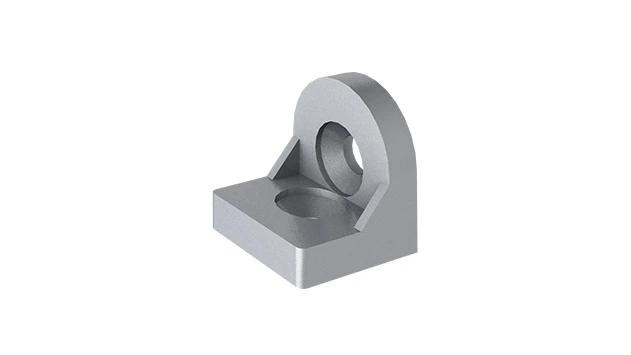
Turning Angle Code 3030
The turning angle aluminum profile connector provides a 90 degree hidden corner connection. 3030 it is means this size is used for 30 series aluminum profile.The corner code comes with set screws that allow for quick, easy connections.
You've spent weeks refining the design of a custom assembly workstation for your manufacturing floor. The blueprint relies on 3030 aluminum profiles for its frame—lightweight, durable, and perfect for supporting the tools and materials your team needs. The final piece of the puzzle? Turning Angle Code 3030 connectors, the small but critical components that lock the profiles together at precise angles. You order from a supplier with a "too good to be true" price, and when the shipment arrives, disaster strikes: the connectors are slightly warped, the threading is uneven, and they won't seat properly on the profiles. Now your workstation is unstable, your project is delayed, and you're stuck paying rush fees to replace them. Sound familiar? Choosing the right supplier for Turning Angle Code 3030 isn't just about checking a box—it's about protecting your workflow, your team's productivity, and your bottom line.
In the world of industrial components, where precision and reliability can make or break a production line, Turning Angle Code 3030 plays a quiet but vital role. These connectors are the unsung heroes of modular setups, ensuring that structures like workbenches, material racks, and assembly lines stay rigid and secure. But not all suppliers are created equal. Some cut corners on materials; others skimp on quality control; a few prioritize speed over accuracy. To avoid costly mistakes, you need a clear framework for evaluating potential suppliers. In this article, we'll break down the key factors to consider when comparing Turning Angle Code 3030 suppliers, from material quality to customer support, and even walk through a side-by-side comparison of hypothetical vendors. By the end, you'll have the tools to choose a partner that delivers not just parts, but peace of mind.
Why Turning Angle Code 3030 Matters More Than You Think
Before diving into supplier comparisons, let's take a moment to appreciate why Turning Angle Code 3030 deserves your attention. These connectors are designed specifically for 3030 aluminum profiles—one of the most widely used sizes in industrial and manufacturing settings, thanks to their balance of strength and versatility. A 3030 profile typically measures 30mm x 30mm, with T-slots along its length for attaching accessories like shelves, brackets, or tools. The Turning Angle Code 3030, as the name suggests, allows you to join two profiles at a fixed angle (often 90 degrees, though some are adjustable) while maintaining the profile's structural integrity.
Think of it as the "glue" of your modular system—without strong, precise glue, the whole structure falls apart. A poorly made Turning Angle Code 3030 might seem functional at first, but over time, the stress of daily use (vibrations from machinery, heavy loads, repeated assembly/disassembly) can cause it to loosen or fail. This isn't just an inconvenience; it's a safety hazard. A wobbly workstation could lead to tools slipping, materials falling, or even injury to operators. Plus, replacements mean downtime—every minute your production line is idle because of a faulty connector eats into your profits.
Worse, not all Turning Angle Code 3030 connectors are compatible with all 3030 profiles. Some suppliers design their connectors for specific aluminum extrusion profile tolerances, meaning a connector from Supplier X might not fit snugly with a profile from Supplier Y. This lack of standardization is why choosing a supplier that understands the nuances of 3030 systems is so critical. They should not only provide high-quality connectors but also guidance on compatibility with your existing profiles or recommendations for complementary parts like 3030 aluminum profile end cap to protect exposed edges.
Key Factors to Compare When Evaluating Suppliers
Now that we've established the stakes, let's explore the criteria that should guide your supplier selection process. These are the non-negotiables—factors that separate reliable partners from fly-by-night vendors.
1. Material Quality: It Starts with the Aluminum
The first question to ask any supplier is: What material is your Turning Angle Code 3030 made from? Not all aluminum is created equal, and the alloy used directly impacts the connector's strength, durability, and resistance to corrosion. Most reputable suppliers use 6061-T6 aluminum alloy, a heat-treated grade known for its excellent strength-to-weight ratio and weldability. 6061-T6 has a tensile strength of around 45,000 psi—more than enough to handle the stresses of industrial use. Cheaper suppliers, however, might use 6063 aluminum (softer, lower strength) or even recycled aluminum with inconsistent properties, which can lead to bending or breaking under load.
But material grade is just the start. You also need to ask about manufacturing processes. How are the connectors shaped? Most high-quality Turning Angle Code 3030 are precision-machined or die-cast, ensuring tight tolerances (ideally ±0.1mm) for a snug fit on 3030 profiles. Casting, if done poorly, can introduce defects like porosity (tiny air bubbles) that weaken the metal over time. A good supplier will be transparent about their production methods and happy to share material certificates or test reports. For example, look for ISO 9001 certification, which indicates a commitment to quality management systems, or RoHS compliance if you're working in an industry with strict environmental standards.
Surface finish matters too. A well-made Turning Angle Code 3030 should have a smooth, consistent finish—no burrs, sharp edges, or discoloration. Anodized finishes are common here, as they add a protective layer that resists scratches and corrosion. Run your finger along the edge of a sample connector; if it catches on a burr, that's a red flag. Sharp edges can also damage the T-slots on your profiles or even cut operators during assembly.
2. Pricing: Beyond the Sticker Shock
Let's talk about money. It's tempting to gravitate toward the supplier with the lowest per-unit price for Turning Angle Code 3030, but this is where many buyers go wrong. The cheapest option rarely includes the hidden costs: replacements for defective parts, rush shipping fees when the first order is delayed, or downtime from failed connectors. Instead of focusing solely on the sticker price, calculate the total cost of ownership (TCO). TCO includes not just the cost of the connector itself but also: shipping, handling, warranty coverage, and the cost of any potential failures (downtime, replacements, repairs).
For example, Supplier A offers Turning Angle Code 3030 for $2.50 per unit, but has a 5% defect rate. Supplier B charges $3.00 per unit but has a 0.1% defect rate. If you order 1,000 units, Supplier A would cost you $2,500 upfront, but you'd need to replace 50 defective connectors at $2.50 each ($125), plus the labor to swap them out (say $500 in downtime). Total: $3,125. Supplier B, meanwhile, costs $3,000 upfront, with only 1 defective unit ($3) and minimal downtime ($50). Total: $3,053. Suddenly, the "cheaper" supplier is more expensive. Always ask suppliers for defect rate data—reputable ones will have this on hand from quality control testing.
Bulk discounts are another consideration. If you're a high-volume buyer, does the supplier offer tiered pricing? For example, $3.00 per unit for 100–499 units, $2.75 for 500–999, and $2.50 for 1,000+. But be wary of suppliers that require large minimum orders to qualify for discounts—if you only need 200 units, a supplier with a 500-unit minimum might force you to overbuy, tying up cash in inventory you don't need yet.
3. Customization: When "One Size Fits All" Doesn't Cut It
Not every project fits standard specifications. Maybe you need a Turning Angle Code 3030 with a longer neck to accommodate a thick panel, or a custom finish to match your company's branding. Or perhaps you're working with non-standard aluminum profile accessories and need the connector to integrate seamlessly. In these cases, a supplier's ability to customize becomes critical.
Ask potential suppliers about their customization capabilities: Can they modify the connector's dimensions? Adjust the angle? Add holes or slots for specific hardware? What's the lead time for custom orders? Some suppliers specialize in off-the-shelf parts and will charge exorbitant fees for customization; others have in-house machining capabilities and can handle small modifications at reasonable costs. For example, a supplier with CNC machining centers might be able to tweak a connector's design in a few days, while a supplier that outsources manufacturing could take weeks (and pass along the outsourcing costs to you).
It's also worth asking about complementary parts. If you need a custom Turning Angle Code 3030, does the supplier also offer compatible aluminum profile connector accessories, like bolts, washers, or end caps? Sourcing from a single supplier for both the connector and its accessories can simplify your supply chain and reduce the risk of compatibility issues.
4. Lead Times: Speed vs. Reliability
In manufacturing, time is money. If your production line is waiting on Turning Angle Code 3030 connectors, every day of delay costs you. That's why lead times—how long it takes for the supplier to fulfill your order—are a key factor. But again, speed isn't everything. A supplier that promises "2-day delivery" might cut corners on quality control to meet that deadline, while a supplier with a 7-day lead time might have rigorous testing processes that ensure every connector is perfect.
Ask suppliers for both standard and rush lead times. Standard lead time is for regular orders (e.g., 5–7 business days), while rush lead time is for orders (e.g., 2–3 days for a premium fee). Be sure to clarify what "rush" actually means—some suppliers define it as "expedited shipping" (the part is already in stock and just needs to be sent faster), while others mean "expedited production" (they'll bump your order to the front of the manufacturing line). The latter is more valuable if you need a custom or large-volume order quickly.
Inventory levels matter too. Does the supplier keep Turning Angle Code 3030 in stock, or do they manufacture them to order? In-stock items are great for small, urgent orders, but for large or custom orders, you'll need a supplier with sufficient production capacity. Ask about their manufacturing capabilities: How many connectors can they produce per day? Do they have backup machines in case of breakdowns? A supplier with limited capacity might struggle to meet your needs during peak seasons.
5. Customer Support: The Difference Between a Vendor and a Partner
You've placed your order, the connectors arrive, and—uh-oh—they don't fit your 3030 profiles. Maybe the tolerance is off, or the design is slightly different from what you discussed. What happens next? This is where customer support separates the good suppliers from the great ones. A vendor will point the finger at you ("You ordered the wrong size!"); a partner will work with you to fix the problem.
Start by testing the supplier's responsiveness before placing an order. Send an email or call with a technical question (e.g., "What's the maximum load your Turning Angle Code 3030 can support?") and see how long it takes to get a reply. A supplier that takes 3 days to answer a simple question is unlikely to be helpful in a crisis. Look for response times of 24 hours or less for standard inquiries, and 4–6 hours for urgent ones.
Warranty coverage is another aspect of customer support. What does the supplier's warranty include? Defective parts? Labor costs for replacements? How long is the warranty period? A 1-year warranty is standard, but some suppliers offer 2–3 years for industrial-grade parts. Be sure to get the warranty terms in writing—verbal promises mean nothing if something goes wrong.
Finally, consider the supplier's technical expertise. Do their representatives understand the nuances of aluminum profile accessories and 3030 systems? Can they help you troubleshoot compatibility issues with your existing setup? A supplier with knowledgeable staff can save you time and money by preventing mistakes upfront. For example, if you're using a 3030 profile with thicker walls than standard, a good supplier might flag that your Turning Angle Code 3030 needs a longer screw to ensure a secure fit.

Side-by-Side: Comparing Turning Angle Code 3030 Suppliers
To put these factors into practice, let's compare four hypothetical Turning Angle Code 3030 suppliers: Alpha Industrial, Beta Components, Gamma Solutions, and Delta Parts. Each has its strengths and weaknesses, and by evaluating them against the criteria above, we can see which might be the best fit for different buyer needs.
| Criteria | Alpha Industrial | Beta Components | Gamma Solutions | Delta Parts |
|---|---|---|---|---|
| Material Grade | 6061-T6 Aluminum | 6063 Aluminum (lower strength) | 6061-T6 Aluminum | Recycled Aluminum Alloy (unknown grade) |
| Quality Testing | 100% visual inspection; 5% load testing | 10% visual inspection; no load testing | 100% visual inspection; 10% load testing; ISO 9001 certified | No formal testing |
| Defect Rate | 0.2% | 3% | 0.1% | 8% |
| Price (per unit, 100–499 units) | $3.25 | $2.40 | $3.50 | $1.99 |
| Bulk Discount (500+ units) | $2.90 per unit | $2.10 per unit | $3.10 per unit | $1.75 per unit |
| Customization | Limited (dimensions only); 7-day lead time | None (off-the-shelf only) | Full customization (dimensions, angles, finishes); 5-day lead time | None (off-the-shelf only) |
| Standard Lead Time | 5–7 business days | 3–5 business days | 7–10 business days | 2–3 business days |
| Rush Lead Time (Premium Fee) | 2–3 days ($100 fee) | 1–2 days ($50 fee) | 3–4 days ($150 fee) | Same day ($200 fee) |
| Customer Support Response Time | 24 hours (standard); 4 hours (urgent) | 48 hours (standard); 24 hours (urgent) | 12 hours (standard); 2 hours (urgent) | 72+ hours (unreliable) |
| Warranty | 2 years (parts only) | 6 months (parts only) | 3 years (parts + labor for replacements) | No warranty |
| Additional Offerings | 3030 aluminum profile end caps, T-slot nuts | None (connectors only) | Full line of aluminum profile accessories, technical consulting | None |
Let's break down what this table tells us. Gamma Solutions, despite having the highest base price, stands out for quality (6061-T6 aluminum, ISO certification, 0.1% defect rate), strong customization, and exceptional customer support (12-hour response times, 3-year warranty). They're ideal for buyers who prioritize reliability and need technical expertise, like manufacturers building custom workstations or high-precision assembly lines.
Alpha Industrial is a solid middle-ground option: good quality, reasonable pricing, and basic customization. They'd work well for small to medium-volume buyers who need consistent parts without the premium price tag of Gamma.
Beta Components is tempting for budget-conscious buyers, but the 3% defect rate and lack of customization make them risky for critical applications. They might be okay for non-essential structures (e.g., temporary storage racks), but not for anything that supports heavy loads or operator safety.
Delta Parts, with their rock-bottom prices and no warranty, is a hard pass. The 8% defect rate and unreliable customer support mean you'll spend more in the long run on replacements and downtime. Avoid unless you're buying for a one-time, low-stress project (and even then, proceed with caution).

Pitfalls to Avoid When Choosing a Supplier
Even with the above criteria, it's easy to fall into common traps when comparing Turning Angle Code 3030 suppliers. Here are a few to watch out for:
Pitfall #1: Ignoring Sample Testing
Never place a large order without first testing a sample batch. A supplier might promise 6061-T6 aluminum and tight tolerances, but the only way to verify is to inspect the parts yourself. Order 10–20 sample Turning Angle Code 3030 connectors and put them through their paces: check the fit with your 3030 profiles, test the load capacity (if possible), and examine the finish for burrs or defects. If the samples are subpar, the full order will be too.
Pitfall #2: Overlooking Compatibility with Accessories
Turning Angle Code 3030 doesn't exist in a vacuum—it works with other aluminum profile accessories like bolts, washers, and end caps. A supplier might sell great connectors but use non-standard threading, meaning you have to buy their proprietary bolts (at a markup) to make them work. Always ask if the connectors are compatible with industry-standard accessories, or if you'll be locked into their ecosystem.
Pitfall #3: Believing "All Aluminum is the Same"
As we discussed earlier, 6061-T6 and 6063 aluminum have very different properties. Don't take a supplier's word for the material grade—ask for a material certificate (a "mill cert") that confirms the alloy and its specifications. If they can't provide one, walk away.
Pitfall #4: Assuming "More Features" = Better
Some suppliers market "premium" Turning Angle Code 3030 with extra features like adjustable angles or built-in locks. While these can be useful in specific cases, they often add complexity and cost. Unless you need those features, stick with a simple, reliable design. Over-engineered connectors are more likely to fail and harder to replace.
Final Thoughts: Choosing a Supplier That Grows With You
At the end of the day, comparing Turning Angle Code 3030 suppliers isn't just about finding the best part—it's about finding the best partner. Your ideal supplier should understand your business, anticipate your needs, and stand behind their products. They should be transparent about their processes, willing to answer tough questions, and committed to continuous improvement.
Remember, the cost of a bad supplier isn't just financial—it's the stress of missed deadlines, the frustration of defective parts, and the risk to your team's safety. By prioritizing material quality, total cost of ownership, customization, lead times, and customer support, you'll avoid these headaches and build a supply chain that supports your growth. And when in doubt, refer back to the comparison table and pitfalls above—they'll keep you grounded in the metrics that matter.
So, the next time you're in the market for Turning Angle Code 3030, take a deep breath, do your homework, and choose wisely. Your production line (and your peace of mind) will thank you.