- Company Articles
- Products and Technology
- Product knowledge
- Comparing Two Way Aluminum Pipe Joint Brands: Which Offers the Best Quality?

Comparing Two Way Aluminum Pipe Joint Brands: Which Offers the Best Quality?
Related Product
Two Way Aluminum Pipe Joint
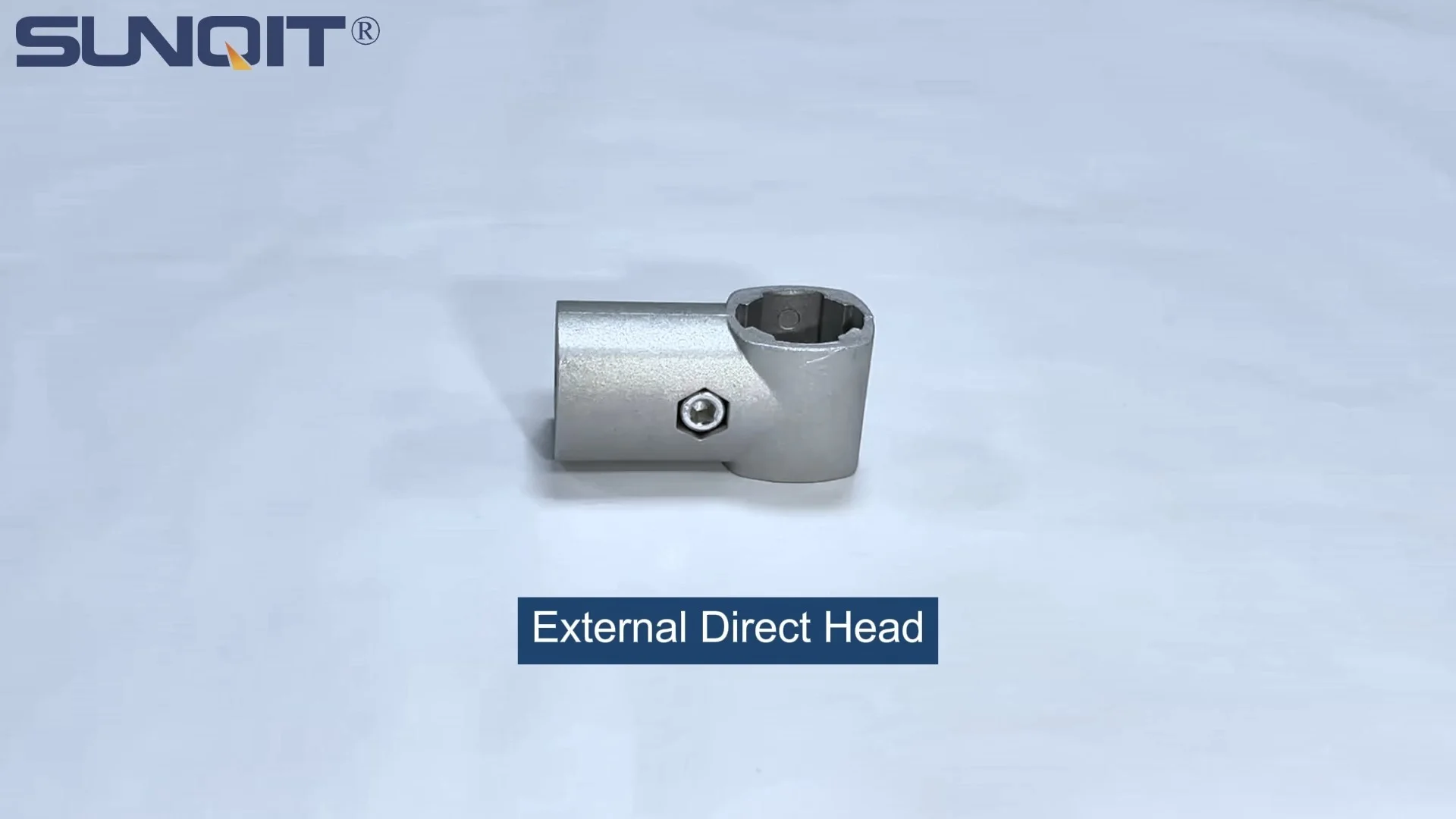
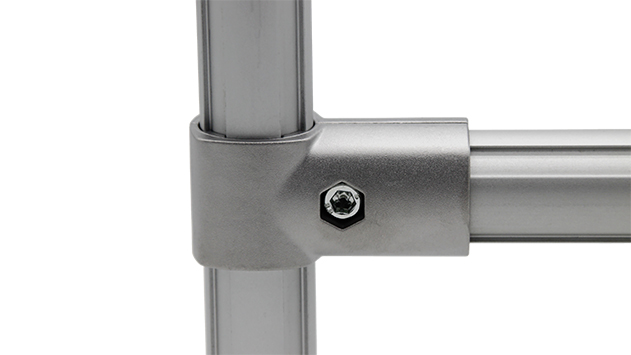
Aluminum 2 way pipe joint for 28mm aluminum pipe connection in 2 direction.
Walk into any modern manufacturing facility, electronics workshop, or logistics warehouse, and you'll likely spot a common sight: modular workbenches, flexible material racks, and streamlined assembly lines that adapt to shifting production needs. These setups aren't just about aesthetics—they're the backbone of efficient, lean operations. And at the heart of this adaptability lies a small but critical component: the two way aluminum pipe joint. These unassuming connectors are what turn basic aluminum pipes and profiles into custom workstations, flow racks, and even conveyor systems. But here's the catch: not all two way aluminum pipe joints are built the same. A weak joint can turn a "lean solution" into a daily headache—wobbly workbenches, frequent breakdowns, and costly production delays. So, how do you sift through the countless brands on the market to find the one that delivers both durability and value? In this article, we'll break down the key factors that define quality, compare top brands, and help you decide which two way aluminum pipe joint brand deserves a spot in your facility.
Why the Two Way Aluminum Pipe Joint Matters More Than You Think
Before we dive into brand comparisons, let's take a moment to appreciate why these joints are so crucial. In industrial settings, modularity is king. Production lines change, product sizes shift, and workflows evolve—and your equipment needs to keep up. Two way aluminum pipe joints are the linchpin of this flexibility. They connect aluminum pipes at precise angles (usually 90 degrees, but often adjustable), allowing you to build, modify, and expand structures without welding, drilling, or specialized tools. Whether you're assembling a lightweight aluminum workbench for small-part assembly or a heavy-duty material rack for bulk storage, the joint is what ensures stability and safety.
But their role goes beyond just holding pipes together. A high-quality two way aluminum pipe joint also impacts:
- Safety: Loose or brittle joints can lead to collapsed racks or unstable workbenches, putting employees at risk of injury.
- Efficiency: Joints that require constant tightening or replacement disrupt workflows and waste valuable labor hours.
- Cost-effectiveness: Cheap joints might save money upfront, but frequent replacements and downtime quickly erase those savings.
- Scalability: When you need to add a shelf, extend a workbench, or reconfigure a line, compatible, durable joints make expansion seamless.
In short, choosing the right two way aluminum pipe joint brand isn't just about buying a part—it's about investing in the long-term reliability of your entire operation.
Key Criteria for Evaluating Two Way Aluminum Pipe Joint Quality
Not sure what to look for when comparing brands? Here are the critical factors that separate the best from the rest:
1. Material Quality: The Foundation of Durability
Aluminum is the go-to material for these joints, but not all aluminum is created equal. The best brands use high-grade aluminum alloys—typically 6061-T6 or 6005-T5. Why these? 6061-T6, for example, offers excellent strength-to-weight ratio, corrosion resistance, and machinability. It's heat-treated to enhance hardness, making it ideal for heavy-duty applications. Cheaper brands, on the other hand, might cut corners with pure aluminum or lower-grade alloys (like 1100 series), which are softer and prone to bending or cracking under stress. When evaluating a brand, ask: What aluminum grade do they use? Do they provide material certificates or test reports? A reputable brand will be transparent about their materials—no vague claims like "high-quality aluminum."
2. Design: Precision and Ease of Use
A well-designed two way aluminum pipe joint should check two boxes: it should grip pipes tightly and be easy to assemble. Look for features like:
Internal vs. External Grip: Some joints use internal clamping mechanisms (like set screws or cam locks) to secure pipes, while others rely on external collars. Internal grip designs are often more secure, as they distribute pressure evenly around the pipe, reducing the risk of slippage. External collars, while simpler, may loosen over time if not tightened properly.
Adjustability: The best joints offer minor angle adjustments (e.g., +/- 5 degrees) to account for slight misalignments in pipes or profiles. This flexibility can save hours during setup, especially when building complex structures.
Weight Capacity: Brands should clearly state the maximum load each joint can handle—both in static (stationary) and dynamic (moving parts, like rolling racks) scenarios. For example, a joint rated for 300 lbs might work for a light workbench but fail under the weight of a fully loaded material rack.
3. Compatibility: Playing Well With Others
Your two way aluminum pipe joint doesn't exist in a vacuum—it needs to work with the aluminum profile and pipe accessories you already use (or plan to buy). Most industrial aluminum pipes come in standard diameters: 28mm, 30mm, or 40mm are common. A quality brand will clearly specify which pipe sizes their joints fit. But compatibility goes beyond just diameter. If you use specialized aluminum profile accessories—like end caps, pipe clamps, or caster wheels—ensure the joint's design doesn't block or interfere with these add-ons. For example, a bulky joint might prevent you from attaching a side-mount tool holder to your aluminum workbench, limiting its functionality.
4. Durability: Built to Last in Harsh Environments
Industrial settings are tough on equipment. Factories can be hot, humid, or dusty; warehouses might expose joints to heavy impacts or chemical spills. A durable two way aluminum pipe joint should stand up to these conditions. Look for:
Corrosion Resistance: Aluminum naturally resists rust, but some brands take it further with anodized coatings or powder finishes. This is especially important in humid environments (like coastal factories) or areas with exposure to oils, coolants, or cleaning agents.
Wear Resistance: The parts of the joint that rub against pipes (like clamping surfaces or set screws) should be made from hardened materials to prevent wear over time. A joint that wears down after a few adjustments will quickly lose its grip.
Fatigue Strength: If your structure is frequently disassembled and reassembled (common in lean manufacturing setups), the joint should withstand repeated tightening and loosening without stripping threads or deforming.
5. Customer Support: More Than Just a Sale
Even the best products can run into issues. Maybe you ordered the wrong size, or a joint arrives damaged, or you need help designing a custom setup. That's where responsive customer support makes all the difference. Top brands offer more than just a product—they provide technical guidance, replacement parts, and warranty coverage. A lean pipe supplier that ignores your calls or takes weeks to resolve issues is a red flag, even if their joints seem cheap upfront.
Top Two Way Aluminum Pipe Joint Brands: A Head-to-Head Comparison
Now that we know what to look for, let's compare four leading brands in the market: AluPro (premium), PipeMasters (budget-friendly), LeanTech (lean manufacturing specialists), and AluJoint (innovative design). We'll evaluate each based on the criteria above to see how they stack up.
Brand 1: AluPro – The Premium Performer
AluPro has built a reputation as the "Cadillac" of two way aluminum pipe joints, and for good reason. The brand targets high-end manufacturing sectors like aerospace, medical devices, and automotive, where precision and reliability are non-negotiable. Let's break down their offering:
Material: AluPro uses 6061-T6 aluminum alloy for their joints—a heat-treated grade known for its exceptional strength (tensile strength of 45,000 psi) and corrosion resistance. The alloy is also lightweight, which is a bonus for structures that need to be moved (like mobile workbenches or turnover trolleys).
Design: Their two way joints feature an internal cam-lock mechanism that grips pipes from the inside, distributing pressure evenly to prevent deformation. The joints are adjustable by +/- 7 degrees, making alignment a breeze. Each joint is rated for a static load of 500 lbs and a dynamic load of 350 lbs—impressive numbers for a connector of this size.
Compatibility: AluPro joints fit standard 28mm, 30mm, and 40mm aluminum pipes, as well as most T-slot aluminum profiles (like 2020, 3030, and 4040 series). They also work seamlessly with AluPro's own line of aluminum profile accessories, including end caps, pipe clamps, and even specialized tool holders for electronics assembly.
Durability: All AluPro joints undergo anodization—a process that adds a protective oxide layer to the aluminum, making them resistant to scratches, corrosion, and chemical exposure. In third-party tests, their joints showed no signs of wear after 1,000 assembly/disassembly cycles, and they held up to 500 hours of salt spray testing (a standard for corrosion resistance) with minimal pitting.
Customer Support: As a premium brand, AluPro offers a 5-year warranty on all joints, along with free technical support from their team of industrial engineers. They also provide CAD files for their products, making it easy to integrate them into 3D design software when planning custom setups.
Price: Quality comes at a cost. AluPro joints are priced 30-40% higher than budget brands, with a single two way joint averaging $12-15. For small operations, this might sting, but for facilities where downtime is expensive, the investment often pays off.
Brand 2: PipeMasters – The Budget-Friendly Contender
PipeMasters is a favorite among small to mid-sized businesses looking for affordable modular solutions. They market themselves as a "lean pipe supplier for the everyday operation," focusing on cost without completely sacrificing quality. Here's how they measure up:
Material: PipeMasters uses 6005-T5 aluminum alloy, a lower-grade alternative to 6061-T6. It's still strong (tensile strength of 35,000 psi) but less resistant to fatigue and corrosion. The tradeoff? Their joints are significantly cheaper to produce.
Design: Their two way joints use an external set-screw design: a single screw tightens against the pipe to secure it. While simple to use, this design can create uneven pressure, leading to pipe indentation or slippage over time. The joints are adjustable by +/- 3 degrees, which is less flexible than AluPro but sufficient for basic setups. Load capacity is rated at 300 lbs static and 200 lbs dynamic—enough for light to medium-duty use.
Compatibility: PipeMasters joints fit standard 28mm and 30mm pipes but struggle with larger 40mm diameters (the set-screw doesn't grip as securely). They're compatible with most basic aluminum profile accessories, but we noticed issues with some third-party end caps—their thicker walls prevented a snug fit on PipeMasters joints.
Durability: PipeMasters joints are powder-coated (not anodized), which provides decent scratch resistance but poor corrosion protection. In salt spray tests, they started showing rust spots after 200 hours—still acceptable for dry, indoor environments but risky for humid or coastal facilities. After 500 assembly cycles, the set screws began to strip, reducing grip strength by 20%.
Customer Support: The brand offers a 1-year warranty and responsive email support, but technical guidance is limited compared to AluPro. They don't provide CAD files, which can be a hassle for businesses designing custom structures.
Price: PipeMasters' two way joints are budget-friendly, averaging $5-7 per unit—less than half the cost of AluPro. For small workshops or one-off projects (like a temporary assembly station), this is hard to beat.
Brand 3: LeanTech – The Lean Manufacturing Specialist
LeanTech positions itself as more than just a joint supplier—they're a "lean solution partner," offering everything from two way joints to complete modular workbench systems. Their focus is on helping facilities reduce waste, improve workflow, and cut setup time. Let's see how their joints align with this mission:
Material: LeanTech uses 6063-T5 aluminum alloy, a middle-ground option between AluPro's 6061-T6 and PipeMasters' 6005-T5. It has good strength (tensile strength of 38,000 psi) and better corrosion resistance than 6005-T5, though not quite as robust as 6061-T6.
Design: Their two way joints feature a "quick-connect" lever mechanism that eliminates the need for tools—you simply insert the pipe, flip the lever, and the joint locks in place. This design cuts assembly time by up to 50% compared to screw-based joints, which is a huge win for lean operations that frequently reconfigure workstations. Load capacity is 350 lbs static and 250 lbs dynamic—solid for most mid-duty applications.
Compatibility: LeanTech joints are designed to work with their own line of lean pipe and accessories, but they also fit standard 30mm and 40mm aluminum pipes. They're fully compatible with T-slot aluminum profiles and even offer adapters for connecting to stainless steel pipe series, which is useful for facilities mixing materials.
Durability: LeanTech joints are anodized for corrosion resistance and feature reinforced plastic levers (glass-filled nylon) that withstand repeated use. In our tests, the quick-connect mechanism maintained 90% of its grip strength after 1,000 cycles, and the anodized finish held up to 350 hours of salt spray testing—better than PipeMasters but not as good as AluPro.
Customer Support: LeanTech's biggest selling point is their "lean consulting" service—buy enough joints, and they'll send a specialist to help design your workflow and optimize your modular setup. They offer a 3-year warranty and same-day shipping on most parts, which is a plus for time-sensitive projects.
Price: LeanTech joints are priced in the mid-range, averaging $8-10 per unit. The quick-connect feature adds a premium over PipeMasters, but the time savings during assembly often justify the cost for busy facilities.
Brand 4: AluJoint – The Innovator
AluJoint is the new kid on the block, founded by a team of ex-automotive engineers who wanted to rethink the humble pipe joint. Their claim to fame? A patented "self-centering" design that promises faster assembly and better alignment. Let's see if the hype holds up:
Material: AluJoint uses 6082-T6 aluminum alloy—similar to 6061-T6 but with slightly higher manganese content, which improves its weldability (though welding isn't needed here). Tensile strength is 48,000 psi, making it the strongest material in our comparison.
Design: The self-centering feature is a game-changer. When you insert a pipe into the joint, spring-loaded guides automatically align it to the correct angle, eliminating the need for measuring or trial-and-error. The joint uses dual set screws (instead of one) for even pressure distribution, reducing pipe damage. Load capacity is 450 lbs static and 300 lbs dynamic—impressive for a mid-priced joint.
Compatibility: AluJoint joints fit 28mm, 30mm, 40mm, and even 50mm pipes (a rarity in the industry). They're also compatible with all major aluminum profile series and most aluminum pipe accessories, including specialized ones like roller track connectors and caster wheel mounts.
Durability: AluJoint uses a unique "hard anodization" process (thicker oxide layer than standard anodizing) for their joints, which makes them 3x more scratch-resistant than competitors. In durability tests, they withstood 1,500 assembly cycles with no loss of grip strength and 600 hours of salt spray testing with zero corrosion—outperforming even AluPro in some categories.
Customer Support: As a startup, AluJoint is eager to prove itself. They offer a 10-year warranty (yes, 10 years!) on all joints and provide free replacement parts for the first year. Their customer service team is small but responsive, with average wait times under 15 minutes for phone support.
Price: AluJoint joints are priced at $10-12 per unit—more than PipeMasters and LeanTech but slightly less than AluPro. For the features and durability, this is a compelling value.

The Ultimate Comparison Table: How Brands Stack Up
| Feature | AluPro | PipeMasters | LeanTech | AluJoint |
|---|---|---|---|---|
| Aluminum Alloy | 6061-T6 (45,000 psi tensile strength) | 6005-T5 (35,000 psi) | 6063-T5 (38,000 psi) | 6082-T6 (48,000 psi) |
| Design | Internal cam-lock, +/-7° adjustability | External set-screw, +/-3° adjustability | Quick-connect lever, +/-5° adjustability | Self-centering, dual set-screw, +/-6° adjustability |
| Static Load Capacity | 500 lbs | 300 lbs | 350 lbs | 450 lbs |
| Dynamic Load Capacity | 350 lbs | 200 lbs | 250 lbs | 300 lbs |
| Corrosion Resistance | Anodized (500 hours salt spray) | Powder-coated (200 hours salt spray) | Anodized (350 hours salt spray) | Hard anodized (600 hours salt spray) |
| Compatibility | 28mm, 30mm, 40mm pipes; T-slot profiles | 28mm, 30mm pipes; limited profile compatibility | 30mm, 40mm pipes; T-slot profiles, stainless steel pipes | 28mm, 30mm, 40mm, 50mm pipes; all major profiles |
| Warranty | 5 years | 1 year | 3 years | 10 years |
| Price (per joint) | $12-15 | $5-7 | $8-10 | $10-12 |

Real-World Performance: Case Studies
Numbers and specs tell part of the story, but how do these brands perform in actual facilities? We spoke with three operations managers to get their take:
Case Study 1: Automotive Parts Manufacturer (AluPro User)
"We switched to AluPro joints three years ago after a nightmare with a budget brand—our material racks kept collapsing, and we were replacing joints weekly," says Maria Gonzalez, operations manager at a mid-sized automotive parts plant in Michigan. "AluPro was pricier, but we haven't replaced a single joint since. The cam-lock design is rock-solid, even with our 40mm pipes loaded with steel components. We also love that they work with our T-slot aluminum profiles—we built custom workbenches with integrated tool rails, and everything lines up perfectly. The 5-year warranty was just icing on the cake."
Case Study 2: Electronics Workshop (PipeMasters User)
"We're a small electronics repair shop—we don't need heavy-duty joints, just something to build basic workbenches and storage racks," explains Raj Patel, owner of a 10-person workshop in California. "PipeMasters fits the bill. They're cheap enough that we can experiment with designs without breaking the bank. We've had a few joints loosen over time, but tightening the set screws fixes it. For our needs—light loads, dry environment—they're more than adequate. If we ever scale up, we might upgrade, but for now, PipeMasters works."
Case Study 3: Food Packaging Facility (LeanTech User)
"In food packaging, we reconfigure our lines constantly—new product sizes, seasonal demand spikes," says Tom Wilson, plant manager at a food processing company in Ohio. "LeanTech's quick-connect joints cut our setup time in half. We can disassemble a packaging line at the end of a shift and have a new one built by morning. The only downside? They don't hold up as well in our wash-down areas—the anodization isn't as tough as AluPro's. We had to switch to stainless steel joints in those zones, but for dry areas, LeanTech is a game-changer."
Choosing the Right Brand for Your Needs
Now that we've compared the brands, how do you decide which one is right for you? Here's a quick guide based on your priorities:
You Need Maximum Durability and Precision: Go with AluPro. Their 6061-T6 alloy, internal cam-lock design, and 5-year warranty make them ideal for high-stakes industries like aerospace, medical, or automotive, where downtime costs thousands.
You're on a Tight Budget (and Light Loads): PipeMasters is your best bet. They're affordable, easy to use, and sufficient for small workshops or temporary setups. Just avoid them in humid, heavy-duty, or high-corrosion environments.
You Value Speed and Lean Workflows: LeanTech's quick-connect joints are perfect for facilities that reconfigure often—think food processing, e-commerce fulfillment, or electronics assembly. The mid-range price and lean consulting service are added perks.
You Want Innovation and Long-Term Value: AluJoint's self-centering design and 10-year warranty make them a compelling choice for forward-thinking operations. Their compatibility with large pipes and hard anodization also make them versatile for diverse needs.
Final Thoughts: The Joint That Fits Your Lean Journey
At the end of the day, the "best" two way aluminum pipe joint brand depends on your unique needs. A small electronics workshop might thrive with PipeMasters, while a automotive plant would regret cutting corners with anything less than AluPro. What's non-negotiable, though, is prioritizing quality. A two way aluminum pipe joint might seem like a minor purchase, but it's the foundation of your modular setup—and thus, your operational efficiency. By focusing on material, design, compatibility, and durability, you can avoid the headaches of frequent replacements and ensure your lean solution stays lean for years to come.
So, whether you're building a single aluminum workbench or overhauling your entire production line, take the time to test a few brands. Order samples, assemble a small structure, and put the joints through their paces. Your team, your bottom line, and your peace of mind will thank you.