- Company Articles
- Products and Technology
- Product knowledge
- Compatibility Check: Four Way Straight Lean Pipe Joint with Standard Lean Pipes

Compatibility Check: Four Way Straight Lean Pipe Joint with Standard Lean Pipes
Related Product
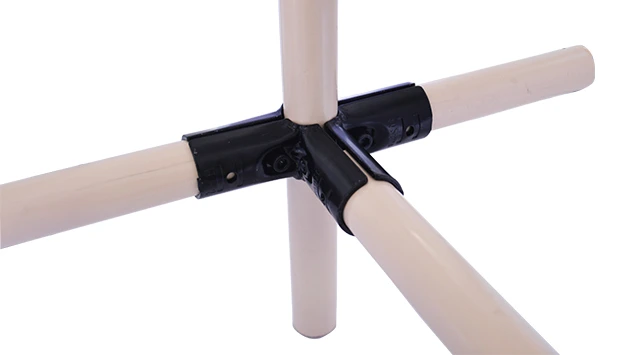
Four Way Straight Lean Pipe Joint
Four way lean pipe joint for 4 pcs 28MM lean pipe connection in straight angle, which used widely in workbench, flow rack, hand trolley frame connection.
In the world of manufacturing and assembly, where every second counts and efficiency is the backbone of productivity, lean systems have become more than just a buzzword—they're a way of life. At the heart of these systems lie the unsung heroes: lean pipes and their accompanying joints. These simple yet versatile components form the building blocks of everything from workbenches to material racks, conveyor systems to turnover trolleys. But here's the thing: even the best lean pipe setup is only as strong as its weakest link. And more often than not, that link comes down to one critical question: Are your joints and pipes compatible?
Today, we're zeroing in on a component that's a workhorse in many lean setups: the four way straight lean pipe joint. This unassuming connector plays a pivotal role in creating multi-directional structures, allowing pipes to branch out in four directions and form stable, flexible frameworks. But to truly harness its power, you need to ensure it works seamlessly with your standard lean pipes. Let's dive into what makes this compatibility so important, how to check for it, and why cutting corners here could cost you more than just time.
Understanding the Basics: What Are Standard Lean Pipes and Four Way Straight Joints?
Before we jump into compatibility, let's make sure we're all on the same page about the stars of the show. Standard lean pipes—often called "lean tubes"—are the backbone of any lean system. They're typically made from steel, aluminum, or stainless steel, with many coated in a layer of polyethylene (PE) to resist corrosion and reduce noise. These pipes come in various diameters, but the most common size you'll encounter is 28mm (about 1.1 inches), though you might also see 20mm or 30mm options depending on the application. Their wall thickness can range from 1.0mm to 2.0mm, with thicker pipes handling heavier loads.
Now, the four way straight lean pipe joint. As the name suggests, this joint is designed to connect four lean pipes in a straight, cross-like formation—think of it as the intersection point where two horizontal and two vertical pipes meet, or any combination that allows four directions of extension. Unlike fixed-angle joints (like 90° or 45° joints), the four way straight joint is all about versatility. It lets you build structures that need to branch out evenly, such as multi-tiered material racks, workbenches with overhead shelving, or conveyor systems with diverging paths. But for this versatility to work, the joint must grip the pipes tightly, maintain structural integrity, and stand up to the daily wear and tear of a busy factory floor.
Why Compatibility Matters: More Than Just a Tight Fit
You might be thinking, "A joint is a joint, right? As long as it screws onto the pipe, it's fine." But anyone who's spent time troubleshooting a wobbly workbench or a collapsed material rack will tell you otherwise. Compatibility between the four way straight joint and standard lean pipes isn't just about whether they physically connect—it's about ensuring safety, durability, and long-term efficiency.
Imagine this: A small electronics manufacturer invests in a new set of aluminum lean pipes to build a modular assembly line. They opt for a budget-friendly four way straight joint from a different supplier, assuming all joints are created equal. Within weeks, the joints start slipping, causing the structure to wobble. Workers have to stop production to readjust the pipes, tools go missing from unstable shelves, and worst of all, a batch of delicate components gets damaged when a section of the rack gives way. The culprit? The joint's inner diameter was slightly larger than the pipe's outer diameter, leading to a loose fit. What seemed like a minor cost-saving move ended up costing thousands in downtime and repairs.
That's the risk of ignoring compatibility. When joints and pipes don't play well together, you compromise structural stability, reduce load capacity, and increase the likelihood of accidents. On the flip side, a compatible pair works in harmony: the joint grips the pipe securely, distributes weight evenly, and allows for easy reconfiguration without sacrificing strength. It's the difference between a lean system that adapts to your needs and one that holds you back.

Key Factors in Compatibility: What to Check Before You Buy
So, how do you ensure your four way straight lean pipe joint and standard lean pipes are a match made in lean heaven? Let's break down the critical factors to evaluate.
1. Material Match: Steel, Aluminum, or PE-Coated?
First up: materials. Standard lean pipes come in a range of options, and each has its own characteristics that affect how it interacts with joints. The most common materials are:
- PE-Coated Steel Pipes: These are the traditional workhorses, with a steel core coated in polyethylene for corrosion resistance and a smooth finish. They're affordable, durable, and widely used in general manufacturing.
- Aluminum Lean Pipes: Lighter than steel but still strong, aluminum pipes are ideal for applications where weight matters—like mobile trolleys or temporary structures. They're also resistant to rust, making them great for cleanrooms or humid environments.
- Stainless Steel Pipes: The heavyweights of the bunch, stainless steel pipes offer superior strength and corrosion resistance, often used in food processing, pharmaceuticals, or outdoor settings.
Now, the four way straight joint's material matters too. Most joints are made from metal (like zinc-plated steel or aluminum) with a plastic or rubber lining to grip the pipe. The key here is to ensure the joint's material is compatible with the pipe's material. For example, if you're using aluminum lean pipes, an aluminum joint is often a better choice than a steel one—it reduces the risk of galvanic corrosion (a chemical reaction that occurs when two dissimilar metals meet in the presence of moisture). Similarly, PE-coated pipes pair well with joints that have a soft, non-abrasive lining to avoid scratching the coating, which could expose the steel core to rust.
2. Dimensional Fit: Diameter and Wall Thickness
If materials are the "what," dimensions are the "how." The most critical measurement here is the pipe's outer diameter (OD) and the joint's inner diameter (ID). Standard lean pipes typically have an OD of 28mm, though some manufacturers offer 20mm or 30mm options for lighter or heavier loads. The four way straight joint must have an ID that matches this OD closely—too loose, and the pipe will slip; too tight, and you'll struggle to assemble (or disassemble) the structure, potentially damaging the pipe or joint.
But diameter isn't the only dimension to consider. Wall thickness plays a role too. A pipe with a 2.0mm wall thickness is stiffer and more rigid than one with a 1.2mm thickness. While the joint itself doesn't directly interact with the wall thickness, the pipe's rigidity affects how much stress the joint has to withstand. For example, a thin-walled pipe might bend under heavy loads, putting extra pressure on the joint and causing it to loosen over time. If you're using thin-walled pipes, opt for a joint with a stronger grip mechanism (like a screw clamp with a rubber pad) to compensate.
3. Load Capacity: Can They Handle the Weight?
Every lean pipe and joint has a maximum load capacity—the amount of weight it can safely support without bending, breaking, or slipping. When checking compatibility, you need to ensure that both the pipe and the joint can handle the load you plan to put on them, and that their combined capacity aligns with your needs. For example, if your four way straight joint has a max load capacity of 50kg per direction, but your lean pipe can only support 30kg, the pipe becomes the weak link. Conversely, if the pipe can handle 100kg but the joint can only manage 50kg, the joint will fail first.
This is especially important in multi-tiered structures, like a material rack b (3 row and 3 floor), where each level adds weight. A compatible pair will distribute the load evenly across all four directions, ensuring no single joint or pipe is overstressed. Always check the manufacturer's specs for both components, and when in doubt, err on the side of a higher load capacity than you think you'll need—better safe than sorry.
4. Environmental Factors: Rust, Moisture, and Temperature
Your factory floor isn't a controlled lab, and environmental conditions can take a toll on compatibility. If your workspace is humid, dusty, or exposed to chemicals, you need to ensure both the pipe and joint can withstand these elements. For example, a standard steel joint might rust in a humid environment, weakening its grip on a PE-coated pipe. In that case, a stainless steel joint or a zinc-plated joint with a corrosion-resistant coating would be a better match for stainless steel pipe series or aluminum pipes.
Temperature fluctuations are another consideration. Extreme heat can cause plastic components (like the PE coating on pipes or the rubber lining in joints) to expand or warp, while cold temperatures can make them brittle. If you're working in a facility with varying temperatures, look for joints and pipes rated for the specific range you'll encounter. For instance, aluminum lean pipes and aluminum joints are more resistant to temperature changes than their steel counterparts, making them a solid choice for outdoor or unheated warehouses.

Installation Best Practices: Ensuring a Perfect Fit
Even if you've checked all the compatibility boxes, improper installation can still lead to issues. Here's how to ensure your four way straight joint and standard lean pipes work together flawlessly once they're on the factory floor.
1. Start with Clean Components
Before you even think about connecting the joint and pipe, make sure both are clean. Dust, grease, or debris on the pipe's surface can prevent the joint from gripping properly. Wipe down the pipe with a dry cloth to remove any dirt, and check the joint's inner surface for any manufacturing residue or burrs. A quick pass with a file or sandpaper can smooth out rough edges that might scratch the pipe or interfere with the fit.
2. Use the Right Tools
Most four way straight joints use a set screw or a hex key to tighten the grip on the pipe. Using the wrong tool (like a Phillips head screwdriver instead of the specified hex key) can strip the screw, making it impossible to tighten or loosen the joint later. Always refer to the manufacturer's instructions for the correct tool size, and invest in a high-quality set—cheap tools are more likely to slip and damage the joint.
3. Tighten, But Don't Over-Tighten
It's tempting to crank down on the joint's screw to ensure a tight fit, but over-tightening can be just as bad as under-tightening. Too much force can warp the joint, crack the pipe's coating, or strip the threads. A good rule of thumb is to tighten until you feel resistance, then give it a quarter-turn more. For PE-coated pipes, be extra gentle—excessive pressure can indent the coating, weakening its corrosion resistance.
4. Test Before Full Assembly
Before building the entire structure, do a test fit with a single four way joint and a short section of pipe. insert the pipe into the joint, tighten it as you would during installation, and then give it a gentle tug. The pipe should stay firmly in place without any wobbling. If it slips, check the diameter again—maybe the joint is too large, or the pipe is slightly smaller than advertised. If it's too tight to insert, the joint might be undersized, or there could be debris blocking the opening.
Real-World Applications: How Compatibility Drives Efficiency
To put this all in perspective, let's look at a common application where compatibility between four way straight joints and standard lean pipes shines: the lean pipe workbench. A typical workbench e (single deck-without caster) relies on a frame of lean pipes connected by joints, with a solid surface on top for assembly or packaging. Now, imagine this workbench needs to support not just tools and parts, but also a conveyor system along one side and a material rack above for easy access to supplies.
Here's where the four way straight joint comes in. It connects the vertical legs of the workbench to horizontal supports, branches out to attach the conveyor's roller track, and extends upward to form the material rack's framework. If the joint and pipe are compatible, the entire structure is stable: the workbench doesn't wobble during use, the conveyor runs smoothly without jamming, and the material rack holds heavy boxes without bending. Workers can focus on their tasks instead of adjusting the setup, and when the production line needs to reconfigure, the joints can be easily loosened, pipes rearranged, and the structure reassembled in minutes.
On the flip side, incompatible joints and pipes turn this efficient setup into a headache. The workbench rocks, causing tools to slide off. The conveyor track misaligns, leading to jams and damaged products. The material rack sags, making it hard to retrieve items. What should be a flexible, productive workspace becomes a source of frustration and delays. That's the power of compatibility—it transforms a basic structure into a lean system that works for you.
Troubleshooting Common Compatibility Issues
Even with careful planning, issues can arise. Here are some common problems and how to fix them:
Problem: Loose Joints After Installation
Cause: The joint's ID is too large for the pipe's OD, or the pipe's wall thickness is too thin, leading to insufficient friction. Solution: Add a thin layer of rubber tape to the pipe (wrapped tightly) to increase its diameter slightly, or replace the joint with one that has a smaller ID. For thin-walled pipes, switch to a joint with a dual-screw design for better grip.
Problem: Joints Rusting and Gripping Less Over Time
Cause: The joint's material isn't corrosion-resistant, and the environment is humid or wet. Solution: replace steel joints with stainless steel or aluminum ones, and consider switching to stainless steel pipe series if rust is a recurring issue. Apply a corrosion-resistant spray to existing joints as a temporary fix.
Problem: Pipes Bending at the Joint
Cause: The combined load exceeds the pipe's capacity, or the joint is placed too far apart, causing the pipe to sag. Solution: Reinforce the structure with additional four way joints to shorten the distance between supports, or upgrade to a thicker-walled pipe with a higher load capacity.
Comparison Table: Four Way Straight Joint vs. Other Common Joints
| Joint Type | Compatible Pipe Materials | Max Load Capacity (Per Direction) | Best For | Compatibility Rating (1-5) |
|---|---|---|---|---|
| Four Way Straight Lean Pipe Joint | Steel, Aluminum, PE-Coated Steel, Stainless Steel | 50-100kg | Multi-directional structures (workbenches, material racks, conveyor systems) | 4.5 (Highly compatible with standard pipes; minor issues with non-standard diameters) |
| Three Way Lean Pipe Joint | Same as four way | 40-80kg | T-shaped structures, corner supports | 4.0 (Good compatibility; lower load capacity than four way) |
| Two Way Lean Pipe Joint | Same as four way | 30-60kg | Straight lines, simple frames | 4.0 (Reliable, but limited to two directions) |
| 90° Crossing Lean Pipe Joint | Steel, PE-Coated Steel (less ideal for aluminum) | 35-75kg | Overlapping perpendicular pipes (e.g., shelving with cross-bracing) | 3.5 (Higher risk of corrosion with aluminum; tighter fit required) |
Conclusion: Compatibility is the Foundation of Lean Success
At the end of the day, lean systems are all about eliminating waste—waste of time, waste of materials, waste of effort. And nothing creates more waste than a structure that's unstable, inefficient, or prone to breakdowns. The four way straight lean pipe joint and standard lean pipes might seem like small parts of a larger puzzle, but their compatibility is the glue that holds the puzzle together.
By taking the time to check material match, dimensional fit, load capacity, and environmental resistance, you're not just ensuring a tight connection—you're investing in a lean system that adapts to your needs, grows with your business, and keeps your team productive. So the next time you're sourcing lean pipe and accessories, remember: compatibility isn't an afterthought. It's the first step toward building a workspace that works as hard as you do.
Whether you're building a simple workbench or a complex conveyor system, make the four way straight lean pipe joint and standard lean pipes your partners in efficiency. Check the specs, test the fit, and install with care. Your future self (and your bottom line) will thank you.