- Company Articles
- Products and Technology
- Product knowledge
- Compatibility Guide: 3030 Aluminum Profile End Caps & Aluminum Joints

Compatibility Guide: 3030 Aluminum Profile End Caps & Aluminum Joints
Related Product
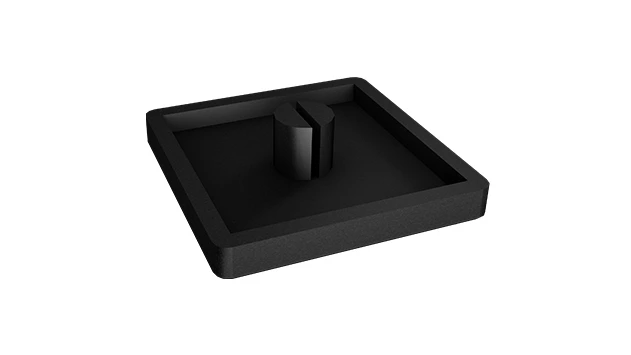
3030 Aluminum Profile End Cap
The aluminum profile end cap adds a finishing touch to your project and closes off profile ends to limit dust and debris buildup, also it can avaid some scratch for material and labor during the assemble work.
If you've ever stepped into a manufacturing facility, a workshop, or even a modern home garage, you've probably seen structures built with sleek, modular aluminum frames. From workbenches and material racks to conveyor systems and machine guards, these frames are the backbone of efficient, flexible spaces. At the heart of these systems are aluminum profiles—specifically, extruded aluminum shapes designed to interlock with accessories like end caps and joints. Today, we're zeroing in on two critical components: 3030 aluminum profile end caps and aluminum joints . Understanding how these pieces work together isn't just about building something that stands up straight; it's about creating structures that are safe, durable, and tailored to your needs. Whether you're a seasoned facility manager or a DIY enthusiast setting up your first workbench, this guide will walk you through everything you need to know about compatibility, installation, and making the most of these essential aluminum profile accessories .
1. The Basics: Why 3030 Aluminum Profiles Matter
Before diving into end caps and joints, let's start with the star of the show: the 3030 aluminum profile. If you're new to the world of aluminum extrusion, you might be wondering, "Why 3030?" The numbers here refer to the profile's cross-section: 30mm in width and 30mm in height. This square (or sometimes rectangular, but in 3030's case, square) shape is one of the most popular in industrial and commercial applications, and for good reason.
3030 profiles are the workhorses of modular construction. They strike the perfect balance between strength and weight—strong enough to support heavy loads (think tool cabinets, assembly line components, or even small machinery) but light enough to be easily maneuvered during setup. Their versatility shines in industries like automotive, electronics, and aerospace, where adaptability is key. Unlike fixed steel frames, 3030 profiles use T-slots (longitudinal grooves along the length) that let you attach accessories—like brackets, shelves, or wheels—anywhere along the profile, without drilling or welding. This modularity is why they're a cornerstone of lean manufacturing systems: you can reconfigure your workspace on the fly as needs change.
But here's the thing: a 3030 profile is just a length of aluminum until you add the right accessories. That's where end caps and joints come in. End caps seal the exposed ends of the profile, protecting both the structure and the people around it. Joints, on the other hand, connect profiles at angles (90°, 45°, 135°, etc.), turning individual lengths into stable frames. Get either of these wrong, and you could end up with wobbly structures, safety hazards, or accessories that fail when you need them most.
Pro Tip:
When shopping for 3030 profiles, always check the wall thickness. Most standard 3030 profiles have a wall thickness of 1.5mm to 3mm. Thicker walls mean higher load capacity, but they also affect compatibility with accessories—some end caps and joints are designed for specific wall thicknesses, so keep that in mind!
2. 3030 Aluminum Profile End Caps: More Than Just a "Cap"
2.1 What Are End Caps, and Why Do You Need Them?
At first glance, end caps might seem like an afterthought—a simple plastic or metal piece that snaps onto the end of a profile. But their role is far more critical than you might think. Imagine a 3030 profile fresh off the extrusion line: its ends are raw, often with sharp edges from cutting. Without an end cap, those edges pose a safety risk—workers could scrape their hands, or loose clothing could catch. End caps also seal the interior of the profile, keeping out dust, debris, and moisture that can corrode the aluminum over time. In clean environments like electronics assembly lines, this is non-negotiable. And let's not forget aesthetics: a finished end cap gives your structure a polished, professional look, turning a functional frame into something that feels intentional and well-made.
2.2 Types of 3030 Aluminum Profile End Caps
Not all end caps are created equal. Depending on your project, you'll need to choose between different materials, styles, and installation methods. Here's a breakdown of the most common types:
- Snap-On End Caps: The most user-friendly option, these are designed to "snap" into place without tools. They're typically made of PVC or nylon, which are lightweight and cost-effective. Snap-on caps work best for light-duty applications, like shelving units or temporary workbenches. Just be aware: they can pop off if the profile is bumped or vibrated heavily.
- Screw-On End Caps: For heavier loads or permanent structures, screw-on caps are the way to go. These have pre-drilled holes that align with the T-slots in the 3030 profile, allowing you to secure them with small screws or bolts. Made from materials like nylon or aluminum, they're more secure than snap-on caps and ideal for environments with vibration, like near machinery.
- Decorative End Caps: If aesthetics matter—say, in a retail display or office partition—decorative end caps add a finishing touch. These might have rounded edges, colored accents, or even company logos. They're often made of aluminum to match the profile, blending seamlessly with the frame.
- Ventilated End Caps: In applications where heat or moisture buildup is a concern (like enclosing electrical components), ventilated caps have small holes to allow airflow. They're a niche option but crucial for specific use cases.
2.3 Material Matters: Choosing the Right End Cap for Your Environment
The material of your end cap affects its durability, cost, and performance. Here's how the most common options stack up:
2.4 Installing 3030 Aluminum Profile End Caps: A Step-by-Step Guide
Installing end caps is straightforward, but a little care goes a long way. Here's how to do it right:
- Prepare the Profile End: Start by cleaning the end of the 3030 profile with a dry cloth to remove dust or debris. If the cut is rough, use a deburring tool to smooth any sharp edges—this ensures the end cap sits flush.
- Choose the Right Size: 3030 profiles have a standard 30mm x 30mm cross-section, but some manufacturers offer slight variations in wall thickness. Double-check that your end cap is labeled for 3030 profiles—an ill-fitting cap will either fall off or crack when forced.
- Snap-On Installation: For snap-on caps, align the cap with the profile end, making sure any tabs or prongs are positioned over the T-slots. Apply even pressure with your palms until you hear a "click." Avoid using a hammer—this can damage the cap or profile.
- Screw-On Installation: For screw-on caps, insert the cap into the profile end. Using a hex key or screwdriver (depending on the screw type), tighten the screws into the T-slots. Don't over-tighten—this can strip the threads or warp the cap.
- Test for Security: Give the end cap a gentle tug to ensure it's secure. If it moves or comes loose, check for debris in the profile or misalignment of the cap.
Pro Tip:
If you're installing end caps in a cold environment, warm the cap slightly with your hands first—PVC and nylon become more flexible in heat, making installation easier and reducing the risk of cracking.

3. Aluminum Joints: The Glue That Holds It All Together
3.1 What Are Aluminum Joints, and How Do They Work?
If end caps are the "finish" of your aluminum structure, joints are the "bones." These are the connectors that link profiles together at angles, allowing you to build everything from simple rectangles to complex, multi-level frames. Unlike welding or bolting, which are permanent and require specialized tools, aluminum joints use the T-slots in the profile to create secure, adjustable connections. This modularity is what makes aluminum extrusion systems so versatile—you can disassemble and reconfigure your structure as needs change, without cutting or drilling new holes.
3.2 Focus: The 90° Aluminum Profile Connector
While joints come in angles like 45°, 135°, and even 180°, the 90° aluminum profile connector is by far the most commonly used. Think about it: most structures—workbenches, racks, frames—are built with right angles. A 90° joint lets you connect two 3030 profiles perpendicularly, creating the corners of your frame. These joints come in several styles, each suited to different load capacities and installation preferences:
- External Corner Brackets: These are L-shaped plates that bolt to the outside of two profiles. They're easy to install and work well for light to medium loads. You'll often see them in shelving units or small workbenches.
- Internal Corner Connectors: Designed to fit inside the T-slots of the profile, these connectors are more discreet and create a cleaner look. They're stronger than external brackets because they're supported by the profile's internal walls, making them ideal for heavy-duty applications like machine bases.
- Flanged Joints: These have a wide base that distributes weight across the profile, reducing stress on the T-slots. They're a favorite in industrial settings where stability is critical, like conveyor supports or material handling racks.
3.3 Other Essential Joint Types
While 90° joints steal the spotlight, other angles and styles are just as important for complex builds:
- 45° and 135° Joints: Used for diagonal bracing or sloped structures, like roof supports or inclined conveyors. These ensure stability in frames that aren't purely rectangular.
- T-Joints: Connect three profiles in a "T" shape, perfect for adding crossbars to a frame (e.g., a shelf in the middle of a vertical rack).
- Multi-Axis Joints: For advanced setups, these joints allow connection at multiple angles (e.g., 3-way or 4-way joints) to create branching structures.
3.4 Material and Load Capacity: Choosing the Right Joint
Like end caps, joints are made from different materials, each with its own strengths. The most common options are die-cast aluminum, plastic (usually PA6 or ABS), and stainless steel (for corrosion resistance). Die-cast aluminum is the gold standard for most industrial applications—it's strong, durable, and compatible with all 3030 profiles. Plastic joints are lighter and cheaper but best for light loads, like retail displays. Stainless steel is reserved for harsh environments, such as food processing or outdoor use, where rust is a concern.
Load capacity is another key factor. Every joint has a maximum weight it can support before bending or failing. For example, a small plastic 90° bracket might handle 20kg, while a heavy-duty aluminum internal connector could support 150kg or more. Always check the manufacturer's specs and factor in dynamic loads (e.g., if materials will be sliding on and off a shelf) rather than just static weight.

4. Compatibility 101: Making Sure End Caps and Joints Play Nice with 3030 Profiles
4.1 The Golden Rule: Match the Profile Series
Here's the first and most important compatibility rule: end caps and joints must be designed for the 3030 profile series. Aluminum profiles come in different sizes—2020, 4040, 4545, etc.—and each has unique T-slot dimensions, wall thickness, and outer dimensions. A 2020 end cap will be too small for a 3030 profile, and a 4040 joint will overhang, creating an unstable connection. Always check the product label: it should explicitly say "3030" or "for 30mm x 30mm profiles."
4.2 T-Slot Size: The Hidden Compatibility Factor
Even within the 3030 series, T-slot sizes can vary. The T-slot is the groove that runs along the length of the profile, and it's where joints and accessories attach. Most 3030 profiles have either M5 or M6 T-slots (referring to the metric screw size they accommodate). An M5 joint uses smaller screws and won't fit into an M6 T-slot, and vice versa. To check your T-slot size, measure the width of the slot opening (M5 slots are ~5mm wide, M6 ~6mm) or refer to the profile's technical datasheet.
4.3 Material Compatibility: Avoiding Galvanic Corrosion
This one's a bit technical but crucial for long-term durability: if you're using aluminum joints with aluminum profiles, make sure they're both the same alloy or coated to prevent galvanic corrosion. Galvanic corrosion occurs when two dissimilar metals (e.g., aluminum and steel) are in contact with moisture, causing one to corrode faster. Most aluminum joints are anodized (coated with a protective oxide layer) to prevent this, but if you're mixing materials—say, a steel screw in an aluminum profile—use a dielectric spacer or anti-corrosion grease to separate them.
4.4 A Quick Compatibility Checklist
Before buying end caps or joints, run through this checklist:
- Is the product labeled for 3030 profiles?
- Does the T-slot size (M5/M6) match your profile?
- Is the material suitable for your environment (e.g., aluminum for heavy loads, plastic for light use)?
- Does the joint angle (90°, 45°, etc.) fit your design?
- For end caps: Is the installation type (snap-on/screw-on) right for your application?
Common Mistake:
Assuming all 3030 accessories are universal. Some manufacturers have proprietary designs—for example, a joint from Brand A might not fit a Brand B 3030 profile if the T-slot position is slightly different. When in doubt, stick to the same brand for profiles and accessories, or ask the supplier for compatibility charts.
5. Troubleshooting: Solving Common End Cap and Joint Issues
5.1 End Cap Problems and Fixes
Even with careful planning, you might run into issues with end caps. Here's how to troubleshoot:
- End Cap Won't Snap On: Check for debris (e.g., metal shavings) inside the profile. If the cap is too tight, try warming it slightly or filing down any burrs on the profile end.
- End Cap Falls Off: If it's a snap-on cap, it might be the wrong size or worn out (plastic can stretch over time). Switch to a screw-on cap for a permanent fix.
- End Cap Cracks: This usually happens from over-tightening (screw-on) or forcing a misaligned cap. replace with a new cap, and ensure proper alignment during installation.
5.2 Joint Issues and Solutions
Joints are more complex than end caps, so problems here can be trickier. Common issues include:
- Loose Joints: This is often due to under-tightened screws or using the wrong screw size. Tighten the screws with a torque wrench (most aluminum joints require 1.5–2 Nm of torque) and ensure they're fully seated in the T-slot.
- Profile Bending at the Joint: The joint might be underrated for the load. Upgrade to a heavier-duty joint or add diagonal bracing to distribute weight.
- Joints Won't Align: If two profiles won't meet at a 90° angle, check that the profile is cut square (use a miter saw for clean cuts) and that the joint isn't warped. Bent joints should be replaced—they'll never align properly.
6. Beyond the Basics: Advanced Tips for Maximizing Your Aluminum Structure
Now that you understand the fundamentals, here are a few pro tips to take your aluminum projects to the next level:
- Combine End Caps and Cable Management: Some end caps have built-in cable holes, letting you route wires through the profile for a clean, clutter-free look. Great for workbenches with power tools!
- Use Joints with Adjustable Angles: For non-standard angles, invest in adjustable joints (e.g., 0°–180° hinges) that let you fine-tune the connection. These are perfect for custom racks or ergonomic workstations.
- Pre-Assemble Test Frames: Before building your final structure, assemble a small test frame with the same end caps and joints. This lets you check for compatibility and stability without committing to the full build.
- Stock Spare Parts: Keep extra end caps and joints on hand—they're small, cheap, and nothing derails a project faster than a broken joint or missing cap.
7. Conclusion: Building Better with Compatible Components
At the end of the day, the compatibility between 3030 aluminum profile end caps, aluminum joints, and your profiles is the foundation of a successful build. It's not just about avoiding frustration during installation—it's about creating structures that are safe, efficient, and built to last. By choosing the right end caps to protect workers and seal profiles, and the right joints to handle your load and angles, you're not just building something functional; you're building something that adapts to your needs, grows with your business, and stands the test of time.
Whether you're setting up a lean manufacturing cell with aluminum extrusion profile frames, a home workshop with a sturdy workbench, or a retail display that wows customers, remember: the smallest components—end caps and joints—make the biggest difference. So take the time to check compatibility, follow installation best practices, and don't hesitate to reach out to your supplier if you're unsure. With the right parts and a little know-how, you'll be building like a pro in no time.