- Company Articles
- Products and Technology
- Product knowledge
- Compatibility Guide: 3060 Aluminum Angle Yards with Lean Tube Systems

Compatibility Guide: 3060 Aluminum Angle Yards with Lean Tube Systems
Related Product
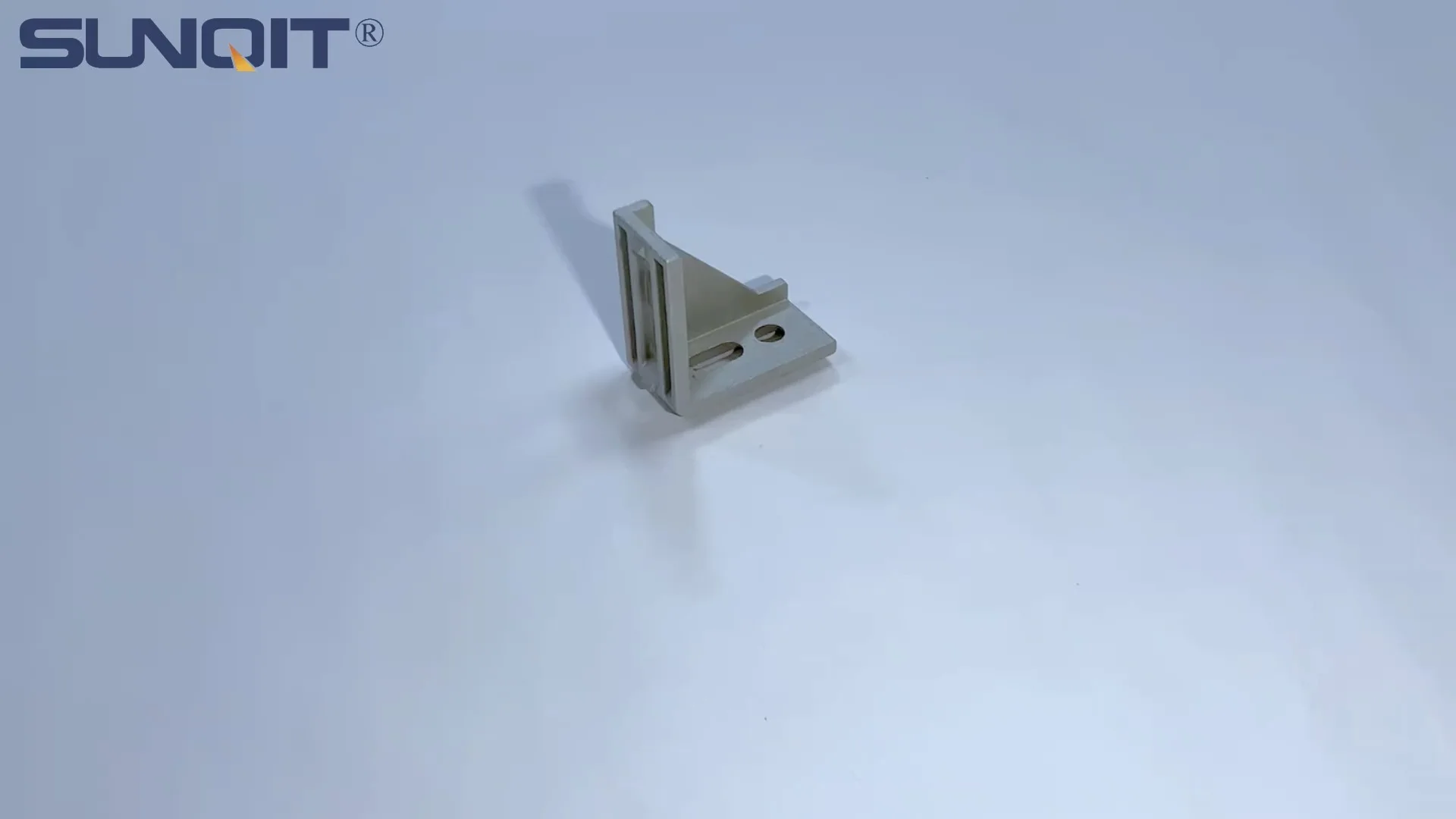
3060 Aluminum Angle Yards
It used for 90° flat connection for 20 series aluminum profile.
In the bustling world of manufacturing, warehousing, and workshop operations, efficiency isn't just a buzzword—it's the backbone of daily productivity. Every tool, every rack, and every workbench plays a role in keeping workflows smooth, reducing downtime, and ensuring teams can focus on what matters most: creating quality products. Among the unsung heroes of these spaces are lean tube systems and aluminum profile accessories—modular, flexible solutions that adapt to evolving needs. But here's the thing: even the best components fall short if they don't work together seamlessly. That's where compatibility comes in, and today, we're diving deep into one critical pairing: 3060 aluminum angle yards and lean tube systems. Whether you're a facility manager upgrading your workspace, a small business owner building a custom workbench, or a hobbyist exploring industrial-grade setups, understanding how these two components interact can save you time, money, and headaches. Let's start by breaking down what each part does, why their compatibility matters, and how to make them work in harmony.
What Are 3060 Aluminum Angle Yards?
Before we jump into compatibility, let's get familiar with 3060 aluminum angle yards. If you've ever walked through a well-organized workshop, you've probably seen aluminum profiles—those sleek, lightweight beams that form the frames of workbenches, material racks, and conveyor systems. 3060 aluminum angle yards are a specific type of these profiles, and their name gives away their key details: "3060" refers to their cross-sectional dimensions, typically 30mm in width and 60mm in height (though exact measurements can vary slightly by manufacturer). The "angle yard" part hints at their shape—they're not just straight tubes but often feature angular or L-shaped cross-sections, designed to provide structural support while allowing for easy attachment of other components.
Made from high-grade aluminum alloy (usually 6063-T5, a common choice for industrial profiles), these angle yards strike a balance between strength and weight. Aluminum's natural resistance to corrosion is a big plus in environments where moisture or chemicals might be present, and its malleability means manufacturers can extrude it into precise shapes with T-slots—those handy grooves along the length that let you slide in bolts, nuts, or accessories without drilling. This T-slot design is what makes 3060 angle yards so versatile; they're not just static beams but building blocks that can be customized with everything from aluminum profile accessories like brackets and connectors to lean pipe joints for attaching lean tubes.
Common uses for 3060 aluminum angle yards include reinforcing workbench frames (especially heavier-duty setups like Workbench E, which we'll touch on later), adding stability to material racks (think Material Rack B with its 3-row, 3-floor design), and forming the bases of turnover trolleys. Their 30x60mm size hits a sweet spot: it's sturdy enough to support moderate loads (often up to 200-300kg per linear meter, depending on the setup) but not so bulky that it limits flexibility. For context, smaller profiles like 2020 might be too light for heavy workbenches, while larger ones like 4080 could be overkill for a simple trolley. 3060 angle yards, in short, are the "goldilocks" of aluminum profiles for many mid-weight industrial applications.
Understanding Lean Tube Systems
Now that we know what 3060 aluminum angle yards bring to the table, let's turn to lean tube systems. If aluminum profiles are the "bones" of a workshop setup, lean tubes are the "muscles"—flexible, adaptable, and designed to streamline workflows. Also called "lean pipes" or "flexible pipes," these systems originated from the principles of lean manufacturing, which focus on minimizing waste and maximizing efficiency. Traditional lean tubes were often steel pipes coated in plastic (like PE-coated lean pipe), but modern systems also include aluminum lean pipes, stainless steel pipe series, and even aluminum pipe variants, all designed to be lightweight and easy to assemble.
The magic of lean tube systems lies in their simplicity. Instead of welding or permanently fastening components, you use lean pipe joints—small, often plastic or metal connectors that let you attach tubes at various angles (90°, 45°, 180°, etc.) with just a wrench. This modularity means you can build, modify, or disassemble structures like workbenches, flow racks, or conveyor systems in minutes, not hours. Need to reconfigure a production line for a new product? Swap out a section of lean tube. Want to add a shelf to your workbench? Just clip on a few joints and tubes. It's this "build-as-you-go" flexibility that has made lean tube systems a staple in industries from automotive manufacturing to electronics assembly.
Key components of a lean tube system include the tubes themselves (which can be steel, aluminum, or stainless steel), lean pipe joints (like the 90° straight lean pipe joint or the parallel lean pipe joint), and accessories such as caster wheels for mobility, roller tracks for material flow, and workbench surfaces (wood, metal, or anti-static ESD tops for sensitive electronics). When paired with aluminum profiles like 3060 angle yards, lean tube systems become even more powerful—combining the structural rigidity of aluminum with the on-the-fly adjustability of lean tubes. But for this partnership to work, compatibility between the two is non-negotiable.

Why Compatibility Matters: More Than Just a Tight Fit
At first glance, you might think compatibility between 3060 aluminum angle yards and lean tube systems is just about whether a lean pipe joint "clicks" onto an angle yard. But it's far more critical than that. In a workshop or production environment, every component is part of a system, and a single incompatible part can throw off efficiency, compromise safety, or lead to costly rework. Let's break down why getting this right matters:
- Safety First: Industrial setups often support heavy loads—think of a Material Rack B stacked with parts or a workbench holding machinery. If a lean tube joint doesn't securely attach to a 3060 angle yard, the structure could wobble, bend, or even collapse, risking injury to workers or damage to equipment.
- Efficiency Gains: Incompatible parts mean wasted time. If you have to drill extra holes, file down edges, or use makeshift adapters to connect an angle yard to a lean tube, you're eating into the time saved by using modular systems in the first place. Compatibility ensures quick, tool-free assembly.
- Cost Savings: Mismatched components might require buying additional adapters or replacing parts entirely. Over time, these small costs add up. Compatibility also extends the lifespan of your setup—components that fit well wear evenly and last longer.
- Flexibility: The whole point of lean systems is adaptability. If your 3060 angle yards and lean tubes don't play nice, you're stuck with a rigid setup that can't evolve with your needs. Compatibility keeps the "lean" in lean manufacturing.
To put this in perspective, imagine building a workbench using 3060 aluminum angle yards for the frame and lean tubes for the shelves. If the lean pipe joints you chose are too loose for the angle yard's T-slots, the shelves might sag under weight. If they're too tight, you might strip the T-slot threads when tightening. Either way, you're left with a workbench that doesn't perform as intended—hardly the efficient, flexible setup you were aiming for.

Key Compatibility Factors: What to Check Before You Buy
So, how do you ensure your 3060 aluminum angle yards and lean tube systems are compatible? It starts with checking a few key factors before purchasing components. Let's break them down, and for clarity, we'll include a quick reference table comparing common lean pipe joints with 3060 angle yard specs.
1. T-Slot Dimensions
Most 3060 aluminum angle yards feature T-slots along their length, and the size of these slots (width and depth) dictates which lean pipe joints will fit. T-slots are usually measured by the width of the opening (the "mouth") and the width of the groove (the "throat"). For example, a common T-slot size for 3060 profiles is 8mm (mouth) x 10mm (throat), which works with M6 or M8 bolts. Lean pipe joints designed for these slots will have matching bolts or tabs that slide smoothly into the T-slot without being too loose or too tight. Always check the angle yard's T-slot specs against the joint's requirements—manufacturers often list this in product descriptions (e.g., "compatible with T-slot 8x10mm").
2. Material and Coating
While aluminum angle yards are corrosion-resistant, lean tube systems might use steel tubes with plastic coatings (PE-coated lean pipe) or stainless steel. If your setup will be exposed to moisture, ensure the lean pipe joints are also corrosion-resistant (e.g., zinc-plated or stainless steel) to avoid galvanic corrosion between dissimilar metals. For example, a steel joint with a plastic coating might be fine, but an uncoated steel joint paired with aluminum could lead to rust over time.
3. Load Capacity
3060 angle yards have a maximum load rating (e.g., 250kg per linear meter when supported at both ends), and lean tube systems have their own limits (e.g., a single lean tube might support 50kg). When combining them, the total load capacity is determined by the weakest link. For instance, if you're building a workbench with 3060 angle yards rated for 300kg and lean tube shelves rated for 100kg, the shelves will be the limit, not the angle yards. Always cross-check load ratings to avoid overloading.
4. Connection Method
Lean pipe joints attach to aluminum angle yards in a few ways: via T-slot bolts (sliding into the groove and tightening with a nut), clamp-on designs (gripping the angle yard's edges), or welded brackets (permanent, but less common in modular setups). T-slot connections are the most flexible, but they require the joint's bolt size to match the T-slot. Clamp-on joints need to fit the angle yard's width and height—too small, and they'll slip; too large, and they won't grip.
| Lean Pipe Joint Type | Compatible T-Slot Size (Mouth x Throat) | Material | Max Load (Per Joint) |
|---|---|---|---|
| 90° Straight Lean Pipe Joint | 8x10mm, 10x12mm | Zinc-plated steel | 80kg |
| Parallel Lean Pipe Joint | 8x10mm | Plastic-coated steel | 50kg |
| 3-Way Lean Pipe Joint | 10x12mm | Stainless steel | 100kg |
| Vertical Lean Pipe Joint | 8x10mm, 6x8mm | Aluminum alloy | 60kg |
Note: This table is for illustrative purposes—always verify specs with your supplier. For example, a 3060 aluminum angle yard with 10x12mm T-slots would pair best with a 3-Way Lean Pipe Joint (10x12mm slot compatibility) for heavier loads, while a lighter setup might use a Parallel Lean Pipe Joint (8x10mm) with plastic coating for corrosion resistance.

Practical Applications: Building with 3060 Angle Yards and Lean Tubes
Now that we've covered the "why" and "what" of compatibility, let's look at real-world examples of how 3060 aluminum angle yards and lean tube systems work together. These applications highlight the versatility of the pairing and offer tips for getting the most out of your setup.
1. Custom Workbenches: Workbench E (Single Deck, Without Caster)
Workbenches are the heart of any workshop, and a common project is building a custom Workbench E—a single-deck setup without casters, ideal for stationary tasks like assembly or inspection. Here's how 3060 angle yards and lean tubes come into play:
- Frame: Use 3060 aluminum angle yards for the legs and side rails. The angle yards provide stability, while their T-slots let you attach cross-braces made from lean tubes (using 90° straight lean pipe joints) for extra rigidity.
- Worktop Support: Mount aluminum profile accessories like bracket supports to the angle yards, then add lean tubes across the top to support the work surface (wood, metal, or ESD laminate for electronics work).
- Shelving: Attach parallel lean pipe joints to the side rails to add lower shelves for tools or materials. Since Workbench E doesn't have casters, the 3060 angle yards can be anchored to the floor (using aluminum foot bases) for added stability.
Pro tip: For ESD-sensitive environments (like electronics assembly), pair ESD workbench accessories with your setup—look for lean tube joints with anti-static coatings and ESD-safe worktop materials.
2. Material Racks: Material Rack B (3 Row, 3 Floor)
Material Rack B is a multi-tiered storage solution, perfect for organizing parts or components in a production line. 3060 angle yards form the vertical posts, while lean tubes and roller tracks handle the horizontal storage layers:
- Vertical Posts: 3060 angle yards stand upright, spaced evenly to support the rack's width. Their height (often 1.8-2m) allows for 3 floors of storage.
- Horizontal Shelves: Use lean tubes with 3-way lean pipe joints to create the shelf frames. Attach roller tracks (like Plastic Roller Track Guide Rail Yellow or Grey) to the lean tubes to let materials slide easily—ideal for turnover boxes or bins.
- Load Distribution: The 3060 angle yards' high load capacity (300kg+ per post) ensures the rack can handle heavy items, while the lean tubes and roller tracks distribute weight evenly across each floor.
Pro tip: Use swivel roller balls (1 inch or 0.5 inch) on the top shelf for easy access to small parts—they fit into the lean tube frames using roller track placon mount connectors, which attach to the 3060 angle yards' T-slots.
3. Turnover Trolleys: Hand Trolley A
Hand Trolley A is a mobile cart for moving materials between workstations. Here, 3060 angle yards provide the frame, and lean tubes add lightweight, adjustable shelves—paired with caster wheels for mobility:
- Frame: 3060 angle yards form the trolley's base and vertical handles. The angle yards' L-shape adds rigidity, preventing the trolley from wobbling when loaded.
- Shelves: Use lean tubes and parallel lean pipe joints to create adjustable shelves—since lean tubes are lightweight, they keep the trolley easy to push, even when loaded.
- Mobility: Attach caster wheels (with brake options for safety) to the bottom of the 3060 angle yards using castor installation bases. Opt for heavy-duty casters if the trolley will carry large loads.
Pro tip: Add aluminum guide rails (Type A or B) to the shelves to prevent materials from sliding off during transport—these guide rails clip into the lean tube frames using roller track placon mount brackets.
Installation Tips: Getting It Right the First Time
Even with compatible components, poor installation can lead to issues down the line. Follow these steps to ensure your 3060 aluminum angle yards and lean tube system work together seamlessly:
- Measure Twice, Cut Once: Before cutting 3060 angle yards or lean tubes, double-check your dimensions. Aluminum profiles can be cut with a miter saw (use a blade for non-ferrous metals), while lean tubes often come pre-cut—if you need to trim them, use a pipe cutter for clean edges.
- Clean T-Slots: Dust, debris, or metal shavings in the angle yard's T-slots can prevent lean pipe joints from seating properly. Use a brush or compressed air to clean the slots before assembly.
- Use the Right Tools: For T-slot bolts, use a hex key (Allen wrench) that fits snugly—stripping the bolt head is a common mistake. For clamp-on joints, use a torque wrench to tighten to the manufacturer's specs (usually 2-3 Nm for aluminum profiles).
- Test Load Capacity: After assembly, test the structure with a gradual load (e.g., add weight to a workbench shelf in 25kg increments) to ensure joints don't loosen and the angle yards don't bend.
- Label Components: If you plan to reconfigure the setup later, label lean pipe joints and angle yard sections with tape or markers (e.g., "Left Leg," "Shelf 2 Front") to save time during disassembly.
Bonus tip: Keep a small toolkit handy with spare lean pipe joints, T-slot bolts, and aluminum profile accessories—you never know when a joint might wear out or a bolt might go missing during reconfiguration.
Troubleshooting Common Compatibility Issues
Even with careful planning, you might run into issues when combining 3060 aluminum angle yards and lean tube systems. Here's how to diagnose and fix the most common problems:
Issue 1: Lean Pipe Joints Won't Slide Into T-Slots
Cause: The joint's bolt or tab is too large for the T-slot, or the slot is dirty.
Fix: Clean the slot with a wire brush. If the bolt is too large, replace it with a smaller size (e.g., M6 instead of M8) that fits the T-slot. For clamp-on joints, check if the joint is adjustable—some have slotted holes that let you fine-tune the fit.
Issue 2: Structure Wobbles Under Load
Cause: Insufficient cross-bracing, loose joints, or angle yards that are too narrow for the load.
Fix: Add more lean tube cross-braces using 45° or 90° joints. Tighten all bolts and joints—if they loosen repeatedly, apply a thread-locking compound (like Loctite) to the T-slot bolts. If the angle yards are bending, upgrade to a heavier profile (e.g., 4060 instead of 3060) or add vertical supports.
Issue 3: Corrosion on Aluminum Angle Yards
Cause: Contact with uncoated steel lean pipe joints or exposure to moisture.
Fix: replace steel joints with zinc-plated or stainless steel versions. If corrosion is minor, clean the angle yard with a mild aluminum cleaner and apply a protective coating (like clear lacquer).
Conclusion: Building a System That Grows With You
3060 aluminum angle yards and lean tube systems are more than just parts—they're partners in creating efficient, adaptable workspaces. By understanding their compatibility (T-slot dimensions, material, load capacity), you can build setups that are safe, cost-effective, and ready to evolve with your needs. Whether you're assembling a Workbench E, stocking a Material Rack B, or rolling a Hand Trolley A across the factory floor, the key is to prioritize fit and function from the start.
Remember, modular systems thrive on precision. Take the time to check specs, test connections, and invest in quality components—your future self (and your workflow) will thank you. And if you ever hit a snag, refer back to this guide or reach out to your supplier—most lean pipe suppliers or aluminum profile manufacturers are happy to help with compatibility questions.
In the end, the goal is simple: to create a workspace that works as hard as you do. With 3060 aluminum angle yards and lean tube systems on your side, that goal is well within reach.