- Company Articles
- Products and Technology
- Product knowledge
- Compatibility Guide: Lean Pipe Clamp B Chrome with Inner Rotation Aluminum Joints

Compatibility Guide: Lean Pipe Clamp B Chrome with Inner Rotation Aluminum Joints
Related Product
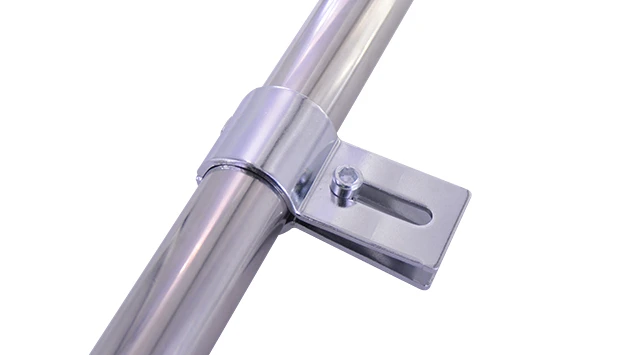
Lean Pipe Clamp B Chrome
Lean pipe clamp is used for turnover trolley, workbench, flowrack adjust the frame or fix some accessory.
In the world of lean manufacturing, where efficiency, flexibility, and adaptability are the cornerstones of success, the tools and components you choose can make or break your workflow. Every connection, every joint, and every clamp plays a role in creating systems that respond to change, reduce waste, and keep your team moving forward. Today, we're diving deep into two unsung heroes of lean setups: the Lean Pipe Clamp B Chrome and the Internal Rotatary Aluminum Joint . More importantly, we'll explore how these two components work together to unlock new levels of versatility in your workbenches, flow racks, and material handling systems. Whether you're a seasoned plant manager looking to revamp your production line or a small business owner building your first workspace, understanding their compatibility is key to building systems that grow with you.
1. The Basics: What Are Lean Pipe Clamp B Chrome and Internal Rotatary Aluminum Joints?
1.1 Lean Pipe Clamp B Chrome: The Silent Workhorse of Secure Connections
Let's start with the Lean Pipe Clamp B Chrome . If lean pipe systems were a puzzle, these clamps would be the corner pieces— but essential for holding everything together. Designed to secure lean pipes (often steel or aluminum) to joints, frames, or other structures, they're built to handle the daily grind of manufacturing environments. What sets the "B Chrome" variant apart? The chrome plating isn't just for looks; it adds a layer of corrosion resistance, making these clamps ideal for workshops where moisture or chemicals might be present. They're also known for their robust grip: slide one onto a pipe, tighten the hex screw, and you've got a connection that stays put, even under the weight of tools, materials, or finished products.
But what really makes them a favorite among lean enthusiasts is their simplicity. No welding, no complex tools—just a hex key and a few seconds to secure. This aligns perfectly with lean principles, where minimizing setup time and simplifying processes are priorities. Whether you're building a workbench, a flow rack, or a turnover trolley, these clamps ensure your structure is both sturdy and easy to modify later. After all, in lean manufacturing, "good enough for now" doesn't mean "permanent."
1.2 Internal Rotatary Aluminum Joints: Flexibility in Motion
Now, meet the Internal Rotatary Aluminum Joint —the component that adds a "twist" to traditional lean systems (pun intended). Unlike fixed joints that lock pipes into a rigid angle, these aluminum joints feature a rotating mechanism that lets connected pipes pivot up to 180 degrees (depending on the model). Think of them as the "elbows" of your system, but elbows that can bend, adjust, and reposition without needing to be disassembled. Made from high-grade aluminum, they're lightweight yet surprisingly strong, striking a balance between portability and durability that's hard to beat.
Why aluminum? In lean setups, every pound counts. Aluminum joints reduce the overall weight of structures like mobile workbenches or trolleys, making them easier for your team to move around. They also resist rust, which is a bonus in busy environments where cleaning might take a backseat to deadlines. But the real magic is in the rotation. Need to adjust the height of a workbench shelf to fit taller materials? Rotate the joint. Want to angle a flow rack to speed up material flow? Twist it into place. This adaptability is why they're becoming a staple in facilities that prioritize continuous improvement—because today's "perfect" setup might need tweaking tomorrow.
2. Compatibility 101: Why These Two Components Work So Well Together
At first glance, a steel clamp and an aluminum joint might seem like an odd pair. But when it comes to lean systems, their differences are actually what make them a match made in efficiency heaven. Let's break down the key factors that make Lean Pipe Clamp B Chrome and Internal Rotatary Aluminum Joints compatible:
2.1 Size Matters: Fitting the Right Pipe Diameter
The first rule of compatibility? They need to fit the same pipe. Most lean pipes come in standard diameters—1.5 inches is common, though smaller sizes exist. Both the Lean Pipe Clamp B Chrome and Internal Rotatary Aluminum Joints are designed to accommodate these standard sizes. The clamp's inner diameter matches the pipe's outer diameter, ensuring a snug fit, while the joint's socket is sized to accept the same pipe. This standardization means you won't have to hunt for specialty pipes; grab a length of basic aluminum tube or steel lean pipe, and both components will play nice.
Pro tip: Always check the manufacturer's specs for pipe diameter compatibility. Some joints might be labeled for "1.5-inch OD pipe," while clamps might specify "1.5-inch pipe" as well—matching these numbers is your first step to a secure connection.
2.2 Load Capacity: Working Together to Handle the Weight
A clamp is only as good as its ability to hold, and a joint is only as reliable as its ability to support. Fortunately, both components are engineered to complement each other's strength. Lean Pipe Clamp B Chrome typically has a load capacity of 50-100 kg per clamp (depending on the model), while Internal Rotatary Aluminum Joints can handle similar weights when properly installed. This means when you use them together—say, clamping a pipe to a rotating joint that's part of a workbench shelf—they distribute weight evenly, preventing sagging or slipping over time.
For example, if you're building a workbench with adjustable shelves, using two clamps per joint (one above, one below) ensures the shelf can hold tools, parts bins, or even heavy machinery without wobbling. The clamp's grip keeps the pipe from sliding, while the joint's internal bearings (yes, some models have small bearings for smooth rotation) handle the load without locking up.
2.3 Material Harmony: Avoiding Galvanic Corrosion
Here's a concern we often hear: "Won't steel (from the clamp) and aluminum (from the joint) react and cause rust?" It's a valid question—when two dissimilar metals touch in the presence of moisture, galvanic corrosion can occur. But the Lean Pipe Clamp B Chrome addresses this with its chrome plating. Chrome acts as a barrier between the steel clamp and aluminum joint, reducing the risk of corrosion. Additionally, many aluminum joints come with a clear anodized finish, which adds another layer of protection. Together, these finishes make the pair suitable for most indoor environments, from dry assembly lines to slightly humid warehouses.
If you're working in an extremely wet or corrosive environment (like a food processing plant with daily washdowns), consider adding a thin layer of non-conductive tape between the clamp and joint for extra peace of mind. But for most workshops, the chrome and anodized finishes are more than enough.
2.4 Installation Ease: Tools You Already Have
Lean systems thrive on simplicity, and both components deliver here. Installing a Lean Pipe Clamp B Chrome requires nothing more than a hex key (usually 5mm or 6mm, depending on the model). Slide the clamp onto the pipe, position it where you want the joint, and tighten the screw until it's snug but not over-tightened (you don't want to strip the threads). The Internal Rotatary Aluminum Joint is just as easy: insert the pipe into the joint's socket, secure it with the joint's built-in set screw (again, using a hex key), and you're done. No welding, no drilling, no specialized tools—just two components, a hex key, and a few minutes of your time.
This ease of installation is a game-changer for lean teams. When you need to reconfigure a workbench or adjust a flow rack, you can do it on the fly without shutting down production. It's the kind of flexibility that turns "we can't do that" into "we can try this instead."
3. Real-World Applications: Where Compatibility Translates to Results
Enough theory—let's talk about how this compatibility plays out in actual workspaces. Here are three common scenarios where Lean Pipe Clamp B Chrome and Internal Rotatary Aluminum Joints shine together:
3.1 Adjustable Workbenches: From Assembly to Packaging (and Back)
Imagine a workbench in a small electronics workshop. In the morning, it's used for assembling circuit boards, so the surface needs to be flat and at a comfortable height for seated workers. By afternoon, it's repurposed for packaging finished products, requiring a tilted surface to let boxes slide easily into bins. With fixed joints, this would mean swapping out the entire workbench top—a hassle that wastes time. But with Internal Rotatary Aluminum Joints and Lean Pipe Clamp B Chrome , it's a 2-minute fix.
Here's how it works: The workbench frame is built with aluminum pipes. The top shelf is attached to the frame using the rotating joints, secured in place with the chrome clamps. In the morning, the joints are locked in the horizontal position, creating a flat surface. When it's time to switch to packaging, loosen the clamps slightly, rotate the joints to tilt the shelf to a 15-degree angle, then retighten the clamps. Done. The clamps hold the shelf securely in the new position, while the joints allow for smooth rotation without disassembling anything. It's lean manufacturing in action—one workspace, two functions, zero waste.
3.2 Flow Racks: Adapting to Material Sizes
Flow racks are the backbone of just-in-time (JIT) inventory systems, keeping materials moving from storage to production. But what if you stock parts of different sizes? A flow rack with fixed shelves might work for small boxes but leave larger components teetering on the edge. Enter our dynamic duo: Use Internal Rotatary Aluminum Joints to attach the roller tracks to the rack's uprights, then secure the joints to the uprights with Lean Pipe Clamp B Chrome clamps. Now, you can angle the roller tracks to match the size of the materials—steeper for small, lightweight boxes (to speed up flow) and shallower for larger, heavier parts (to prevent them from sliding too fast).
Take Material Rack B (3 row and 3 floor) , a common flow rack design. By replacing fixed joints with rotating ones and adding chrome clamps, each shelf can be adjusted independently. One row might hold small plastic bins at a 10-degree angle, another row holds metal brackets at 5 degrees, and the third row holds empty boxes at a 15-degree angle for quick retrieval. It's customization without the cost of building a new rack from scratch.
3.3 Mobile Trolleys: Navigating Tight Spaces with Ease
Turnover trolleys are essential for moving materials between workstations, but tight aisles can make maneuvering a rigid trolley a nightmare. By using Internal Rotatary Aluminum Joints and Lean Pipe Clamp B Chrome on the trolley's handle, you can create a foldable or adjustable handle that pivots out of the way when not in use. Need to squeeze through a narrow gap? Rotate the handle 90 degrees so it lies flat against the trolley. Once you're in the open, rotate it back to a comfortable pushing position. The clamps keep the handle secure in both positions, while the joints allow for smooth rotation. It's a small change that makes a big difference in how your team moves through the workspace.
4. The Benefits: Why This Combination Stands Out
So, what makes Lean Pipe Clamp B Chrome and Internal Rotatary Aluminum Joints more than just "another pair of parts"? Here are the top benefits of their compatibility:
- Flexibility to Reconfigure: Lean manufacturing isn't about building something perfect once—it's about building something that can be perfected over time. With rotating joints and secure clamps, you can adjust, adapt, and experiment without starting from scratch.
- Durability That Lasts: Chrome-plated steel and aluminum are built to handle daily use. The clamps won't loosen under vibration, and the joints won't seize up after repeated rotation (thanks to their smooth internal bearings).
- Cost-Effective Scaling: Instead of buying new workbenches or racks when your needs change, just reconfigure the ones you have. It's a fraction of the cost and better for the environment, too.
- Compatibility with Other Aluminum Profile Accessories: These components play well with the rest of your lean toolkit. Add aluminum profile accessories like end caps, rubber strips, or tool hooks, and you've got a fully customized system.
- Ergonomic Wins for Your Team: Adjustable heights, angles, and positions mean less strain on workers' backs, shoulders, and wrists. Happier, healthier teams are more productive teams.
5. Installation Guide: Step-by-Step for a Secure, Rotating Connection
Ready to put this compatibility to work? Follow these steps to connect a Lean Pipe Clamp B Chrome and Internal Rotatary Aluminum Joint :
- Gather Your Components: You'll need the clamp, the joint, a length of lean pipe (aluminum or steel, 1.5-inch diameter works for most), a hex key (check the clamp and joint for the correct size), and a level (optional, for alignment).
- Prepare the Pipe: Cut the pipe to your desired length (use a pipe cutter for clean edges). Deburr the ends with a file to avoid sharp edges that could damage the joint or clamp.
- Position the Clamp: Slide the Lean Pipe Clamp B Chrome onto one end of the pipe. Leave about 2-3 inches of pipe exposed beyond the clamp—this will be inserted into the joint.
- Attach the Joint: insert the exposed end of the pipe into the Internal Rotatary Aluminum Joint 's socket. Push it in until it's flush with the joint's inner stop (this ensures a secure fit).
- Secure the Joint: Tighten the joint's set screw (located on the side of the socket) with the hex key. Turn it until it's snug—you should feel resistance, but don't overtighten (aluminum threads are strong but can strip if forced).
- Align and Tighten the Clamp: Slide the clamp along the pipe until it's touching the joint. Position the joint at the angle you want (horizontal, vertical, or somewhere in between). Use the level if you need precise alignment. Once in place, tighten the clamp's hex screw until the clamp grips the pipe firmly. Test the rotation by gently moving the joint— it should rotate smoothly without slipping.
- Test the Connection: Apply light pressure to the joint (push or pull gently) to ensure it doesn't move. If it slips, check that both the clamp and joint screws are tight. If rotation is stiff, loosen the joint's set screw slightly (a quarter-turn) to reduce friction.
That's it! You've just created a secure, rotating connection that's ready to tackle whatever your workspace throws at it.
6. Troubleshooting: Common Issues and How to Fix Them
Even the best components can run into hiccups. Here's how to solve three common problems with Lean Pipe Clamp B Chrome and Internal Rotatary Aluminum Joints :
6.1 The Clamp Keeps Loosening
If the clamp slips after a few days of use, it might be due to vibration from nearby machinery or overtightening during installation. Try these fixes:
- Check the Pipe Surface: If the pipe is dirty or greasy, the clamp can't grip properly. Clean the pipe with a degreaser and dry it before reinstalling.
- Use Thread Locking Compound: A drop of medium-strength thread locker (like Loctite Blue) on the clamp's screw can prevent loosening from vibration. Let it dry for 10 minutes before tightening.
- replace the Screw: If the screw is stripped or worn, swap it out for a new one (most suppliers sell replacement screws separately).
6.2 The Joint Won't Rotate Smoothly
Stiff rotation is usually caused by debris in the joint or overtightening. Try this:
- Clean the Joint: Use a can of compressed air to blow out dust or debris from the joint's rotating mechanism. If it's really dirty, wipe it with a rag dampened with isopropyl alcohol.
- Loosen the Set Screw: A quarter-turn counterclockwise on the joint's set screw can reduce pressure on the pipe, allowing smoother rotation. Just don't loosen it too much—you still need the pipe to stay in place.
- Lubricate (Sparingly): If the joint is still stiff, add a drop of lightweight machine oil (like 3-in-1 Oil) to the rotating bearing. Wipe away excess oil to prevent attracting dust.
6.3 Galvanic Corrosion (Rust Between Clamp and Joint)
If you notice white or greenish corrosion where the clamp meets the joint, it's likely galvanic corrosion. Fix it by:
- Disassemble and Clean: Remove the clamp and joint, then scrub the corroded area with a wire brush and baking soda paste (baking soda and water). Rinse and dry thoroughly.
- Add a Barrier: Apply a thin layer of electrical tape or non-conductive rubber between the clamp and joint before reassembling. This prevents metal-to-metal contact.
- Consider Stainless Steel: If corrosion is a recurring issue, ask your supplier about stainless steel clamps (though they're pricier, they're more corrosion-resistant than chrome-plated steel).
7. Beyond the Basics: Pairing with Other Aluminum Profile Accessories
The beauty of lean systems is that they're modular—add a few aluminum profile accessories , and your clamp-and-joint combo becomes even more powerful. Here are a few to consider:
- End Caps: Snap these onto the ends of aluminum pipes to prevent sharp edges (great for safety) and keep dust out of hollow pipes.
- Rubber Strips: Attach to workbench surfaces or flow rack edges to reduce noise and prevent parts from sliding.
- Casters: Add locking casters to the bottom of a workbench or trolley frame (secured with your trusty Lean Pipe Clamp B Chrome ) for easy mobility.
- Tool Hooks: Mount these to uprights using clamps to keep tools within arm's reach on workbenches.
- Roller Tracks: Use roller track and accessories (like plastic roller track guide rails) with your rotating joints to create gravity-fed flow systems for materials.
These accessories are designed to work with standard aluminum profiles and lean pipes, so they'll play nice with your existing setup.
8. Choosing the Right Supplier: Quality Matters
Not all Lean Pipe Clamp B Chrome or Internal Rotatary Aluminum Joints are created equal. To ensure compatibility and durability, look for suppliers who:
- Provide Spec Sheets: Reputable suppliers will share load capacity, pipe diameter compatibility, and material specs upfront. If a supplier can't tell you the clamp's maximum load, keep looking.
- Offer Samples: Order a few clamps and joints to test before buying in bulk. Check for smooth rotation, tight threads, and even chrome plating.
- Have a Track Record: Look for reviews or testimonials from other manufacturers. A supplier who's been in the business for years is more likely to stand behind their products.
- Stock Related Accessories: Buying clamps, joints, and aluminum profile accessories from the same supplier ensures everything works together seamlessly.
Remember, cheap components might save you money upfront, but they'll cost you in downtime and replacements later. Invest in quality, and your lean system will repay you with years of reliable service.
9. Final Thoughts: Building Systems That Grow With You
At the end of the day, compatibility between Lean Pipe Clamp B Chrome and Internal Rotatary Aluminum Joints is about more than just parts fitting together—it's about building a workspace that adapts to your team, not the other way around. Lean manufacturing isn't a one-time project; it's a mindset of continuous improvement. With these components, you're not just building a workbench or a flow rack—you're building a foundation for growth, flexibility, and innovation.
So, the next time you're designing a new system or upgrading an old one, remember: the right connections matter. Choose components that work together, that are easy to install and reconfigure, and that can handle the demands of your workspace. Your team, your productivity, and your bottom line will thank you.