- Company Articles
- Products and Technology
- Product knowledge
- Compatibility Guide: Suction Cup Anti-Slip Foot Adjusters with Lean Pipe Systems

Compatibility Guide: Suction Cup Anti-Slip Foot Adjusters with Lean Pipe Systems
Related Product
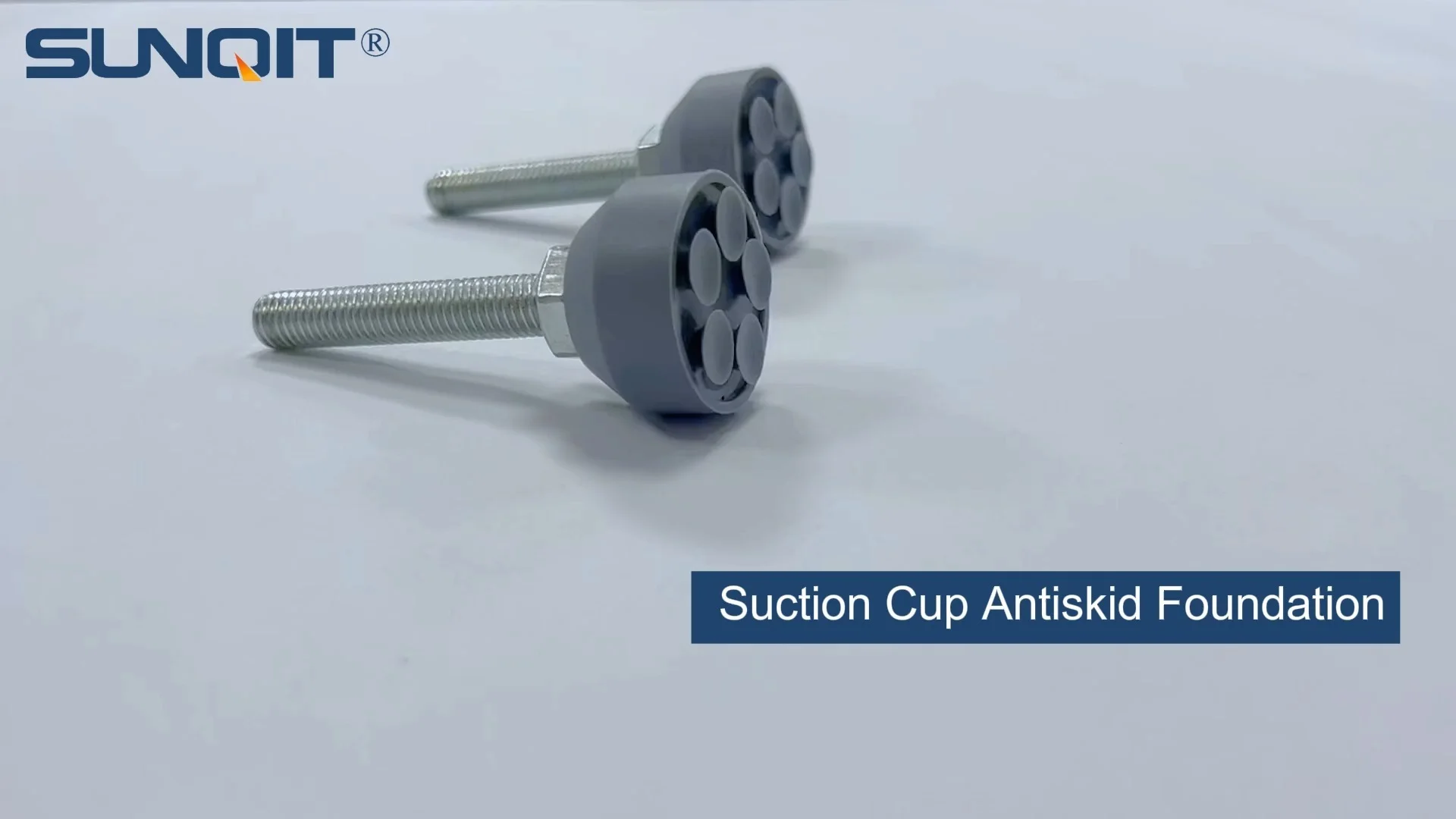
Suction Cup Anti-slip Foot Adjuster
D=35mm suction cup anti-slip foot adjusterï¼screw M10*55ï¼with a blot, used for workbench, flowrack pipe contact with groud.
In the world of lean manufacturing, where every second counts and efficiency is king, stability isn't just a nice-to-have—it's the backbone of smooth operations. Imagine a production line where workbenches wobble slightly, conveyor tracks shift under load, or material racks tilt imperceptibly. These small inconsistencies might seem trivial, but over time, they add up: parts misalign during assembly, workers adjust their posture to compensate for uneven surfaces, and valuable time is lost to constant readjustments. That's where the unsung heroes of lean systems come into play: suction cup anti-slip foot adjusters. These unassuming components might not grab headlines, but they're critical for keeping your lean pipe systems grounded, secure, and operating at peak performance. In this guide, we'll dive deep into how these foot adjusters work, why compatibility with your lean pipe setup matters, and how to ensure they integrate seamlessly with everything from aluminum lean pipes to heavy-duty workbenches.
What Are Suction Cup Anti-Slip Foot Adjusters?
At first glance, suction cup anti-slip foot adjusters look like simple devices: a sturdy metal rod topped with a threaded end (to screw into equipment) and a rubber suction cup base. But their design is deceptively clever. The rubber suction cup, often made from high-density, oil-resistant materials like nitrile or EPDM, creates a powerful grip on floors—whether they're smooth concrete, tiled, or even slightly uneven. The adjustable rod lets you tweak the height of your lean pipe components, ensuring everything from workbenches to material racks sits level, even if the floor itself isn't perfectly flat. Think of them as the "leveling feet" of the lean world, but with a superpower: the suction cup doesn't just prevent sliding; it actively adheres to the surface, absorbing vibrations and reducing noise during operation.
Why rubber? Unlike plastic or metal feet, rubber provides natural shock absorption. In a busy factory, where machinery hums and carts roll by, vibrations can travel through the floor and shake lean pipe structures. Over time, this can loosen joints, misalign roller tracks, or even damage sensitive components on an ESD workbench. The suction cup's flexibility dampens these vibrations, acting like a mini shock absorber for your entire setup. And the anti-slip properties? They're non-negotiable in high-traffic areas. A sudden jolt from a passing forklift or a worker leaning against a material rack shouldn't send your carefully organized system sliding across the floor. The suction cup's grip ensures that even under lateral force, your lean pipe structures stay exactly where you placed them.
Why Compatibility Matters in Lean Pipe Systems
Lean pipe systems are all about modularity. You start with basic components—aluminum lean pipes, joints, workbench frames—and build up, adding roller tracks, casters, or material racks as your needs change. But modularity only works if every piece fits together like a puzzle. A lean pipe joint that doesn't thread properly into a pipe, or a caster that can't support the weight of a loaded trolley, can turn a flexible system into a frustrating mess. The same logic applies to suction cup anti-slip foot adjusters: if they're not compatible with your lean pipe workbench, aluminum profile, or stainless steel pipe series, they won't just underperform—they could compromise safety and efficiency.
Take load capacity, for example. A small suction cup adjuster rated for 50kg might work perfectly on a lightweight turnover trolley, but slap it under a heavy-duty material rack B (3 row and 3 floor) loaded with metal parts, and you're asking for trouble. The adjuster will compress, the suction cup will lose its grip, and the rack could tilt or slide. Then there's thread size: lean pipe workbenches often use M10 threads for leveling feet, while some aluminum profile accessories might require M8. If you pair an M10 adjuster with an M8 thread hole, you'll either strip the threads (ruining the workbench leg) or the adjuster will wobble loose. Material compatibility is another hidden pitfall: if you're using stainless steel pipe series in a food processing plant, you need foot adjusters with corrosion-resistant metal rods (like stainless steel) to avoid rust. Using a standard steel adjuster here would lead to premature failure—and potential contamination risks.

Key Components to Pair With Suction Cup Anti-Slip Foot Adjusters
1. Lean Pipe Workbenches
Lean pipe workbenches are the workhorses of assembly lines, where precision matters most. Whether it's a single-deck workbench E (without casters) used for electronics assembly or a double-deck model in a automotive parts shop, stability here directly impacts product quality. A wobbly workbench can lead to misaligned screws, uneven glue application, or even dropped parts—all costly mistakes. Suction cup anti-slip foot adjusters shine here because they not only level the workbench but also dampen vibrations from nearby machinery. When pairing adjusters with workbenches, pay attention to the number of feet: a standard workbench E has four legs, so you'll need four adjusters, each rated for at least 25% of the workbench's total load capacity (including tools and materials). For heavier workbenches with added shelves or storage, opt for adjusters with larger suction cups (4-5 inches in diameter) for better weight distribution.
2. Aluminum Lean Pipes and Profiles
Aluminum lean pipes are popular for their lightweight yet sturdy nature, making them ideal for modular systems that need to be reconfigured often. They're also corrosion-resistant, which is why they're common in cleanrooms or pharmaceutical facilities. When pairing suction cup adjusters with aluminum lean pipes, focus on thread compatibility: most aluminum pipe accessories use metric threads (M8 or M10), so match the adjuster's thread size to the pipe's end fittings. Aluminum's lighter weight also means you can use slightly smaller adjusters than you would with steel pipes, but don't skimp on quality. Look for adjusters with aluminum or anodized steel rods to avoid galvanic corrosion—mixing dissimilar metals (like a steel adjuster with aluminum pipe) can cause rust over time, weakening the connection. For aluminum profile accessories like aluminum guide rail A or B, which are often used in roller track systems, consider low-profile adjusters that won't interfere with the rail's height or the movement of parts along the track.
3. Lean Pipe Joints
Lean pipe joints are the connectors that hold your system together, from 90° straight joints to multi-angle fixed aluminum joints. While the foot adjusters attach to the base of pipes or workbench legs, the joints above determine how weight is distributed through the structure. A poorly secured joint can create uneven weight distribution, putting extra stress on the foot adjusters. For example, if a 135° aluminum pipe joint isn't tightened properly, the entire frame might lean slightly, causing one foot adjuster to bear more weight than the others. Over time, this can wear out the suction cup on the overloaded adjuster, leading to instability. To avoid this, ensure joints are tightened to the manufacturer's specs before installing adjusters, and check joint tightness regularly—especially after reconfiguring the system. The adjusters can compensate for minor unevenness, but they can't fix a structurally unsound joint setup.
4. Material Racks and Turnover Trolleys
Material racks, like the 3-row, 3-floor material rack B, and turnover trolleys are constantly on the move—either because they're wheeled around the facility or loaded/unloaded multiple times a day. For stationary racks, suction cup adjusters prevent sliding during loading; for trolleys that are sometimes parked for extended use (like during batch processing), adjusters add an extra layer of security. When pairing adjusters with trolleys, look for models with quick-release mechanisms if you need to switch between casters and adjusters. Some trolleys use a combination: casters for mobility and suction cup adjusters that can be lowered when the trolley is parked, "locking" it in place. For material racks, which often have narrow bases, adjusters with swivel suction cups can help—they automatically align to the floor surface, even if the rack is slightly off-kilter.

Compatibility Table: Suction Cup Adjusters & Lean Components
| Component Type | Recommended Adjuster Features | Load Capacity (per adjuster) | Best For | Notes |
|---|---|---|---|---|
| Lean Pipe Workbench E (single deck) | M10 thread, 4-inch suction cup, rubber base | 75-100kg | Electronics assembly, light manufacturing | Use 4 adjusters (one per leg); ideal for concrete or tile floors |
| Material Rack B (3 row and 3 floor) | M12 thread, 5-inch suction cup, stainless steel rod | 150-200kg | Heavy parts storage, warehouse use | Load capacity increases with larger suction cup diameter |
| Aluminum Lean Pipes (28mm diameter) | M8 thread, 3-inch suction cup, aluminum rod | 50-75kg | Modular shelving, lightweight racks | Anodized aluminum rod prevents corrosion with aluminum pipes |
| Stainless Steel Pipe Series | M10 thread, 4-inch suction cup, stainless steel rod | 100-125kg | Food processing, cleanrooms | Stainless steel rod matches pipe material to avoid rust |
| Turnover Trolley (with casters) | Quick-release M8 thread, 3-inch suction cup | 50kg | Mobile storage, batch transport | Pair with lockable casters for dual mobility/stability |

Installation Tips for Seamless Integration
Installing suction cup anti-slip foot adjusters isn't rocket science, but a few best practices will ensure they perform at their best. Start by cleaning the floor where the adjusters will sit: dust, oil, or debris on the floor will prevent the suction cup from forming a tight seal. A quick wipe with a damp cloth (or degreaser for oily areas) goes a long way. Next, thread the adjusters into the component's legs by hand first—this avoids cross-threading. Once they're finger-tight, use a wrench to give them a ¼-turn more; overtightening can damage the threads or warp the component's leg.
Leveling is next. Place a spirit level on the workbench or rack and adjust each foot until the bubble is centered. For uneven floors, you might need to extend some adjusters more than others—most models have 1-2 inches of height adjustment range. Once level, press down firmly on each corner of the component to engage the suction cup: the pressure helps the rubber conform to the floor surface, creating a stronger seal. If you're installing adjusters on a trolley, test them in the parked position: lower the adjusters until they touch the floor, then give the trolley a gentle push—if it doesn't move, the suction cups are working. For added security, mark the adjuster's position with a permanent marker so you can quickly spot if they loosen over time.
Real-World Applications: A Case Study
Let's look at how a small electronics manufacturer solved their stability issues with suction cup anti-slip foot adjusters. The company used a lean pipe workbench E (single deck) for assembling circuit boards, but workers complained that the bench wobbled slightly, making it hard to place tiny surface-mount components. The maintenance team initially thought the floor was uneven, so they added plastic shims under the bench legs. This worked temporarily, but the shims slid out, and the wobble returned. Then they tried standard rubber leveling feet—better, but the bench still shifted when workers leaned on it during assembly.
After consulting with a lean pipe supplier, they switched to suction cup anti-slip foot adjusters with M10 threads and 4-inch suction cups. The results were immediate: the bench stayed perfectly still, even when workers leaned on it. The suction cups dampened vibrations from a nearby conveyor, so parts on the bench no longer "walked" across the surface. Over the next month, the team noticed a 15% reduction in assembly errors related to misaligned parts—and workers reported less fatigue, since they no longer had to compensate for the wobble. The adjusters also proved durable: after six months of daily use, the suction cups showed no signs of wear, and the bench remained level. The maintenance team now installs these adjusters on all new workbenches, calling them "the cheapest productivity boost we've ever invested in."
Troubleshooting Common Compatibility Issues
Even with careful planning, you might run into issues. Here's how to troubleshoot the most common problems:
Problem: The suction cup won't stick to the floor. Solution: Check for debris on the floor or suction cup. Clean both with soap and water, then dry thoroughly. If the floor is porous (like unfinished concrete), the suction cup might not seal—try a larger cup or switch to a ribbed rubber base designed for rough surfaces.
Problem: The adjuster threads don't fit the component. Solution: Verify the thread size of your lean pipe workbench or rack. Most manufacturers list this in the product specs (e.g., M10 for workbenches, M8 for aluminum profiles). If you're unsure, take a sample leg to a hardware store to match the thread size.
Problem: The adjuster sinks into soft floors (like vinyl or carpet). Solution: Add a metal or plastic base plate under the suction cup to distribute weight. The plate should be slightly larger than the suction cup (e.g., 6-inch plate for a 4-inch cup) and flat to maintain the seal.
Conclusion: Stability as the Foundation of Lean Success
In lean manufacturing, every component has a role to play—and suction cup anti-slip foot adjusters are the quiet enforcers of stability. By ensuring your lean pipe workbenches, aluminum lean pipes, and material racks stay level, secure, and vibration-free, these small devices contribute to big wins: fewer errors, faster assembly times, and safer workspaces. The key is compatibility: matching the right adjuster to your components based on load capacity, thread size, and environment. Whether you're setting up a new production line or upgrading an existing system, don't overlook these unsung heroes—your bottom line (and your workers) will thank you.
Remember, lean manufacturing isn't just about eliminating waste—it's about building systems that work with your team, not against them. Suction cup anti-slip foot adjusters might not be the most glamorous part of your lean pipe system, but they're proof that sometimes the smallest components make the biggest difference.