- Company Articles
- Products and Technology
- Product knowledge
- Components of End Support for Roller Track Placon Mount with Wheel: A Detailed Breakdown

Components of End Support for Roller Track Placon Mount with Wheel: A Detailed Breakdown
Related Product
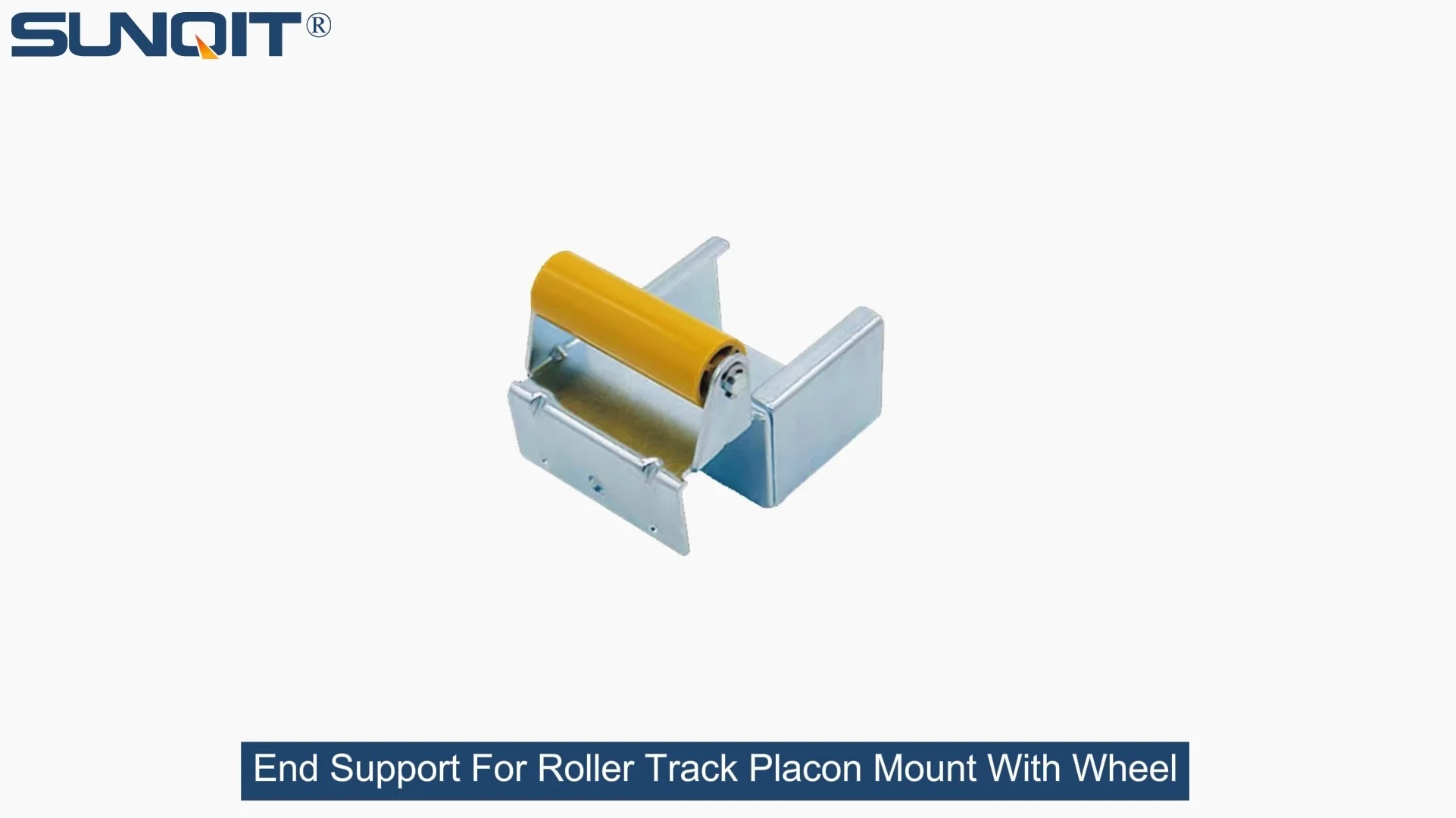
End Support for Roller Track Placon Mount with Wheel
End support for roller track placon mount with wheel,the special design with end wheel,make it with more flexible function for roller track and pipe connection and give more option for selection for building flow rack system.
In the fast-paced world of manufacturing and logistics, every component in your production line plays a silent but crucial role in keeping operations running smoothly. When it comes to material handling, roller tracks are the unsung heroes—they ensure products glide seamlessly from one workstation to the next, reducing manual labor and minimizing delays. But have you ever stopped to think about what keeps these roller tracks stable, aligned, and ready for action? Enter the end support for roller track placon mount with wheel —a small but mighty component that's often overlooked, yet vital for the reliability of your entire roller track system. In this article, we'll take a deep dive into its components, design, and why it matters in the bigger picture of lean manufacturing.
Why End Supports Matter: The Backbone of Roller Track Stability
Before we jump into the details, let's set the stage: roller tracks are everywhere in modern factories. From assembly lines in 3C electronics to warehousing operations for medical supplies, they're the arteries that keep materials flowing. But a roller track is only as strong as its weakest link. Imagine a conveyor system where the ends sag under the weight of products, or wheels that wobble, causing jams and delays. That's where end supports come in. Specifically, the end support for roller track placon mount with wheel is designed to anchor the roller track at its termination points, absorb stress, and ensure smooth movement—even under heavy loads.
Think of it like the foundation of a house: you don't see it every day, but without it, the whole structure risks collapse. In lean manufacturing terms, this translates to avoiding downtime, reducing waste (like time spent fixing jams), and keeping your production line "flowing" as efficiently as possible—because in lean, flow is everything.
What Exactly Is an End Support for Roller Track Placon Mount with Wheel?
Simply put, this component is a specialized bracket-and-wheel assembly designed to mount at the end of a roller track (often using a "placon mount" system, which refers to the way it attaches to aluminum profiles). Its primary job? To support the weight of the roller track and the materials moving along it, while also allowing for smooth transitions between track sections or onto other equipment like workbenches or turnover trolleys. The "with wheel" part is key here—it adds mobility or helps guide materials off the track, preventing them from getting stuck at the end.
But it's not just about support. A well-designed end support also allows for adjustability (so you can fine-tune height or alignment), durability (to withstand daily wear and tear), and compatibility with other components in your lean system—like aluminum pipes, connectors, and profile accessories. After all, in today's factories, flexibility is non-negotiable. You need components that can adapt as your production needs change, and this end support is no exception.

Breaking Down the Core Components: What's Inside?
Now, let's get granular. The end support for roller track placon mount with wheel isn't a single part—it's an assembly of several key components working together. Let's break them down one by one, so you can understand how each piece contributes to the whole.
1. Wheel Assembly: The "Moving" Part of the Support
At the heart of this component is the wheel itself. Without a reliable wheel, the end support can't do its job of guiding materials smoothly. Here's what you need to know:
- Wheel Type: Most often, these are swivel or fixed roller wheels, made from durable materials like nylon or steel. Nylon wheels are popular for their quiet operation and resistance to scratches (important if you're handling delicate parts, like in 3C assembly), while steel wheels are better for heavy loads.
- Size: Common sizes include 1 inch or 0.5 inch diameters (you might see terms like "swivel roller balls 1 inch" in product specs), chosen based on the weight of materials and the speed of the track.
- ESD Protection: In industries like electronics manufacturing, static electricity can damage sensitive components. That's why some end supports come with ESD (Electrostatic Discharge) wheels —designed to dissipate static, keeping your products safe.
Example: A 1-inch steel wheel with a black ESD coating might be used in a 3C assembly line where both heavy circuit boards and static-sensitive parts are being transported. It's a small detail, but it can save you from costly product defects.
2. Mounting Bracket: The "Anchor" to Your Aluminum Profile
Next up is the mounting bracket—the part that connects the end support to your roller track's frame, which is typically made from aluminum profile (those T-slot aluminum extrusions you see in lean systems). This bracket is critical for stability and adjustability.
- Design: Brackets are usually L-shaped or angled, with holes or slots that align with the T-slots in the aluminum profile. This allows for easy installation using T-slot nuts and bolts—no welding required, which is a win for modularity.
- Material: Aluminum is the go-to here (matching the aluminum profile it attaches to). It's lightweight, corrosion-resistant, and strong enough to handle the load. Plus, it's recyclable, aligning with the "sustainable improvement" ethos of lean manufacturing.
- Adjustability: Many brackets have slotted holes, so you can slide the end support up, down, or sideways to align perfectly with the roller track. This is a lifesaver during installation or when reconfiguring your line—no need to drill new holes or replace parts.
Fun fact: The term "placon mount" refers to a specific type of bracket design that's optimized for quick attachment to aluminum profiles. It's part of what makes lean systems so flexible—you can disassemble and reassemble components in minutes, not hours.
3. Support Structure: Reinforcing for Heavy-Duty Use
Between the wheel assembly and the mounting bracket is the support structure—think of it as the "arm" that holds everything together. This is where the component gets its strength, especially when dealing with heavy loads (like in automotive parts manufacturing).
- Design: Often made from extruded aluminum or stamped steel, the support structure is engineered to distribute weight evenly. Some designs include gussets (triangular reinforcements) to add rigidity without adding too much weight.
- Load Capacity: This is a key spec. A support structure for a light-duty flow rack in a small warehouse might handle 50kg, while one for a production line conveyor could need to support 200kg or more. Always check the load rating to match your needs!
- Integration with Other Components: The support structure might also include holes or slots for attaching additional parts, like stop plates (to prevent materials from rolling off the track entirely) or guides (to keep products centered).
4. Connection Hardware: The "Glue" That Holds It All Together
You might not think much about bolts, nuts, and washers, but they're the unsung heroes of any mechanical assembly. For end supports, the connection hardware needs to be strong, corrosion-resistant, and easy to tighten (or loosen, when you need to reconfigure).
- Types: Common hardware includes hex bolts, T-slot nuts (for attaching to aluminum profiles), and lock washers to prevent loosening from vibration (a common issue in busy factories).
- Material: Stainless steel is a popular choice here—it resists rust, even in humid environments like warehouses or cleanrooms in medical device manufacturing.
- Tool Compatibility: Most hardware is designed to be tightened with standard tools (like hex keys), so you don't need special equipment on the factory floor. This saves time during installation and maintenance.
5. Adjustment Mechanism: Fine-Tuning for Perfection
Last but not least, many end supports include an adjustment mechanism—think of it as the "tweak" button that ensures everything works just right. This could be a threaded rod for height adjustment, a pivot joint for angle adjustment, or even a sliding mechanism for lateral alignment.
Why does this matter? Because no two factory floors are perfectly level, and over time, components can shift due to vibration. An adjustment mechanism lets you "dial in" the end support to keep the roller track straight and level, preventing jams and ensuring smooth material flow. It's a small feature, but it's a big part of why lean systems are "sustainably improvable"—you can keep optimizing without replacing the entire component.

Material Matters: Why Aluminum Takes the Lead
You've probably noticed we keep mentioning aluminum profile and aluminum components. There's a good reason for that: aluminum is the material of choice for modern lean systems, and end supports are no exception. Let's break down why:
| Feature | Aluminum | Steel (Traditional Alternative) | Plastic (Budget Alternative) |
|---|---|---|---|
| Weight | Lightweight (easy to install/move) | Heavy (requires more labor to handle) | Light, but less durable |
| Corrosion Resistance | Excellent (resists rust, ideal for humid environments) | Needs coating (prone to rust if scratched) | Good, but can warp in high temps |
| Recyclability | 100% recyclable (aligns with sustainability goals) | Recyclable, but higher energy cost to recycle | Often not recyclable (contributes to waste) |
| Modularity | Easy to drill/tap (customizable for unique needs) | Harder to modify (requires welding/grinding) | Limited strength for modifications |
In short, aluminum checks all the boxes for lean manufacturing: it's lightweight (so workers can reconfigure systems without heavy lifting), durable (so it lasts for years), and sustainable (so you're not contributing to waste). When paired with other aluminum components—like basic aluminum tubes and internal rotary aluminum joints —it creates a system that's not just efficient, but also kind to the planet. That's a win-win for any manufacturer looking to balance productivity with corporate responsibility.

Designing for Lean: How End Supports Align with "Kaizen" (Continuous Improvement)
Lean manufacturing isn't just about tools and systems—it's a philosophy, and at its core is kaizen , or continuous improvement. So how does the end support for roller track placon mount with wheel fit into this? Let's count the ways:
- Modularity: Because it's designed to attach to standard aluminum profiles, you can easily swap out parts (like wheels or brackets) as your needs change. Need a bigger wheel for heavier loads? Just unscrew the old one and bolt on a new one—no need to replace the entire end support.
- Reusability: When you reconfigure your production line (say, moving from manufacturing smartphones to tablets), you can remove the end support and reuse it elsewhere. This reduces waste and saves money—key principles of lean.
- Durability: A well-made aluminum end support can last for years, even in high-traffic environments. This means fewer replacements, less downtime, and more consistent performance—all of which free up time and resources to focus on improving other parts of your process.
- Compatibility: It works seamlessly with other lean components, like lean pipe workbenches , flow racks , and turnover trolleys . This interoperability means you can build a fully integrated system where every part "talks" to the next, minimizing bottlenecks.
Example: Imagine you run a small electronics assembly line. Initially, you use a roller track with end supports to move circuit boards to a workbench. As your business grows, you add a second track parallel to the first. Thanks to the modular design of your end supports, you can easily adjust their height to align with the new track, and even add ESD wheels to protect your more sensitive components. No need to buy a whole new system—just tweak what you already have. That's kaizen in action.
Real-World Applications: Where End Supports Shine
To make this tangible, let's look at two industries where end supports for roller track placon mount with wheel are making a difference:
1. 3C Electronics Assembly (Smartphones, Laptops, etc.)
In 3C manufacturing, precision and speed are everything. Products move quickly along roller tracks from one workstation to the next—soldering, testing, packaging. The end support here needs to handle lightweight but delicate parts, often with ESD protection. For example, a roller track might feed components to an ESD workbench , where workers assemble circuit boards. The end support with a 0.5-inch ESD wheel ensures the components glide smoothly onto the workbench without static buildup, reducing the risk of damage to microchips.
Bonus: Because 3C lines often reconfigure for new product models, the adjustable mounting bracket on the end support lets workers quickly realign the track with the workbench—saving hours of setup time.
2. Warehousing and Logistics for Medical Supplies
Medical warehouses deal with a mix of heavy items (like equipment) and fragile goods (like vials or test kits). Roller tracks with end supports are used to move bins and boxes between storage racks and packing stations. Here, the end support's steel wheel (for heavy loads) and sturdy aluminum bracket ensure that even fully loaded bins (up to 150kg) move smoothly, while the adjustment mechanism keeps the track level—preventing spills or damage to sensitive medical supplies. Plus, the corrosion-resistant stainless steel hardware holds up in cleanroom environments, where hygiene is critical.
Choosing the Right End Support: What to Look For
Now that you know what goes into an end support, how do you choose the right one for your needs? Here are a few key questions to ask:
- What's the maximum load it needs to support? Don't guess—check the product specs for load ratings. Overloading can lead to bending or breakage.
- Do you need ESD protection? If you're handling electronics or sensitive parts, ESD wheels are a must.
- What environment will it be in? For humid or corrosive environments (like food processing or coastal warehouses), prioritize stainless steel hardware and aluminum components.
- Is adjustability important? If your line might reconfigure, look for slotted brackets or height-adjustable mechanisms.
- Does it work with your existing aluminum profile? Not all brackets fit all profiles—check the placon mount design to ensure compatibility with your current system (common profiles include 2020, 3030, or 4040 series).
When in doubt, work with a supplier who specializes in lean systems—they can help you match the end support to your specific application, ensuring you get the right component the first time.
Final Thoughts: Small Component, Big Impact
At the end of the day, the end support for roller track placon mount with wheel is a reminder that in lean manufacturing, every detail counts. It's not the flashiest component on the factory floor, but it's a workhorse that keeps your materials flowing, your line efficient, and your team focused on what matters: building great products. Whether you're assembling smartphones, warehousing medical supplies, or manufacturing automotive parts, this small but critical component plays a role in reducing waste, improving safety, and making your operations "leaner" every day.
So the next time you walk past a roller track in your factory, take a second look at the ends. Chances are, there's an end support hard at work—quietly, reliably, and in service of that bigger goal: a production line that runs like clockwork. And isn't that what lean is all about?