- Company Articles
- Products and Technology
- Installation And Maintenance
- Computer Peripheral Assembly: Lean Pipe Clamp B's Role in Efficient Line Setup

Computer Peripheral Assembly: Lean Pipe Clamp B's Role in Efficient Line Setup
Related Product
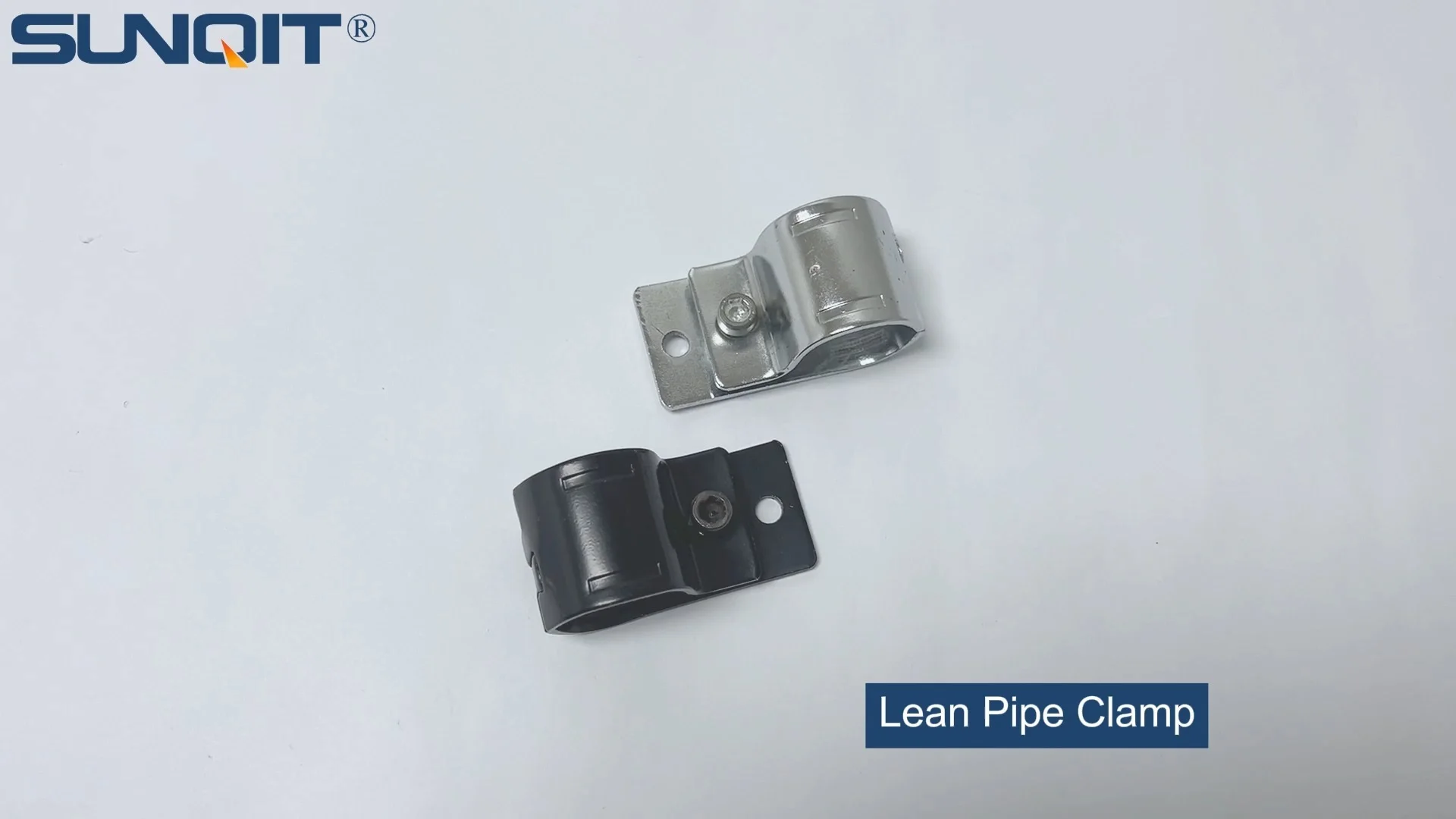
Lean Pipe Clamp
Lean pipe clamp is used for rack system hang monitor or other panel for workbenck, flowrack in production daily use.
Walk into any computer peripheral assembly plant, and you'll likely be met with a symphony of activity: the hum of conveyor belts, the precise click of components being snapped into place, and workers moving with focused urgency to meet daily production targets. From wireless mice and mechanical keyboards to high-resolution webcams and sleek docking stations, the demand for these devices has never been higher. But behind this seemingly smooth operation lies a hidden challenge—one that has plagued manufacturers for years: how to keep assembly lines flexible, efficient, and adaptable in an industry where product lifecycles grow shorter by the month.
In a world where a new keyboard model with updated features can render last year's assembly setup obsolete, rigidity is the enemy. Traditional assembly lines, built with fixed metal frames and welded structures, simply can't keep up. They're expensive to modify, time-consuming to reconfigure, and often leave workers frustrated by constant downtime. This is where lean manufacturing systems step in—and at the heart of many of these systems is a small, unassuming component that's making a big difference: the Lean Pipe Clamp B.
The Hidden Cost of Rigidity in Peripheral Assembly
To understand why Lean Pipe Clamp B matters, let's first unpack the unique challenges of computer peripheral assembly. Unlike large electronics like laptops or smartphones, peripherals come in an astonishing variety of shapes, sizes, and configurations. A wireless mouse might measure just 10cm in length, while a gaming keyboard with mechanical switches and RGB lighting could be 45cm long and require specialized mounting during assembly. Add to that the need to accommodate different materials—plastics, metals, delicate PCBs—and the complexity only grows.
Traditional assembly lines often rely on custom-built workbenches and fixed material racks. When a new product is introduced, these setups require extensive modifications: cutting metal, welding new supports, or even replacing entire sections of the line. The costs add up quickly—not just in materials, but in lost production time. A mid-sized manufacturer might lose 8–12 hours of production for a single line reconfiguration, translating to thousands of dollars in missed output. Worse, these delays can push back product launches, allowing competitors to gain an edge in the market.
"We used to dread product launches," recalls James, a production manager with over 15 years in the peripheral industry. "A new wireless mouse model would come in, and we'd have to shut down the line for a full day to adjust the workbenches and reroute the roller tracks. By the time we got back up to speed, we were already behind on the week's targets. The team was stressed, and the overtime costs were through the roof."
Enter lean manufacturing—a philosophy centered on minimizing waste, maximizing efficiency, and fostering continuous improvement. At its core, lean is about adaptability, and nowhere is that more evident than in the use of modular lean pipe systems. These systems, built with lightweight metal pipes, joints, and clamps, allow manufacturers to create custom workbenches, material racks, and conveyor setups that can be reconfigured in hours, not days. And among the many components that make these systems work, Lean Pipe Clamp B stands out as a linchpin of flexibility.
What Is Lean Pipe Clamp B? A Closer Look at the Component
At first glance, Lean Pipe Clamp B might seem unremarkable. It's a small, durable piece of hardware, typically made from high-grade steel or aluminum, designed to connect and secure lean pipes (also known as "lean tubes") in a variety of configurations. But its simplicity is deceptive. Unlike fixed welds or permanent fasteners, Lean Pipe Clamp B allows for quick, tool-free adjustments, making it possible to modify the structure of an assembly line on the fly.
Let's break down its design. Lean Pipe Clamp B features a split-ring structure with a tightening mechanism—usually a hex bolt or a cam lever—that clamps firmly onto the outer surface of a lean pipe. This design ensures a secure hold (critical for safety in fast-paced assembly environments) while still allowing for easy loosening when reconfiguration is needed. Most models are compatible with standard 28mm or 30mm lean pipes, though some manufacturers offer variants for smaller or larger diameters, such as the aluminum profile pipes common in modern lean systems.
What truly sets Lean Pipe Clamp B apart, however, is its versatility. It can be used to connect pipes at 90-degree angles for building vertical supports, attach crossbars to create workbench surfaces, or even secure roller track sections to material racks. In computer peripheral assembly, where workbenches often need to support varying weights (from lightweight plastic casings to heavier metal chassis), this strength and adaptability are non-negotiable.
| Feature | Traditional Fixed Assembly Setup | Lean Pipe System with Lean Pipe Clamp B |
|---|---|---|
| Reconfiguration Time | 8–12 hours (requires welding/cutting) | 1–2 hours (tool-free adjustments) |
| Flexibility | Fixed structure; limited to original design | Modular; can be reshaped for new products |
| Cost to Modify | High (labor, new materials, downtime) | Low (minimal labor, reusable components) |
| Weight Capacity | High, but rigid (no adjustment for varying loads) | High, with adjustable support for light/heavy components |
| Worker Satisfaction | Low (frequent downtime, cumbersome adjustments) | High (reduced downtime, ergonomic customization) |

Lean Pipe Clamp B in Action: Integrating with the Assembly Ecosystem
Lean Pipe Clamp B doesn't work in isolation. To fully appreciate its impact, we need to look at how it integrates with other key components of a lean assembly system. In computer peripheral manufacturing, these systems typically include lean pipe workbenches, roller tracks, aluminum profiles, and mobile carts—all of which rely on Clamp B to function as a cohesive unit.
1. Lean Pipe Workbenches: The Foundation of Assembly
The workbench is where the magic happens in peripheral assembly. It's where workers sit or stand for hours, carefully placing PCBs into keyboard frames, soldering wires onto mouse circuit boards, or testing the functionality of newly assembled devices. A poorly designed workbench can lead to ergonomic issues, slow down production, and even increase error rates.
Lean pipe workbenches, built using Lean Pipe Clamp B, solve these problems by offering customizable heights, widths, and surface materials. For example, a workbench used for assembling small webcams might need a smooth, non-conductive surface to protect sensitive electronics, while one for mechanical keyboards could benefit from a sturdier, anti-slip top to keep components from sliding during assembly. With Clamp B, swapping out these surfaces is as simple as loosening a few bolts, removing the old top, and securing a new one—no welding required.
Take the "Workbench E (Single Deck–Without Caster)" model, a popular choice in many plants. Its frame is constructed from aluminum lean pipes connected by Lean Pipe Clamp B, allowing managers to adjust the height from 75cm to 90cm to accommodate workers of different statures. This adjustability isn't just about comfort; studies have shown that ergonomically optimized workbenches can reduce worker fatigue by up to 30%, directly boosting productivity and reducing errors.
2. Roller Tracks: Streamlining Material Flow
In any assembly line, the movement of materials is just as critical as the assembly process itself. Components need to flow seamlessly from storage racks to workstations, and finished products must move efficiently to packaging areas. This is where roller tracks come in—and Lean Pipe Clamp B is instrumental in keeping these tracks stable and adaptable.
Roller tracks, often made from aluminum or plastic, use a series of small wheels to allow materials (like component trays or casings) to glide smoothly along a path. In computer peripheral assembly, where precision is key, even a slight misalignment in a roller track can cause jams, leading to delays. Lean Pipe Clamp B ensures that these tracks are securely fastened to support structures, whether they're mounted to the side of a workbench or integrated into a standalone material rack.
Consider a scenario where a plant needs to switch from assembling wired mice (which are lightweight and can use a basic roller track) to heavier gaming mice with metal bases. The original track, mounted with fixed brackets, might sag under the new weight, causing trays to get stuck. With Lean Pipe Clamp B, workers can quickly add additional support bars beneath the track, securing them with Clamp B to reinforce the structure. The entire process takes 20 minutes, not 2 hours—and production never stops completely.
"Roller tracks used to be a headache," says Mike, a material handler at a peripheral manufacturer in Taiwan. "If a track got bent or misaligned, we'd have to call in maintenance to weld on new supports. Now, with Lean Pipe Clamp B, I can adjust the track myself in 10 minutes. Last month, we switched from plastic to aluminum roller track guide rails (the yellow ones) for our keyboard line, and I had the whole system reconfigured during a lunch break. The team couldn't believe how smooth it went."
3. Aluminum Profiles: Lightweight Strength for Modern Lines
While traditional lean pipes are often made of steel with a plastic coating, modern systems increasingly rely on aluminum profiles. These extruded aluminum pipes offer the same strength as steel but at a fraction of the weight, making them easier to handle during reconfiguration. Lean Pipe Clamp B has evolved to work seamlessly with these aluminum profiles, with specialized variants designed to grip the T-slots common in aluminum extrusion profiles.
Aluminum profiles are particularly valuable in computer peripheral assembly, where lines are often reconfigured to accommodate smaller, lighter products. For example, assembling a thin wireless keyboard might require a lightweight, mobile workbench that can be moved closer to the testing station. With aluminum pipes and Clamp B, the workbench can be disassembled, moved, and reassembled in under an hour—something that would be nearly impossible with a steel-welded frame.

The Bottom Line: How Lean Pipe Clamp B Boosts the Bottom Line
At the end of the day, manufacturing is a numbers game. Does a component like Lean Pipe Clamp B really make enough of a difference to justify the investment? The data suggests it does. Let's break down the tangible benefits:
Reduced Downtime:
As noted earlier, traditional reconfigurations can take 8–12 hours. With Lean Pipe Clamp B, that drops to 1–2 hours. For a line producing 500 units per hour, this translates to saving 3,500–5,500 units per reconfiguration. Over a year with 12 product launches, that's 42,000–66,000 additional units—enough to significantly boost revenue.
Lower Labor Costs:
Modifying a traditional line often requires skilled welders or metalworkers. Lean Pipe Clamp B, by contrast, can be operated by any trained worker. This reduces reliance on specialized labor and cuts down on overtime costs, as reconfigurations can be done during regular shifts.
Scalability:
As a manufacturer grows, so do its production needs. Lean systems with Clamp B can be expanded incrementally—adding a new workbench here, extending a roller track there—without the need for a complete overhaul. This scalability is especially valuable for small to mid-sized manufacturers looking to enter new markets or meet sudden spikes in demand.
Durability:
Despite its lightweight design, Lean Pipe Clamp B is built to last. Made from corrosion-resistant materials like stainless steel or anodized aluminum, it can withstand the daily wear and tear of a busy assembly plant, including exposure to lubricants, cleaning agents, and the occasional bump from a material cart. This longevity means lower replacement costs over time compared to cheaper, disposable fasteners.

Real-World Impact: A Case Study
To put these benefits into perspective, let's look at a real-world example. A mid-sized computer peripheral manufacturer in Vietnam, specializing in wireless keyboards and mice, was struggling to keep up with demand in 2023. Their assembly line, built with traditional welded steel frames, could only produce 1,200 units per day, and reconfiguring for new models took 10 hours on average. Employee turnover was high due to frustration with downtime, and the company was losing market share to competitors with faster production cycles.
In early 2024, the company invested in a lean system upgrade, centered around aluminum lean pipes and Lean Pipe Clamp B. They replaced their fixed workbenches with modular ones, installed adjustable roller tracks, and trained their team to reconfigure the line using Clamp B. The results were striking:
- Production increased by 40%: Daily output rose from 1,200 to 1,680 units, as downtime for reconfigurations dropped to just 90 minutes per model change.
- Employee turnover fell by 25%: Workers reported higher job satisfaction, citing reduced frustration with line delays and the ability to adjust their workbenches for comfort.
- Cost per unit decreased by 18%: Lower labor and downtime costs, combined with reduced material waste, made the company's products more competitive in the global market.
"It's not just about the numbers," says the plant's operations director, Pham Minh. "There's a cultural shift, too. The team feels empowered now. They can suggest adjustments to the line—like moving a roller track closer to their workstation—and actually see those changes happen the same day. That kind of ownership makes a huge difference in morale."
Looking Ahead: The Future of Lean Assembly
As computer peripherals continue to evolve—think foldable keyboards, AI-powered mice, and peripherals designed for virtual reality—the need for flexible assembly systems will only grow. Lean Pipe Clamp B, while a small component, is poised to play an even bigger role in this future. Manufacturers are already exploring new materials for Clamp B, such as carbon fiber-reinforced plastics, to reduce weight further without sacrificing strength. Others are integrating smart sensors into the clamps to monitor tension and alert maintenance teams if a connection starts to loosen—preventing downtime before it happens.
There's also a trend toward greater integration with automation. In advanced plants, collaborative robots ("cobots") now work alongside human workers, assembling components with precision. These cobots often rely on lean pipe structures for support, and Lean Pipe Clamp B allows for quick adjustments to the robot's position as production needs change. For example, a cobot tasked with installing batteries into wireless mice can be repositioned in minutes using Clamp B to accommodate a new battery size or placement.
Perhaps most importantly, Lean Pipe Clamp B embodies the core principle of lean manufacturing: continuous improvement. It's a tool that doesn't just solve today's problems but adapts to tomorrow's challenges. In an industry where the only constant is change, that's invaluable.
Conclusion: Small Component, Big Impact
In the grand scheme of computer peripheral assembly, Lean Pipe Clamp B might seem like a player. But as we've explored, its role in creating flexible, efficient, and adaptable assembly lines is undeniable. From reducing downtime and labor costs to boosting worker morale and scalability, this small clamp has a big impact on the bottom line—and on the people who keep our devices rolling off the production line.
So the next time you unbox a new wireless mouse or type on a mechanical keyboard, take a moment to appreciate the unseen heroes of manufacturing. Behind that sleek device is a story of innovation, and at the heart of that story is often a simple truth: sometimes, the most powerful solutions come in the smallest packages. Lean Pipe Clamp B is proof of that.